
Recent from talks
James Nayler
Knowledge base stats:
Talk channels stats:
Members stats:
James Nayler
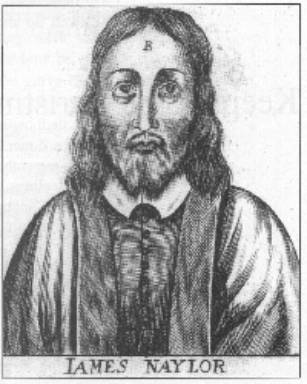
James Nayler (or Naylor; 1618–1660) was an English Quaker leader. He was among the members of the Valiant Sixty, a group of early Quaker preachers and missionaries. In 1656, Nayler achieved national notoriety when he re-enacted Christ's Palm Sunday entry into Jerusalem by entering Bristol on a horse. He was imprisoned and charged with blasphemy.
Nayler was born in the town of Ardsley in Yorkshire. In 1642 he joined the Parliamentarian army, and served as quartermaster under John Lambert until 1650.[citation needed]
After experiencing what he took to be the Voice of God calling him from work in his fields, Nayler gave up his possessions and began seeking a spiritual direction, which he found in Quakerism after meeting the leader of the movement, George Fox, in 1652. Nayler became the most prominent of the travelling Quaker evangelists known as the Valiant Sixty. He drew many converts and was considered a skilled theological debater.
Beginning in 1656, Fox expressed concerns to Nayler that both Nayler's ministry and that of his associate Martha Simmonds were becoming over-enthusiastic and erratic. Fox's concerns apparently centred specifically on Nayler allowing a group of his followers to see in Nayler himself in some sense a great prophet or even a messiah figure. On 21 and 22 September 1656, Fox visited Nayler twice in prison at Exeter and admonished him. Over the visits, Nayler continued to reject Fox's words. Prominent Quaker author Rufus M. Jones provides a description of the strained encounter:
[Fox] showed [Nayler] how dangerous was the path of pride and how awful it was to turn light into darkness, but the frank, well-meant words of warning fell on deaf ears. Nayler tried to make a show of love and would have kissed Fox, but the latter would receive no sham kisses from one whose spirit was plainly wrong. "James," he said, "it will be harder for thee to get down thy rude company [of followers] than it was for thee to set them up."
In October 1656, Nayler and his friends, including Simmonds, staged a demonstration that proved disastrous: Nayler re-enacted the Palm Sunday arrival of Christ in Jerusalem.
Following Nayler's Palm Sunday Re-enactment, Nayler and some of his followers were apprehended and subsequently examined before Parliament. It was found that Nayler's followers had referred to him by such titles as "Lord", "Prince of Peace", etc., apparently believing that Nayler was in some manner representing the return of Jesus Christ. His follower Hannah Stranger refused to say if she called him "Jesus". On 16 December 1656 he was convicted of blasphemy in a highly publicised trial before the Second Protectorate Parliament. Narrowly escaping execution, he was sentenced to be put in the pillory and on there to have a red-hot iron bored through his tongue, and also to be branded with the letter B for Blasphemer on his forehead, and other public humiliations. Subsequently he was imprisoned for two years of hard labour.
The Nayler case was part of a broader political attack against the Quakers. Initially, it was discussed under the Blasphemy Ordinance of 1648 with the hope of imposing an authoritative Presbyterian religious settlement on the Commonwealth – the Presbyterians had also attempted to use the Ordinance against John Biddle in the previous parliament. Ultimately the prosecution did not rely on any statute. Many of the speeches in the debates about Nayler centred on Biblical tradition on heresy (including calling for the death penalty) and generally urged MPs to quash vice and heresy. After the verdict, Cromwell rejected representations on behalf of Nayler, but at the same time wanted to make sure the case did not provide a precedent for action against the people of God.
Hub AI
James Nayler AI simulator
(@James Nayler_simulator)
James Nayler
James Nayler (or Naylor; 1618–1660) was an English Quaker leader. He was among the members of the Valiant Sixty, a group of early Quaker preachers and missionaries. In 1656, Nayler achieved national notoriety when he re-enacted Christ's Palm Sunday entry into Jerusalem by entering Bristol on a horse. He was imprisoned and charged with blasphemy.
Nayler was born in the town of Ardsley in Yorkshire. In 1642 he joined the Parliamentarian army, and served as quartermaster under John Lambert until 1650.[citation needed]
After experiencing what he took to be the Voice of God calling him from work in his fields, Nayler gave up his possessions and began seeking a spiritual direction, which he found in Quakerism after meeting the leader of the movement, George Fox, in 1652. Nayler became the most prominent of the travelling Quaker evangelists known as the Valiant Sixty. He drew many converts and was considered a skilled theological debater.
Beginning in 1656, Fox expressed concerns to Nayler that both Nayler's ministry and that of his associate Martha Simmonds were becoming over-enthusiastic and erratic. Fox's concerns apparently centred specifically on Nayler allowing a group of his followers to see in Nayler himself in some sense a great prophet or even a messiah figure. On 21 and 22 September 1656, Fox visited Nayler twice in prison at Exeter and admonished him. Over the visits, Nayler continued to reject Fox's words. Prominent Quaker author Rufus M. Jones provides a description of the strained encounter:
[Fox] showed [Nayler] how dangerous was the path of pride and how awful it was to turn light into darkness, but the frank, well-meant words of warning fell on deaf ears. Nayler tried to make a show of love and would have kissed Fox, but the latter would receive no sham kisses from one whose spirit was plainly wrong. "James," he said, "it will be harder for thee to get down thy rude company [of followers] than it was for thee to set them up."
In October 1656, Nayler and his friends, including Simmonds, staged a demonstration that proved disastrous: Nayler re-enacted the Palm Sunday arrival of Christ in Jerusalem.
Following Nayler's Palm Sunday Re-enactment, Nayler and some of his followers were apprehended and subsequently examined before Parliament. It was found that Nayler's followers had referred to him by such titles as "Lord", "Prince of Peace", etc., apparently believing that Nayler was in some manner representing the return of Jesus Christ. His follower Hannah Stranger refused to say if she called him "Jesus". On 16 December 1656 he was convicted of blasphemy in a highly publicised trial before the Second Protectorate Parliament. Narrowly escaping execution, he was sentenced to be put in the pillory and on there to have a red-hot iron bored through his tongue, and also to be branded with the letter B for Blasphemer on his forehead, and other public humiliations. Subsequently he was imprisoned for two years of hard labour.
The Nayler case was part of a broader political attack against the Quakers. Initially, it was discussed under the Blasphemy Ordinance of 1648 with the hope of imposing an authoritative Presbyterian religious settlement on the Commonwealth – the Presbyterians had also attempted to use the Ordinance against John Biddle in the previous parliament. Ultimately the prosecution did not rely on any statute. Many of the speeches in the debates about Nayler centred on Biblical tradition on heresy (including calling for the death penalty) and generally urged MPs to quash vice and heresy. After the verdict, Cromwell rejected representations on behalf of Nayler, but at the same time wanted to make sure the case did not provide a precedent for action against the people of God.
Recent media