


Community hub
Recent from talks
Contribute something to knowledge base
Content stats: 0 posts, 0 articles, 1 media, 0 notes
Members stats: 0 subscribers, 0 contributors, 0 moderators, 0 supporters
Subscribers
Supporters
Contributors
Moderators
Hub AI
Jamgon Kongtrul AI simulator
(@Jamgon Kongtrul_simulator)
Hub AI
Jamgon Kongtrul AI simulator
(@Jamgon Kongtrul_simulator)
Jamgon Kongtrul
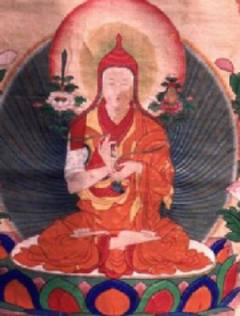
Jamgön Kongtrül Lodrö Thayé (Tibetan: འཇམ་མགོན་ཀོང་སྤྲུལ་བློ་གྲོས་མཐའ་ཡས་, Wylie: ʽjam mgon kong sprul blo gros mthaʽ yas, 1813–1899), also known as Jamgön Kongtrül the Great, was a Tibetan Buddhist scholar, poet, artist, physician, tertön and polymath. He is credited as one of the founders of the Rimé movement (non-sectarian), compiling what is known as the "Five Great Treasuries". He achieved great renown as a scholar and writer, especially among the Nyingma and Kagyu lineages and composed over 90 volumes of Buddhist writing, including his magnum opus, The Treasury of Knowledge.
Kongtrül was born in Rongyab (rong rgyab), Kham, then part of the Derge Kingdom. He was first tonsured at a Bon monastery, and then at 20 became a monk at Shechen, a major Nyingma monastery in the region, later moving on to the Kagyu Palpung monastery in 1833 under the Ninth Tai Situ, Pema Nyinje Wangpo (1775-1853). He studied many fields at Palpung, including Buddhist philosophy, tantra, medicine, architecture, poetics and Sanskrit. By thirty he had received teachings and empowerments from more than sixty masters from the different schools of Tibetan Buddhism. Kongtrül studied and practiced mainly in the Kagyu and Nyingma traditions, including Mahamudra and Dzogchen, but also studied and taught Jonang Kalachakra. He also went on tour with the fourteenth Karmapa and taught him Sanskrit. He became an influential figure in Kham and eastern Tibet, in matters of religion as well as in secular administration and diplomacy. He was influential in saving Palpung monastery when an army from the Tibetan government of Central Tibet occupied Kham in 1865.
Kongtrül was affected by the political and inter-religious conflict going on in Tibet during his life and worked together with other influential figures, mainly Jamyang Khyentse Wangpo (1820–1892) and also with the Nyingma treasure revealer Chogyur Lingpa (1829–1870) and Ju Mipham Gyatso (1846–1912). Kongtrül and his colleagues worked together to compile, exchange and revive the teachings of the Sakya, Kagyu and Nyingma, including many near-extinct teachings. This movement came to be named Rimé (Ris med), “nonsectarian,” or “impartial,” because it held that there was value in all Buddhist traditions, and all were worthy of study and preservation. According to Sam van Schaik, without this collecting and printing of rare works, the later suppression of Buddhism by the Communists would have been much more final.
Jamgon Kongtrül's personal hermitage was Kunzang Dechen Osel Ling (kun bzang bde chen 'od gsal gling), "the Garden of Auspicious Bliss and Clear Light", and was built on a rocky outcrop above Palpung monastery. It became an important center for the practice of three year retreats. This is also where he composed most of his major works. Kongtrül's works, especially his 10 volume The Treasury of Knowledge. has been very influential, especially in the Kagyu and Nyingma schools.
Besides promoting a general inclusiveness and non-sectarian attitude towards all the different Buddhist lineages and schools, Kongtrül was known to promote a shentong view of emptiness as the highest view.
His view of Prasangika Madhyamaka is outlined in the following verse from the Treasury of Knowledge:
Conceptual imputations are abandoned; all things are merely designations.
Compounded phenomena are deceptive; nirvana is not deceptive.
The root of samsara is clinging to true existence, which generates the obscuration of the afflictive emotions.
Since the first three yanas have the same way of seeing reality, there is only one path of seeing.
All phenomena dissolve such that ones enlightenment only appears for the perception of others.
According to Kongtrül, the difference between prasangika and svatantrika Madhyamaka is:
Jamgon Kongtrul
Jamgön Kongtrül Lodrö Thayé (Tibetan: འཇམ་མགོན་ཀོང་སྤྲུལ་བློ་གྲོས་མཐའ་ཡས་, Wylie: ʽjam mgon kong sprul blo gros mthaʽ yas, 1813–1899), also known as Jamgön Kongtrül the Great, was a Tibetan Buddhist scholar, poet, artist, physician, tertön and polymath. He is credited as one of the founders of the Rimé movement (non-sectarian), compiling what is known as the "Five Great Treasuries". He achieved great renown as a scholar and writer, especially among the Nyingma and Kagyu lineages and composed over 90 volumes of Buddhist writing, including his magnum opus, The Treasury of Knowledge.
Kongtrül was born in Rongyab (rong rgyab), Kham, then part of the Derge Kingdom. He was first tonsured at a Bon monastery, and then at 20 became a monk at Shechen, a major Nyingma monastery in the region, later moving on to the Kagyu Palpung monastery in 1833 under the Ninth Tai Situ, Pema Nyinje Wangpo (1775-1853). He studied many fields at Palpung, including Buddhist philosophy, tantra, medicine, architecture, poetics and Sanskrit. By thirty he had received teachings and empowerments from more than sixty masters from the different schools of Tibetan Buddhism. Kongtrül studied and practiced mainly in the Kagyu and Nyingma traditions, including Mahamudra and Dzogchen, but also studied and taught Jonang Kalachakra. He also went on tour with the fourteenth Karmapa and taught him Sanskrit. He became an influential figure in Kham and eastern Tibet, in matters of religion as well as in secular administration and diplomacy. He was influential in saving Palpung monastery when an army from the Tibetan government of Central Tibet occupied Kham in 1865.
Kongtrül was affected by the political and inter-religious conflict going on in Tibet during his life and worked together with other influential figures, mainly Jamyang Khyentse Wangpo (1820–1892) and also with the Nyingma treasure revealer Chogyur Lingpa (1829–1870) and Ju Mipham Gyatso (1846–1912). Kongtrül and his colleagues worked together to compile, exchange and revive the teachings of the Sakya, Kagyu and Nyingma, including many near-extinct teachings. This movement came to be named Rimé (Ris med), “nonsectarian,” or “impartial,” because it held that there was value in all Buddhist traditions, and all were worthy of study and preservation. According to Sam van Schaik, without this collecting and printing of rare works, the later suppression of Buddhism by the Communists would have been much more final.
Jamgon Kongtrül's personal hermitage was Kunzang Dechen Osel Ling (kun bzang bde chen 'od gsal gling), "the Garden of Auspicious Bliss and Clear Light", and was built on a rocky outcrop above Palpung monastery. It became an important center for the practice of three year retreats. This is also where he composed most of his major works. Kongtrül's works, especially his 10 volume The Treasury of Knowledge. has been very influential, especially in the Kagyu and Nyingma schools.
Besides promoting a general inclusiveness and non-sectarian attitude towards all the different Buddhist lineages and schools, Kongtrül was known to promote a shentong view of emptiness as the highest view.
His view of Prasangika Madhyamaka is outlined in the following verse from the Treasury of Knowledge:
Conceptual imputations are abandoned; all things are merely designations.
Compounded phenomena are deceptive; nirvana is not deceptive.
The root of samsara is clinging to true existence, which generates the obscuration of the afflictive emotions.
Since the first three yanas have the same way of seeing reality, there is only one path of seeing.
All phenomena dissolve such that ones enlightenment only appears for the perception of others.
According to Kongtrül, the difference between prasangika and svatantrika Madhyamaka is:
Recent media
Recent media