Hubbry Logo
Javan tigerJavan tigerMain
Open search
Javan tiger
Community hub
Javan tiger
logo
8 pages, 0 posts
0 subscribers
Be the first to start a discussion here.
Javan tiger
Javan tiger
from Wikipedia
Javan tiger
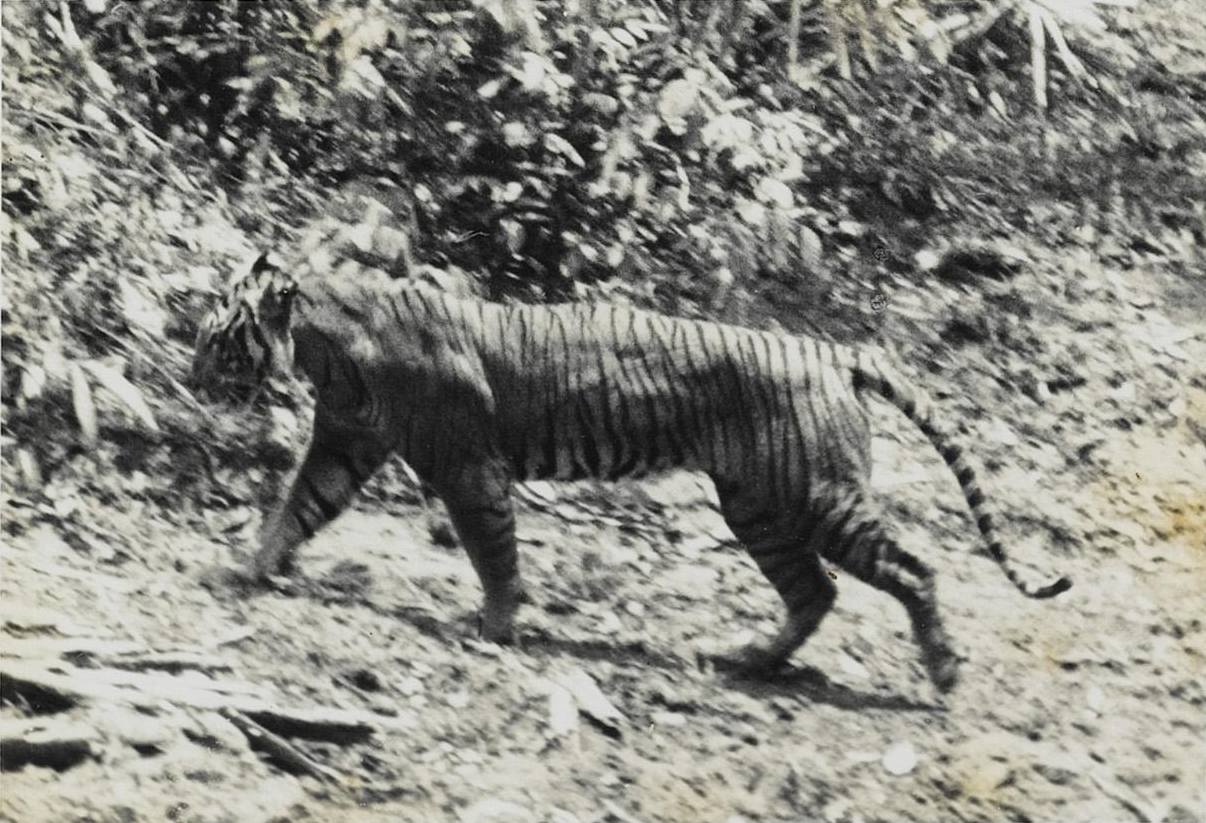
A photo of a Javan tiger, 1938 at Ujung Kulon
Extinct
Extinct (2008)  (IUCN 3.1)
Scientific classificationEdit this classification
Kingdom: Animalia
Phylum: Chordata
Class: Mammalia
Order: Carnivora
Family: Felidae
Genus: Panthera
Species: P. tigris
Subspecies: P. t. sondaica
Population: Javan tiger

The Javan tiger was a Panthera tigris sondaica population native to the Indonesian island of Java. It was one of the three tiger populations that colonized the Sunda Islands during the last glacial period 110,000–12,000 years ago. It used to inhabit most of Java, but its natural habitat decreased continuously due to conversion for agricultural land use and infrastructure. By 1940, it had retreated to remote montane and forested areas. Since no evidence of a Javan tiger was found during several studies in the 1980s and 1990s, it was assessed as being extinct in 2008.

Taxonomy

[edit]

Felis tigris sondaicus was proposed by Coenraad Jacob Temminck in 1844 as a scientific name for the Javan tiger.[1]

In 1929, the British taxonomist Reginald Innes Pocock subordinated the tiger under the genus Panthera using the scientific name Panthera tigris.[2][3][4]

In 2017, the Cat Classification Task Force of the Cat Specialist Group revised felid taxonomy and now recognizes the Javan tiger together with the Sumatran tiger and the Bali tigers as one subspecies, P. t. sondaica.[5]

Evolution

[edit]

Results of mitochondrial DNA analysis of 23 tiger samples from museum collections indicate that the tiger colonized the Sunda Islands during the last glacial period 110,000–12,000 years ago.[6]

Characteristics

[edit]
Skin of a Javan tiger in the collection of the Tropenmuseum, 1915
Tiger skull from Java in the collection of the Museum Wiesbaden

The Javan tiger was small compared to other subspecies of the Asian mainland, but larger than the Bali tiger, and similar in size to the Sumatran tiger.[4] It usually had long and thin stripes, which were slightly more numerous than those of the Sumatran tiger. Its nose was long and narrow, the occipital plane remarkably narrow, and carnassials were relatively long. Based on these cranial differences, the Javan tiger was proposed to be assigned to a distinct species, with the taxonomic name Panthera sondaica.[7]

Males had a mean body length of 248 cm (98 in) and weighed between 100 and 141 kg (220 and 311 lb). Females were smaller than males and weighed between 75 and 115 kg (165 and 254 lb).[4] The smaller body size of the Javan tiger is attributed to Bergmann's rule and the size of the available prey species in Java, which are smaller than the deer and bovid species on the Asian mainland. However, the diameter of its tracks is larger than that of the Bengal tiger.[8]

The Javan tiger was said to be strong enough to break the legs of horses or water buffaloes with its paws.[9]

Habitat and ecology

[edit]

The Javan tiger used to inhabit most of Java but had retreated to remote montane and forested areas by 1940. Around 1970, the only known tigers lived in the region of Meru Betiri National Park. This rugged region with sloping terrain had not been settled. An area of 500 km2 (190 sq mi) was gazetted as a wildlife reserve in 1972. The last tigers were sighted there in 1976.[10][11]

The Javan tiger preyed on Javan rusa (Rusa timorensis), banteng (Bos javanicus), and wild boar (Sus scrofa); and less often on waterfowl and reptiles. Nothing is known about its gestation period or life span in the wild or captivity. Up to World War II, some Javan tigers were kept in a few Indonesian zoos that were closed during the war. After the war, it was easier to obtain Sumatran tigers.[8]

Extirpation

[edit]
A tiger fight in Java, 1870–1892
A group of men and children poses with a killed tiger in Malingping in Banten, West Java, 1941

Bounties for hunting the Javan tiger were issued in the 1830s. Around 1850, people living in rural areas considered it a plague. The killing of tigers increased at the beginning of the 20th century when 28 million people lived in Java and the production of rice was insufficient to adequately supply the growing human population. Within 15 years, 150% more land was cleared for rice fields. In 1938, natural forest covered 23% of the island. By 1975, only 8% of the forest remained, and the human population had increased to 85 million people.[8] In this human-dominated landscape, the extirpation of the Javan tiger was intensified by the conjunction of several circumstances and events:[10]

  • Tigers and their prey were poisoned in many places during the period when their habitat was rapidly being reduced.
  • Natural forests were increasingly fragmented after World War II for plantations of teak (Tectona grandis), coffee, and rubber (Hevea brasiliensis), which were unsuitable habitats for wildlife.
  • The Javan rusa, the tiger's most important prey species, was lost to disease in several reserves and forests during the 1960s.
  • During the period of civil unrest after 1965, armed groups retreated to reserves, where they killed the remaining tigers.

Last efforts

[edit]

In 1960, the tiger population in Ujung Kulon National Park was estimated to comprise 10–12 individuals.[12] Until the mid-1960s, tigers survived in three protected areas that had been established during the 1920s to 1930s: Leuweng Sancang Nature Reserve, Ujung Kulon, and Baluran National Parks. Following the period of civil unrest, no tigers were sighted there. In 1971, an older female was shot in a plantation near Mount Betiri in Java's southeast. The area was upgraded to a wildlife reserve in 1972, a small guard force was established, and four habitat management projects were initiated. The reserve was severely disrupted by two large plantations in the major river valleys, occupying the most suitable habitat for the tiger and its prey. In 1976, tracks were found in the eastern part of the reserve, indicating the presence of three to five tigers. Only a few bantengs survived close to the plantations, but tracks of Javan rusa were not sighted.[13]

A tiger killed along with seven Javan leopards during Rampokan in Kediri, East Java, circa 1900

After 1979, no more sightings of tigers in Meru Betiri National Park were confirmed. In 1980, it was recommended to extend the wildlife reserve and eliminate the disruptive influence of humans on the fragile ecosystem. The Indonesian Nature Conservation Authority implemented these recommendations in 1982 by gazetting the reserve as a national park. These measures were too late to save the few remaining tigers in the region.[10] In 1987, a group of 30 students of Bogor Agricultural University (Institut Pertanian Bogor) conducted an expedition to Meru Betiri. They searched the area in groups of five and found tiger scat and tracks.[14]

In the west of Java lies the Halimun Reserve, today integrated into the Mount Halimun Salak National Park. A tiger was killed there in 1984, and pugmarks found in 1989 were the size of a tiger's. However, an expedition of six biologists conducted in 1990 did not yield any definite, direct evidence for the presence of a tiger.[14] A subsequent survey was planned in Meru Betiri National Park in the autumn 1992 with the support of WWF Indonesia, deploying camera traps for the first time. From March 1993 to March 1994, cameras were deployed at 19 locations but did not yield a picture of a tiger. During this period, no tracks indicating the presence of tigers were discovered.[15] After the final report of this survey had been published, the Javan tiger was declared extinct.[16]

Rumors and indications of the possible presence of tigers in Meru Betiri National Park prompted the park's Chief Warden Indra Arinal to initiate another search. With support of the Sumatran Tiger Project, 12 park staff members were trained in autumn 1999 to set up camera traps and map their observations. The Canadian The Tiger Foundation provided infrared cameras.[17] Despite a year of work, they did not photograph a tiger, but few prey and many poachers.[18]

In 2008, the Javan tiger was assessed as being extinct.[19]

Alleged sightings

[edit]
Drawing by artist O. Fienzel, 1892

Occasional, unofficial reports of Javan tigers surface from enthusiasts who believe the tiger still exists in Java.[20] In November 2008, an unidentified body of a female mountain hiker was found in Mount Merbabu National Park in Central Java, who allegedly died from a tiger attack. Villagers who discovered the body also claimed some tiger sightings in the vicinity.[21] In January 2009, some villagers claimed to have seen a tigress with two cubs wandering near a village adjacent to Lawu Mountain. Local authorities found several fresh tracks in the location. However, by that time, those animals had already vanished.[22] Following the October 2010 eruption of Mount Merapi, two Indonesian villagers claimed sightings of a big cat paw print in the residual ash, which sparked rumors that a tiger or leopard was roaming abandoned farms in search of food. Personnel of the nearby national park did not think it was likely that the paw print belonged to a tiger.[23] In 2016, a Javan tiger was allegedly photographed in Mount Arjuno in East Java.[24] However, it was later proven to be a hoax, and the photo was actually of a Bengal tiger taken at Taman Safari Prigen, a zoo located on the slope of Mount Arjuno.[25] In August 2017, a wildlife ranger photographed an alleged Javan tiger in Ujung Kulon National Park. A tiger expert later identified the animal as a Javan leopard.[26]

A reported sighting of a Javan tiger in 2019 near Cipendeuy village in the south of Sukabumi Regency reignited the debate over its possible survival. A single hair found on a fence near the sighting location was thought to belong to the same group as zoological specimens of the Javan tiger by genetic analysis in 2024.[27] This claim was shown to be faulty in a subsequent analysis.[28]

Cultural significance

[edit]

In 1890, Dutch author Jan Gerhard ten Bokkel noted how the fear of tigers brought the people to use superstitious language: "A Javan will never speak about a tiger without calling him 'Mister', it's always: Mr. Tiger. The beast might hear him once, and take revenge at him for merely saying tiger in a familiar way!"[29]

See also

[edit]
  • Holocene extinction

References

[edit]
[edit]
Revisions and contributorsEdit on WikipediaRead on Wikipedia
from Grokipedia
The Javan tiger (Panthera tigris sondaica) was a subspecies of tiger endemic to the Indonesian island of Java, distinguished by its relatively small size and adaptation to tropical environments. This big cat, similar in build to the closely related Sumatran tiger but with minor morphological differences such as a narrower skull, inhabited lowland tropical rainforests, subtropical forests, and scrublands across Java, where it hunted medium-sized ungulates like sambar deer (Rusa unicolor) and wild boar (Sus scrofa). The subspecies is recognized as forming a monophyletic group with the Sumatran and extinct Bali tigers, sharing close genetic affinities based on mitochondrial DNA analysis. Historically, the Javan tiger's range covered much of Java until the , when colonial-era conversion for agriculture and intensive hunting drastically reduced its population. By the mid-20th century, it had become restricted to remote forested areas in eastern Java, including the region later designated as Meru Betiri National Park in 1982, with the population severely diminished. Primary threats included deforestation for and plantations, which fragmented its , and for skins, bones, and trophies, exacerbated by a lack of effective conservation measures during Dutch colonial rule and post-independence . The last confirmed sighting occurred in 1976, leading to its classification as Extinct on the in 2008 after extensive surveys in the and yielded no evidence of survival. In recent years, unverified reports and a 2019 hair sample from West Java sparked debate about possible persistence, with DNA analysis in 2024 indicating a match to historical Javan tiger specimens and ruling out leopards or other species. However, the finding has faced scientific critique regarding sample contamination risks and methodological limitations, and as of November 2025, ongoing surveys have not yielded further confirmation, maintaining its Extinct status amid calls for additional camera-trap surveys and genetic studies in potential habitat remnants. The Javan tiger's loss underscores broader threats to island-endemic felids, with its closest living relative, the Critically Endangered Sumatran tiger, facing similar pressures from palm oil expansion and human encroachment.

Taxonomy and evolution

Taxonomy

The Javan tiger is scientifically classified as Panthera tigris sondaica, a subspecies within the species Panthera tigris (Linnaeus, 1758) and the genus Panthera. This trinomial name was first proposed by Coenraad Jacob Temminck in 1844, based on tiger specimens collected from the island of Java, Indonesia, where he described it under the original binomial Felis tigris sondaica. Within the broader of tigers, P. t. sondaica is recognized alongside other distinct , including the (P. t. tigris), (P. t. altaica), and (P. t. sumatrae), all sharing the species-level traits of the such as solitary behavior and carnivorous diet but differentiated by geographic isolation and morphological variations. Historical taxonomic debates trace back to Temminck's early 19th-century work, where he treated the Javan tiger as a full due to its island-specific adaptations, distinct from mainland Asian tigers. Subsequent revisions in the reclassified it as a , emphasizing its close relation to other Panthera tigris populations, though researchers like Vratislav Mazák and Colin Groves in 2006 advocated for elevating it to species status based on craniometric and pelage differences from continental forms. In 2017, the IUCN/SSC Cat Specialist Group revised tiger taxonomy to recognize only two subspecies: the continental P. t. tigris and the Sundaic P. t. sondaica, lumping the Sumatran (P. t. sumatrae), Javan (P. t. sondaica), and extinct Balinese (P. t. balica) tigers into the latter based on genetic and morphological evidence. This revision reflects the close phylogenetic affinities within the populations, though traditional classifications continue to treat the tiger as distinct in historical and conservation contexts. Delineation of the Javan tiger as a subspecies has traditionally relied on cranial measurements—such as shorter skull length and narrower braincase compared to mainland tigers—and pelage patterns, including denser striping and a more tawny coat. Modern genetic analyses further support this distinction, revealing unique mitochondrial DNA haplotypes in P. t. sondaica, with diagnostic single nucleotide polymorphisms (SNPs) in genes like ND6 that separate it from mainland tiger lineages. The International Union for Conservation of Nature (IUCN) assessed the Javan tiger as Extinct in 2008 under the traditional subspecies classification, reflecting the loss of this island-endemic population.

Evolution

The evolutionary history of the Javan tiger (Panthera tigris sondaica) traces back to the Pleistocene epoch, with fossil evidence indicating the presence of tiger-like felids on Java as early as the Early and Middle Pleistocene, approximately 1.8 million to 780,000 years ago. Excavations at key sites such as Trinil and Sangiran have yielded tiger fossils co-occurring with early hominins and other carnivores, including saber-toothed cats and canids. These specimens, often from the Trinil Fauna and Sangiran dome, reveal that Pleistocene tigers on Java had body masses ranging from 87 to 122 kg, comparable to those of historical Javan tigers, suggesting continuity in size despite environmental fluctuations. Phylogenetic studies based on extracted from 19th- and 20th-century museum specimens demonstrate that the Javan tiger diverged from continental Asian tiger populations around 108,000 years ago (95% highest posterior density interval: 57,000–180,000 years), coinciding with the isolation of the due to rising sea levels during periods. This separation restricted between mainland and island populations, fostering distinct Sundaic lineages. Within the Sunda , Javan and Balinese tigers form a monophyletic group that is more closely related to each other than to the , with their estimated at approximately 17,600 years ago (95% HPD: 4,200–37,800 years), supported by analysis of 1,750 mtDNA control region sequences showing no shared haplotypes across islands. In response to island isolation, the Javan tiger evolved adaptive traits such as a smaller body size compared to mainland subspecies like the Bengal tiger, a phenomenon linked to island dwarfism and the availability of smaller prey species on Java, including rusa deer and wild boar. This reduction in size, averaging 80–120 kg for adults, likely enhanced energy efficiency in a resource-limited insular environment. Evolutionary pressures were further shaped by Java's dynamic geology and climate, including frequent volcanic activity that created diverse habitats and the Toba supereruption approximately 73,500 years ago, which may have acted as a population bottleneck influencing genetic coalescence in Sundaic tigers. Glacial-interglacial climate shifts, driving sea level oscillations, reinforced isolation and habitat fragmentation, promoting localized adaptations over deep time.

Description

Physical characteristics

The Javan tiger (Panthera tigris sondaica) exhibited a compact morphology typical of island-dwelling , with adult males measuring 2.2–2.5 meters in total length (head, body, and tail) and females 2.1–2.3 meters, rendering it smaller overall than mainland counterparts like the . Males typically weighed 100–140 kg, while females ranged from 75–110 kg, reflecting adaptations to insular conditions without the seen in some continental populations. These dimensions were derived from historical measurements of preserved specimens collected primarily in the 19th and early 20th centuries. Cranial features distinguished the Javan tiger, including a shorter nasal region, more rounded cranium, and narrower occiput compared to tigers, with greatest skull lengths of preserved specimens measuring approximately 295–320 mm. The head was proportionally smaller, featuring elongated upper canine teeth measuring up to 7.5 cm, consistent with the robust across for subduing prey. Paws were relatively compact, with retractable claws averaging 8–10 cm when extended, and a print of about 10–12 cm in adults. The pelage consisted of short, coarse , measuring 7–20 mm on the back and slightly longer on the underparts, with a vivid reddish-orange ground color marked by narrow, vertical black stripes that were sparser and thinner than in many other . Prominent white markings adorned the belly, inner limbs, and facial areas, enhancing in varied light conditions. Sexual dimorphism was pronounced, with males displaying greater overall size, broader skulls, and thicker ruffs of longer around the neck. Newborn cubs possessed a rosetted, spotted pelage on an background, which transitioned to the adult striped pattern by around 6 months of age.

Behavioral traits

The Javan tiger, like other , led a predominantly solitary lifestyle, with adults interacting primarily during seasons or when females were raising . Observations from early 20th-century surveys in Java indicated that individuals maintained exclusive home ranges, with males occupying larger areas than females in the island's fragmented lowland forests. Behavioral traits are largely inferred from general and limited historical observations in Java, as direct studies on the subspecies are scarce. These tigers displayed crepuscular and nocturnal hunting patterns, showing heightened activity at dawn and dusk to prey while minimizing encounters with diurnal human activity. Communication among tigers involved scent marking through and scrapes on trees or ground to delineate territories, supplemented by vocalizations such as growls, chuffs, and occasional roars to signal presence or deter intruders. Mating occurred year-round in Java's but peaked during the from May to , allowing for optimal cub survival in drier conditions. lasted 103–105 days, resulting in litters of 2–4 cubs born in concealed dens; mothers provided exclusive care, teaching skills over 18–24 months before the young dispersed to establish their own ranges. Territorial disputes among males were resolved through displays of scrapes, spraying, and vocal threats, often escalating to physical confrontations that could result in injury or death, though such conflicts were documented less frequently in Java's resource-limited environments. Historical records highlight significant human- interactions, including man-eating incidents in 19th-century Java, where encroachment and prey depletion drove s into closer proximity with settlements; colonial reports from 1862–1904 estimate around 50 human fatalities annually attributed to attacks, frequently involving injured or elderly animals unable to hunt wild prey effectively.

Habitat and ecology

Historical distribution

The Javan tiger (Panthera tigris sondaica) colonized the island of during the epoch, approximately 110,000 to 12,000 years ago, when lowered sea levels exposed land bridges across the , allowing tigers to migrate from mainland Asia to the including . This isolation on led to the of distinct morphological traits adapted to the island's environments. By the early , the subspecies had established a broad distribution across most of , from the western tip at Ujung Kulon to the eastern regions near Bromo Tengger Semeru, encompassing lowlands, coastal zones, and montane forests up to elevations of about 1,200 meters. Dense populations were particularly noted in southeastern forested strongholds such as Meru Betiri and Baluran, where suitable supported higher densities, while the central volcanic highlands were largely avoided owing to their steep elevations and sparse prey availability. Historical records from the document an initial contraction of the range, with tigers increasingly confined to remote southeastern areas as human expansion fragmented lowland s. The utilized a variety of ecosystems, including tropical rainforests, swamps in coastal regions, and even human-modified plantations, reflecting its adaptability to Java's diverse landscapes. The Javan tiger's close proximity to expanding human settlements, particularly in coastal and lowland villages, resulted in early conflicts, with the animal frequently preying on and occasionally humans, leading to its classification as a pest by Dutch colonial authorities who instituted bounties and encouraged hunting throughout the . These interactions exacerbated range reduction in populated areas, setting the stage for further decline in the .

Ecological adaptations

The Javan tiger (Panthera tigris sondaica) served as an in Java's tropical ecosystems, regulating populations of herbivorous ungulates such as Javan rusa deer (Rusa timorensis), barking deer (, Muntiacus muntjak), and (Sus scrofa vittatus), which formed the primary components of its diet. By preying on these species, the Javan tiger maintained balance in forest understories, preventing excessive browsing that could degrade vegetation structure and diversity, and indirectly facilitating and forest regeneration through its prey. Due to Java's insular environment and limited megafauna compared to mainland , the Javan tiger preyed on smaller items, including porcupines (Hystrix javanica) and langurs (such as Javan leaf monkeys, Presbytis comata), alongside occasional scavenging of carrion when hunting opportunities were scarce. This opportunistic feeding strategy allowed it to exploit the island's fragmented prey base, where large ungulates like (Bos javanicus) were less abundant, enabling survival in resource-constrained habitats. It engaged in multi-predator interactions, coexisting symbiotically with dholes (Cuon alpinus) and Javan leopards ( pardus melas) via spatial and dietary partitioning, where tigers focused on larger kills while competitors targeted smaller or alternative prey, enhancing overall trophic stability. Adapted to Java's , the Javan tiger tolerated high humidity and seasonal monsoons, reducing activity during dry periods while favoring evergreen enclaves for cover. It utilized riverine corridors and upper valley systems for movement across fragmented landscapes, facilitating dispersal in areas with dense vegetation and water access. As a indicator, the tiger's decline closely mirrored the extensive loss of Java's forest cover throughout the , reflecting broader habitat degradation that disrupted prey availability and .

Decline and extinction

Population decline

The population of the Javan tiger (Panthera tigris sondaica) underwent a significant decline starting in the , primarily driven by habitat conversion under Dutch colonial rule. Expanding , including rice paddies, plantations, and tobacco fields, fragmented and destroyed the tiger's preferred lowland forests and riverine habitats, reducing suitable areas from widespread coverage across to isolated patches. By the early , deforestation intensified through large-scale teak logging for export, leading to the loss of over 75% of Java's natural forest cover between 1900 and 1975, with only 23% remaining by 1938 according to colonial surveys. This confined surviving tigers to remote mountainous and reserve areas, with estimates placing the population at around 20–25 individuals by the mid-1950s. Dutch records from the period highlight the severe impact, as human population growth—reaching 28 million by 1900—further pressured remaining ecosystems through settlement and land clearance. The collapse of the prey base exacerbated the decline, as intensive hunting of key species like rusa deer (Rusa timorensis) and for food and sport, combined with habitat loss, reduced food availability in core ranges. Disease outbreaks among rusa deer populations further diminished this resource, creating nutritional stress for the s. Isolated remnant populations, confined to small reserves under 500 km², suffered genetic bottlenecks and , evidenced by morphological analyses of museum specimens showing reduced and heterozygosity compared to mainland . Early protected areas established in the 1920s and 1930s, such as Ujung Kulon and Baluran, failed to prevent further decline due to inadequate enforcement against and encroachment. Colonial-era hunting contributed to direct mortality, with bounties issued by Dutch authorities to address perceived threats to settlements and livestock; for instance, payments totaling 955 guilders were made for nine tigers and 32 leopards in 1871 alone. European hunters and officials collected skins and trophies, with continued pressure into the early . These combined pressures reduced the population to fewer than a dozen individuals by the in areas like Ujung Kulon .

Extirpation causes and timeline

The extirpation of the Javan tiger intensified in the 1940s and 1960s following Indonesian independence in 1945, when human encroachment on remaining habitats accelerated alongside continued bounties that incentivized targeted killings by locals and authorities to protect livestock and crops. Bounties, originally established under Dutch colonial rule in the 1830s, persisted and expanded post-independence, contributing to a sharp decline as agricultural expansion fragmented the tiger's forested refugia across Java. By the mid-20th century, only isolated populations survived in remote areas like Meru Betiri and Ujung Kulon, where hunting pressure was unrelenting. Key events in the final decades included widespread poisoning campaigns in the , which decimated tigers and their prey, such as the deer that succumbed to introduced diseases during this period. These efforts, often using toxic baits to eliminate perceived threats to human settlements, were exacerbated by civil unrest and rapid for rice paddies and plantations. By the mid-, the last known holdouts in Ujung Kulon —established primarily for Javan rhino conservation—had disappeared, likely due to ongoing habitat conversion and direct persecution. The final confirmed sightings occurred in these areas: a Javan tiger was photographed by naturalist Andries Hoogerwerf in Ujung Kulon in 1938, and a single individual was shot near Meru Betiri in 1976, leaving no viable populations. A major contributing factor was Java's post-World War II human population boom, which doubled from approximately 50 million in the to over 90 million by 1980, converting nearly all remaining lowland forests into and eliminating the tigers' last refugia. This demographic surge, combined with infrastructure development, reduced suitable habitat to less than 8% of the island's original forest cover by the 1970s. Surveys in the 1980s, including camera traps in Meru Betiri, yielded no evidence of tigers, leading to their declaration as functionally extinct by Indonesian authorities. The formally assessed the Javan tiger (Panthera tigris sondaica) as Extinct in 2008, following repeated failed searches and genetic analyses confirming no recent populations.

Post-extinction status

Alleged sightings

In the 1980s, several unconfirmed reports of Javan tiger presence surfaced in protected areas of Java, though none were substantiated by photographic or genetic evidence. In 1987, a group of 30 students from Agricultural University discovered what they believed to be tiger scats and footprints in , , but follow-up investigations attributed these to other species such as leopards. Similarly, in 1989, alleged footprints were reported in , , prompting a 1990 survey that found no signs of tigers, leading experts to dismiss the claims as misidentifications. During the 1990s and 2000s, efforts to verify alleged sightings relied heavily on s and field surveys, but yielded no conclusive proof of Javan tiger survival. Between 1992 and 1994, deployments in captured no images of tigers despite targeting areas with reported activity. A 1999 collaborative survey involving the Sumatran Tiger Project also failed to detect any tigers or related signs in the same region. In 2006, a in reported a sighting, but investigations later suggested it involved escaped domestic or pet animals rather than a wild Javan tiger. These efforts culminated in the species' official declaration of by the IUCN in 2008, following the absence of verified since the last confirmed sighting in 1976. The 2010s saw continued anecdotal reports, with a notable incident in 2011 involving a survey in that identified tiger-like prints, though DNA testing was inconclusive and the findings were not replicated. In 2019, five local witnesses reported an eyewitness encounter near in , describing an animal with morphology consistent with the Javan tiger, including a smaller stature and striped pattern, accompanied by footprints; however, no photographs were obtained. Assessments of these alleged sightings highlight significant credibility issues, primarily due to the lack of photographic, video, or genetic confirmation. Most reports remain anecdotal, explained by misidentifications of Javan leopards, feral dogs, or clouded leopards, as determined through expert reviews and field validations. Methods for evaluation typically involve on-site surveys, track analysis, and comparison to known morphology, but the absence of hard has led conservationists to treat post-2008 claims with . Reported sightings have shown patterns of clustering in Java's remnant forests, particularly in East Java's Meru Betiri, Baluran, and Alas Purwo areas, where suitable persists amid human encroachment. Frequency has decreased since 2000, correlating with intensified monitoring and , though isolated claims persist in less-accessible regions.

Recent evidence and searches

In 2024, a single strand of discovered on a fence in a forested area of , , sparked renewed interest in the potential survival of the Javan tiger (Panthera tigris sondaica). The sample, collected near the site of a reported sighting by local witnesses, underwent (mtDNA) analysis published in the journal Oryx. Researchers found that the hair's mtDNA shared 97.8% similarity with historical Javan tiger specimens, clustering closely with the Sundaic tiger lineage and distinguishing it from other tiger subspecies, thereby suggesting the possibility of at least one surviving individual. The Indonesian Ministry of Environment and Forestry responded promptly by initiating a large-scale search effort in March 2024, deploying camera traps across potential habitats in , including national parks and protected forests, alongside (eDNA) sampling from water sources and soil. This multi-institutional operation, involving the Natural Resources Conservation Agency (BKSDA) and local researchers, aimed to collect non-invasive evidence such as tracks, scat, and genetic material to verify the hair sample's implications. As of 2025, no photographic confirmations or additional genetic matches to Javan tigers have been reported from these efforts. A subsequent peer-reviewed in Oryx from December 2024, led by researchers from the and other institutions, critiqued the initial DNA analysis for potential contamination and methodological flaws, including incomplete sequencing and reliance on a single low-quality sample. The study reanalyzed the and concluded that the more likely originated from a domestic or contaminated source, with no reliable evidence supporting Javan tiger persistence; it emphasized the need for higher standards in future genetic validations, such as high-throughput sequencing to avoid interference. Ongoing conservation initiatives continue to probe for signs of survival, including collaborations between the Indonesian government and the World Wildlife Fund (WWF) for expanded eDNA sampling in Java's river systems to detect tiger presence without direct encounters. If a viable were confirmed, estimates suggest it would number fewer than 10 individuals, prompting discussions on genetic rescue through interbreeding with the closely related (P. tigris sumatrae), the nearest living relative based on prior phylogenetic studies.

Cultural significance

In Indonesian folklore

In Javanese shadow puppetry, the , known as macan, frequently appears as a supporting character in epic narratives drawn from the and , embodying raw power, ferocity, and untamed wilderness that challenges human order. These depictions portray the as a formidable adversary or ally, often in forest scenes where it tests the heroism of protagonists, reflecting its role as a symbol of primal strength in pre-colonial Javanese cosmology. In broader Sundanese and Javanese legends, the serves as a guardian spirit, invoked to ward off malevolent forces and maintain harmony between the human and spirit worlds. Folklore tales across emphasize the tiger's shape-shifting abilities, particularly through the figure of the macan gadungan or weretiger, a being with a tiger's body but a soul that emerges during sleep or trance states to enact justice or vengeance. These stories, transmitted orally and integrated into communal rituals, cast the weretiger as a protector against , capable of revealing hidden threats or punishing moral transgressors, thereby reinforcing social norms in rural communities. In East Javanese variants, ancestral tigers known as macan onjangan—summonable spirits visible only to those harboring ill intent—guard villages, crops, and sacred sites from harm. Traditional taboos and rituals underscore the tiger's sacred status, prohibiting direct confrontation or observation, as sighting a tiger was believed to impose a forty-day fast on the animal and invite spiritual retribution on the observer. The rampok macan ceremony, practiced in pre-colonial Javanese courts and villages until the early , involved ritual confrontations between s and warriors or beasts, symbolizing the taming of chaos and affirming royal or communal authority through controlled displays of ferocity. Such practices extended to avoiding hunts during auspicious times, viewing the tiger as an intermediary between the earthly and divine realms. Regional variations highlight the tiger's ties to local landscapes; in , it is linked to volcanic deities in animistic lore, representing the explosive forces of nature that both destroy and renew, as seen in oral traditions equating tigers with mountain guardians amid seismic activity. These narratives blend Hindu-Buddhist elements with indigenous beliefs, portraying the tiger as a bridge between island ecologies. Historical art from the illustrates these motifs, such as the tiger-hunting relief at Yeh Pulu in —reflecting cross-island cultural exchanges with —depicting warriors pursuing a striped amid lush foliage, symbolizing over wild spirits in ancient Hindu-Buddhist .

Modern representations

The Javan tiger continues to hold symbolic significance in contemporary Indonesian culture, particularly in , where it is viewed as a guardian spirit embodying the balance between nature, ancestral traditions, and Islamic . Despite its official , the tiger persists in local beliefs as a dhanyang, or protective entity, often invoked in village purification rituals such as bersih desa with offerings to ensure community harmony. This enduring role reflects a cultural to ecological loss, where the tiger symbolizes strength and continuity amid modernization. Surveys in the indicated widespread belief among East Javan residents in its survival, reinforcing its presence in contemporary and retellings. In modern media and urban contexts, the Javan tiger appears as an emblem of power and resilience, featured in advertisements, , and popular that evoke national pride and environmental . These depictions bridge traditional reverence with modern identity, portraying the tiger as a phantom protector against and cultural erosion. Contemporary Southeast Asian frequently reimagines the Javan as an "imagined" or spectral figure, addressing themes of postcolonial trauma, spatial identity, and ecological absence. Artists use the tiger to explore human-nature tensions in , depicting it as a haunting icon in installations and paintings that critique habitat loss and colonial legacies. For instance, the tiger's form evokes regional , transforming into a of resilience and lost . Documentaries have revived interest in the Javan tiger, highlighting its historical range and potential through field investigations and expert . The 2018 Animal Planet episode "Extinct or Alive: The Javan Tiger" follows biologist Forrest Galante's expedition in , using camera traps and local testimonies to probe alleged sightings, emphasizing conservation implications for island ecosystems. Following the 2024 DNA suggesting possible , recent media such as have emphasized the tiger's role in Javanese as mythical creatures, linking cultural beliefs to ongoing conservation debates as of 2024. In conservation efforts, the Javan tiger serves as an emblem for broader wildlife preservation in Indonesia, representing the fragility of endemic species amid habitat fragmentation. Organizations like the World Wildlife Fund reference its story to advocate for protected areas such as Meru Betiri National Park, where historical tiger populations once thrived, underscoring the need for habitat restoration to prevent similar extinctions. Recent DNA studies and sighting reports further position it as a motivational icon for rewilding initiatives.

References

Add your contribution
Related Hubs
User Avatar
No comments yet.