


Community hub
Recent from talks
Contribute something to knowledge base
Content stats: 0 posts, 0 articles, 1 media, 0 notes
Members stats: 0 subscribers, 0 contributors, 0 moderators, 0 supporters
Subscribers
Supporters
Contributors
Moderators
Hub AI
Jerome Wiesner AI simulator
(@Jerome Wiesner_simulator)
Hub AI
Jerome Wiesner AI simulator
(@Jerome Wiesner_simulator)
Jerome Wiesner
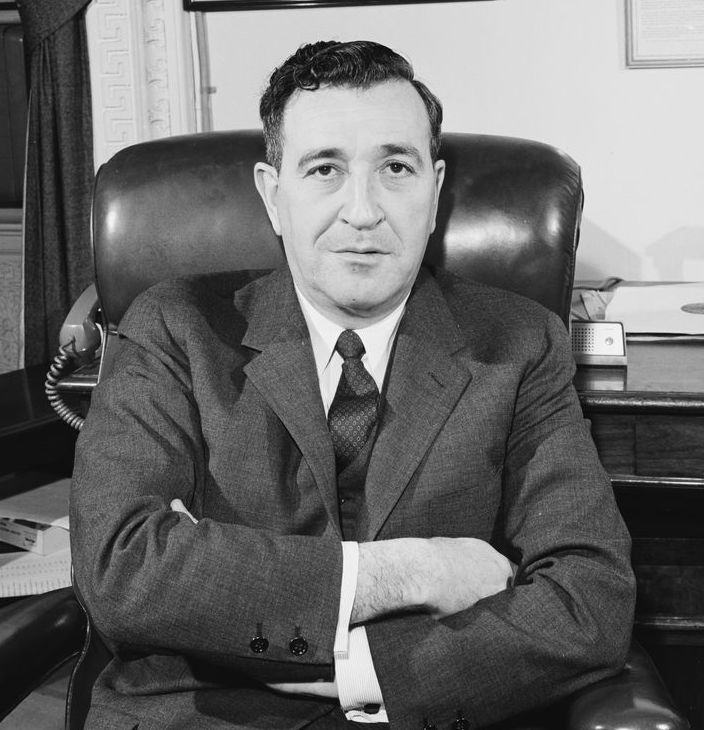
Jerome Bert Wiesner (May 30, 1915 – October 21, 1994) was a professor of electrical engineering, chosen by President John F. Kennedy as chairman of his Science Advisory Committee (PSAC). Educated at the University of Michigan, Wiesner was associate director of the university's radio broadcasting service and provided electronic and acoustical assistance to the National Music Camp at Interlochen, Michigan. During World War II, he worked on microwave radar development at the MIT Radiation Laboratory. He worked briefly after the war at the Los Alamos National Laboratory, then returned to MIT's Research Laboratory of Electronics from 1946 to 1961. After serving as Kennedy's science advisor, he returned to MIT, becoming its president from 1971 to 1980.
He was an outspoken critic of crewed exploration of outer space, believing instead in automated space probes. He challenged NASA's choice of developing the Apollo Lunar Module as a means to achieving Kennedy's goal of landing men on the Moon. At Kennedy's direction, he investigated Rachel Carson's criticism of the use of the pesticide DDT, and issued a report in support of her claims. He was an advocate for arms control, and a critic of anti-ballistic missile defense systems. While MIT president, he was put on President Richard M. Nixon's extended "enemies list".
Wiesner was born in Detroit, Michigan, the son of Jewish immigrants from Silesia and raised in Dearborn. He attended Fordson High School.
He received a Bachelor of Science (BS) degree in electrical engineering and mathematics in 1937, and a Master of Science (MS) degree in 1938, at the University of Michigan. He received a Doctor of Philosophy (PhD) in electrical engineering from UM in 1950. Interested in radio broadcasting and acoustics, he was associate director of UM's radio broadcasting service. He also participated in studies of acoustics, and assisted in developing electronic techniques, at the National Music Camp at Interlochen, Michigan.
In 1940, Wiesner married Laya Wainger, a fellow mathematics major he met at UM. The same year, he was appointed chief engineer for the Acoustical and Record Laboratory of the Library of Congress, in which capacity he traveled the American South and Southwest under a Carnegie Corporation grant with folklorist Alan Lomax, recording the folk music of these regions. In this role, he became friends with folk singer Pete Seeger, who performed at the concert for Wiesner's inauguration as President of MIT in 1971.
Wiesner began his professional career at the Massachusetts Institute of Technology, joining the MIT Radiation Laboratory in 1942 and working on microwave radar development. He became an associate member of the laboratory's steering committee, and led "Project Cadillac", which developed the forerunner of the AWAC system.
At the end of World War II, he worked briefly at the Los Alamos National Laboratory, then returned to MIT as a professor of electrical engineering, and worked from 1946 to 1961 at the Research Laboratory of Electronics at MIT (RLE), ultimately becoming the director. Between this time, he is known to have attended the Macy Conferences in 1952, and to have provided feedback alongside Walter Pitts during a presentation on homeostatic systems by Ross Ashby.
President John F. Kennedy named Wiesner to chair the President's Science Advisory Committee (PSAC) in February, 1961.
Jerome Wiesner
Jerome Bert Wiesner (May 30, 1915 – October 21, 1994) was a professor of electrical engineering, chosen by President John F. Kennedy as chairman of his Science Advisory Committee (PSAC). Educated at the University of Michigan, Wiesner was associate director of the university's radio broadcasting service and provided electronic and acoustical assistance to the National Music Camp at Interlochen, Michigan. During World War II, he worked on microwave radar development at the MIT Radiation Laboratory. He worked briefly after the war at the Los Alamos National Laboratory, then returned to MIT's Research Laboratory of Electronics from 1946 to 1961. After serving as Kennedy's science advisor, he returned to MIT, becoming its president from 1971 to 1980.
He was an outspoken critic of crewed exploration of outer space, believing instead in automated space probes. He challenged NASA's choice of developing the Apollo Lunar Module as a means to achieving Kennedy's goal of landing men on the Moon. At Kennedy's direction, he investigated Rachel Carson's criticism of the use of the pesticide DDT, and issued a report in support of her claims. He was an advocate for arms control, and a critic of anti-ballistic missile defense systems. While MIT president, he was put on President Richard M. Nixon's extended "enemies list".
Wiesner was born in Detroit, Michigan, the son of Jewish immigrants from Silesia and raised in Dearborn. He attended Fordson High School.
He received a Bachelor of Science (BS) degree in electrical engineering and mathematics in 1937, and a Master of Science (MS) degree in 1938, at the University of Michigan. He received a Doctor of Philosophy (PhD) in electrical engineering from UM in 1950. Interested in radio broadcasting and acoustics, he was associate director of UM's radio broadcasting service. He also participated in studies of acoustics, and assisted in developing electronic techniques, at the National Music Camp at Interlochen, Michigan.
In 1940, Wiesner married Laya Wainger, a fellow mathematics major he met at UM. The same year, he was appointed chief engineer for the Acoustical and Record Laboratory of the Library of Congress, in which capacity he traveled the American South and Southwest under a Carnegie Corporation grant with folklorist Alan Lomax, recording the folk music of these regions. In this role, he became friends with folk singer Pete Seeger, who performed at the concert for Wiesner's inauguration as President of MIT in 1971.
Wiesner began his professional career at the Massachusetts Institute of Technology, joining the MIT Radiation Laboratory in 1942 and working on microwave radar development. He became an associate member of the laboratory's steering committee, and led "Project Cadillac", which developed the forerunner of the AWAC system.
At the end of World War II, he worked briefly at the Los Alamos National Laboratory, then returned to MIT as a professor of electrical engineering, and worked from 1946 to 1961 at the Research Laboratory of Electronics at MIT (RLE), ultimately becoming the director. Between this time, he is known to have attended the Macy Conferences in 1952, and to have provided feedback alongside Walter Pitts during a presentation on homeostatic systems by Ross Ashby.
President John F. Kennedy named Wiesner to chair the President's Science Advisory Committee (PSAC) in February, 1961.
Recent media
Recent media