
Recent from talks
Jesse Elliott
Knowledge base stats:
Talk channels stats:
Members stats:
Jesse Elliott
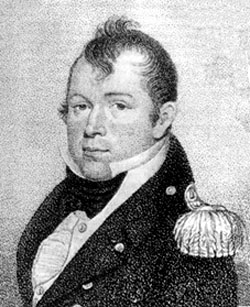
Jesse Duncan Elliott (14 July 1782 – 10 December 1845) was a United States naval officer and commander of American naval forces in Lake Erie during the War of 1812, especially noted for his controversial actions during the Battle of Lake Erie.
Elliott was born in Hagerstown, Maryland. His childhood home, the Elliot-Bester House, was listed on the National Register of Historic Places in 1975. He enlisted in the US Navy as a midshipman in April 1804 and saw action in the Mediterranean Sea during the Barbary Wars between 1805 and 1807, serving on board the USS Essex under Commodore James Barron. In June 1807, Elliott was on board USS Chesapeake when Commodore Barron was forced to allow a search of the ship by HMS Leopard.
Elliott won promotion to lieutenant in April 1810 and was assigned to Lake Erie to oversee construction of the US naval squadron on Lake Erie upon the outbreak of the War of 1812. On 8 October 1812, he and Army Captain Nathan Towson captured the British brigs HMS Caledonia and HMS Detroit, formerly the United States brig Adams, anchored near the British Fort Erie in the upper reaches of the Niagara River. Caledonia escaped to an American port with a load of furs and became the USS Caledonia. Detroit was swept down the Niagara River into range of the British guns. Elliott battled the shore emplacement until his ammunition ran out and then beached the ship on Squaw Island (today known as Unity Island) and fled to the American side of the river. British and American guns destroyed the beached ship. Elliott and Towson were later commended for this action by Congress. In February 1813, however, Elliott was replaced as commander of the Lake Erie squadron by Master Commandant Oliver H. Perry.
Transferred to Lake Ontario, Elliott served under Commodore Isaac Chauncey as captain on board the flagship the USS Madison, and took part in the Battle of York on 27 April 1813 and the Battle of Fort George on 27 May. He was promoted to master commandant in July and reassigned to the Lake Erie squadron, to serve as Commodore Perry's second-in-command. He felt Perry had insufficient combat experience, and was particularly critical of Perry's choice of Presque Isle for his shipyard.
During the Battle of Lake Erie against a British squadron under Captain Robert Barclay on 10 September, Elliott commanded the brig USS Niagara. Perry commanded the Niagara's sister-ship, USS Lawrence. In the center of the American line of battle, the Niagara was astern of the Caledonia which in turn was astern of the Lawrence. During the early stages of the battle, the Lawrence fought alone against several of the heaviest British ships while the Niagara was scarcely engaged. After the Lawrence was battered into a wreck, Perry took command of the Niagara while Elliott was dispatched by boat to urge the smaller American gunboats at the rear of the line of battle into closer action. The battle ended with the capture of Barclay's entire squadron.
Elliott won distinction for his actions and official praise from Perry, and was given command of the Lake Erie squadron the next month. There was nevertheless controversy over his actions during the battle. Some (including Perry) suspected that he had deliberately held Niagara out of the battle in the beginning, and they would feud over this point to the end of their lives.
On January 6, 1814, both Elliott and Perry were each honored with a Congressional Gold Medal, and the Thanks of Congress. (See 3 Stat. 141.) (Compare Congressional Gold Medal Honoring Jesse D. Elliott and Congressional Gold Medal Honoring Oliver Hazard Perry.) In addition to the medals, Elliott and Perry each received an equal share of the prize money ($7,140.00 apiece) gained from the captured British ships. In recognition of Perry's position as commodore of the squadron, Congress voted Perry an additional payment of $5,000.00, which became a source of consternation for Elliott. In 1818 Elliott was elected as an honorary member of the Maryland Society of the Cincinnati.
Even before the medals were presented, Elliott and Perry became embroiled in a thirty-year-long controversy over their respective conduct and fault in the battle, extending even beyond Perry's death in 1819. Perry claimed that Elliott had failed to offer timely support; Elliott decried lack of communication and signals on Perry's part. In August 1818 Perry drew up a list of charges against Elliott but was, apparently, dissuaded by the Secretary of the Navy against formally filing them.
Hub AI
Jesse Elliott AI simulator
(@Jesse Elliott_simulator)
Jesse Elliott
Jesse Duncan Elliott (14 July 1782 – 10 December 1845) was a United States naval officer and commander of American naval forces in Lake Erie during the War of 1812, especially noted for his controversial actions during the Battle of Lake Erie.
Elliott was born in Hagerstown, Maryland. His childhood home, the Elliot-Bester House, was listed on the National Register of Historic Places in 1975. He enlisted in the US Navy as a midshipman in April 1804 and saw action in the Mediterranean Sea during the Barbary Wars between 1805 and 1807, serving on board the USS Essex under Commodore James Barron. In June 1807, Elliott was on board USS Chesapeake when Commodore Barron was forced to allow a search of the ship by HMS Leopard.
Elliott won promotion to lieutenant in April 1810 and was assigned to Lake Erie to oversee construction of the US naval squadron on Lake Erie upon the outbreak of the War of 1812. On 8 October 1812, he and Army Captain Nathan Towson captured the British brigs HMS Caledonia and HMS Detroit, formerly the United States brig Adams, anchored near the British Fort Erie in the upper reaches of the Niagara River. Caledonia escaped to an American port with a load of furs and became the USS Caledonia. Detroit was swept down the Niagara River into range of the British guns. Elliott battled the shore emplacement until his ammunition ran out and then beached the ship on Squaw Island (today known as Unity Island) and fled to the American side of the river. British and American guns destroyed the beached ship. Elliott and Towson were later commended for this action by Congress. In February 1813, however, Elliott was replaced as commander of the Lake Erie squadron by Master Commandant Oliver H. Perry.
Transferred to Lake Ontario, Elliott served under Commodore Isaac Chauncey as captain on board the flagship the USS Madison, and took part in the Battle of York on 27 April 1813 and the Battle of Fort George on 27 May. He was promoted to master commandant in July and reassigned to the Lake Erie squadron, to serve as Commodore Perry's second-in-command. He felt Perry had insufficient combat experience, and was particularly critical of Perry's choice of Presque Isle for his shipyard.
During the Battle of Lake Erie against a British squadron under Captain Robert Barclay on 10 September, Elliott commanded the brig USS Niagara. Perry commanded the Niagara's sister-ship, USS Lawrence. In the center of the American line of battle, the Niagara was astern of the Caledonia which in turn was astern of the Lawrence. During the early stages of the battle, the Lawrence fought alone against several of the heaviest British ships while the Niagara was scarcely engaged. After the Lawrence was battered into a wreck, Perry took command of the Niagara while Elliott was dispatched by boat to urge the smaller American gunboats at the rear of the line of battle into closer action. The battle ended with the capture of Barclay's entire squadron.
Elliott won distinction for his actions and official praise from Perry, and was given command of the Lake Erie squadron the next month. There was nevertheless controversy over his actions during the battle. Some (including Perry) suspected that he had deliberately held Niagara out of the battle in the beginning, and they would feud over this point to the end of their lives.
On January 6, 1814, both Elliott and Perry were each honored with a Congressional Gold Medal, and the Thanks of Congress. (See 3 Stat. 141.) (Compare Congressional Gold Medal Honoring Jesse D. Elliott and Congressional Gold Medal Honoring Oliver Hazard Perry.) In addition to the medals, Elliott and Perry each received an equal share of the prize money ($7,140.00 apiece) gained from the captured British ships. In recognition of Perry's position as commodore of the squadron, Congress voted Perry an additional payment of $5,000.00, which became a source of consternation for Elliott. In 1818 Elliott was elected as an honorary member of the Maryland Society of the Cincinnati.
Even before the medals were presented, Elliott and Perry became embroiled in a thirty-year-long controversy over their respective conduct and fault in the battle, extending even beyond Perry's death in 1819. Perry claimed that Elliott had failed to offer timely support; Elliott decried lack of communication and signals on Perry's part. In August 1818 Perry drew up a list of charges against Elliott but was, apparently, dissuaded by the Secretary of the Navy against formally filing them.
Recent media