Hubbry Logo
Joe PytkaJoe PytkaMain
Open search
Joe Pytka
Community hub
Joe Pytka
logo
8 pages, 0 posts
0 subscribers
Be the first to start a discussion here.
Joe Pytka
Joe Pytka
from Wikipedia

Joe Pytka (born 1938)[1] is an American film, television, commercial and music video director born in Pittsburgh, Pennsylvania.[2][3] He holds the record for the most nominations for the Directors Guild of America Award for Outstanding Directing – Commercials.[4] He directed Space Jam (1996).

Key Information

Early life

[edit]

Pytka studied fine arts at the Carnegie Museum of Art, Carnegie Tech (now Carnegie Mellon), and chemical engineering at the University of Pittsburgh. He began his film career at WRS Motion Pictures while still in college. He moved to New York as a post-production supervisor at MGM Telestudios but returned to Pittsburgh to make documentaries at WQED, a flagship production center of the then National Educational Television Network, now PBS.[5] His work there for NET Playhouse garnered many awards and the film A View of the Sky was the official United States Government film at the Expo '67 World's Fair in Montreal.[citation needed]

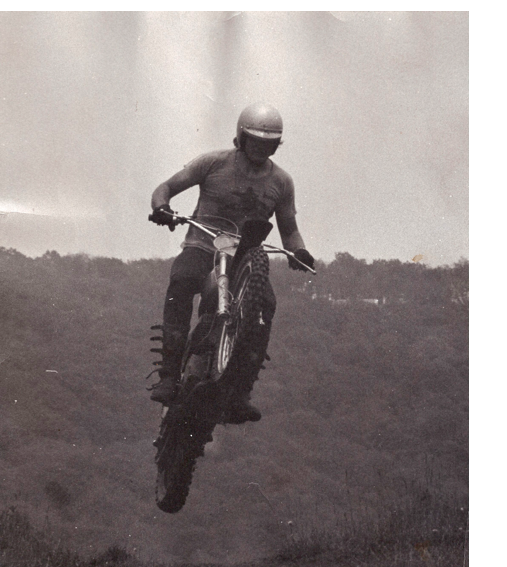
He left to form his own production company with Rift Fournier and produced and directed many short films, documentaries and commercials. As a part of his documentary Maggie's Farm, Richie Havens and Bob Dylan allowed him to use their music. It was a precursor to the current music video form. Through motorcycle racing, he met Steve McQueen, and they began to collaborate on a documentary on off-road desert racing. The project never came about but Pytka finished the short film High Flying Bird, featuring McQueen driving an off-road desert vehicle, again, to Richie Havens' music.[6]

Through his love of jazz, Pytka began to use the music in much of his work, using Gary McFarland, Don Elliot, and Chico Hamilton during this period.[citation needed]

Professional life

[edit]

Pytka adapted the documentary form into his work in commercials and eventually moved to New York, then to Los Angeles. To date he has directed many commercials,[7] several films, documentaries and music videos. He has been acclaimed for his work with celebrities and athletes ranging from Michael Jackson to Michael Jordan, doing extensive work with each.[citation needed] He's done many of Tiger Woods' commercials, including the acclaimed I Am Tiger Woods.[8]

In 1987 a series of 15 and 30 second spots directed for Michelob by Pytka drew praise from the American film director Stanley Kubrick. Kubrick followed American football on VHS cassettes mailed from the United States. Commercial breaks had been left intact at Kubrick's request. The director was struck by Pytka's work and later recalled in an interview with Rolling Stone that,

Last year Michelob did a series, just impressions of people having a good time [...] And the editing, the photography, was some of the most brilliant work I've ever seen. Forget what they're doing—selling beer—and it's visual poetry. Incredible eight-frame cuts. And you realize that in thirty seconds they've created an impression of something rather complex. If you could ever tell a story, something with some content, using that kind of visual poetry, you could handle vastly more complex and subtle material.[9]

The spots were edited by Lawrence Bridges.

Pytka has over fifty pieces of his work in the permanent collection of New York's Museum of Modern Art.[citation needed]

Pytka has directed over eighty Super Bowl commercials and won the USA Today Super Bowl Ad Meter Poll seven times.[citation needed] His commercial for Pepsi, Security Camera, was chosen as the best ever in the history of the poll.[citation needed] Another commercial for Nike, Hare Jordan, was developed into the hit film Space Jam which Joe directed.[10]

Notable music videos

[edit]
  • 1987: Music video for "The Way You Make Me Feel", almost 7 minutes long. The music video was released on October 31, 1987, and received one nomination at the 1988 MTV Video Music Awards Ceremony. The video, alongside Jackson's '"Bad" video, was nominated for Best Choreography, but lost to Jackson's younger sister Janet's video "The Pleasure Principle".[11]
  • 1989: A five-minute music video for the song "Dirty Diana" by Michael Jackson. This music video won the "Viewers Choice No. 1 Video" at the 2nd World Music Awards held on April 14, 1989.[12]
  • 1991: "Heal the World" from Michael Jackson.[13]
  • 1995: "Free as a Bird" was produced by Vincent Joliet and directed by Joe Pytka and depicts, from the point of view of a bird in flight, many references to Beatles songs. The video won the Grammy Award for Best Short Form Music Video in 1997.[14]
  • 2000: "(Just Like) Starting Over" from John Lennon.

Noteworthy commercials

[edit]

Feature films

[edit]

Awards

[edit]

References

[edit]
[edit]
Revisions and contributorsEdit on WikipediaRead on Wikipedia
from Grokipedia
Joe Pytka is an American film, television, and commercial director, best known for directing over 5,000 advertisements for major brands including , , , and Nike, as well as feature films like (1996) and music videos for artists such as and . Born November 4, 1938, in , , Pytka initially aspired to become a painter and participated in a gifted youth program at the , before attending the in 1958 as an engineering major and later studying fine arts at . His early career began at a local affiliate in , where he assisted on documentaries, including the 1967 film A View of the Sky, before transitioning to commercial production with WRS Motion Pictures. Pytka founded his production company, Pytka, in Venice, California, in 1984, and went on to direct over 80 Super Bowl commercials—more than any other director—including seven Budweiser Clydesdales spots that topped the USA Today Ad Meter. Among his most iconic commercials are Pepsi's "Make a Wish" (1989) featuring Madonna, Nike's "Bo Knows" with Bo Jackson and "Hare Jordan" with Michael Jordan, and the anti-drug PSA "This Is Your Brain on Drugs" (1987). In music videos, he helmed Michael Jackson's "Dirty Diana," "The Way You Make Me Feel," and "Heal the World," John Lennon's "Starting Over," and The Beatles' "Free as a Bird" (1995). His feature film directing credits include the comedy Let It Ride (1989) starring Richard Dreyfuss and the Warner Bros. hybrid live-action/animation Space Jam (1996) with Michael Jordan and Bugs Bunny. Pytka has earned three Directors Guild of America (DGA) Awards for Outstanding Directorial Achievement in Commercials (in 1983, 1987, and 1992), along with 15 DGA nominations—the most in that category—as well as two Grand Prix and seven Palme d'Or awards at the Cannes Lions International Festival of Creativity, a Clio Lifetime Achievement Award (2011), an Emmy, and a Grammy. In recent years, as of 2022, he has shifted focus toward documentaries and additional feature films while reflecting on his extensive legacy in advertising.

Early life

Upbringing in Pittsburgh

Joe Pytka was born on November 4, 1938, in , . As the son of a machinist, he grew up in a working-class family in Braddock, a suburb of heavily tied to the steel industry. Pytka's early years unfolded amid the economic hardships of the steel-making region during the mid-20th century, a period marked by labor-intensive jobs and community resilience that instilled in him a robust . This industrial environment, characterized by the hum of factories and the grit of blue-collar life, provided the backdrop for his formative experiences in . At the age of eight, Pytka began studying art as part of a gifted youth program at the in , sparking his initial aspiration to become an artist. This early immersion in , amid the creative undercurrents of his surroundings, cultivated a deep affinity for creativity and imagery that would influence his later pursuits.

Education and initial interests

Following his parents' encouragement for a practical career, Pytka initially enrolled in 1958 in the program at the , a path he later described as disastrous and one he soon abandoned. He never completed a degree there, instead shifting his focus to his true passion for by transferring to the fine arts program at the Carnegie Institute of Technology (now ). At Carnegie Mellon, Pytka's coursework in fine arts deepened his engagement with visual expression, where art classes and continued exposure to museum collections inspired his initial experiments with visual media, such as painting and conceptual explorations of form and movement. This period marked a definitive pivot from engineering aspirations to an artistic orientation, laying the groundwork for his future creative pursuits in film and advertising.

Career beginnings

Entry into film industry

While studying fine arts at Carnegie Mellon University, Joe Pytka began his professional entry into the film industry through employment at WRS Motion Picture and Video Lab in Pittsburgh during the 1960s. There, he handled early technical roles in film processing and production support, gaining hands-on experience in motion picture workflows while still in college. Pytka expanded his involvement in local television productions, including shooting shows for Pittsburgh's WQED public broadcasting station, a key PBS affiliate. This work transitioned him into documentary filmmaking, where he took on roles as a director and for educational and social-issue projects, such as environmental documentaries narrated by prominent figures. In the late , after a brief venture into production that folded due to financial issues, Pytka began bouncing between and New York to build his commercial reel and network. He continued developing his career in into the early , building toward broader opportunities in commercial and motion picture production, establishing the foundation for his directing career.

Early directing projects

Pytka's directing career began in the mid-1960s at WQED, Pittsburgh's public television station, where he produced documentaries that honed his filmmaking skills. Among his initial projects was Steeltown Blues (late 1960s), a documentary examining industrial life and economic challenges in his native . This work showcased his ability to capture authentic narratives through on-location shooting and visual composition, drawing from his background in art and engineering. In the late , Pytka directed , a non-commercial documentary that integrated performances by and , experimenting with rhythmic editing and performer close-ups that anticipated techniques. He also helmed an environmental documentary on for WQED (late ), narrated by , which used stark imagery to highlight urban industrial impacts. These efforts emphasized concise storytelling within limited formats, establishing Pytka's preference for dynamic camera movement and emotional resonance over static exposition. A notable milestone came in 1967 when Pytka directed A View of the Sky, a selected as the official U.S. entry for the World's Fair Expo, blending experimental visuals with thematic exploration of human aspiration. By the early 1970s, after co-founding Pytka Productions with his brother John in , he expanded into industrial films and public service-oriented videos, producing content for local industries and non-profits that further refined his approach to short-form narrative efficiency. This phase solidified his signature style—characterized by fluid motion, vivid cinematography, and layered storytelling—laying the groundwork for his later commercial transitions without relying on high-budget resources.

Advertising career

Notable commercials

Joe Pytka has directed over 5,000 television commercials throughout his career, establishing himself as one of the most prolific and influential directors in advertising history. His work often blended innovative visual techniques with compelling narratives, contributing to landmark campaigns for major brands that shaped consumer culture in the and . Pytka's collaborations with in the exemplified his pioneering use of science-fiction aesthetics to elevate brand storytelling. The 1985 "Archaeology" spot depicted future archaeologists unearthing a bottle amid ancient ruins, puzzling over its cultural significance in a dystopian world, which highlighted the product's enduring appeal through a clever, futuristic lens. Similarly, the 1996 "Security Camera" commercial captured a deliveryman covertly purchasing a , only to be exposed by store surveillance footage set to 's "," a humorous jab that underscored consumer preference and became one of the most acclaimed ads of its era. These campaigns demonstrated Pytka's ability to infuse everyday products with cinematic flair, influencing subsequent trends toward narrative-driven, genre-bending formats. In 1990, Pytka directed Nike's iconic campaign featuring athlete , which playfully portrayed Jackson excelling in multiple sports—from baseball and football to unlikely pursuits like guitar—culminating in Bo Diddley's line, "Bo, you don't know Diddley." The series, produced by , leveraged Jackson's dual-sport prowess to embody Nike's ethos of versatility and athletic supremacy, spawning multiple spots that resonated widely and solidified the campaign's status as a cultural touchstone. Pytka's work for , beginning in the 1980s, centered on the beloved Clydesdales horses in holiday-themed advertisements that evoked Americana and emotional warmth. These spots, often featuring the majestic horses pulling wagons through snowy landscapes or forming bonds with trainers and animals, emphasized themes of tradition and heartfelt connection, becoming annual staples that enhanced the brand's wholesome image. His direction brought a sense of grandeur and sincerity to the equine narratives, distinguishing them through meticulous animal handling and scenic . For Hallmark, Pytka's 1991 "Dance Cards" commercial portrayed a group of awkward teenage boys brainstorming ways to invite girls to a school dance, ultimately opting for heartfelt greeting cards to express their feelings. This spot, created by , won the Award for Outstanding Directorial Achievement in Commercials, praised for its authentic portrayal of youthful vulnerability and the emotional power of simple gestures. Through such campaigns, Pytka consistently prioritized relatable human stories, amplifying brand messages with subtlety and impact.

Super Bowl advertisements

Joe Pytka has directed more than 80 commercials spanning several decades, establishing himself as one of the most prolific directors in the event's advertising history. His work for brands like and has become synonymous with the high-stakes spectacle of broadcasts, where ads compete for viewer attention amid the game's excitement. Pytka's contributions emphasize cinematic and emotional resonance, adapting commercial formats to the unique pressure of the Super Bowl's massive audience. Pytka achieved seven victories in USA Today's Super Bowl Ad Meter Poll, the industry's benchmark for viewer preference, with notable peaks during the and 2000s. Among these, he directed the 1992 Nike "Hare Jordan" spot featuring and , the 1993 "Michael and Larry" basketball challenge, the 1999 "Separated at Birth" Clydesdales narrative, the 2008 "Dalmatian Trains Clydesdale," and the 2013 "Brotherhood" reunion story, each topping the poll for their humor, heart, and visual flair. These wins highlight his ability to craft ads that not only entertain but also drive cultural conversations around the brands. His iconic Super Bowl spots include the enduring Budweiser Clydesdales series, which debuted in the 1980s and evolved into heartfelt tales of tradition and camaraderie, such as the 2009 "Clydesdale Stick" and 2010 "American Dream" ads that captured American values during the game. For Pepsi, Pytka helmed high-energy game-day ads like the 1992 Cindy Crawford spot, blending celebrity allure with product integration to energize viewers, and the 1996 "Security Camera" prank that topped early Ad Meter rankings. Pytka introduced innovations like the first five-second TV spots, compressing narrative impact into brief bursts suitable for fast-paced event programming, which influenced broader trends in and live-event by prioritizing quick emotional hooks over extended exposition. His techniques, including dynamic and celebrity-driven humor, set standards for how leverage the 's platform to shape strategies for major events worldwide.

Other works

Music videos

Joe Pytka's foray into music videos marked a significant extension of his commercial directing expertise, where his signature dynamic visuals and narrative flair translated effectively to the landscape of the and 1990s. One of his earliest and most iconic contributions was directing Michael Jackson's "The Way You Make Me Feel" in 1987, a high-energy production filmed in an urban setting that emphasized Jackson's charismatic performance and intricate choreography by , capturing the song's playful pursuit theme through vibrant street scenes and flirtatious interactions. Pytka continued his collaboration with Jackson on subsequent videos, including "Dirty Diana" (1988) and "Heal the World" (1992), which showcased his ability to blend with emotional depth, often drawing from his background to create visually compelling, performance-driven pieces that highlighted the artist's global appeal. His work extended to other artists, such as Lionel Richie's "All Night Long (All Night)" in 1983, a festive, narrative-focused video that infused the track's celebratory vibe with lively ensemble scenes and rhythmic energy, exemplifying Pytka's approach to pop visuals. He also directed a 2000 music video for John Lennon's "(Just Like) Starting Over", using archival photographs in a scrapbook format to chronicle Lennon's life, including his time with . A pinnacle of Pytka's music video career came in 1995 with The Beatles' "Free as a Bird," the band's first new single in over two decades, where he innovatively incorporated archival footage of , , , and to weave a nostalgic, bird's-eye journey through their history, blending unseen clips with new animations to evoke the group's enduring legacy. This landmark production, produced by Vincent Joliet, earned a Grammy Award for Best Short Form in 1997 and was nominated for an MTV Video Music Award for Best in 1996, underscoring Pytka's pioneering use of visual effects in music .

Feature films

Joe Pytka's transition to feature films drew on his advertising expertise, emphasizing dynamic visuals, humor, and concise storytelling to engage audiences in longer narratives. His two directorial efforts in this medium highlighted his versatility, though they represented a departure from his primary focus on commercials. In 1989, Pytka made his narrative feature debut with Let It Ride, a comedy starring as Jay Trotter, a down-on-his-luck cab driver and habitual gambler who embarks on a miraculously winning streak at the racetrack in . Adapted from Jay Cronley's novel Good Vibes, the film captures Trotter's escalating bets and moral dilemmas amid a colorful ensemble of track denizens, blending with character-driven . Produced on an $18 million budget by , it opened to $1.9 million but ultimately grossed just $4.97 million domestically, qualifying as a disappointment. Critical reception was mixed, with praise for Dreyfuss's energetic performance and Pytka's lively direction evoking the chaotic thrill of , though some noted uneven pacing and abrupt editing. Pytka's second and most prominent feature, Space Jam (1996), was a groundbreaking live-action/animated hybrid produced by Warner Bros. and Ivan Reitman, in which basketball legend Michael Jordan teams with the Looney Tunes characters to defeat diminutive aliens in a high-stakes basketball game after being kidnapped to save the Tune World. Drawing from Pytka's prior Nike commercial "Hare Jordan" featuring Jordan and Bugs Bunny, the project integrated his music video experience—such as directing Michael Jackson's "The Way You Make Me Feel" and "Dirty Diana"—to handle celebrity performances and visual effects seamlessly. Production spanned over two years and encountered significant challenges, including technical hurdles in blending live-action with traditional 2D animation by Warner Bros. Feature Animation, as well as navigating conflicting agendas among the studio, NBA, and Jordan's representatives, which frustrated Pytka's vision for edgier humor. With a $80 million budget, the film opened to $27.5 million and grossed $90.4 million domestically and $250.1 million worldwide, ranking as the highest-grossing basketball movie at the time and a top-10 earner of 1996. It received mixed reviews from critics, who debated its whimsical premise and uneven tone but lauded its innovative fusion of sports and animation; its cultural impact endures through massive merchandising, soundtrack sales exceeding 6 million copies, and its embodiment of 1990s nostalgia blending hip-hop, celebrity, and cartoons. Following the success of , Pytka returned to directing commercials, citing the greater creative autonomy and lucrative nature of advertising—where his Venice, California-based company generated $30–35 million annually as of —as reasons for not pursuing additional features, despite initial development on other projects. This shift allowed him to maintain his signature fast-paced style in shorter formats without the bureaucratic constraints of Hollywood studio productions.

Awards and recognition

Directors Guild awards

Joe Pytka holds the record for the most nominations in the (DGA) Award for Outstanding Directing – Commercials, with 15 nominations spanning from the 1980s through the 2000s. These nominations reflect his consistent recognition for directing high-impact advertisements that blended innovative storytelling, humor, and visual flair to elevate brand messaging. Pytka's frequent nods often highlighted his pioneering techniques, such as integrating celebrity endorsements with surreal or athletic narratives, which set new standards in commercial production. Pytka secured three DGA wins for Outstanding Directing – Commercials, in 1983, 1987, and 1992. His 1983 victory came for directing Bud Light spots including "Boxer," "Pairs," and "," which showcased dynamic, character-driven humor in beer advertising. In 1987, he won for Pepsi's "Floats," alongside Financial's "Brothers" and "Chuck Wagon," demonstrating his ability to infuse everyday products with whimsical, relatable energy. The 1992 award recognized his work on Nike's "Hare Jordan," featuring and in a basketball-meets-cartoon fantasy, as well as ' "Old Friend," which captured emotional depth in promotion. These wins exemplified Pytka's innovative approach to merging sports icons with imaginative visuals, as seen briefly in his Nike "" campaign. Early in his career, Pytka achieved a milestone by directing the commercial "Chimps" in 1996, which earned the first Primetime Emmy Award for Outstanding Commercial in 1997, recognizing his direction of chimpanzees reenacting famous movie scenes with satirical precision. This Emmy underscored his boundary-pushing techniques in commercial direction, aligning with the creative risks that fueled his DGA nominations.

Lifetime achievements

Joe Pytka's directing career, which began in the , has spanned over five decades, encompassing more than 5,000 commercials, music videos, documentaries, and feature films. In recognition of his pioneering contributions to commercial directing, he received the (DGA) Lifetime Achievement Award for Distinguished Achievement in Television Direction in 2015, honoring his trailblazing work that elevated the art form within the industry. Pytka was inducted into the One Club for Creativity's Hall of Fame in 2012 for his enduring impact on advertising creativity, followed by induction into the American Advertising Federation's Advertising Hall of Fame in 2014, celebrating his role in shaping brand storytelling for global icons like and Nike. Pytka has also received two Grand Prix and seven Palme d'Or awards at the Cannes Lions International Festival of Creativity, a Clio Lifetime Achievement Award in 2011, a Primetime Emmy for the HBO "Chimps" commercial (1997), and a Grammy Award for directing The Beatles' "Free as a Bird" music video (1995). In recent reflections, Pytka has emphasized television advertising's profound societal influence, arguing it should prioritize authentic emotional connections over superficial gimmicks to foster meaningful cultural dialogue. As of 2022, at age 83, he critiqued the overhype surrounding Super Bowl ads, insisting that true impact comes from universal storytelling rather than celebrity excess or materialism, underscoring advertising's potential to reflect and shape societal values. Holding a record 15 DGA nominations for commercials, Pytka's legacy endures as a benchmark for directors blending commercial viability with artistic innovation.

References

Add your contribution
Related Hubs
User Avatar
No comments yet.