Hubbry Logo
Joe SenecaJoe SenecaMain
Open search
Joe Seneca
Community hub
Joe Seneca
logo
8 pages, 0 posts
0 subscribers
Be the first to start a discussion here.
Joe Seneca
Joe Seneca
from Wikipedia

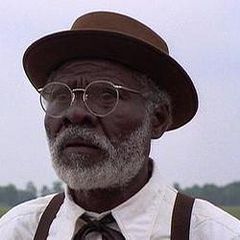
Joe Seneca (January 14, 1919 – August 15, 1996)[1] was an American actor, singer, and songwriter. He is known for his roles as Willie Brown in Crossroads (1986), Dr. Meadows in The Blob (1988), and Dr. Hanes in The Cosby Show, among others.

Key Information

Life and career

[edit]

Seneca was born Joel McGhee Jr. in Cleveland, Ohio.

Music

Before his acting career, he belonged to the R&B singing group The Three Riffs, which was active from the late 1940s to the mid 1970s, and performed at upscale supper clubs in New York City.[2]

He was also a songwriter and had big hits with "Talk to Me", sung by Little Willie John, and "Break It to Me Gently," which was a smash hit by Brenda Lee in 1962 and by Juice Newton in 1982.

Theatre

In the early 1970s, Seneca transitioned into acting, beginning in regional theatre at the Eugene O'Neill National Playwrights Conference in Waterford, Connecticut.[3] He debuted on Broadway in Of Mice and Men with James Earl Jones (1974). In 1981, he performed in The Little Foxes with Elizabeth Taylor.[4] In 1982, he had a role in Rhinestone, an off-Broadway musical.[3] Seneca could play piano, but in the 1984 Broadway production of August Wilson's play, Ma Rainey's Black Bottom, he was asked to portray the old blues trombonist, Cutler. He learned the trombone specifically for the part.[3]

Film

Seneca's theatrical film career includes The Verdict (1982), in which he played Dr. Thompson, a small-town women's hospital physician brought in by attorney Frank Galvin (Paul Newman) to support his belief that two famous doctors' incompetence left his client alive but in a coma. Arguably his most well-known role is blues-man Willie Brown in Crossroads (1986). He also played Dr. Meddows in The Blob (1988), the evil head of a government team who created, and was sent to contain, the title creature.[5] That same year, Seneca appeared in Spike Lee's School Daze as Mission College President McPherson.[4]

Television

On television he appeared in more than twenty series, including The Cosby Show as Hillman President, Dr. Zachariah J. Hanes. He also played Alvin Newcastle, a man suffering from Alzheimer's disease, on The Golden Girls in the 1987 episode "Old Friends".[6] That same year, He appeared in Michael Jackson's music video "The Way You Make Me Feel." On The Equalizer he played Fossil Williams, a mission worker looking after the spiritual and physical well-being of the down-and-out homeless of Skid row in The Bowery neighborhood of New York City in the episode, "17 Zebra". He played Eddie Haynes on Matlock in the "The Blues Singer" (1989). Seneca played "Blind Otis Lemon" (based on Muddy Waters[7]), a homeless blues legend who gets one last chance to sing and play in a club the night before an operation that may leave him deaf in the Doogie Howser, M.D. episode "Doogie Sings the Blues" (1990). He later played murder witness Lionel Jackson in the Law & Order episode "Profile" (1993).[8]

He also appeared in several television films, including Wilma (1977), The House of Dies Drear (1984), A Gathering of Old Men (1987), and The Vernon Johns Story (1994). Seneca's final screen role was portraying Whitechaple in the British television film The Longest Memory (1997) which he completed just two weeks prior to his death.[4]

Death

[edit]

He died at his home on Roosevelt Island, New York City from coronary arrest after an asthma attack August 15, 1996, at the age of 77. He was married to his wife, Betty Seneca, until his death.[3][4][9]

Filmography

[edit]

Film

[edit]
Joe Seneca film credits
Year Title Role Notes
1974 The Taking of Pelham One Two Three Police Sergeant
1979 The Fish That Saved Pittsburgh Mr. Sweets
1979 Kramer vs. Kramer Partygoer #6
1982 The Verdict Dr. Thompson
1984 The Evil That Men Do Santiago
1985 Heart of the Garden Unknown
1985 Silverado Ezra
1986 Crossroads Willie Brown
1987 Big Shots Ferryman
1987 Moments Without Proper Names Directed by Gordon Parks[10]
1988 School Daze President McPherson
1988 The Blob Dr. Meddows
1990 Mo' Better Blues Big Stop's Friend
1991 Mississippi Masala Williben Williams
1992 Malcolm X Toomer
1993 The Saint of Fort Washington Spits
1996 A Time to Kill Reverend Isaiah Street

Television

[edit]
Joe Seneca film credits
Year Title Role Notes Ref.
1977 Wilma Ed Rudolph Television film [4]
1984 The House of Dies Drear Pluto Television film [4]
1987 A Gathering of Old Men Clatoo Television film [4]
1987 The Cosby Show Dr. Zachariah J. Hanes Episode: "Hillman" (S3.E23)
1987 The Golden Girls Alvin Newcastle Episode: "Old Friends" (S3.E1)
1988 227 Wailing Eddie Tompkins Episode: "Blues"
1988 Another Page Mr. John 15 episodes
1989 The Equalizer Fossil Williams Episode: "17 Zebra"
1989 Matlock Eddie Hayns Episode: "The Blues Singer" (S3.E19)
1989 In the Heat of the Night Rev. John Carter Episode: "Anniversary"
1990 China Beach Ernie Episode: "Skylark" (S3.E18) [3]
1990 Doogie Howser, M.D. Blind Otis Lemon Episode: "Doogie Sings the Blues"
1993 Law & Order Lionel Jackson Episode: "Profile" (S4.E4) [8]
1994 The Vernon Johns Story Deacon Wilkes Television film [4]
1997 The Longest Memory Whitechapel Television film (final screen role) [4]

References

[edit]
[edit]
Revisions and contributorsEdit on WikipediaRead on Wikipedia
from Grokipedia
Joe Seneca (January 14, 1919 – August 15, 1996) was an American singer, songwriter, and character actor celebrated for his multifaceted career in music, theater, film, and television. Born in , , he initially gained prominence as a singer with the vocal group the Three Riffs and later as a songwriter, co-authoring hits including (with Diane Lampert; recorded by ) and "Talk to Me" (a success for ). Seneca transitioned to acting in the 1970s. He achieved critical recognition for portraying the trombonist Cutler in August Wilson's Pulitzer Prize-winning play Ma Rainey's Black Bottom on Broadway in 1984. In film, Seneca delivered memorable performances as the police sergeant in The Taking of Pelham One Two Three (1974) and the veteran blues musician Willie Brown in Crossroads (1986). His television appearances spanned decades, including episodes of (as Alvin Newcastle), , and . Seneca died of a coronary following an asthma attack at his home on in at the age of 77.

Early life

Birth and family background

Joe Seneca was born Joel McGhee Jr. on January 14, 1919, in , . His original family surname was McGhee, reflecting his African American heritage in the city's growing Black community during the early 20th century. Limited details are known about his parents' occupations or backgrounds, but Seneca and his sister were raised by an aunt in following their early years. This familial arrangement provided a stable yet modest environment amid the challenges of the Great Migration era, where many Black families in navigated economic hardships and cultural transitions. The early family setting exposed Seneca to music from a young age, as he grew up immersed in blues sounds while developing a personal affinity for jazz and soulful ballads. This auditory backdrop, influenced by relatives like his uncle Jimmy—a boisterous yet affectionate figure—fostered his nascent passion for performance and entertainment, setting the foundation for his later artistic pursuits. He later adopted the stage name Joe Seneca during his music career.

Upbringing and early influences

Joe Seneca grew up in , , during the 1920s and 1930s, a period marked by the Great Migration and the challenges of the for African American families. Seneca and his sister were raised by an aunt in the city. Cleveland's African American population had swelled to about 72,000 by 1930, concentrated in the Central Avenue area, where economic hardships were acute, exacerbating poverty and limited opportunities for many families like Seneca's. Seneca's formal education took place in Cleveland's public schools, culminating in his graduation from Central High School in 1937, though no records indicate pursuit of higher education amid the era's job . During his high school years in the mid-1930s, he joined the school's , where he sang in a trio alongside classmates Eddie Parton and John Rose, gaining initial experience in group performances. These school activities laid the groundwork for Seneca's interest in singing, further nurtured by Cleveland's vibrant African American community events and local music scenes in the 1930s. He participated in amateur talent shows, such as the Diplomat’s Gala Amateur Show in May 1936, where his rendition of "Tormented" earned third prize, highlighting emerging public performance skills. As president of the Continental Social Club, a youth organization, Seneca engaged in social gatherings that often featured music, while exposure to radio broadcasts on stations like WHK introduced him to broader R&B and jazz influences prevalent in the city's Black neighborhoods during this time. Such community-driven outlets, amid the cultural richness of Central Avenue's emerging music hubs, sparked his passion for vocal performance before his professional endeavors.

Music career

The Three Riffs

The Three Riffs formed in the late 1930s in , , emerging from the at Central High School, where Joel McGhee (later known as Joe Seneca) was a founding member alongside Eddie Parton and John Rose. By January 1938, the group had solidified as a trio, with Howard Greene soon joining as a , marking their transition from school-based performances to professional aspirations in harmony singing. McGhee, performing under his birth name initially, contributed lead vocals and helped shape the group's distinctive style that blended tight vocal harmonies with comedic elements and dance routines, often imitating popular acts like . Following , The Three Riffs relocated to , where they gained prominence on the and nightclub circuits, performing at upscale venues such as the Famous Door, , Le Ruban Bleu, and the renowned . Their post-war shows in the late featured energetic live sets that combined , satirical skits, and caricatures of contemporary pop stars, captivating audiences in the vibrant nightlife scene. A highlight was their 1947 appearance alongside , showcasing their melodic yet unconventional harmonies in numbers like "I May Be Wrong" and "Boogie Woogie Piggly," which emphasized their rhythmic flair and stage presence. The group also secured recording deals, issuing singles on labels including in 1944 and Atlantic in 1948-1949, though their live performances remained the core of their appeal during this era. Group dynamics were marked by collaborative energy but eventual strains, as personnel changes occurred around 1947 when Greene departed and was replaced by Eugene "Bunny" Walker on bass. The Three Riffs continued touring and recording sporadically into the early , with a final Apollo single in 1950, before disbanding in late 1957 amid professional setbacks, including missed engagements in attributed to internal issues. During this period, McGhee adopted the stage name Joe Seneca, reflecting his evolving role within the ensemble.

Songwriting and solo performances

Following his time with The Three Riffs, Joe Seneca shifted focus to songwriting in the late , drawing on his vocal experience to craft R&B material that achieved commercial success. His breakthrough came with "Talk to Me," a soulful he wrote and which became a signature hit for upon its release in 1958, peaking at number 5 on the R&B chart and number 20 on the pop chart. The song's emotional plea for communication resonated widely, leading to covers by artists including Sunny & the Sunliners, whose 1963 version reached number 11 on the Hot 100. Seneca's songwriting prowess continued with "Break It to Me Gently," co-written with Diane Lampert, which provided with one of her biggest hits in 1962, climbing to number 4 on the Billboard Hot 100. The track's gentle handling of heartbreak themes contributed to its enduring appeal, resulting in notable later covers such as Juice Newton's 1982 rendition that hit number 11 on the Hot 100. His compositions were also recorded by prominent figures like , , , , Jack Jones, and , underscoring his influence in R&B and pop during the and . In parallel with his compositional work, Seneca pursued solo recording opportunities, releasing the upbeat R&B single "Overnight Success" backed with "Rick-A-Chick" on Everest Records in 1959. The A-side, a lively track about sudden fame, garnered regional airplay and appeared in "On the Way Up" sections of charts like WHIL in , marking a modest but direct extension of his performing into solo territory. This release highlighted his versatility as a vocalist and songwriter, though it did not achieve national chart success comparable to his penned hits.

Acting career

Transition to theater

After decades in the music industry as a , and performer with groups like The Three Riffs, Joe Seneca transitioned to around the age of 50 in the late 1960s, driven by a desire to pursue new creative opportunities as songwriting opportunities diminished. His background in song-and-dance performances equipped him with essential stage skills that facilitated this shift. In the early , Seneca made his acting debut in regional theater at the National Playwrights Conference in , where he participated in developmental workshops and staged readings of new plays. This opportunity marked his entry into the professional theater world, leading to early appearances in and regional productions that allowed him to build experience away from major commercial stages.

Notable stage roles

Joe Seneca made his Broadway debut in the 1974 revival of John Steinbeck's Of Mice and Men, directed by Robert Lewis, where he portrayed Crooks, the stable hand, opposite James Earl Jones as Lennie. His performance contributed to the production's short run of 61 performances, marking an early showcase of his ability to embody complex supporting characters in classic American drama. In 1981, Seneca appeared in the Broadway revival of Lillian Hellman's The Little Foxes at the Martin Beck Theatre, playing the role of Cal, the family , in a cast led by as Regina Giddens. The production, which ran for 137 performances, highlighted his skill in understated ensemble work within a high-profile revival of theater. Seneca's most acclaimed stage role came in 1984 as Cutler, the trombonist in Ma Rainey's band, in the original Broadway production of August Wilson's Ma Rainey's Black Bottom at the Cort Theatre, directed by Lloyd Richards. The play, which ran for 276 performances and earned the New York Drama Critics' Circle Award for Best Play, drew widespread praise for its ensemble, with critics noting the "beauty and poignance" of the monologues delivered by Seneca, Robert Judd, and Leonard Jackson as the band members. Seneca's portrayal, informed by his own background as a musician with The Three Riffs, brought authenticity to Cutler's world-weary demeanor and musical interludes, enhancing the production's exploration of racial tensions in 1920s Chicago. Through his role in Ma Rainey's Black Bottom, Seneca became a key figure in the burgeoning Black theater movement of the , collaborating with Wilson and Richards to bring African American experiences to mainstream Broadway audiences for the first time in Wilson's career. His work in this production, later honored by a dedication in the 2003 revival, underscored his contributions to amplifying Black voices in American drama.

Film and television

Film roles

Joe Seneca began his film career in the 1970s, with early roles including the police sergeant in The Taking of Pelham One Two Three (1974) and a supporting part in The Wiz (1978). He went on to portray nuanced supporting characters, often embodying wise elders, mentors, and authority figures in over 20 feature films spanning the 1980s and 1990s. His roles frequently highlighted themes of racial justice, community resilience, and personal dignity, contributing to the depth of ensemble casts in socially conscious cinema. In (1982), Seneca played Dr. Thompson, a compassionate physician testifying in a high-stakes case, marking an early showcase of his ability to convey quiet authority and moral conviction. He followed this with the role of Ezra, the steadfast father to Mal's character (played by ), in Lawrence Kasdan's Western Silverado (1985), where his performance underscored familial bonds and rural perseverance amid frontier challenges. Seneca's portrayal of Willie Brown, a legendary blues guitarist haunted by his past, in Walter Hill's Crossroads (1986) stands as one of his most acclaimed film roles, blending his musical background with dramatic intensity to mentor the young protagonist on a quest for authenticity in the tradition. This character type— the grizzled sage guiding the inexperienced—recurred in works like (1988), where he depicted President McPherson, a university leader navigating racial tensions on a historically campus. Later in the decade, Seneca took on Dr. Meddows, the ambitious overseeing a bioweapon cover-up, in the horror remake The Blob (1988), adding a layer of ethical complexity to the genre through his authoritative presence. His filmography continued with supporting turns in Spike Lee's (1992) as fellow inmate Toomer, who influences the titular figure's intellectual awakening through reading, emphasizing themes of redemption and self-education. Seneca's final major role came in Joel Schumacher's A Time to Kill (1996) as Reverend Isaiah Street, a moral anchor and community preacher supporting a father's fight for justice in a racially charged Southern trial, encapsulating his career-long affinity for roles that amplified voices of conscience and collective strength.

Television appearances

Joe Seneca's television career spanned several decades, beginning with early guest roles in the late 1970s and extending into prominent dramatic and comedic appearances through the 1990s. One of his initial forays into television was in the landmark miniseries (1977), where he portrayed Noah, an elderly slave, contributing to the production's exploration of and enslavement. This role marked Seneca's entry into episodic and long-form television, leveraging his stage-honed presence for impactful supporting parts. Throughout the 1980s, Seneca made notable guest appearances on popular series, showcasing his versatility across genres. In The Golden Girls (1987), he played Alvin Newcastle, an Alzheimer's-afflicted resident who forms a poignant bond with Sophia Petrillo in the episode "Old Friends," delivering a heartfelt performance that highlighted themes of friendship and loss. He also appeared in multiple episodes of L.A. Law, bringing authority to the legal drama's courtroom scenes. Similarly, Seneca guest-starred in several episodes of Murder, She Wrote, embodying suspects and other characters in the show's classic whodunit episodes. Other standout spots included The Cosby Show (1987) as Dr. Zachariah J. Hanes, where his portrayal added depth to the family sitcom's occasional dramatic turns. In the , Seneca continued to demonstrate his range in and TV movies, often in roles emphasizing civil rights and personal resilience. His performance as Deacon Wilkes in the biographical TV film The Vernon Johns Story (1994) stood out, depicting a key figure in the life of civil rights pioneer and underscoring Seneca's ability to convey quiet strength in historical narratives. Additional appearances, such as in Matlock (1989) as blues musician Eddie Haynes accused of murder and seaQuest DSV (1995) as Professor Bingham, further illustrated his steady presence in prime-time television until the mid-1990s.

Personal life and legacy

Marriage and family

Joe Seneca was married to Elizabeth Mae Young, known as Betty Seneca, from 1953 until his death in 1996. The couple resided in , where Seneca pursued his multifaceted career in music and theater while maintaining a private personal life with his wife. Contemporary obituaries note that he was survived by Betty, with limited public records available on children or extended family.

Death and posthumous recognition

Joe Seneca died on August 15, 1996, at his home on in , from a coronary following an attack; he was 77 years old. A memorial service was planned in New York, with burial in , , his birthplace. Seneca's death prompted tributes highlighting his transition from musician to in works exploring African American experiences, including acclaimed films on , Black leaders, and human dignity. His portrayal of the trombonist Cutler in August Wilson's Ma Rainey's Black Bottom (1984) brought him wide recognition.

References

Add your contribution
Related Hubs
User Avatar
No comments yet.