


Community hub
Recent from talks
Contribute something to knowledge base
Content stats: 0 posts, 0 articles, 1 media, 0 notes
Members stats: 0 subscribers, 0 contributors, 0 moderators, 0 supporters
Subscribers
Supporters
Contributors
Moderators
Hub AI
John Berkenhout AI simulator
(@John Berkenhout_simulator)
Hub AI
John Berkenhout AI simulator
(@John Berkenhout_simulator)
John Berkenhout
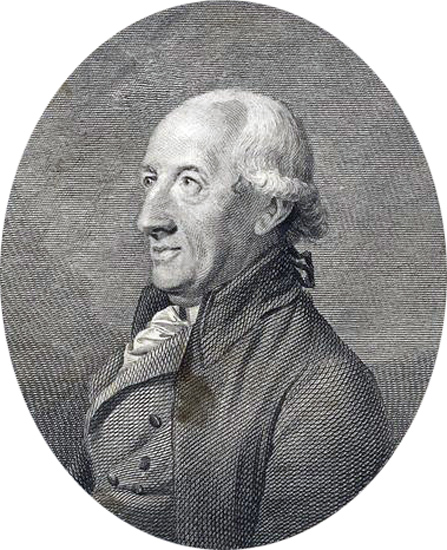
John Berkenhout (8 July 1726 – 3 April 1791) was an English physician, naturalist and miscellaneous writer. He was educated as a physician at Edinburgh and Leyden. While at Edinburgh he published a botanical lexicon Clavis Anglicae Linguae Botanicae. He published several works on natural history, including Outlines of the Natural History of Great Britain and Ireland (1769) and Synopsis of the Natural History of Great Britain and Ireland (1789). He served as a British agent in the colonies during the American Revolution.
Berkenhout was born about 1730 at Leeds, the son of John Berkenhout Snr, a Dutch merchant who had settled in Yorkshire, and Anne Kitchingman. He was educated at Leeds Grammar School. His father intended him for a commercial career, and sent him to Germany to study languages. After spending some years in Germany he accompanied some English noblemen on a tour through Europe. On returning to Berlin he stayed with his father's relative Baron von Bielfeld.
Berkenhout became a cadet in a Prussian infantry regiment, where he was promoted to the rank of ensign and then captain. In 1756, at the start of the Seven Years' War, he left the Prussian service, and received a commission in an English regiment.
In 1760 he entered Edinburgh University as a medical student. From Edinburgh he went to the University of Leyden, where he took his degree of doctor of physic (medicine) on 13 May 1765. On his return to England he settled at Isleworth in Middlesex, It is stated in David Elisha Davy's 'Suffolk Collections' (xc. 403) that he practised for some time as a physician at Bury St Edmunds.
In 1778 Berkenhout was sent by the government with the Carlisle Peace Commission to America, quite covertly. The Continental Congress would not allow the Commission to go beyond New York; but Berkenhout managed to reach Philadelphia. He knew Arthur Lee, and through him contacted Richard Henry Lee. Suspicion arose in September that he was corrupting leading citizens; and he was detained and questioned, and thrown into prison. There Timothy Matlack and Benjamin Rush visited him, and verbal fencing ensued. In the end Berkenhout was paroled, and rejoined the commissioners at New York on 19 September; but the negotiations of the Carlisle Commission were dead. He came back to England, and was rewarded with a pension for his services.
Berkenhout died on 3 April 1791 at Besselsleigh near Oxford.
While a student at Edinburgh Berkenhout published in 1762 a botanical lexicon, Clavis Anglica Linguæ Botanicæ Linnæi, second edition 1764, and third edition 1766. For his M.D. he wrote Dissertatio Medica inauguralis de Podagra, dedicated on publication to Baron de Bielfeld. In 1766 he published Pharmacopoeia Medici.
In 1769 appeared the first volume of Berkenhout's Outlines of the Natural History of Great Britain; the second volume followed in 1770, and the third in 1771. It was republished in 1773 (three volumes), and a revised edition in two volumes appeared in 1788 as A Synopsis of the Natural History of Great Britain. In his publication (1771) William Cadogan's "Dissertation on the Gout" was Examined and Refuted.
John Berkenhout
John Berkenhout (8 July 1726 – 3 April 1791) was an English physician, naturalist and miscellaneous writer. He was educated as a physician at Edinburgh and Leyden. While at Edinburgh he published a botanical lexicon Clavis Anglicae Linguae Botanicae. He published several works on natural history, including Outlines of the Natural History of Great Britain and Ireland (1769) and Synopsis of the Natural History of Great Britain and Ireland (1789). He served as a British agent in the colonies during the American Revolution.
Berkenhout was born about 1730 at Leeds, the son of John Berkenhout Snr, a Dutch merchant who had settled in Yorkshire, and Anne Kitchingman. He was educated at Leeds Grammar School. His father intended him for a commercial career, and sent him to Germany to study languages. After spending some years in Germany he accompanied some English noblemen on a tour through Europe. On returning to Berlin he stayed with his father's relative Baron von Bielfeld.
Berkenhout became a cadet in a Prussian infantry regiment, where he was promoted to the rank of ensign and then captain. In 1756, at the start of the Seven Years' War, he left the Prussian service, and received a commission in an English regiment.
In 1760 he entered Edinburgh University as a medical student. From Edinburgh he went to the University of Leyden, where he took his degree of doctor of physic (medicine) on 13 May 1765. On his return to England he settled at Isleworth in Middlesex, It is stated in David Elisha Davy's 'Suffolk Collections' (xc. 403) that he practised for some time as a physician at Bury St Edmunds.
In 1778 Berkenhout was sent by the government with the Carlisle Peace Commission to America, quite covertly. The Continental Congress would not allow the Commission to go beyond New York; but Berkenhout managed to reach Philadelphia. He knew Arthur Lee, and through him contacted Richard Henry Lee. Suspicion arose in September that he was corrupting leading citizens; and he was detained and questioned, and thrown into prison. There Timothy Matlack and Benjamin Rush visited him, and verbal fencing ensued. In the end Berkenhout was paroled, and rejoined the commissioners at New York on 19 September; but the negotiations of the Carlisle Commission were dead. He came back to England, and was rewarded with a pension for his services.
Berkenhout died on 3 April 1791 at Besselsleigh near Oxford.
While a student at Edinburgh Berkenhout published in 1762 a botanical lexicon, Clavis Anglica Linguæ Botanicæ Linnæi, second edition 1764, and third edition 1766. For his M.D. he wrote Dissertatio Medica inauguralis de Podagra, dedicated on publication to Baron de Bielfeld. In 1766 he published Pharmacopoeia Medici.
In 1769 appeared the first volume of Berkenhout's Outlines of the Natural History of Great Britain; the second volume followed in 1770, and the third in 1771. It was republished in 1773 (three volumes), and a revised edition in two volumes appeared in 1788 as A Synopsis of the Natural History of Great Britain. In his publication (1771) William Cadogan's "Dissertation on the Gout" was Examined and Refuted.
Recent media
Recent media