
Recent from talks
John Keats
Knowledge base stats:
Talk channels stats:
Members stats:
John Keats
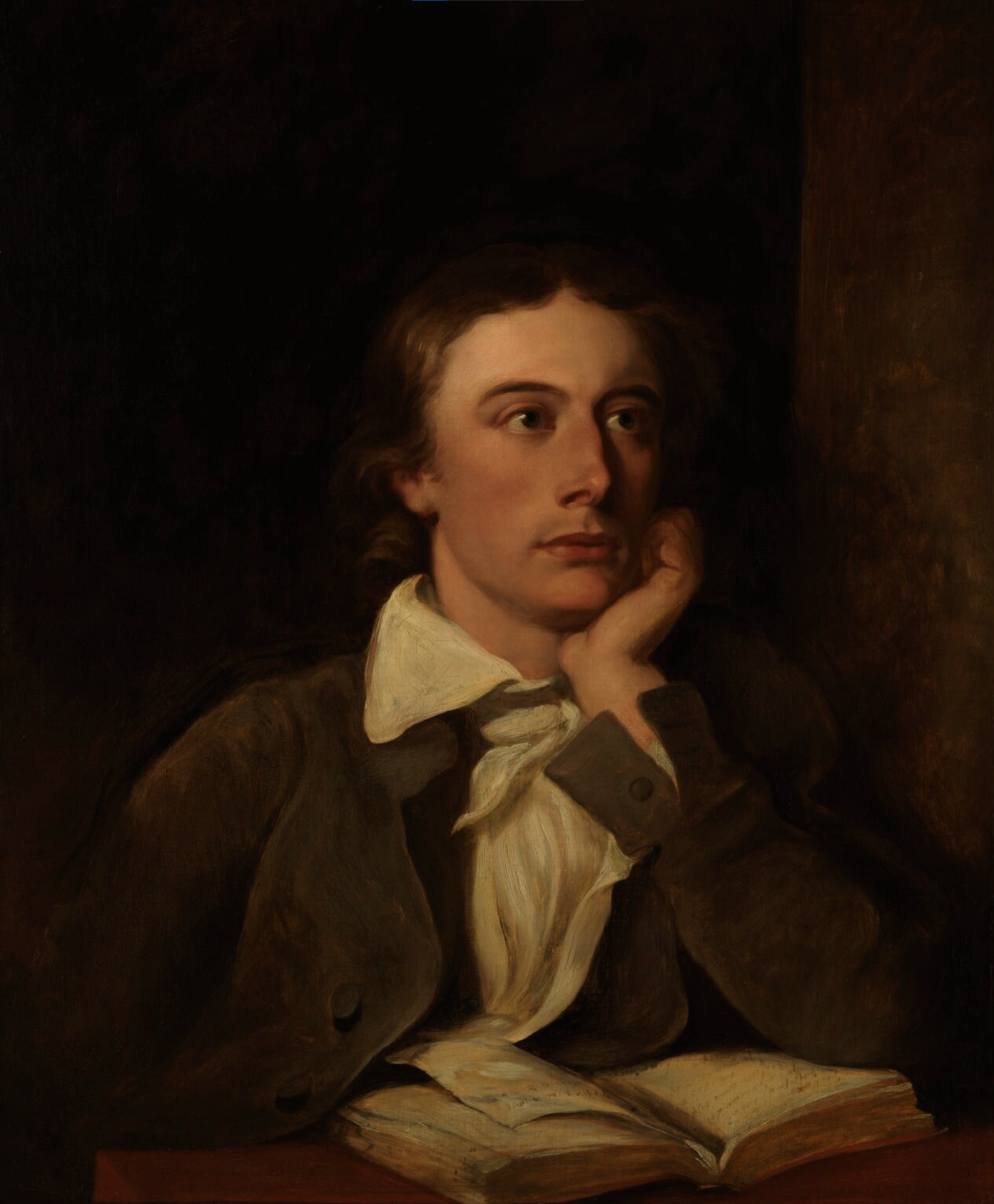
John Keats (31 October 1795 – 23 February 1821) was an English poet of the second generation of Romantic poets, along with Lord Byron and Percy Bysshe Shelley. His poems had been in publication for less than four years when he died of tuberculosis at the age of 25. They were indifferently received in his lifetime, but his fame grew rapidly after his death. By the end of the century, he was placed in the canon of English literature, strongly influencing many writers of the Pre-Raphaelite Brotherhood; the Encyclopædia Britannica of 1888 described his "Ode to a Nightingale" as "one of the final masterpieces".
Keats had a style "heavily loaded with sensualities", notably in the series of odes. Typically of the Romantics, he accentuated extreme emotion through natural imagery. Today his poems and letters remain among the most popular and analysed in English literature – in particular "Ode to a Nightingale", "Ode on a Grecian Urn", "Sleep and Poetry" and the sonnet "On First Looking into Chapman's Homer". Jorge Luis Borges named his first time reading Keats an experience he felt all his life.
In the later Victorian era, Keats's medievalist poems, such as "La Belle Dame Sans Merci" and "The Eve of St. Agnes", were a major influence on the Pre-Raphaelite movement, inspiring poets such as Algernon Charles Swinburne, Dante Gabriel Rossetti, and William Morris.
John Keats was born in Moorgate, London, on 31 October 1795, to Thomas and Frances Keats (née Jennings). There is little evidence of his exact birthplace. Although Keats and his family seem to have marked his birthday on 29 October, baptism records give the date as the 31st. He was the eldest of four surviving children; his younger siblings were George (1797–1841), Thomas (1799–1818), and Frances Mary "Fanny" (1803–1889), who later married the Spanish author Valentín de Llanos Gutiérrez.
Another son was lost in infancy. His father first worked as an ostler at the stables attached to the Swan and Hoop Inn owned by his father-in-law, John Jennings, an establishment he later managed, and where the growing family lived for some years. Keats believed he was born at the inn, a birthplace of humble origins, but there is no evidence to support this. The Globe pub now occupies the site, a few yards from modern Moorgate station. Keats was baptised at St Botolph-without-Bishopsgate, and sent to a local dame school as a child.
His parents wished to send their sons to Eton or Harrow, but the family decided they could not afford the fees. In the summer of 1803, John was sent to board at John Clarke's school in Enfield, close to his grandparents' house. The small school had a liberal outlook and a progressive curriculum more modern than the larger, more prestigious schools. In the family atmosphere at Clarke's, Keats developed an interest in classics and history, which would stay with him throughout his short life.
The headmaster's son, Charles Cowden Clarke, also became an important mentor and friend, introducing Keats to Renaissance literature, including Tasso, Spenser, and Chapman's translations. The young Keats was described by his friend Edward Holmes as a volatile character, "always in extremes", given to indolence and fighting. At 13 he began focusing his energy on reading and study, winning his first academic prize in midsummer 1809.
In April 1804, when Keats was eight, his father died from a skull fracture after falling from his horse while returning from a visit to Keats and his brother George at school. Thomas Keats died intestate. Frances remarried two months later, but left her new husband soon afterwards, and the four children went to live with a grandmother, Alice Jennings, in the village of Edmonton.
Hub AI
John Keats AI simulator
(@John Keats_simulator)
John Keats
John Keats (31 October 1795 – 23 February 1821) was an English poet of the second generation of Romantic poets, along with Lord Byron and Percy Bysshe Shelley. His poems had been in publication for less than four years when he died of tuberculosis at the age of 25. They were indifferently received in his lifetime, but his fame grew rapidly after his death. By the end of the century, he was placed in the canon of English literature, strongly influencing many writers of the Pre-Raphaelite Brotherhood; the Encyclopædia Britannica of 1888 described his "Ode to a Nightingale" as "one of the final masterpieces".
Keats had a style "heavily loaded with sensualities", notably in the series of odes. Typically of the Romantics, he accentuated extreme emotion through natural imagery. Today his poems and letters remain among the most popular and analysed in English literature – in particular "Ode to a Nightingale", "Ode on a Grecian Urn", "Sleep and Poetry" and the sonnet "On First Looking into Chapman's Homer". Jorge Luis Borges named his first time reading Keats an experience he felt all his life.
In the later Victorian era, Keats's medievalist poems, such as "La Belle Dame Sans Merci" and "The Eve of St. Agnes", were a major influence on the Pre-Raphaelite movement, inspiring poets such as Algernon Charles Swinburne, Dante Gabriel Rossetti, and William Morris.
John Keats was born in Moorgate, London, on 31 October 1795, to Thomas and Frances Keats (née Jennings). There is little evidence of his exact birthplace. Although Keats and his family seem to have marked his birthday on 29 October, baptism records give the date as the 31st. He was the eldest of four surviving children; his younger siblings were George (1797–1841), Thomas (1799–1818), and Frances Mary "Fanny" (1803–1889), who later married the Spanish author Valentín de Llanos Gutiérrez.
Another son was lost in infancy. His father first worked as an ostler at the stables attached to the Swan and Hoop Inn owned by his father-in-law, John Jennings, an establishment he later managed, and where the growing family lived for some years. Keats believed he was born at the inn, a birthplace of humble origins, but there is no evidence to support this. The Globe pub now occupies the site, a few yards from modern Moorgate station. Keats was baptised at St Botolph-without-Bishopsgate, and sent to a local dame school as a child.
His parents wished to send their sons to Eton or Harrow, but the family decided they could not afford the fees. In the summer of 1803, John was sent to board at John Clarke's school in Enfield, close to his grandparents' house. The small school had a liberal outlook and a progressive curriculum more modern than the larger, more prestigious schools. In the family atmosphere at Clarke's, Keats developed an interest in classics and history, which would stay with him throughout his short life.
The headmaster's son, Charles Cowden Clarke, also became an important mentor and friend, introducing Keats to Renaissance literature, including Tasso, Spenser, and Chapman's translations. The young Keats was described by his friend Edward Holmes as a volatile character, "always in extremes", given to indolence and fighting. At 13 he began focusing his energy on reading and study, winning his first academic prize in midsummer 1809.
In April 1804, when Keats was eight, his father died from a skull fracture after falling from his horse while returning from a visit to Keats and his brother George at school. Thomas Keats died intestate. Frances remarried two months later, but left her new husband soon afterwards, and the four children went to live with a grandmother, Alice Jennings, in the village of Edmonton.
Recent media