Hubbry Logo
John ParrottJohn ParrottMain
Open search
John Parrott
Community hub
John Parrott
logo
8 pages, 0 posts
0 subscribers
Be the first to start a discussion here.
John Parrott
John Parrott
from Wikipedia

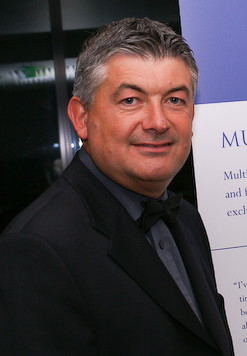
John Stephen Parrott (born 11 May 1964) is an English former professional snooker player who won the 1991 World Snooker Championship. He came to prominence in the mid to late 1980s, and remained within the top 16 of the world rankings for 14 consecutive seasons. Following his playing career, he became a snooker commentator and pundit.

Key Information

He twice reached the final of the World Snooker Championship. At the 1989 World Snooker Championship, he lost 3–18 to Steve Davis, the heaviest defeat in a world championship final in modern times. Two years later, however, he defeated Jimmy White in the final of the 1991 event. He also won against White later the same year, to win the 1991 UK Championship title. This made him only the third player to win both championships in the same calendar year (after Steve Davis and Stephen Hendry); he is still one of only six players to have achieved this feat. The following year, Parrott lost in the final of the 1992 UK Championship, again to White. Parrott reached the final of the Masters on three occasions, losing to Hendry each time.

Parrott reached his highest place in the world rankings in 1989–90, 1992–93, 1993–94 where he was second. He is one of several players to have achieved more than 200 competitive century breaks during his career, with 221. Following his playing career, Parrott became a commentator and pundit for the BBC. In addition, he also presented horse racing and was a regular on BBC quiz show A Question of Sport.

Early life and career

[edit]

John Parrott was born on 11 May 1964 at the Oxford Street Maternity Hospital, Liverpool.[2] Parrott grew up with his aunt and uncle following a split between his parents when he was 4.[3]: 10  He was a keen bowls player until the age of 11,[4] as he was first introduced to snooker by his father.[3]: 16 [5] He lost in the final of the British Under-16s Championship in 1979 and then again in 1980.[6][7][3]: 34–37  The next year, he won the 1981 Pontins Junior Championship. In 1982, he won the Pontins Open, a tournament with over 1,000 entrants.[3]: 44  The same year, he also won the 1982 Junior Pot Black championship.[8][9] He turned professional in 1983 after winning 14 tournaments in his last year as an amateur player, including the 1983 Junior Pot Black title,[10] and finishing as runner-up in the English Amateur Championship.[11][12]

Professional career

[edit]

World championship win (1983–1991)

[edit]

Parrott turned professional in 1983, aged 19, making his televised debut as a professional during the last 16 of the 1984 Classic.[3]: 20  In the match, he defeated Alex Higgins 5–2. He then beat Tony Knowles in the next round before losing to Steve Davis in the semi-finals on a deciding frame.[13][14] Parrott qualified for the World Snooker Championship on the first attempt, losing only five frames in qualification for the 1984 World Snooker Championship.[15] He defeated Knowles, but lost in the quarter-finals to Dennis Taylor. He finished his first professional season ranked 20th in the world.[3]: 54  In 1987, Parrott was placed within the top 16 in the world for the first time.[3]: 54 

At the 1988 Classic, Parrott reached his first ranking event final. Despite leading 11‍–‍10, he lost 11‍–‍13 to Steve Davis.[16][failed verification] The following season, Parrott was runner-up in a number of professional events. He lost again to Davis in the final of the 1988 World Matchplay and second to him at the 1989 Matchroom League,[17] to Stephen Hendry in the final of the invitational 1989 Masters and 1989 London Masters, and to Mike Hallett at the 1989 English Professional Championship.[3]: 59–61  He also reached the final to play Davis at the 1989 World Snooker Championship.[3]: 59–61  In the first to 18 match, Parrott trailed 2‍–‍5,[18] but won only one more frame in the match, losing 3‍–‍18.[19] The loss was the largest in any World Championship final.[20] With the match finishing early, Parrott had to play an exhibition match in place of the final session.[21] Parrott finished the season at his highest placement in the snooker world rankings, second in the world, only behind Davis.[22]

Parrott won his first ranking title at the 1989 European Open, defeating Terry Griffiths in the final 9‍–‍8.[23][24] He successfully defended his title at the 1990 event, defeating Stephen Hendry 10‍–‍6 in the final.[25] Parrott reached the final of the 1990 Masters for a second time, losing again to Hendry.[26] He finished the season at the 1990 World Snooker Championship losing in the semi-final 11‍–‍16 to Hendry.[27]

Parrott reached the final of the World Championship again in 1991. Defeating Nigel Gilbert, Tony Knowles, Griffiths and Davis, he played Jimmy White in the final.[28] He took a 7‍–‍0 lead,[29] winning the match 18‍–‍11.[28] Parrott's first session was described by commentator Ted Lowe as "the finest session by one player" they had ever seen.[30][29] Following the World Championship win, the following season, Parrott won the 1991 Dubai Classic over Knowles 9‍–‍3.[31] He also won his second Triple Crown event - the 1991 UK Championship.[32] After defeating David McDonnell, Willie Thorne, Dean Reynolds and James Wattana, he met White in the final, defeating him 16‍–‍13.[33] He was just the third person to win hold both the UK and World Championships sequentially.[34] Parrott finished the 1991–92 season once again second in the world rankings.[35]

Later career (1992-2000)

[edit]

In 1992, Parrott reached four major finals. He retained the Dubai Classic, defeating Hendry on a deciding frame,[36] but lost both the UK Championship and Masters to White and Hendry, respectively.[37][38] This was the last time Parrott reached the final of the Masters. Having won both the UK and World Championships, he was unable to complete the Triple Crown during his career.[39] Parrott also reached the final of the 1992 Strachan Open losing to James Wattana.[40] He finished the season again in second in the world rankings for the third and final time.[41] At the 1992 World Snooker Championship, he was the first player to conduct a "whitewash" in the Crucible World Championship final stages, when he defeated Eddie Charlton 10–0 in the first round.[42] For 27 years, he held the record for being the only player ever to achieve this, until Shaun Murphy defeated China's Luo Honghao 10–0 in the first round of the 2019 World Championship.[43] In defence of his World Championship, Parrott reached the quarter-final, losing to Alan McManus 13-12.[44]

The following season, Parrott won the 1994 International Open, defeating Wattana in the final.[45] Later in 1994, he reached the final of the European Open for the third time, this time losing to Hendry.[46] The following season, Parrott won the 1995 Thailand Classic for the third time, defeating Nigel Bond in the final.[47] Parrott reached the final of the European Open for a fourth time, winning the 1996 European Open with a victory in the final over Peter Ebdon.[48] Over the next two seasons, Parrott reached the final of three more rankings events. He lost the 1997 European Open, 1997 German Open finals both to John Higgins and the 1998 Thailand Masters to Hendry.[49] This was the last ranking event final of Parrotts career. He spent 14 consecutive seasons in the top 16 of the snooker world rankings, from 1987 until 2001, 11 of which were in the top 6.[4] He won the non-ranking 1998 German Masters event, defeating Williams in the final 6‍–‍4.[50] Parrott captained an England team at the 2000 Nations Cup made up of O'Sullivan, Stephen Lee and White which won the event, defeating the Welsh team 6‍–‍4.[51]

Retirement and legacy

[edit]

At the 2007 World Snooker Championship he reached the last 16 of the World Championship for the first time since 2000, after victories over James Leadbetter, David Gray to qualify, he defeated Steve Davis.[52] He lost to Shaun Murphy in the last 16 and never appeared in the final stages of the event again.[53][54] Following his 6–10 defeat to young Chinese player Zhang Anda in the qualification for the 2010 event, Parrott finished outside the top 64 in the end of season rankings and was not assured a place on the main tour for the 2010–11 season.[55] Later Parrott announced he was to retire from the professional game.[56] Parrott finished his career with 221 century breaks.[57]

Following his professional career, Parrott entered the 2011 World Seniors Championship, where he lost in the semi-finals to Davis.[58] He also participated in the preliminary qualifying rounds of the 2012 World Snooker Championship as an amateur losing 0–5 to Patrick Wallace in Round one.[59] He reached the semi-finals of the 2015 World Seniors Championship, losing to professional player Mark Williams 0‍–‍2.[60] He reached the final of the 2017 World Seniors Championship losing 0‍–‍3 to Peter Lines.[61] Parrott retired from the seniors tour after the 2022 World Seniors Championship, with a parade with the World Snooker Championship after the event.[62][63]

Ronnie O'Sullivan wrote that he considered Parrott to be a "great match player [with] plenty of bottle" that, before the emergence of the "Class of '92 (snooker)", was the only player that would go "toe to toe" with Hendry.[64] In their 2005 book Masters of the Baize, Luke Williams and Paul Gadsby described Parrott as a "solid and belligerent player, with a delightfully smooth cue action".[65] Robert Philip of The Daily Telegraph wrote approvingly in 2007 of how Parrott had prioritised his family above playing, and speculated that had he not done so, Parrott could have won further world championships.[66]

Television

[edit]

Following his playing career, Parrott became a pundit and commentator on snooker for BBC Sport.[67] From 1996 to 2002, he was one of the team captains on the BBC quiz show A Question of Sport, alongside association football player Ally McCoist.[68] As a supporter of horse racing, he was involved in the BBC's horse racing coverage as part of the presenting team.[69][70]

Personal life

[edit]

In 1996, Parrott was honoured with an MBE in the Queen's Birthday Honours list, for charitable services in Merseyside.[71] In 2008, he launched John Parrott Cue Sports, an online retailer selling snooker and pool cues and some snooker collectables.[72] This was re-branded John Parrott Sports in 2019.[73] Parrott is a supporter of Everton F.C. and brother-in-law of former Everton player Duncan Ferguson.[74] Parrott was made the Honorary Patron of the British Crown Green Bowling Association in 2010.[75]

Performance and rankings timeline

[edit]
Tournament 1983/
84
1984/
85
1985/
86
1986/
87
1987/
88
1988/
89
1989/
90
1990/
91
1991/
92
1992/
93
1993/
94
1994/
95
1995/
96
1996/
97
1997/
98
1998/
99
1999/
00
2000/
01
2001/
02
2002/
03
2003/
04
2004/
05
2005/
06
2006/
07
2007/
08
2008/
09
2009/
10
Ranking[76][nb 1] [nb 2] 20 18 17 13 7 2 3 4 2 2 5 4 4 6 6 5 10 22 18 30 31 29 42 39 39 53
Ranking tournaments
Shanghai Masters Tournament Not Held LQ A LQ
Grand Prix[nb 3] 2R 2R 1R 2R SF 2R 3R QF 1R 2R SF 1R 1R SF QF 2R 2R 2R 2R 1R SF 1R 1R LQ LQ 2R LQ
UK Championship NR 1R 2R SF QF QF 3R SF W F SF QF 3R QF 2R QF 2R 2R 2R 1R 1R QF 1R 1R LQ WD LQ
Welsh Open Tournament Not Held SF QF 2R 1R F SF QF 2R 1R 1R LQ LQ 2R 3R 1R 1R 1R LQ LQ
China Open[nb 4] Tournament Not Held NR QF 1R 2R 1R Not Held LQ LQ LQ LQ WD LQ
World Championship 2R QF 2R 2R 2R F SF W QF QF QF QF 1R QF QF QF 2R 1R 1R 1R 1R LQ 1R 2R LQ LQ LQ
Non-ranking tournaments
Premier League[nb 5] A Not Held A A F RR A RR SF F RR RR RR A A A A A A A A A A A A A
The Masters A A A A SF F F QF F QF 1R 1R QF QF 1R 1R SF QF A A A A LQ A A A A
Former ranking tournaments
Canadian Masters Not Held Non-Ranking QF Tournament Not Held
Hong Kong Open[nb 6] Non-Ranking Event NH 2R Not Held NR Tournament Not Held
Classic SF LQ 1R QF F QF 3R 2R QF Tournament Not Held
Strachan Open Tournament Not Held F Tournament Not Held
Dubai Classic[nb 7] Tournament Not Held NR SF 2R W W 2R 1R W 1R Tournament Not Held
German Masters[nb 8] Tournament Not Held 2R 1R F NR Tournament Not Held
Malta Grand Prix Tournament Not Held Non-Ranking Event QF NR Tournament Not Held
Thailand Masters[nb 9] Non-Ranking Event Not Held WD QF 3R QF 2R 2R QF QF F SF 1R SF 1R NR Not Held NR Not Held
Scottish Open[nb 10] A LQ QF 1R 3R 1R QF Not Held 2R W SF 1R QF 2R 3R 1R 3R 2R 1R 3R Tournament Not Held
British Open[nb 11] NR 2R 3R 1R SF SF 1R 1R 1R 3R 3R SF QF 1R QF QF 2R 2R 2R 3R 1R 2R Tournament Not Held
Irish Masters Non-Ranking Event LQ LQ LQ NH NR Not Held
European Open[nb 12] Tournament Not Held W W 1R SF 2R SF F W F NR SF Not Held LQ LQ LQ LQ 1R LQ NR Not Held
Northern Ireland Trophy Tournament Not Held NR LQ 1R LQ NH
Bahrain Championship Tournament Not Held LQ NH
Former non-ranking tournaments
UK Championship 1R Tournament Not Held
Canadian Masters Not Held QF A A R Tournament Not Held
Hong Kong Open[nb 6] A A SF A QF NH R Not Held A A Tournament Not Held
Fosters Professional[nb 13] NH A SF A A SF Tournament Not Held
Pontins Professional A QF QF SF W QF A A A A A A A A A A A Tournament Not Held
English Professional Championship NH 2R 2R QF 2R F Tournament Not Held
New Zealand Masters NH A Not Held A QF Tournament Not Held
Norwich Union Grand Prix Tournament Not Held A SF W Tournament Not Held
World Masters Tournament Not Held 2R Tournament Not Held
London Masters Tournament Not Held F F SF Tournament Not Held
Thailand Masters A RR A A Not Held SF Ranking Event A Not Held A Not Held
European Challenge Tournament Not Held QF A Tournament Not Held
Hong Kong Challenge[nb 14] A QF A A A QF NH A QF Tournament Not Held
Indian Challenge Tournament Not Held F Tournament Not Held
Belgian Challenge Tournament Not Held QF Tournament Not Held
Kent Classic[nb 15] Not Held A W A A A NH W Tournament Not Held
Belgian Masters Tournament Not Held W SF F Not Held A Tournament Not Held
World Matchplay Tournament Not Held F F QF QF QF Tournament Not Held
Nescafe Extra Challenge Tournament Not Held A NH RR Tournament Not Held
Pot Black A 1R 1R Tournament Not Held QF SF 1R Tournament Not Held A A A Not Held
Malta Grand Prix Tournament Not Held W A A A A R A Tournament Not Held
Red & White Challenge Tournament Not Held F Tournament Not Held
German Masters[nb 8] Tournament Not Held Ranking Event W Tournament Not Held
Champions Cup[nb 16] Tournament Not Held QF QF QF QF 1R RR A A Tournament Not Held
Scottish Masters A A A QF A NH SF QF QF QF QF 1R 1R SF SF QF QF A A A Tournament Not Held
Irish Masters A A A A A SF QF F SF SF QF SF 1R QF SF 1R SF A A Ranking Event A Tournament Not Held
Performance Table Legend
LQ lost in the qualifying draw #R lost in the early rounds of the tournament
(WR = Wildcard round, RR = Round robin)
QF lost in the quarter-finals
SF lost in the semi-finals F lost in the final W won the tournament
DNQ did not qualify for the tournament A did not participate in the tournament WD withdrew from the tournament
NH / Not Held means an event was not held.
NR / Non-Ranking Event means an event is/was no longer a ranking event.
R / Ranking Event means an event is/was a ranking event.
MR / Minor-Ranking Event means an event is/was a minor-ranking event.
PA / Pro-am Event means an event is/was a pro-am event.
  1. ^ From the 2010/2011 season it shows the ranking at the beginning of the season.
  2. ^ New players on the Main Tour do not have a ranking.
  3. ^ The event ran under different names as Professional Players Tournament (1983/1984) and the LG Cup (2001/2002–2003/2004)
  4. ^ The event ran under different name as China International (1997/1998–1998/1999)
  5. ^ The event was also called the Professional Snooker League (1983/1984), Matchroom League (1986/1987-1991/1992) and European League (1992/1993-1996/1997
  6. ^ a b The event also ran as the Australian Masters (1983/1984–1987/1988 & 1995/1996)
  7. ^ The event ran under different names such as Thailand Classic (1995/1996) and Asian Classic (1996/1997)
  8. ^ a b The event ran under different name as German Open (1995/1996–1997/1998)
  9. ^ The event ran under different names such as Asian Open (1989/1990 to 1992/1993) and Thailand Open (1993/1994 to 1996/1997).
  10. ^ The event ran under different names such as International Open (1983/1984 to 1984/1985, 1986/1987 to 1996/1997), Goya Matchroom Trophy (1985/1986) and Players Championship (2003/2004).
  11. ^ The event was also known as the International Masters (1983/1984).
  12. ^ The event ran under different names such as the Irish Open (1998/1999) and Malta Cup (2004/2005–2007/2008)
  13. ^ The event also ran as the Carlsberg Challenge (1984/1985–1986/1987) and the Carling Challenge (1987/1988)
  14. ^ The event was also called the Hong Kong Masters (1983/1984–1988/1989)
  15. ^ The event was also called the Kent Cup (1986/1987–1987/1988 & 1989/1990–1990/1991)
  16. ^ The event ran under a different name as the Charity Challenge (1994/1995–1998/1999)

Career finals

[edit]

Ranking finals: 18 (9 titles)

[edit]
Legend
World Championship (1–1)
UK Championship (1–1)
Other (7–7)
Ranking event finals contested by John Parrott
Outcome No. Year Championship Opponent in the final Score Ref
Runner-up 1. 1988 The Classic England Steve Davis 11–13 [77]
Winner 1. 1989 European Open Wales Terry Griffiths 9–8 [78]
Runner-up 2. 1989 World Snooker Championship England Steve Davis 3–18 [79]
Winner 2. 1990 European Open (2) Scotland Stephen Hendry 10–6 [80]
Winner 3. 1991 World Snooker Championship England Jimmy White 18–11 [81]
Winner 4. 1991 Dubai Classic England Tony Knowles 9–3 [82]
Winner 5. 1991 UK Championship England Jimmy White 16–13 [83]
Runner-up 3. 1992 Strachan Open Thailand James Wattana 5–9 [84]
Winner 6. 1992 Dubai Classic (2) Scotland Stephen Hendry 9–8 [85]
Runner-up 4. 1992 UK Championship England Jimmy White 9–16 [86]
Winner 7. 1994 International Open Thailand James Wattana 9–5 [87]
Runner-up 5. 1994 European Open Scotland Stephen Hendry 3–9 [88]
Winner 8. 1995 Thailand Classic (3) England Nigel Bond 9–6 [89]
Runner-up 6. 1996 Welsh Open Wales Mark Williams 3–9 [90]
Winner 9. 1996 European Open (3) England Peter Ebdon 9–7 [91]
Runner-up 7. 1997 European Open (2) Scotland John Higgins 5–9 [92]
Runner-up 8. 1997 German Open Scotland John Higgins 4–9 [93]
Runner-up 9. 1998 Thailand Masters Scotland Stephen Hendry 6–9 [94]

Non-ranking finals: 24 (9 titles)

[edit]
Non-ranking finals contested by John Parrott
Outcome No. Year Championship Opponent in the final Score Ref
Winner 1. 1982 Zimbabwe Open  Neal Foulds (ENG) 6–5 [95][96]
Winner 2. 1983 Zimbabwe Open  Joe Johnson (ENG) 7–1 [95]
Winner 3. 1988 Kent Cup  Martin Clark (ENG) 5–1 [97]
Winner 4. 1988 Pontins Professional  Mike Hallett (ENG) 9–1 [98]
Runner-up 1. 1988 World Matchplay  Steve Davis (ENG) 5–9 [99]
Runner-up 2. 1989 The Masters  Stephen Hendry (SCO) 6–9 [100]
Runner-up 3. 1989 English Professional Championship  Mike Hallett (ENG) 7–9 [101]
Runner-up 4. 1989 Matchroom League  Steve Davis (ENG) Round-Robin [102]
Runner-up 5. 1989 London Masters  Stephen Hendry (SCO) 2–4 [103]
Runner-up 6. 1989 World Matchplay (2)  Jimmy White (ENG) 9–18 [104]
Runner-up 7. 1990 The Masters (2)  Stephen Hendry (SCO) 4–9 [105]
Runner-up 8. 1990 London Masters (2)  Stephen Hendry (SCO) 2–4 [106]
Winner 5. 1990 Belgian Masters  Jimmy White (ENG) 9–6 [107]
Winner 6. 1990 Norwich Union Grand Prix  Steve Davis (ENG) 4–2 [108]
Runner-up 9. 1991 Irish Masters  Steve Davis (ENG) 5–9 [109]
Runner-up 10. 1991 Indian Challenge  Stephen Hendry (SCO) 5–9 [110]
Runner-up 11. 1992 The Masters (3)  Stephen Hendry (SCO) 4–9 [111]
Winner 7. 1992 Kent Classic  Stephen Hendry (SCO) 6–5 [112]
Runner-up 12. 1992 Belgian Masters  James Wattana (THA) 5–10 [113]
Runner-up 13. 1994 European League (2)  Stephen Hendry (SCO) 7–10 [114]
Winner 8. 1994 Malta Grand Prix  Tony Drago (MLT) 7–6 [115]
Runner-up 14. 1995 Red & White Challenge  Nigel Bond (ENG) 6–8 [116]
Winner 9. 1998 German Masters  Mark Williams (WAL) 6–4 [117]
Runner-up 15. 2017 World Seniors Championship  Peter Lines (ENG) 0–4 [118]

Team finals: 1 (1 title)

[edit]
Team event finals contested by Parrott
Outcome No. Year Championship Team Opponent in the final Score Ref
Winner 1. 2000 Nations Cup  England  Wales 6–4 [51]

Pro-am finals: 3 (2 titles)

[edit]
Pro-am finals contested by John Parrott
Outcome No. Year Championship Opponent in the final Score Ref.
Winner 1. 1982 Pontins Spring Open  Ray Reardon (WAL) 7–4 [119]
Runner-up 1. 1985 Pontins Spring Open  Jim Chambers (ENG) 6–7 [119]
Winner 2. 1986 Pontins Spring Open (2)  Tony Putnam (ENG) 7–6 [119]

Amateur finals: 8 (3 titles)

[edit]
Amateur snooker finals contested by John Parrott
Outcome No. Year Championship Opponent in the final Score Ref.
Runner-up 1. 1979 British Under-16 Championship  Tony Pyle (ENG) 2–3 [6]
Runner-up 2. 1979 Pontins Junior Championship  Dave Gilbert (ENG) 1–3 [120][121]
Runner-up 3. 1980 British Under-16 Championship (2)  Terry Whitthread (ENG) 1–3 [7]
Winner 1. 1981 Pontins Junior Championship  Don Tate (ENG) 3–1 [120][122]
Runner-up 4. 1982 British Under-19 Championship  Neal Foulds (ENG) 2–3 [123]
Winner 2. 1982 Junior Pot Black  John Keers (ENG) 156–70[a] [10]
Runner-up 5. 1983 English Amateur Championship  Tony Jones (ENG) 9–13 [11]
Winner 3. 1983 Junior Pot Black (2)  Steve Ventham (ENG) [a] [10]

Notes

[edit]

References

[edit]

Further reading

[edit]
[edit]
Revisions and contributorsEdit on WikipediaRead on Wikipedia
from Grokipedia
John Parrott MBE (born 11 May 1964) is an English former professional player and television commentator, best known for his victory in the , where he defeated 18–11 in the final. Born in , Parrott turned professional in 1983 at the age of 19 after winning the Junior [Pot Black](/page/Pot Black) title in 1982 and 1983. Throughout his playing career, which spanned from 1983 to around 2010, Parrott achieved significant success, securing nine ranking event titles and reaching the world number two ranking for three consecutive seasons between 1992 and 1994. His other major victories included the in 1990, the European Open in 1989, 1990, and 1996, the International Open in 1992, the British Open in 1995, and the in 1998. Parrott was renowned for his tactical acumen and safety play, earning the nickname "The Entertainer" despite his methodical style, and he maintained a top-16 world ranking for 14 consecutive seasons, with 11 of those in the top six. Following his retirement from competitive play, Parrott transitioned into , becoming a prominent commentator and pundit for the , where he has covered major events like the since the early 2000s. He was awarded the MBE in 2002 for services to and has also appeared on television shows such as from 1996 to 2002. Parrott's career highlights his status as one of the sport's most accomplished figures from the and era.

Early life and amateur career

Childhood and family background

John Parrott was born on 11 May 1964 in , , into a working-class family on . Following his parents' separation when he was four years old, Parrott was raised by his aunt and uncle in . He spent much of his early childhood in this stable environment, developing an interest in outdoor activities amid the urban setting of the city. At the age of 14, he returned to live with his father, Alan, who played a significant role in shaping his sporting interests. Parrott's initial hobbies reflected his family's modest circumstances and local traditions, particularly , which he played enthusiastically with his father at Wavertree Park in . He showed early promise in the sport, advancing to the quarter-finals of the Junior Waterloo tournament in and securing several trophies, including a doubles title alongside his father. These experiences fostered a competitive spirit during his school years, where he balanced academics with community-based recreation typical of 's youth in the . It was his father who later introduced him to , marking a pivotal shift in his pursuits.

Introduction to snooker and amateur achievements

Parrott's introduction to occurred at age 11, when his father Alan took him to a local snooker hall in after a rainy day interrupted their regular practice at Wavertree Park. Alan, who had initially encouraged his son in , purchased a second-hand six-foot table for the family home in 1978, setting up a dedicated practice area that allowed Parrott to hone his skills daily. In the late 1970s, Parrott began competing in local junior tournaments across , securing early wins that built his confidence and reputation in the regional scene. These successes paved the way for national recognition, including his victory in the 1981 Pontins Junior Championship, where he demonstrated emerging talent against top young players. He followed this with back-to-back wins in the Junior series in 1982 and 1983, showcasing his precision and composure on televised stages. Parrott's amateur career peaked in 1983, a year in which he won a record 14 tournaments and reached the final of the English Amateur Championship, losing 13-9 to Tony Jones. These accomplishments qualified him for the professional tour through the qualifying school process later in 1983, marking the end of his highly successful amateur phase.

Professional snooker career

Professional debut and early years

John Parrott turned professional in 1983 at the age of 19 following his victory in the Junior tournament in 1983. His first professional match took place on 3 September 1983 in the Professional Players Tournament, a ranking event, where he defeated Paul Watchorn 5-0 in the opening round. This marked his entry into the professional circuit, with his debut season proving promising as he quickly established himself on the tour. Early in his career, Parrott encountered challenges with maintaining consistency in performance and managing finances, as prize money was limited for newcomers, totaling just £12,600 for the 1983-1984 season. A breakthrough moment came during the 1984 Classic, his first televised professional appearance, where he upset two-time world champion 5-2 in the last 16 before reaching the semi-finals, losing narrowly 5-4 to . He also reached the last 32 of the 1984 , having defeated 1978 world finalist 10–0 in qualifying, before losing 7–10 to Tony Knowles in the first round. Building momentum, Parrott achieved further key results, including a quarter-final finish at the 1987 Grand Prix where he compiled the tournament's highest break of 130. These performances contributed to steady ranking progression; after starting outside the top 64 upon turning professional, he ended his debut season ranked 20th and climbed into the top 16 by 1988.

Major titles and peak period

Parrott's peak years came in the late 1980s and 1990s, during which he secured all nine of his ranking event victories and established himself as one of the sport's elite players. His first ranking title was the 1989 European Open, where he defeated Ian Charlton 9–7 in the final. He retained the title in 1990, beating Stephen Hendry 9–6, and won it again in 1996 against Ronnie O'Sullivan 9–8. In 1990, Parrott won the Belgian Open (then known as the European Open variant) and reached the UK Championship final, losing to Stephen Hendry. His breakthrough came in 1991, when he won both the UK Championship, defeating Jimmy White 16–9, and the World Snooker Championship at the Crucible Theatre, beating White 18–11 in the final after earlier victories over Eddie Charlton, Tony Knowles, and Steve Davis. This made him one of only five players to hold both titles simultaneously. Parrott added the 1992 International Open (9–4 over ), the 1994 Malta Grand Prix (non-ranking but significant), the 1995 British Open (9–6 over ), and the 1998 (9–7 over Mark Williams). He reached world No. 2 for three seasons: 1989–90, 1992–93, and 1993–94, and maintained a top-six for 11 consecutive years. Renowned for his tactical play and composure under pressure, Parrott compiled over 200 century breaks and reached 18 finals, solidifying his status in an era dominated by players like , , and .

Later career, decline, and retirement

Following his victory at the , where he defeated Mark Williams 9–7 in the final to claim his ninth and final ranking title, Parrott experienced a prolonged decline in form that saw him plummet down the world rankings. Previously a consistent top-10 player during the early , Parrott struggled to maintain his elite level amid the sport's growing competitiveness, with younger talents like and dominating the scene. His results became inconsistent, marked by early exits in major tournaments and a failure to reach another ranking final after , contributing to a gradual drop from the top 16 by the early 2000s. Despite the slump, Parrott achieved occasional highlights that underscored his enduring skill, including a run to the last 16 at the 2007 World Snooker Championship—his deepest Crucible progress since 2000—and participation in invitational events. He also competed successfully on the seniors circuit later in his career, reaching the final of the 2017 World Seniors Championship, where he lost 0–4 to Peter Lines, demonstrating resilience in an era when snooker's physical and technical demands had intensified. These sporadic successes highlighted Parrott's longevity in a sport where maintaining peak performance over nearly three decades proved increasingly challenging against a deeper field of professionals. By the 2009/10 season, Parrott's ranking had fallen to a career-low of 65th, outside the top 64, culminating in his failure to qualify for the 2010 after a 10–6 defeat to . This marked the end of his 27-year professional tenure on the main tour, as he lost his tour card and announced his from competitive play, effective after the season. Reflecting on his decision, Parrott noted the toll of the game's evolution, stating that the relentless practice required and the emergence of fitter, more aggressive opponents made sustaining a top-level career untenable at age 45. He expressed satisfaction with his achievements, including the 1991 triumph, but acknowledged that the changing landscape of —now featuring global talent and higher standards—had outpaced his ability to compete at the elite level.

Broadcasting and media career

Snooker commentary and punditry

Following his retirement from competitive around 2010, Parrott became a prominent commentator and pundit for the , covering major events such as the since the early 2000s. He has provided analysis and commentary alongside presenters like and fellow former player .

Other television and public appearances

Beyond his role in snooker broadcasting, John Parrott served as a team captain on the BBC quiz show from 1996 to 2002, appearing in 176 episodes alongside host and fellow captain . His tenure on the program showcased his quick wit and broad sporting knowledge, contributing to the show's popularity during that era. Parrott was involved in the BBC's horse racing coverage as a pundit and presenter starting in 2003, providing analysis for major events such as the Grand National and Royal Ascot, drawing on his lifelong passion for National Hunt racing that began in his youth. In the realm of public speaking, Parrott is represented by the Champions Speakers agency, where he delivers engaging after-dinner talks on topics ranging from competitive sportsmanship to his career highs and lows, often emphasizing resilience and entertainment in performance. These corporate and motivational engagements highlight his charismatic "Entertainer" persona, blending humor with insights from his professional experiences. Parrott has endorsed and promoted snooker equipment through various partnerships, including a collaboration with Peradon cues in the 1980s and the launch of his own online retailer, John Parrott Sports, in 2008, which offers cues, balls, and accessories from brands like PowerGlide and Aramith. More recently, Parrott appeared as a guest on the BBC's Framed: The Snooker Podcast in September 2023, discussing his career, love for Everton FC, and the competitive nature of 1990s snooker. He continues to support charity initiatives, notably as a patron hosting the annual John Parrott Golf Classic for Woodlands Hospice, with events held in 2023 and scheduled for 2025 to raise funds for palliative care services.

Personal life and legacy

Family and personal interests

John Parrott has been married to Karen since the early , and the couple maintains a private family life away from the public eye. Karen's sister is married to former Everton footballer , making Parrott Ferguson's brother-in-law. They have two children, son (born 1994) and daughter (born 1997). A lifelong supporter of , Parrott frequently attends matches and has expressed deep affection for the club in interviews. He is actively involved in local charities, including serving as a patron of Woodlands Hospice since 2003, where he participates in fundraising events such as the annual John Parrott Golf Classic. He has supported initiatives like the Rhys Jones Memorial Fund. Parrott's personal interests include , which he plays avidly and incorporates into charity efforts, and , a passion he has pursued since the , often placing bets and covering the sport for . In 2008, he launched John Parrott Sports, a business specializing in cues, accessories, and related products.

Awards, honors, and post-retirement activities

In 1996, Parrott was appointed Member of the (MBE) in the Queen's for his charitable services in . In 2015, he was inducted into the World Snooker Hall of Fame in recognition of his achievements, including his 1991 title. Following his retirement from the main professional tour in 2010, Parrott competed on the World Seniors Tour, where he reached the semi-finals of the 2011 before announcing his retirement from competitive in 2022 after a last-16 defeat at that year's . He has contributed to player development by producing instructional coaching videos on techniques such as grip, stance, and practice routines. As of 2025, Parrott, now aged 61, remains active in broadcasting as a commentator and pundit for the , providing expert analysis during major events like the . He has also advocated for awareness in sports, authoring pieces on drawn from his competitive experiences and participating in initiatives to support individuals facing challenges.

Career statistics

Performance and rankings timeline

John Parrott turned professional in 1983 and competed until 2010, establishing himself as one of snooker's leading players during the late and early . His career featured consistent high-level , including nine ranking event victories and participation in every from 1984 to 2004. Parrott's rankings progressed rapidly, entering the top 16 by his second season and remaining there for 14 consecutive years until 2001, with 11 seasons in the top six. The following table summarizes Parrott's year-end world rankings, highest breaks, and key tournament results by season, focusing on representative achievements such as major ranking wins and deep runs in Triple Crown events (, , Masters). Data reflects verified professional results, with rankings based on end-of-season positions from official records.
SeasonYear-End RankingHighest BreakKey Results
1983/848102Debut season; reached QF in Pontins Professional; qualified for last 32.
1984/85NR118Last 16 at ; QF at International Open.
1985/8617-SF at ; last 16 at and Masters.
1986/8713137Won Kent Cup (non-ranking); last 16 at .
1987/8813130QF at ; SF at .
1988/896137Won European Open (first ranking title); F (lost 3–18 to ).
1989/902142Won European Open; QF ; last 16 .
1990/913140Won (18–9 vs. ) and (16–9 vs. ); F Masters (lost to ).
1991/924147Won Dubai ; SF ; QF ; F Masters (lost to ).
1992/932136Won Dubai ; QF ; SF .
1993/942138Won International Open; last 16 ; QF .
1994/955134F European Open; QF ; last 16 Masters.
1995/964139Won Thailand and European Open; last 32 .
1996/977139F European Open; last 16 and .
1997/989138F Thailand Masters and German Open; QF .
1998/9911142QF ; last 16 .
1999/0016137Last 32 ; QF Grand Prix.
2000/0122120Last 32 ; last 16 .
2001/0227120Last 48 ; QF Welsh Open.
2002/0330125Did not qualify for ; last 32 .
2003/0435137Did not qualify for ; last 32 .
2004/0541124Did not qualify for or ; last 64 China Open.
2005/0648116Q School; sporadic qualifying appearances.
2006/0750132Last 80 qualifying; last 48 .
2007/0852113Last 48 qualifying.
2008/0960131Limited appearances; last 96 qualifying.
2009/10NR-Final professional season; lost tour card; last 128 Welsh Open.
Parrott achieved his peak ranking of number 2 at the end of the 1989/90, 1992/93, and 1993/94 seasons, during which he secured four ranking titles, including the . His total career surpassed £3.17 million, placing him among the top 20 all-time earners at retirement. Following his retirement from the main professional tour in 2010, Parrott transitioned to the World Seniors Tour, competing in events for players over 40. His last competitive appearance on the World Seniors Tour was in 2017, where he reached the final of the but lost to .

Career finals

John Parrott reached 46 professional finals throughout his snooker career (including team and pro-am events), securing 21 victories in total. Among these, he contested 18 event finals, winning 9 titles, which equates to a 50% success rate in an era dominated by intense competition from players like and . This distribution underscores his reliability in major tournaments, where finals carried significant prestige and points implications for seeding and earnings. Parrott's broader professional record includes additional finals in non-ranking, invitational, and league events, contributing to an overall tally of 46 professional finals with 21 wins, as documented in comprehensive databases. His win rate of around 59.77% across all professional matches (511 wins from 855) reflects the challenges of the period, yet highlights his ability to perform under pressure in diverse formats. A notable pattern in Parrott's career was his strong showings in invitational tournaments, where he frequently advanced to decisive stages against top-tier fields, bolstering his reputation as a consistent contender.

Ranking finals

OutcomeNo.YearChampionshipOpponent in the finalScore
Winner1.1989European OpenDean Reynolds9–2
Winner2.1990European Open9–7
Runner-up1.1991World Snooker Championship18–9
Winner3.199116–9
Winner4.1991Dubai Classic9–2
Runner-up2.1992European Open0–9
Winner5.1992Dubai Classic9–7
Runner-up3.1994European Open9–11
Winner6.1994International Open9–6
Runner-up4.1995Grand Prix9–3
Winner7.1995British Open9–6
Winner8.1995Thailand Classic9–6
Winner9.1996European Open9–3
Runner-up5.19975–9
Runner-up6.1997Thailand Masters3–9
Runner-up7.19984–9
Runner-up8.1998Irish Open2–9
Runner-up9.2000Welsh Open5–9

Non-ranking and other finals

Parrott demonstrated versatility and success in non-ranking events throughout his career, reaching numerous finals in invitational tournaments that highlighted his skill against top competition without affecting world rankings. One of his most notable achievements in this category was his victory at the 1988 , where he claimed the title in the invitational non-ranking event held at Holiday Village in , . He also reached the final of the prestigious three times, all losses to : 9–6 in 1989, 9–4 in 1990, and 9–4 in 1992, showcasing his ability to compete at the highest level in elite invitational fields. In team competitions, Parrott contributed to England's triumph at the 2000 Nations Cup, an international team event where the English squad—comprising , , Stephen Lee, and Parrott—defeated 6–4 in the final at the Hexagon Theatre in Reading, . This victory underscored his role in promoting national team success in non-ranking formats. Parrott's pro-am experience included strong performances in mixed professional-amateur events, such as his win at the 1988 Pontins Professional, which bridged his early professional transition. Earlier in his career, as an amateur, he secured three major titles across eight finals, including back-to-back Junior championships in 1981 and 1982, and the 1983 World Amateur Championship, establishing a solid foundation before turning professional.

References

Add your contribution
Related Hubs
User Avatar
No comments yet.