Recent from talks
Contribute something
Nothing was collected or created yet.
Ray Reardon
View on Wikipedia
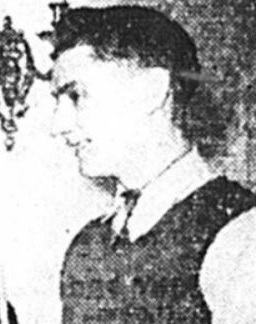
Raymond Reardon (8 October 1932 – 19 July 2024) was a Welsh professional snooker player who dominated the sport in the 1970s, winning the World Snooker Championship six times and claiming more than a dozen other professional titles. Due to his dark widow's peak and prominent eye teeth, he was nicknamed "Dracula".
Key Information
Until his mid-thirties, Reardon worked as a coal miner and then as a police officer while pursuing snooker at an amateur level. His titles during this era included six consecutive Welsh Amateur Championships from 1950 to 1955 and the English Amateur Championship in 1964. He turned professional in 1967 and became World Champion in 1970, 1973, 1974, 1975, 1976, and 1978; he was also runner-up in 1982. His other major tournament wins included the inaugural Pot Black tournament in 1969, the 1976 Masters, and the 1982 Professional Players Tournament. The first player to be ranked "world number one" when world rankings were introduced during the 1976–77 season, he held the position for the next five years. He regained the top ranking position in 1982, after which his form declined; he dropped out of the elite top-16 ranked players after the 1986–87 season.
In 1978, Reardon became the oldest World Champion, aged 45 years and 203 days, a record he held for the next 44 years, until Ronnie O'Sullivan won his seventh world title at the 2022 event, aged 46 years and 148 days. Reardon became the oldest winner of a ranking title when he won the 1982 Professional Players Tournament aged 50 years and 14 days; his record endured for 43 years, until Mark Williams won the 2025 Xi'an Grand Prix at the age of 50 years and 206 days. Appointed a Member of the Order of the British Empire in 1985, Reardon retired from professional competition in 1991, aged 58. He never achieved a maximum break in tournament play; his highest break in competition was 146.
During his retirement, Reardon served as president of Churston Ferrers golf club in Devon, where he was a member for over 40 years. He mentored O'Sullivan in preparation for his 2004 World Championship campaign, helping him lift his second world title. In 2017, the Welsh Open trophy was renamed the Ray Reardon Trophy in his honour. Reardon died from cancer in July 2024, aged 91.
Early life
[edit]The son of Ben and Cynthia Reardon,[2] he was born on 8 October 1932 in the coal mining community of Tredegar in Monmouthshire, Wales.[3] When eight years old, he was introduced to a version of snooker by his uncle, and at ten he was practising cue sports twice-weekly at Tredegar Workmen's Institute as well as on a scaled-down billiard table at home. He primarily played English billiards rather than snooker, which, according to authors Luke Williams and Paul Gadsby, helped improve his control of the cue ball and his potting.[4] At the age of 14, following in the footsteps of his father, Reardon turned down a place at a grammar school to become a miner at Ty Trist Colliery. He wore white gloves while mining, to protect his hands for snooker.[4] He made his first century break on his 17th birthday.[2]
In March 1959, Reardon married Sue, a pottery painter.[5]: 43 After a rockfall in which he was buried for three hours, and with Sue's encouragement, he quit mining and became a police officer in 1960 when his family moved to Stoke-on-Trent in Staffordshire, England.[4][5]: 43 While serving in the police force, Reardon earned commendations for bravery. On one occasion, he disarmed a man who was wielding a shotgun. On another, he crawled across an icy rooftop and dropped through a skylight onto a burglar.[2]
Amateur snooker career
[edit]In 1949, Reardon won the News of the World Amateur title and was awarded an ash cue stick, presented to him by 15-time world snooker champion, Joe Davis. Reardon used this cue for almost 30 years until it came apart shortly after the 1978 World Championship final.[6] He reached the final of the 1949–50 under-19 Junior championship, losing 2–3 to Jack Carney.[7] Reardon first won the Welsh Amateur Championship in 1950, defeating the defending champion John Ford 5–3 in the final,[8] and he retained the title every year until 1955.[9] He reached the final of the 1956 English Amateur Championship, where he led Tommy Gordon 7–3 after the first day, but lost the tip from his cue early on the second day and was defeated 9–11.[10]
Reardon played a fellow Tredegar resident, Cliff Wilson, in a succession of money matches and faced him several times in amateur tournaments.[11][12] Their contests attracted hundreds of spectators and in his 1979 book, The Story of Billiards and Snooker, Clive Everton describes them as "modern snooker's nearest equivalent to a bare knuckle prize fight."[13]
After losing in the first round of the 1957 English Amateur Championship, Reardon decided to take some time out from competitive snooker to work on improving his game. He next entered the championship in 1964, when he won the title by defeating John Spencer 11–8 in the final.[14]
Professional career
[edit]Six times world snooker champion
[edit]That victory in 1964 led to an invitation to tour South Africa with Jonathan Barron, which proved so successful that Reardon was offered the opportunity to return and tour again as a professional. He returned there after having resigned from the police force and turned professional in 1967. When he played Jimmy van Rensberg in the South African Challenge, Reardon won the best-of-three matches event 2–1.[10][15][16]
Reardon's first appearance at the World Snooker Championship was in 1969 in a quarter-final against Fred Davis in Stoke-on-Trent.[17] The match featured lengthy tactical exchanges between the players, resulting in some of the longest sessions ever recorded in World Championship play.[18] Neither player was ahead by more than two frames until Reardon won the 27th frame to lead 15–12, after which Davis won six frames in a row. The best-of-49-frames match went to a deciding frame, which Davis won.[18][19] In July 1969, the BBC began broadcasting Pot Black, a competition of one-frame matches which became popular with viewers and enhanced the profile and earning power of the participants. Reardon won the first series by defeating Spencer 88–29 in the one-frame final.[20]
In London in April 1970, Reardon won the World Championship for the first time, defeating Davis in the quarter-finals, Spencer in the semi-finals, and John Pulman 37–33 in the final, having led 27–14 before Pulman reduced the lead to one frame at 34–33.[20][21] At the next World Championship, played in Australia in November 1970, Reardon won all four of his round-robin group matches,[22][23] and qualified for a place in the semi-finals, where Spencer established a winning margin against him at 25–7 and finished the match 34–15 ahead after dead frames.[24][25] Reardon won the October 1971 edition of the Park Drive 2000, defeating Spencer 4–3 in the final after placing second in the round-robin stage (behind Spencer who had placed first). In the Spring 1972 edition, he made a break of 146 in the round-robin, which was the highest-ever break in competitive play at that time.[26] This remained the highest official break of Reardon's career,[27] as he never achieved a maximum break of 147 in tournament play.[28]
At the 1972 World Championship, Reardon lost his first match 22–25 to Rex Williams in the quarter-finals.[29] He reached the final of the 1973 World Championship in Manchester, beating Jim Meadowcroft 16–10, and Spencer 23–22. He lost the first seven frames of the final to Eddie Charlton, but took 17 of the next 23 to hold a four-frame advantage at 17–13 and then moved further ahead into a 27–25 lead. At this point in the match, he complained to the organisers about the television lighting reflecting on the object balls; when his complaint was not resolved by the organisers, he approached the tournament sponsors and threatened to withdraw from the competition, after which the lighting was changed. Reardon was ahead 31–29 going into the last day, and won 38–32 to claim his second world title.[29][30]
Reardon defended his World Championship title in 1974, defeating Meadowcroft 15–3, Marcus Owen 15–11 and Davis 15–3 before beating Graham Miles 22–12 in the final.[29] In a post-match interview, Reardon suggested that he had not played "any better than mediocre" in the final, but that Miles had not created any pressure for him, adding: "I don't feel the elation that I felt at winning last year."[31][32] He also won the 1974 Pontins Professional, leading 9–4 in the final and winning it 10–9 after Spencer took five consecutive frames to force a decider.[33]
In 1975, Reardon reached the final of the inaugural Masters by winning 5–4 on the pink ball against Williams in the semi-final, but lost the final 8–9 to Spencer on a re-spotted black.[34] At the 1975 World Championship in Australia, he won a tough quarter-final against Spencer, 19–17, and then eliminated Alex Higgins 19–14 in the semi-finals to meet Charlton in the final. Reardon was leading 16–8, but Charlton won the following nine frames and then went ahead 28–23 before Reardon pulled back seven of the next eight frames to lead 30–29. Charlton took the 60th frame to tie the match but Reardon won the vital 61st frame to secure the world title for the third successive year.[34] A week later, at Pontins in Prestatyn, Wales, he retained the Professional title and won the Spring Open title.[34]
Reardon won the Masters in January 1976, beating Miles 7–3 in the final.[35] He had earned his place in the final by defeating Pulman 4–1 in the quarter-finals, in a match where the highest break (compiled by Pulman) was only 22, and then Charlton 5–4 in the semi-finals.[36]
In 1976, Reardon won his fifth world title, defeating John Dunning 15–7, Dennis Taylor 15–2 and Perrie Mans 20–10. During the final in Manchester against Higgins, Reardon complained about the television lighting (which was changed), the quality of the table (to which adjustments were subsequently made), and the referee (who was replaced). Higgins led in the early stages of the match, but Reardon recovered to 15–13 before winning 12 of the next 15 frames for a 27–16 victory.[29][37] He claimed the Pontins Professional title for the third consecutive year, defeating Fred Davis 10–9 in a contest described by Snooker Scene's correspondent as the best match of the professional season for "quality, interest and excitement".[38] Both players made a century break in the match, Reardon pulling ahead to 8–5 after losing all of the first three frames, but then needing the last two when Davis took the score to 9–8.[38] Reardon also won the 1976 World Professional Match-play Championship in Australia, defeating the event's promoter Charlton 31–24 in the final.[39]
Reardon reached the final of the 1977 Masters, beating Williams 4–1 in the quarter-finals and Miles 5–2 in the semi-finals, but lost the final 6–7 to Doug Mountjoy.[40] He was also runner-up at the 1977 Benson & Hedges Ireland Tournament, losing 2–5 to Higgins.[41] Reardon's successful run at the World Championship ended in 1977 at the Crucible Theatre in Sheffield,[a] when he lost to Spencer in the quarter-finals 6–13; it was his first defeat at the World Championship since his quarter-final loss to Williams in 1972.[29]
Reardon regained the world title in 1978 in Sheffield; after recovering from 2–7 down to beat Mountjoy 13–9 in the last-16 round, he defeated Bill Werbeniuk 13–6, Charlton 18–14, and Mans 25–18 in the final to lift the trophy for the sixth and final time.[43] Aged 45 years and 203 days, Reardon was the oldest winner of the World Snooker Championship,[44] a record that lasted until 2022 when Ronnie O'Sullivan won the title aged 46 years and 148 days.[45][46] Soon after establishing this record, Reardon regained the Pontins Professional title, taking it for the fourth time in five years, defeating Spencer 7–2 in the final.[47] The same year, his old rival from Tredegar, Wilson, won the World Amateur Championship.[48]
Later professional career
[edit]Toward the end of 1978, Reardon beat Patsy Fagan 6–1 and Higgins 11–9 to win the one-off "Champion of Champions" event, sponsored by the Daily Mirror and held at the Wembley Conference Centre.[49] He also won the 1979 Forward Chemicals Tournament.[41]
Reardon regained his Pot Black title in 1979 by defeating Mountjoy 2–1 in the final. This was Reardon's first win since he won the inaugural event in 1969, although he was runner-up in 1970, 1972 and 1980.[50] At the 1979 World Championship, he lost to Dennis Taylor in the quarter-finals, and was eliminated by David Taylor at the same stage in 1980. He progressed one stage further in 1981, beating Spencer 13–11 and Werbeniuk 13–10 before being defeated by Mountjoy in the semi-finals. Mountjoy scored a championship record break of 145 during the match, which he won 16–10.[51]
In 1979, Reardon joined with Mountjoy and the reigning World Champion, Terry Griffiths, to win the first World Challenge Cup for Wales, defeating England (Fred Davis, Spencer and Miles) in the final, 14–3. The same Wales team retained the title in 1980.[52]
At the 1982 Highland Masters, Reardon eliminated Steve Davis in the semi-finals before winning the event by defeating Spencer 11–4 in the final.[53]He reached the final of the 1982 World Championship, losing to Higgins 15–18. En route to the final, he defeated Jim Donnelly 10–5, John Virgo 13–8, Silvino Francisco 13–8, and Charlton, in the semi-finals, by 16–11 after winning five successive frames from 11-all.[41][54] In the final, Reardon built a 5–3 lead, but was behind 7–10 at the end of the first day. He later levelled the match at 15–15, but Higgins won the last three frames to claim the title.[55]
For the 1982–83 season, Reardon returned to number one in the world rankings, which at the time was only based on performances at the World Championships over previous years.[56] He won the Professional Players Tournament in October 1982, beating Jimmy White 10–5 in the final,[57] reached the final of the Benson & Hedges Masters, losing 7–9 to Cliff Thorburn,[41] and won the 1983 International Masters, where he defeated Davis 2–1 in the semi-final group stages, before prevailing 9–6 against White in the final, having trailed 3–5.[58] At the Professional Players Tournament, Reardon set a record as the oldest winner of a ranking tournament at the age of 50 years and 14 days;[44] this record stood for 43 years, until Mark Williams won the 2025 Xi'an Grand Prix at the age of 50 years and 206 days.[59] He also regained the Welsh Professional Title, eliminating Griffiths 9–4 and Mountjoy 9–1 in the semi-final and final respectively.[60] At the 1983 World Championship, he lost 12–13 in the second round to Tony Knowles; he reached the quarter-finals in 1984 but was eliminated 2–13 by Kirk Stevens.[41]
Reardon first wore spectacles in a match at the 1985 British Open, which he lost 4–5 to Dave Martin after leading 4–1.[61] He reached the semi-finals of the 1985 World Championship (playing with unassisted vision), where he lost 5–16 to Davis.[62] He lost to John Campbell in the first round of the 1986 World Championship, and to Davis in the second round in 1987.[41]
After dropping out of the top-16 rankings in 1987,[63] Reardon whitewashed Davis 5–0 in the third round of the 1988 British Open, using his old cue (encouraged to rebuild it by Davis) with which he had won his world titles. In the next round, playing under TV lighting, he suffered a drying of contact lenses (which he started using in 1987) and lost 2–5 to David Roe, having led 2–1.[64][65]
In 1985, Reardon left his wife Sue, with whom he had two children, to live with Carol Covington.[66][67] He told reporters from the Daily Mirror that Sue had been "fully informed" of his eight-year affair with Covington.[66] The Reardons divorced in December 1986, and Reardon married Covington in June 1987.[68]
Retirement, death and legacy
[edit]Reardon played his last competitive ranking match in the second round of qualifying for the 1991 World Championship, where he was defeated 5–10 by Jason Prince, losing three frames on the final black. Afterwards, Reardon said that he felt "no bitterness" but that he would not be returning. Aged 58 and having slipped to 127th in the provisional rankings, Reardon halted his playing career, mentioning that he had not entered any tournaments for the following season because the qualifying event dates clashed with his exhibition commitments on the holiday camp circuit, but adding that "even if it were feasible, [he] wouldn't play" except in invitation or seniors events.[69] He later played in the 2000 World Seniors Masters where he lost his opening one-frame match 46–69 to Miles.[70] He advised Ronnie O'Sullivan on the way to his 2004 World Championship victory, giving him psychological and tactical help.[71]
When the snooker world rankings were introduced in 1976, Reardon was the first to claim the position of world number one, retaining it until 1981.[3] His win in the 1982 Professional Players Tournament at 50 contributed to his recapturing the world number one position in the first set of rankings to be calculated on tournaments other than the World Championship.[72] Reardon and Spencer were the first players to exploit the commercial opportunities made available by the increasing interest in snooker in the early 1970s.[73] After winning Pot Black in 1969 and the world title in 1970, Reardon took up offers for exhibition matches and holiday camp exhibition engagements.[56] Everton and Gordon Burn (1986) have both noted that his peak as a player pre-dated the real boom in snooker that happened in the 1980s.[10][74]
In January 1976, Reardon was the subject of an episode of the British TV show, This is Your Life, the guests including Spencer, Charlton, Higgins, Pulman, Miles, Thorburn, Jackie Rea and Joyce Gardner.[75] Later that year, he was a guest on The David Nixon Show,[76] and in 1979 he was a guest on Parkinson,[77] A Question of Sport,[78] and The Paul Daniels Magic Show.[79] His later guest appearances included Punchlines (1981),[80] Saturday Superstore (1984),[81] The Rod and Emu Show (1984),[82] Sorry! (1985),[83] and The Little and Large Show (1987).[84] He appeared on the snooker-themed game show Big Break several times.[85] Ian Wooldridge wrote and presented a Ray Reardon special on BBC2 in 1984,[86] and the same channel broadcast Ray Reardon at 80 in 2012.[87] Reardon was a castaway on BBC Radio 4's Desert Island Discs in 1979, and chose a set of golf clubs and balls as his luxury item.[88]
His prominent eye teeth and widow's peak led to him being nicknamed "Dracula";[89][90] the sobriquet was first used by Paul Daniels after Reardon appeared on one of his television shows.[91] Everton has described Reardon in his early career as a "deadly long potter", and praised his "nerve with which he identifies and seizes frame winning openings."[62] Jack Karnehm wrote that Reardon achieved "complete and utter dominance of the game" by 1976,[92] and "had a determination and will to win unequalled since the heyday of Joe Davis."[93] Williams and Gadsby described Reardon as "without doubt the most successful snooker player of the 1970s", and claimed "he set new standards for mental fortitude" in the game.[94]
After seeing Reardon play at Pontins in 1975, Steve Davis incorporated elements that he had observed in Reardon's game into his own, including a pause before hitting the cue ball, and his "approach" to the shot. Burn wrote "Ray Reardon behaved as if he thought he was special. And Steve—with a little encouragement from [his manager] Barry [Hearn]—decided that was how he was going to behave from now on."[95] Davis admitted that he had lost some respect for Reardon when, as a new professional, he experienced Reardon asking for the pack of red balls to be re-racked six times, claiming that the referee had not placed them correctly. Unsettled by what he felt was gamesmanship on Reardon's part, Davis had lost the match 0–4.[96] Spencer stated in his autobiography that he was never friendly with Reardon, and suggested that he was "the sort of person who could laugh 24 hours a day if it was to his advantage".[97]
Reardon was appointed a Member of the Order of the British Empire (MBE) in the 1985 Birthday Honours for services to snooker.[62][98] He resided in Devon,[27] and was the president of the golf club in Churston,[99] a position that he had held since 2001,[100] having been a member since the 1970s.[101] He made a playing appearance at a Snooker Legends evening in Plymouth in July 2010.[102] The Welsh Open trophy was renamed the Ray Reardon Trophy in his honour, starting with the 2017 edition of the tournament.[103]
Reardon died of cancer on 19 July 2024, at the age of 91.[104] Three-time world champion Mark Williams led tributes to his fellow Welshman, describing Reardon as "one of the best sportspeople ever from Wales and the best snooker player."[105]
Performance and rankings timeline
[edit]| Tournament | 1968/ 69 |
1969/ 70 |
1970/ 71 |
1971/ 72 |
1972/ 73 |
1973/ 74 |
1974/ 75 |
1975/ 76 |
1976/ 77 |
1977/ 78 |
1978/ 79 |
1979/ 80 |
1980/ 81 |
1981/ 82 |
1982/ 83 |
1983/ 84 |
1984/ 85 |
1985/ 86 |
1986/ 87 |
1987/ 88 |
1988/ 89 |
1989/ 90 |
1990/ 91 |
Ref. |
|---|---|---|---|---|---|---|---|---|---|---|---|---|---|---|---|---|---|---|---|---|---|---|---|---|
| Ranking | No ranking system | 1 | 1 | 1 | 1 | 1 | 4 | 1 | 2 | 5 | 6 | 15 | 38 | 40 | 54 | 74 | [63][106][107] | |||||||
| Ranking tournaments | ||||||||||||||||||||||||
| Grand Prix[b] | Tournament Not Held | W | 3R | 3R | 1R | 1R | 1R | LQ | A | LQ | [41] | |||||||||||||
| Asian Open[c] | Tournament Not Held | Non-Ranking Event | Not Held | A | LQ | [41] | ||||||||||||||||||
| Dubai Classic[d] | Tournament Not Held | NR | A | LQ | [41] | |||||||||||||||||||
| UK Championship | Tournament Not Held | Non-Ranking Event | QF | 2R | 2R | 1R | 1R | LQ | LQ | [41] | ||||||||||||||
| Classic | Tournament Not Held | Non-Ranking Event | 1R | QF | 1R | 1R | 1R | 2R | LQ | A | [41] | |||||||||||||
| British Open[e] | Tournament Not Held | Non-Ranking Event | 2R | 1R | 2R | 2R | 1R | LQ | A | [41] | ||||||||||||||
| European Open | Tournament Not Held | 1R | A | LQ | [41] | |||||||||||||||||||
| World Championship | Non-Ranking Event | W | W | W | QF | W | QF | QF | SF | F | 2R | QF | SF | 1R | 2R | LQ | LQ | LQ | LQ | [41] | ||||
| Non-ranking tournaments | ||||||||||||||||||||||||
| Scottish Masters | Tournament Not Held | QF | QF | A | A | A | A | A | NH | A | A | [41] | ||||||||||||
| European Grand Masters | Tournament Not Held | F | [112] | |||||||||||||||||||||
| The Masters | Tournament Not Held | F | W | F | SF | SF | SF | QF | QF | F | QF | QF | 1R | 1R | A | A | A | A | [41] | |||||
| Irish Masters[f] | Tournament Not Held | A | A | F | SF | F | RR | F | SF | F | QF | 1R | 1R | A | A | A | A | A | [41] | |||||
| Welsh Professional Championship | Tournament Not Held | W | NH | F | W | SF | W | SF | SF | QF | QF | QF | QF | QF | QF | [41] | ||||||||
| Professional Snooker League[g] | Tournament Not Held | RR | Not Held | A | A | A | A | A | [115] | |||||||||||||||
| Pontins Professional | Tournament Not Held | W | W | W | RR | W | SF | F | QF | F | F | SF | SF | QF | A | A | A | A | A | [41] | ||||
| Former ranking tournaments | ||||||||||||||||||||||||
| Canadian Masters[h] | Tournament Not Held | Non-Ranking | Tournament Not Held | Non-Ranking | 1R | Not Held | [41] | |||||||||||||||||
| International Open[i] | Tournament Not Held | NR | 2R | 2R | 2R | 1R | 2R | 1R | 1R | A | NH | [41] | ||||||||||||
| Former non-ranking tournaments | ||||||||||||||||||||||||
| Stratford Professional | Not Held | F | A | A | Tournament Not Held | [118] | ||||||||||||||||||
| Park Drive 2000 (Spring) | Not Held | A | RR | Tournament Not Held | [26] | |||||||||||||||||||
| Park Drive 2000 (Autumn) | Not Held | W | RR | Tournament Not Held | [26] | |||||||||||||||||||
| Men of the Midlands | Not Held | SF | F | Tournament Not Held | [119] | |||||||||||||||||||
| World Championship | QF | W | SF | QF | W | Ranking Event | [29] | |||||||||||||||||
| World Masters | Tournament Not Held | RR | Tournament Not Held | [120] | ||||||||||||||||||||
| Norwich Union Open | Tournament Not Held | A | F | Tournament Not Held | [41] | |||||||||||||||||||
| Watney Open | Tournament Not Held | SF | Tournament Not Held | [41] | ||||||||||||||||||||
| Canadian Club Masters | Tournament Not Held | F | Tournament Not Held | [121] | ||||||||||||||||||||
| World Matchplay Championship | Tournament Not Held | F | Tournament Not Held | [41] | ||||||||||||||||||||
| Dry Blackthorn Cup | Tournament Not Held | SF | Tournament Not Held | [122] | ||||||||||||||||||||
| Holsten Lager International | Tournament Not Held | QF | Tournament Not Held | [123] | ||||||||||||||||||||
| Forward Chemicals Tournament | Tournament Not Held | W | Tournament Not Held | [41] | ||||||||||||||||||||
| Golden Masters | Tournament Not Held | F | W | Tournament Not Held | [124] | |||||||||||||||||||
| Kronenbrau 1308 Classic | Tournament Not Held | F | Tournament Not Held | [125] | ||||||||||||||||||||
| Champion of Champions | Tournament Not Held | W | NH | RR | Tournament Not Held | [41][126] | ||||||||||||||||||
| International Open[i] | Tournament Not Held | 2R | Ranking Event | NH | [41] | |||||||||||||||||||
| Highland Masters | Tournament Not Held | W | Tournament Not Held | [53] | ||||||||||||||||||||
| Classic | Tournament Not Held | A | SF | SF | 1R | Ranking Event | [41][127] | |||||||||||||||||
| Tolly Cobbold Classic | Tournament Not Held | F | A | A | A | QF | A | Tournament Not Held | [41][128] | |||||||||||||||
| UK Championship | Tournament Not Held | 2R | 2R | A | SF | QF | SF | QF | Ranking Event | [41] | ||||||||||||||
| British Open[e] | Tournament Not Held | F | RR | RR | W | 2R | Ranking Event | [41] | ||||||||||||||||
| KitKat Break for World Champions | Tournament Not Held | QF | Tournament Not Held | [41] | ||||||||||||||||||||
| Belgian Classic | Tournament Not Held | QF | Tournament Not Held | [41] | ||||||||||||||||||||
| Canadian Masters[h] | Tournament Not Held | A | A | A | SF | A | A | A | Tournament Not Held | SF | A | A | R | Not Held | [41] | |||||||||
| Performance Table Legend | |||||
|---|---|---|---|---|---|
| LQ | lost in the qualifying draw | #R | lost in the early rounds of the tournament (WR = Wildcard round, RR = Round robin) |
QF | lost in the quarter-finals |
| SF | lost in the semi-finals | F | lost in the final | W | won the tournament |
| DNQ | did not qualify for the tournament | A | did not participate in the tournament | ?? | no reliable source available |
| NH / Not Held | means an event was not held. | |||
| NR / Non-Ranking Event | means an event is/was no longer a ranking event. | |||
| R / Ranking Event | means an event is/was a ranking event. | |||
Career finals
[edit]Sources for the ranking and non-ranking final results can be found in the Performance timeline section above.
Ranking finals: 6 (5 titles)
[edit]| Legend |
|---|
| World Championship (4–1) |
| Other (1–0) |
| Outcome | No. | Year | Championship | Opponent in the final | Score |
|---|---|---|---|---|---|
| Winner | 1. | 1974 | World Championship (3) | 22–12 | |
| Winner | 2. | 1975 | World Championship (4) | 31–30 | |
| Winner | 3. | 1976 | World Championship (5) | 27–16 | |
| Winner | 4. | 1978 | World Championship (6) | 25–18 | |
| Runner-up | 1. | 1982 | World Championship | 15–18 | |
| Winner | 5. | 1982 | Professional Players Tournament | 10–5 |
Non-ranking finals: 47 (22 titles)
[edit]| Legend |
|---|
| World Championship (2–0)[j] |
| The Masters (1–3) |
| Other (19–22) |
Team finals: 6 (3 titles)
[edit]| Outcome | No. | Year | Championship | Team/partner | Opponent(s) in the final | Score | Ref. |
|---|---|---|---|---|---|---|---|
| Winner | 1. | 1975 | Ladbroke International | Rest of the World[k] | Cumulative score | [131] | |
| Winner | 2. | 1979 | World Challenge Cup | 14–3 | [52] | ||
| Winner | 3. | 1980 | World Challenge Cup (2) | 8–5 | [133] | ||
| Runner-up | 1. | 1981 | World Team Classic | 3–4 | [52] | ||
| Runner-up | 2. | 1983 | World Team Classic (2) | 2–4 | [52] | ||
| Runner-up | 3. | 1985 | World Doubles Championship | 5–12 | [136] |
Pro-am finals: 3 (1 title)
[edit]| Outcome | No. | Year | Championship | Opponent in the final | Score | Ref. |
|---|---|---|---|---|---|---|
| Winner | 1. | 1975 | Pontins Spring Open | 7–1 | [137] | |
| Runner-up | 1. | 1982 | Pontins Spring Open | 4–7 | [137] | |
| Runner-up | 2. | 1983 | Pontins Spring Open (2) | 3–7 | [137] |
Amateur finals: 8 (7 titles)
[edit]| Outcome | No. | Year | Championship | Opponent in the final | Score | Ref. |
|---|---|---|---|---|---|---|
| Winner | 1. | 1950 | Welsh Amateur Championship | 5–3 | [8] | |
| Winner | 2. | 1951 | Welsh Amateur Championship (2) | 5–2 | [138] | |
| Winner | 3. | 1952 | Welsh Amateur Championship (3) | 5–3 | [9] | |
| Winner | 4. | 1953 | Welsh Amateur Championship (4) | 5–3 | [9] | |
| Winner | 5. | 1954 | Welsh Amateur Championship (5) | unknown | [9] | |
| Winner | 6. | 1955 | Welsh Amateur Championship (6) | 5–2 | [139] | |
| Runner-up | 1. | 1956 | English Amateur Championship | 9–11 | [140] | |
| Winner | 7. | 1964 | English Amateur Championship | 11–8 | [140] |
Publications
[edit]- Reardon, Ray (1976). Classic Snooker. Newton Abbot: David & Charles. ISBN 978-0-340-23112-8. OCLC 16431293.
- Reardon, Ray (1980). Ray Reardon's 50 Best Trick Shots. Newton Abbot: David & Charles. ISBN 978-0-7153-7993-6. OCLC 9431755.
- Reardon, Ray; Buxton, Peter (1982). Ray Reardon. Newton Abbot: David & Charles. ISBN 978-0-7153-8262-2. OCLC 16539704.
- Reardon, Ray (1983). Bedside Snooker. Newton Abbot: Century. ISBN 978-0-00-636845-8. OCLC 12507221.
- Reardon, Ray; Hennessey, John (1985). Enjoying Snooker with Ray Reardon: A Personal Guide to the Game. London: Orbis. ISBN 978-0-85613-909-3. OCLC 60071113.
Notes
[edit]- ^ This was the first year that the World Championship was held at the Crucible.[42]
- ^ The event was also called the Professional Players Tournament (1982/1983–1983/1984).[108]
- ^ The event was also called the Thailand Masters (1983/1984–1986/1987 & 1991/1992) and the Asian Open (1989/1990–1992/1993).[109]
- ^ The event was also called the Dubai Masters (1988/1989).[110]
- ^ a b The event was also called the British Gold Cup (1979/1980), Yamaha Organs Trophy (1980/1981) and International Masters (1981/1982–1983/1984).[111]
- ^ The event was also called the Benson & Hedges Ireland Tournament (1974/1975–1976/1977).[113]
- ^ The event was later called the Premier League.[114]
- ^ a b The event was also called the Canadian Open (1978/1979–1980/1981).[116]
- ^ a b The event was also called the Goya Matchroom Trophy (1985/1986).[117]
- ^ The World Professional Billiards and Snooker Association implemented the ranking system following the 1976 World Snooker Championship. In the initial list, points were awarded based on performances in the 1974, 1975 and 1976 World Championships.[129]
- ^ "Rest of the World" team: Reardon, Cliff Thorburn (Canada), Eddie Charlton (Australia), Alex Higgins and Jackie Rea (both Northern Ireland)[130]
- ^ England team: Rex Williams, Fred Davis, Graham Miles, John Spencer, John Pulman[130]
- ^ Wales team: Reardon, Terry Griffiths, Doug Mountjoy[132]
- ^ England team: John Spencer, Fred Davis, Graham Miles[132]
- ^ Wales team: Reardon, Terry Griffiths, Doug Mountjoy[133]
- ^ Canada team: Cliff Thorburn, Bill Werbeniuk, Kirk Stevens[133]
- ^ Wales team: Reardon, Terry Griffiths, Doug Mountjoy[134]
- ^ England team: Steve Davis, John Spencer, David Taylor[134]
- ^ Wales team: Reardon, Terry Griffiths, Doug Mountjoy[135]
- ^ England team: Steve Davis, Tony Knowles, Tony Meo[135]
References
[edit]- ^ "Ray Reardon". World Snooker Tour. Archived from the original on 4 December 2022. Retrieved 13 February 2024.
- ^ a b c Everton, Clive (21 July 2024). "Ray Reardon obituary". The Guardian. ISSN 0261-3077. Retrieved 22 July 2024.
- ^ a b "Profile: Ray Reardon". Eurosport. 2 March 2010. Archived from the original on 7 April 2016. Retrieved 28 June 2022.
- ^ a b c Williams & Gadsby 2005, p. 68.
- ^ a b Reardon, Ray; Buxton, Peter (1982). Ray Reardon. Newton Abbott: David & Charles. ISBN 0715382624.
- ^ Morrison 1987, pp. 108–109.
- ^ "High quality snooker in 1949–50 B.A. & C.C. youth's (16–18) snooker championship". The Billiard Player. Billiards Association and Control Council. December 1949. p. 13.
- ^ a b "Snooker: Tredegar boy is champion". Merthyr Express. 11 February 1950. p. 16.
- ^ a b c d "Welsh Championship Records". welshsnooker.com. WBSA. Archived from the original on 13 October 2018. Retrieved 22 July 2021.
- ^ a b c Everton 1985, p. 26.
- ^ Hodgson, Guy (26 May 1994). "Obituary: Cliff Wilson". The Independent. Archived from the original on 2 April 2019. Retrieved 23 July 2021.
- ^ Everton, Clive (28 May 1994). "Cue for a happy life". The Guardian. p. 30.
- ^ Everton 1979, p. 80.
- ^ Everton & Silverton 1972, p. 19.
- ^ Everton & Silverton 1972, pp. 19–20.
- ^ "Ray Reardon turns professional". Billiards and Snooker. Billiards Association and Control Council. December 1967. p. 5.
- ^ Everton, Clive (17 November 1968). "Old pros face the new men". The Observer. p. 18. Archived from the original on 3 November 2020. Retrieved 23 July 2021 – via Newspapers.com.
- ^ a b Everton, Clive (February 1969). "Davis wears down Reardon". Billiards and Snooker. Billiards Association and Control Council. pp. 4–5.
- ^ "Snooker win in last frame". The Sydney Morning Herald. 28 January 1969. p. 24. Archived from the original on 23 July 2021. Retrieved 23 July 2021 – via Newspapers.com.
- ^ a b Williams & Gadsby 2005, p. 71.
- ^ Everton 1985, p. 56.
- ^ "Reardon in final four". The Sydney Morning Herald. 22 October 1970. p. 15. Archived from the original on 12 March 2016. Retrieved 1 March 2016.
- ^ "Match by match". World Snooker. Birmingham: Clive Everton. January 1971. pp. 1–2.
- ^ Williams & Gadsby 2005, p. 72.
- ^ "Spencer makes the final". The Sydney Morning Herald. 30 October 1970. p. 15.
- ^ a b c Everton 1981, p. 90.
- ^ a b "Ray Reardon". World Snooker. Archived from the original on 27 October 2021. Retrieved 27 July 2021.
- ^ "Official 147s". World Snooker. Archived from the original on 22 July 2020. Retrieved 24 July 2021.
- ^ a b c d e f "Embassy World Championship". Snooker Scene. Archived from the original on 24 January 2013. Retrieved 24 July 2021.
- ^ Williams & Gadsby 2005, pp. 73–74.
- ^ Williams & Gadsby 2005, p. 74.
- ^ "1974 Pontin's Festival – Pontins Professional". Global Snooker Centre. Archived from the original on 21 April 2006. Retrieved 29 August 2018.
- ^ "£1000 for Reardon". Snooker Scene. Birmingham: Everton's News Agency. July 1974. p. 9.
- ^ a b c Everton 1986, p. 103.
- ^ Everton 1986, p. 105.
- ^ "Reardon wins Benson and Hedges". Snooker Scene. Birmingham: Everton's News Agency. March 1976. pp. 16–17.
- ^ Williams & Gadsby 2005, p. 75.
- ^ a b "Pontin's classic professional final". Snooker Scene. Birmingham: Everton's News Agency. June 1976. p. 24.
- ^ Turner, Chris (2008). "World Matchplay". Chris Turner's Snooker Archive. Archived from the original on 28 February 2012. Retrieved 26 July 2021.
- ^ Everton, Clive (March 1977). "Benson and Hedges masters". Snooker Scene. Birmingham: Everton's News Agency. pp. 17–19.
- ^ a b c d e f g h i j k l m n o p q r s t u v w x y z aa ab ac ad ae af ag ah Hayton & Dee 2004, pp. 834–836.
- ^ "1977: Spencer sparkles in Sheffield". BBC Sport. 18 April 2003. Archived from the original on 8 April 2004. Retrieved 23 July 2022.
- ^ "Embassy world professional snooker championship". Snooker Scene. Birmingham: Everton's News Agency. June 1978. pp. 7–17.
- ^ a b Turner, Chris (2008). "Various Snooker Records". Chris Turner's Snooker Archive. Archived from the original on 10 February 2013. Retrieved 27 July 2021.
- ^ Sutcliffe, Steve (2 May 2022). "World Snooker Championship 2022: Ronnie O'Sullivan claims record-equalling seventh world title". BBC Sport. Archived from the original on 3 May 2022. Retrieved 2 May 2022.
- ^ Hammer, Chris (3 May 2022). "Ronnie O'Sullivan's career statistics and records as he equals Stephen Hendry's tally of seven World Championship titles". Sporting Life. Archived from the original on 8 May 2022. Retrieved 4 May 2022.
- ^ "The professionals". Snooker Scene. Birmingham: Everton's News Agency. June 1978. p. 20.
- ^ Everton 1985, pp. 53–55.
- ^ "Give him the money! Reardon too good again". Snooker Scene. Birmingham: Everton's News Agency. December 1978. p. 7.
- ^ Perrin 1983, pp. 21–22.
- ^ "Embassy world snooker championship". Snooker Scene. Birmingham: Everton's News Agency. June 1981. pp. 10–15.
- ^ a b c d Morrison 1989, pp. 98–99.
- ^ a b "Reardon on cue". Aberdeen Press and Journal. 19 April 1982. p. 13.
- ^ Everton, Clive (15 May 1982). "Higgins and Reardon the finalists". The Guardian. London. p. 22.
- ^ Morrison 1989, pp. 38–39.
- ^ a b Morrison 1987, p. 108.
- ^ "Final". Snooker Scene. Birmingham: Everton's News Agency. November 1982. p. 22.
- ^ "Yamaha tunes Reardon for world title attempt – final". Snooker Scene. Birmingham: Everton's News Agency. April 1983. p. 9.
- ^ Cartwright, Phil (13 October 2025). "Xi'an Grand Prix 2025: Mark Williams, 50, wins title to become oldest ranking event winner". BBC Sport. Retrieved 13 October 2025.
- ^ "Ray Reardon regains Woodpecker Welsh title". Snooker Scene. Birmingham: Everton's News Agency. April 1983. pp. 12–13.
- ^ Friskin, Sydney (20 February 1985). "Thorne and White lose". The Times. p. 22.
- ^ a b c "Ray Reardon M.B.E.". Snooker Scene. Birmingham: Everton's News Agency. July 1985. p. 3.
- ^ a b Hayton & Dee 2004, pp. 119–120.
- ^ Morrison 1988, p. 89.
- ^ "Davis falls at first fence and Hendry canters home". Snooker Scene. Birmingham: Everton's News Agency. April 1988. pp. 9–13.
- ^ a b Jackson, John; Martin, Alister (22 November 1985). "I'm no cheat, says Dracula". Daily Mirror. p. 3.
- ^ "Reardon surprises snooker world". Aberdeen Press and Journal. 22 November 1985. p. 14.
- ^ "Snooker star Ray takes a break – to get married". Staffordshire Sentinel. 6 June 1987. p. 1.
- ^ "The hard road from Preston to Sheffield". Snooker Scene. Birmingham: Everton's News Agency. May 1991. p. 5.
- ^ Smith, Terry (October 2000). "Senior Superstars". CueSport Magazine. pp. 26–28.
- ^ "'Magic' Ronnie wows Reardon". BBC Sport. 2 May 2004. Archived from the original on 6 April 2012. Retrieved 13 July 2008.
- ^ Morrison 1987, p. 107.
- ^ Morrison 1988, p. 86.
- ^ Burn 2008, p. 135.
- ^ "Ray Reardon: this is your life". Snooker Scene. Birmingham: Everton's News Agency. February 1976. pp. 16–17.
- ^ "Grampian". Aberdeen Evening Express. 12 April 1976. p. 2.
- ^ "BBC1". Daily Mirror. 13 January 1979. p. 12.
- ^ "A Question of Sport". Programme Index. BBC. 12 February 1979. Archived from the original on 27 October 2014. Retrieved 15 July 2022.
- ^ "The Paul Daniels Magic Show". Programme Index. BBC. 30 June 1979. Archived from the original on 17 October 2014. Retrieved 15 July 2022.
- ^ "Grampian". Daily Mirror. 5 December 1981. p. 16.
- ^ "Saturday Superstore". Programme Index. BBC. 21 January 1984. Archived from the original on 15 July 2022. Retrieved 15 July 2022.
- ^ "The Rod and Emu Show". Programme Index. BBC. 10 March 1984. Archived from the original on 15 July 2022. Retrieved 15 July 2022.
- ^ "Sorry!". Programme Index. BBC. 26 May 1985. Archived from the original on 15 July 2022. Retrieved 15 July 2022.
- ^ "The Little and Large Show". Programme Index. BBC. 21 February 1987. Archived from the original on 15 July 2022. Retrieved 15 July 2022.
- ^ "Results 1 to 20 of 26 for "Big Break" "Ray Reardon"". Programme Index. BBC. Archived from the original on 15 July 2022. Retrieved 15 July 2022.
- ^ "Ray, the pitman in white gloves!". Nottingham Evening Post. 19 April 1984. p. 2.
- ^ "Ray Reardon at 80". Programme Index. BBC. 29 April 2012. Archived from the original on 15 July 2022. Retrieved 15 July 2022.
- ^ "Desert Island Discs: Ray Reardon". BBC. Retrieved 15 July 2022.
- ^ Wills, Colin (16 May 1982). "'Dracula' loses the first bite". Sunday Mirror. p. 48.
- ^ "Reardon and Spencer – a great rivalry". World Snooker. 19 May 2020. Archived from the original on 27 July 2021. Retrieved 27 July 2021.
- ^ Morrison 1988, p. 87.
- ^ Karnehm 1982, p. 62.
- ^ Karnehm 1982, p. 64.
- ^ Williams & Gadsby 2005, p. 79.
- ^ Burn 2008, pp. 138–139.
- ^ Davis 2015, pp. 93–94.
- ^ Spencer 2006, pp. 106–107.
- ^ United Kingdom list: "No. 50154". The London Gazette (Supplement). 14 June 1985. p. 15.
- ^ "A message from the Club's President Ray Reardon". churstongolf.com. Archived from the original on 5 September 2011. Retrieved 25 February 2009.
- ^ Fitzgerald, David (28 August 2020). "Why golf is now snooker champion Ray Reardon's game of choice". Torbay Weekly. Retrieved 22 July 2024.
- ^ "Churston Golf Club". churstongolf.com. Archived from the original on 9 September 2004. Retrieved 27 July 2021.
- ^ "Ray Reardon to join Snooker Legends at Plymouth Pavilions (news)". southwestshows.co.uk. 9 June 2010. Archived from the original on 16 June 2010.
- ^ "Welsh Open Snooker trophy named after legend Ray Reardon". BBC Sport. 28 September 2016. Archived from the original on 7 April 2019. Retrieved 15 August 2020.
- ^ "Snooker legend Ray Reardon dies". Sky News. 20 July 2024. Retrieved 20 July 2024.
- ^ "Six-time world snooker champion Reardon dies aged 91". BBC Sport. 20 July 2024. Retrieved 20 July 2024.
- ^ "WPBSA world rankings". Snooker Scene. Birmingham: Everton's News Agency. June 1988. pp. 24–25.
- ^ "The new world rankings". Snooker Scene. Birmingham: Everton's News Agency. June 1990. p. 20.
- ^ Turner, Chris. "Professional Players Tournament, Grand Prix, LG Cup". Chris Turner's Snooker Archive. Archived from the original on 16 February 2012.
- ^ Turner, Chris. "Thailand Open, Thailand Classic, Thailand Masters". Chris Turner's Snooker Archive. Archived from the original on 16 February 2012.
- ^ Turner, Chris. "Dubai Classic, Dubai Masters, Bahrain Snooker Championship". Chris Turner's Snooker Archive. Archived from the original on 7 January 2012.
- ^ Turner, Chris. "British Open Including British Gold Cup, Yamaha Organs Trophy and Yamaha International Masters". Chris Turner's Snooker Archive. Archived from the original on 16 February 2012.
- ^ "Clark wins in Monte Carlo". Snooker Scene. Birmingham: Everton's News Agency. February 1991. p. 31.
- ^ Turner, Chris. "Irish Masters". Chris Turner's Snooker Archive. Archived from the original on 16 February 2012.
- ^ Turner, Chris. "Premier/Matchroom League, Matchroom Championship League". Chris Turner's Snooker Archive. Archived from the original on 16 February 2012.
- ^ Everton 1984, pp. 91–92.
- ^ Turner, Chris. "Canadian Masters". Chris Turner's Snooker Archive. Archived from the original on 16 February 2012.
- ^ Turner, Chris. "International Open, Goya Matchroom Trophy". Chris Turner's Snooker Archive. Archived from the original on 16 February 2012.
- ^ "Owen defeats title holder". Sport Argus. 5 September 1970. p. 11.
- ^ "Higgins too hot for Reardon". Belfast Telegraph. Belfast. 7 March 1972. p. 19.
"Higgins takes Men of Midlands title". Birmingham Daily Post. Birmingham. 6 February 1973. p. 25. - ^ "Reardon is beaten in snooker". The Canberra Times. Canberra. 5 July 1974. p. 18.
- ^ "Higgins beats Reardon to win Canadian Club masters". Snooker Scene. Birmingham: Everton's News Agency. July 1976. pp. 16–17.
- ^ Morrison 1987, p. 32.
- ^ "Spencer first in Holsten lager international". Snooker Scene. Birmingham: Everton's News Agency. February 1979. pp. 12–15.
- ^ Turner, Chris (2011). "Other Non-Ranking and Invitation Events". Chris Turner's Snooker Archive. Archived from the original on 16 February 2012. Retrieved 24 July 2021.
- ^ Morrison 1989, p. 97.
- ^ "Champion of champions". Snooker Scene. Birmingham: Everton's News Agency. November 1980. pp. 6–11.
- ^ "Results: snooker". The Guardian. 3 December 1980. p. 20.
- ^ Everton 1985, pp. 73–74.
- ^ Turner, Chris. "Historical World Rankings 1975/76 to 1989/90". Chris Turner's Snooker Archive. Archived from the original on 8 June 2012. Retrieved 23 July 2021.
- ^ a b "ITV London". Reading Evening Post. Reading. 5 April 1975. p. 2.
- ^ Everton 1976, pp. 6–7.
- ^ a b "A successful experiment". Snooker Scene. December 1980. pp. 3–9.
- ^ a b c Morrison 1987, p. 143.
- ^ a b "World Team Classic". Snooker Scene. December 1981. pp. 5–11.
- ^ a b "England regain title". Snooker Scene. Birmingham: Everton's News Agency. December 1983. p. 14.
- ^ Hale 1987, pp. 226–227.
- ^ a b c Morrison 1987, p. 100.
- ^ "Ray Reardon's record". Merthyr Express. 10 March 1951. p. 15.
- ^ "Welsh billiards championship". Pontypridd Observer. 19 March 1955. p. 13.
- ^ a b Morrison 1987, p. 37.
Bibliography
[edit]- Burn, Gordon (2008) [1986]. Pocket Money. London: Faber & Faber. ISBN 978-0-571-23683-1.
- Davis, Steve (2015). Interesting: My Autobiography. London: Ebury. ISBN 978-0-09-195864-0.
- Everton, Clive; Silverton, John (1972). Park Drive Official Snooker and Billiards Year Book. London: Gallagher Ltd. OCLC 498112105.
- Everton, Clive (1976). The Ladbroke Snooker International Handbook. Birmingham: Ladbrokes Leisure. ISBN 978-0-905606-00-2.
- Everton, Clive (1979). The Story of Billiards and Snooker. London: Cassell. ISBN 978-0-304-30373-1.
- Everton, Clive (1981). The Guinness Book of Snooker. Enfield: Guinness Superlatives. ISBN 978-0-85112-230-4.
- Everton, Clive, ed. (1984). Benson and Hedges Snooker Year (First ed.). London: Virgin Books. ISBN 978-0-86369-051-8.
- Everton, Clive (1985). Snooker: The Records. Enfield: Guinness Superlatives. ISBN 978-0-85112-448-3.
- Everton, Clive (1986). The History of Snooker and Billiards. Haywards Heath: Partridge Press. ISBN 978-1-85225-013-3.
- Hale, Janice (1987). Rothmans Snooker Yearbook 1987–88. Aylesbury: Queen Anne Press. ISBN 978-0-356-14690-4.
- Hayton, Eric; Dee, John (2004). The CueSport Book of Professional Snooker: The Complete Record & History. Lowestoft: Rose Villa Publications. ISBN 978-0-9548549-0-4.
- Karnehm, Jack (1982). World Snooker No. 2. London: Pelham. ISBN 978-0-7207-1398-5.
- Morrison, Ian (1987). The Hamlyn Encyclopedia of Snooker (Revised ed.). Twickenham: Hamlyn Publishing Group. ISBN 978-0-600-55604-6.
- Morrison, Ian (1988). Hamlyn Who's Who in Snooker. London: Hamlyn. ISBN 978-0-600-55713-5.
- Morrison, Ian (1989). Snooker: Records, Facts and Champions. Enfield: Guinness Superlatives Ltd. ISBN 978-0-85112-364-6.
- Perrin, Reg (1983). Pot Black. London: BBC Books. ISBN 978-0-563-20132-8.
- Spencer, John (2006). Out of the Blue – Into the Black: The Autobiography of John Spencer. Manchester: Parrs Wood Press. ISBN 978-1-903158-63-0.
- Williams, Luke; Gadsby, Paul (2005). Masters of the Baize. Edinburgh: Mainstream. ISBN 978-1-84018-872-1.
External links
[edit]- Ray Reardon at the World Snooker Tour (archived)
- Ray Reardon at Snooker.org
Ray Reardon
View on GrokipediaEarly life
Family background and childhood
Ray Reardon was born on 8 October 1932 in Tredegar, Monmouthshire (now Blaenau Gwent), Wales, into a working-class family in the heart of the South Wales Valleys coal mining community.[6][8] His father, Ben Reardon, was a coal miner who also played in the local snooker league for the Miners’ Institute, while his mother, Cynthia, supported the family's involvement in community activities.[6] As the eldest of several siblings, including a younger brother Ron who was 17 years his junior, Reardon grew up in a household where cue sports were a familiar pastime among family members and uncles.[6][9] Reardon's childhood unfolded amid the economic hardships of the Great Depression in the 1930s and the disruptions of the Second World War from 1939 to 1945, periods that deeply affected the mining valleys through unemployment, rationing, and community resilience.[8] He attended Georgetown Secondary School in Tredegar, where he developed early interests in sports such as boxing and billiards, reflecting the rugged, active lifestyle of the region.[6][8] In the 1940s, as a teenager, Reardon gained his initial exposure to billiards through local pubs and working men's clubs in Tredegar, including the Workmen's Institute where his father played, fostering a casual familiarity with cue sports amid the post-war recovery.[6][10] These formative experiences in the valleys shaped his early years before he transitioned to mining work as a young adult.[8]Mining work and introduction to snooker
At the age of 14 in 1946, Reardon left school and began working as a coal miner at Ty Trist Colliery in Tredegar, following in the footsteps of his father, Ben, who was also employed there.[11] The colliery, a typical Welsh pit of the era, involved grueling underground labor in cramped, dusty tunnels where workers faced constant hazards including roof collapses, flooding, and toxic gases, contributing to numerous injuries and fatalities among the mining community.[12] These demanding conditions forged Reardon's compact, muscular physique and instilled a strong sense of discipline and resilience that would later characterize his approach to snooker.[13] Around 1956, due to closures of Welsh pits, the Reardon family relocated to North Staffordshire, where he continued mining at Florence Colliery. Reardon worked there until 1957, when a severe accident abruptly ended his underground career. On April 30 of that year, at age 24, he was trapped in a rockfall at the colliery, buried under rubble and a 12-foot girder for three hours before being rescued; the incident nearly cost him his life and prompted him to leave the pits entirely.[9] Amid the rigors of mine work, Reardon first encountered billiards in the mid-1940s through informal games at local clubs and pubs in Tredegar, where he taught himself the fundamentals on worn pub tables using borrowed cues.[6] His family, recognizing his early aptitude, provided encouragement that sustained his interest in cue sports during these formative years.[14] By the early 1950s, Reardon shifted his focus to snooker, honing his skills through dedicated practice sessions after long mine shifts, often at the nearby Workmen's Hall where colliery workers gathered.[12] Balancing the physical toll of labor with evening routines, he developed a methodical style emphasizing precision and control, traits essential for navigating the game's complexities. During the 1950s, Reardon began competing in amateur league play across Welsh mining communities, securing his initial local victories in club matches that built his confidence and reputation among fellow enthusiasts.[6]Amateur career
Early amateur competitions
Reardon entered organized amateur snooker competitions in the late 1940s, initially gaining success in local club events in his hometown of Tredegar, where he won the local club handicap at the age of 15.[15] At age 16, he reached the final of the 1949 British Junior Snooker Championship, losing 3–2 to Jack Carney. These early victories in South Wales leagues and workmen's institute matches honed his skills amid the region's thriving grassroots snooker culture.[10] His breakthrough at the national level came in 1950 when, at age 17, he won the Welsh Amateur Championship, defeating defending champion John Ford 5–3 in the final.[6] Reardon defended the title successfully for the next five years, securing consecutive victories in 1951, 1952, 1953, 1954, and 1955, which established him as a dominant force in Welsh amateur snooker and earned him his first widespread national recognition.[3][16] During this period, Reardon balanced his burgeoning competitive career with demanding work as a coal miner, often traveling long distances after underground shifts to participate in tournaments; the physical endurance from mining contributed to his resilience in lengthy matches.[6] He expanded his scope by entering the English Amateur Championship, reaching the final in 1956 where he led 7–3 against Tommy Gordon but ultimately lost 11–9 after the tip of his cue broke during the match.[6]Major amateur titles and achievements
Reardon's amateur career reached its zenith in the mid-1950s and early 1960s with a series of dominant performances in national competitions. He secured six consecutive Welsh Amateur Championships from 1950 to 1955, establishing himself as the preeminent player in his home country during that period.[6][3] After a hiatus from competitive play to focus on his career as a police officer, Reardon returned in 1964 and claimed the English Amateur Championship, defeating John Spencer 11–8 in the final held at the Central Hall in Birmingham.[17][15] This victory, his first in the prestigious English event, marked him as one of the top amateurs in Britain and earned him selection to represent England in international matches.[18] The 1964 English Amateur triumph paved the way for Reardon's transition to professionalism, leading to exhibition tours and an invitation to turn pro in 1967, at which point he resigned from the Stoke-on-Trent Constabulary to dedicate himself fully to snooker.[19][3]Professional career
Entry into professional snooker
Following his victory in the 1964 English Amateur Championship, Reardon continued his career as a police officer until 1967, when a successful exhibition tour of South Africa prompted him to turn professional at the age of 35. He resigned from the police force to join the Professional Billiard Players Association and pursue snooker full-time.[3][4] Reardon's professional debut came during the 1968–69 season, with his first major tournament appearance at the 1969 World Snooker Championship. He qualified for the event and advanced to the quarter-finals, where he lost a close match to Fred Davis, 24–25.[3] In the same year, Reardon secured his first professional title by winning the inaugural Pot Black tournament, a single-frame knockout event broadcast on BBC television that helped popularize snooker. He defeated John Spencer in the final, marking an early highlight in his transition to the professional ranks.[3][6] The shift from stable employment in law enforcement to the uncertainties of professional snooker presented challenges, including frequent travel across the UK and abroad for matches and exhibitions, as well as adapting to the competitive intensity without the safety net of a regular salary. Initial earnings were modest, reflecting the sport's limited commercial appeal at the time, but Reardon's rapid progress positioned him among the elite players by the end of the decade.[4]World Championship successes
Ray Reardon secured his first World Snooker Championship title in 1970, defeating John Pulman 37–33 in a 73-frame final held at London's Victoria Hall from April 6 to 11. This victory marked the end of Pulman's long reign as champion and showcased Reardon's resilience, as he came from behind in the latter stages of the match; he also compiled the tournament's highest break of 118. The win earned Reardon £1,800 in prize money and propelled him to the forefront of professional snooker.[20][21] After a two-year gap, Reardon returned to the final in 1973 and defeated Eddie Charlton 38–32 over 70 frames at Manchester's City Exhibition Hall, claiming his second title and £1,300. This set the stage for an unprecedented run of four consecutive championships, beginning with a dominant 22–12 victory over Graham Miles in the 1974 final at Belle Vue, Manchester, played to 35 frames and earning £2,000. In 1975, Reardon edged Charlton again 31–30 in a 61-frame final at Melbourne's Nunawading Civic Centre, securing £4,000 and extending his dominance. The streak culminated in 1976, when he beat Alex Higgins 27–21 in the 53-frame final at Manchester's Wythenshawe Forum, pocketing £6,000. These triumphs highlighted Reardon's tactical mastery and mental fortitude, particularly in high-stakes encounters with rivals like Charlton and Higgins, which intensified the matches' drama.[22][4] Reardon's final World Championship success came in 1978, where he overcame Perrie Mans 25–18 in the 43-frame final at the Crucible Theatre, Sheffield, becoming the oldest winner at age 45 and earning £7,500—the highest prize for a world title at that point. Overall, Reardon appeared in seven World Championship finals, winning six and losing only once, to Higgins 15–18 in 1982 at the Crucible Theatre. His era of supremacy, with five titles in the 1970s alone, significantly boosted snooker's popularity through increased television exposure on BBC, drawing larger audiences and elevating the sport's profile. When official world rankings began in 1976, Reardon topped the list, holding the position until 1981 and reclaiming it briefly in 1982, reflecting his consistent excellence.[23][3]Other professional titles and rivalries
Reardon also claimed the Masters title in 1976, defeating John Spencer 9-8 in the final to become the second winner of the invitational tournament. Additionally, Reardon won the inaugural Pot Black series in 1969 by beating Spencer in the one-frame final, and repeated the feat in 1979, highlighting his prowess in the televised single-frame format that popularized snooker. His other notable victories included the 1982 Professional Players Tournament, where at age 50 he became the oldest ranking event champion—a record that endured until 2025—and the 1983 International Masters, his final professional title against Jimmy White. These successes contributed to Reardon's achievements in ranking and non-ranking events, reflecting his peak form through strategic safety play and precise potting.[3] Reardon's era was marked by intense rivalries that elevated snooker's competitive drama. His matchup with Alex Higgins exemplified a stylistic clash: Reardon's composed, methodical approach contrasted sharply with Higgins' aggressive, unpredictable flair, leading to memorable encounters like their 1976 UK Championship semi-final, where Reardon prevailed 9-5. With John Spencer, a close friend off the table, Reardon shared a fierce on-table rivalry; Spencer defeated him in the 1971 UK Championship final 12-9, but Reardon often edged key matches, such as the 1975 Masters final. Against Eddie Charlton, Reardon's battles were tests of endurance, with Charlton's long-frame resilience challenging Reardon's consistency in international events like the 1974 Australian Professional Championship, where Reardon won 10-9 after a grueling decider. These rivalries, spanning the 1970s, not only defined Reardon's peak but also fueled snooker's growing appeal through contrasting personalities and high-stakes drama.[4][6]Decline and final years
Following his sixth World Snooker Championship victory in 1978, Reardon's dominance began to wane as the sport evolved with a new generation of players emphasizing faster, more aggressive play.[6] He remained competitive initially, reclaiming the world number one ranking for the 1981/82 season, but his form dipped thereafter.[23] A notable highlight came in January 1982 when, at the age of 49, he won the Professional Players Tournament—later known as part of the Classic series—defeating Jimmy White 10–5 in the final and becoming the oldest winner of a ranking event, a record that stood until 2025.[3] However, later that year at the World Championship, he suffered a heartbreaking loss in the final to Alex Higgins, 15–18, after leading 12–15 and winning three consecutive frames before Higgins mounted a dramatic comeback with a 69-break in the decider.[4] By the mid-1980s, Reardon's rankings plummeted outside the top 16 following the 1986/87 season, as age-related factors like declining eyesight—he began wearing glasses for matches in 1985—and the increasing pace of the game, driven by younger stars like Steve Davis and Jimmy White, took their toll.[24] Sporadic successes punctuated this period, including a run to the semi-finals of the 1989 International, where he showcased resilience against emerging talent before exiting. Personal challenges, including the end of his first marriage to Sue in divorce during these twilight years, added to the strain.[25] Despite these hurdles, he continued competing, amassing career earnings of approximately £307,000 over his professional tenure.[26] Reardon's professional career concluded in 1991 after 27 years on the tour, with his final match a 5–10 defeat to Jason Prince in the first round of World Championship qualifying.[3] At 58, he announced his retirement shortly thereafter, reflecting on a career that had transformed snooker from a niche pursuit into a global spectacle, though the physical demands and shifting dynamics of the sport ultimately led to his exit.[6]Later life and legacy
Retirement from competition
Reardon formally retired from professional snooker in 1991 at the age of 58, following a first-round qualifying defeat to Jason Prince at the World Snooker Championship.[3] In a later interview, he explained his decision stemmed from the deterioration of his cue, failing eyesight requiring contact lenses and glasses, and his inability to win, stating he only played to win.[27] Having turned professional in 1967, Reardon concluded a career spanning over two decades on the circuit.[28] In the immediate years following his retirement, Reardon shifted focus to personal leisure pursuits, notably taking up golf with enthusiasm and eventually serving as president of Churston Golf Club in Devon, where he remained a member for decades.[3] He continued to engage with snooker casually, participating in occasional exhibition matches and playing socially, while maintaining a lower public profile compared to his competitive era.[29] Financially secure from his successes as a six-time world champion, Reardon initially eschewed formal roles like coaching, preferring a relaxed adjustment to non-competitive life.[30] Throughout the 1990s, Reardon enjoyed an active lifestyle in Devon, with no major health setbacks reported during this period, allowing him to balance golf and family time effectively.[6]Post-retirement activities and honors
After retiring from professional snooker in 1991, Reardon continued to engage with the sport through exhibition matches, particularly at holiday camps, where he showcased his skills to enthusiasts well into the 2000s. He also took on a mentorship role, serving as a consultant to Ronnie O'Sullivan during the 2003-2004 season; Reardon's tactical advice on safety play and match management was instrumental in O'Sullivan securing his third World Snooker Championship title in 2004. This guidance helped refine O'Sullivan's strategic depth, turning potential vulnerabilities into strengths during high-pressure tournaments.[15][1][31] Reardon also mentored Shaun Murphy, who used one of his old cues to win the 2005 World Championship and received further guidance from him in 2007.[3] Reardon made notable media appearances, contributing to BBC documentaries that chronicled snooker's history and his own legacy, such as The Crucible: 21 Years in the Frame in 1997, where he provided insights as a featured participant across multiple episodes, and later Ray Reardon: The Welsh Master in 2022, an intimate portrait reflecting on his career highs and lows. These engagements highlighted his enduring charisma and expertise, often drawing on his experiences from the 1970s dominance era. He integrated family life into his later years, sharing moments with his wife Carol during public reflections on his journey.[32][33] Among his honors, Reardon was appointed Member of the Order of the British Empire (MBE) in the 1985 Queen's Birthday Honours for his services to snooker, recognizing his role in popularizing the sport globally. In 2011, he was inducted into the World Snooker Hall of Fame, cementing his status as one of the game's icons. Further tribute came in 2016 when the Welsh Open trophy was renamed the Ray Reardon Trophy, with the inaugural presentation under the new name occurring at the 2017 event to honor his six world titles and Welsh heritage. Posthumously, in October 2024, Blaenau Gwent council awarded him the freedom of the borough. In February 2025, probate records revealed he left £409,000 to his wife Carol.[1][34][35][16][25] In retirement, Reardon pursued golf as a primary hobby, eventually becoming president of Churston Golf Club in Devon, where he resided from the 1990s onward, enjoying a quieter life by the coast until health challenges emerged in his later years, including surviving a pulmonary embolism in 2019. His publications were limited post-retirement, though earlier works like his 1982 autobiography Ray Reardon offered biographical insights that remained influential among fans.[29][6][3]Death and tributes
In early 2024, Ray Reardon was diagnosed with cancer, which he battled until his death on 19 July 2024 at the age of 91 in his home in Devon.[1][3] His wife, Carol, confirmed the passing to the World Snooker Tour, which issued an official announcement describing him as one of the sport's all-time greats.[3] Tributes poured in from across the snooker community, with the World Snooker Tour hailing Reardon's charisma and tactical brilliance that captivated audiences during snooker's rise in popularity.[3] Ronnie O'Sullivan described him as a "true legend of the game," crediting Reardon's mentorship for shaping his own career.[36] Mark Williams called Reardon a "Welsh icon" and one of the best sportspeople Wales has produced, emphasizing his role in elevating snooker on the global stage.[3] Media obituaries in outlets such as the BBC and The Guardian reflected on Reardon's dominance in the 1970s, when he secured six World Championship titles and helped transform snooker into a televised spectacle that drew millions of viewers.[1][6] His legacy endures through these achievements, which not only established him as a pioneer but also popularized the sport during its formative era on television.[37]Playing style and personality
Technical approach to the game
Ray Reardon's cue action was characterized by a smooth and controlled stroke, emphasizing precision and cue ball control, which he honed through meticulous practice techniques such as the stunned screw shot for enhanced positional play.[13] This approach stemmed from his early intensive training sessions, often conducted in isolation after leaving the coal mines following a near-fatal accident in 1957, where he focused on fundamental shot mechanics to build consistency.[13] In break-building, Reardon prioritized safety play and accurate positioning to maintain control over the table, allowing him to construct extended runs methodically rather than through aggressive potting alone. His record competitive break of 146, achieved during the 1972 Park Drive 2000 event, exemplified this balanced method, combining defensive setups with opportunistic clearances.[3] He adapted his strategy to emphasize colored ball priorities after securing reds, ensuring sustainable momentum in frames. Reardon's strategic style showcased defensive mastery, where he excelled in prolonged safety exchanges to wear down opponents, as seen in frames lasting up to 35 minutes focused solely on restraint and cue ball placement. His potting was outstanding and consistent, forming the foundation of his all-around game that evolved from early emphasis on direct shots to a tactical blend of efficiency and opportunism.[4][13] Regarding equipment, Reardon relied on a single custom cue gifted to him by Joe Davis in 1957, which he used throughout his professional career except for a brief period when it was stolen, underscoring his preference for familiar, personalized tools over frequent changes. His practice routines involved daily, dedicated sessions—often wearing white gloves to maintain hand cleanliness during mining shifts—fostering a disciplined approach that influenced modern snooker's emphasis on safety-oriented and tactical play.[13]Nicknames and public persona
Ray Reardon earned the enduring nickname "Dracula" in the 1970s, a moniker first used by magician Paul Daniels owing to his pale complexion, widow's peak hairstyle, and prominent canine teeth that lent him a vampiric appearance.[38][39] Reardon embraced the label with good humor, often leaning into it during post-match interviews to enhance his on-screen charm, which helped cement his status as one of snooker's early media stars.[40] Reardon's public persona was that of a charismatic showman, blending sharp wit and self-deprecating humor with a composed demeanor that contrasted the intensity of his play.[6] His engaging personality shone in shows like Pot Black, where his flair for entertainment—complete with sly grins and playful banter—drew casual viewers to the sport, transforming it from a niche pursuit into a mainstream spectacle.[41] Despite his celebrity, Reardon kept his personal life relatively private, marrying Sue Carter in 1959 and having two children, Darren and Melanie, before separating in 1985 to be with Carol Covington, whom he wed in 1987; the couple remained together until his death.[6][42] Unlike contemporaries such as Alex Higgins, whose career was marred by public excesses, Reardon avoided high-profile scandals, maintaining a dignified off-table image that focused on family and quiet pursuits.[6]Career statistics
Performance and rankings timeline
Ray Reardon's professional career spanned from 1967 to 1991, during which he achieved unparalleled success in the 1970s, securing six World Snooker Championship titles and establishing himself as the dominant force in the sport. Official world rankings were introduced ahead of the 1976–77 season, with Reardon claiming the inaugural number one position, which he held continuously until the end of the 1980–81 season—a total of five years—before briefly regaining it for the 1982–83 season following his victory in the Professional Players Tournament. Prior to 1977, the sport featured limited ranking events, primarily knock-out formats for the World Championship, with the introduction of the UK Championship in 1977 expanding the professional calendar; non-ranking events like Pot Black provided additional high-profile opportunities. Reardon compiled 91 competitive century breaks across his career, with his annual prize money reaching a peak of £53,415 in 1982–83, though earlier successes like his 1976 World Championship win contributed to an estimated £25,000 in earnings that year amid growing commercial interest in snooker. After retiring in 1991, his entries in major tournaments are marked as non-competitive (N/A). The table below outlines his key performances and rankings on a seasonal basis, focusing on major outcomes to highlight his trajectory.| Season | Ranking | World Championship | UK Championship | Other Major Outcomes | Prize Money (£) |
|---|---|---|---|---|---|
| 1967–68 | N/A | Did not qualify | N/A | N/A | N/A |
| 1968–69 | N/A | Last 32 | N/A | Pot Black: Winner | N/A |
| 1969–70 | N/A | Winner (def. John Pulman 37–33) | N/A | N/A | ~1,225 |
| 1970–71 | N/A | Quarter-final | N/A | N/A | N/A |
| 1971–72 | N/A | Semi-final | N/A | Park Drive 2000: Winner | N/A |
| 1972–73 | N/A | Winner (def. Eddie Charlton 38–32) | N/A | N/A | N/A |
| 1973–74 | N/A | Winner (def. Graham Miles 22–12) | N/A | Pontins Professional: Winner | N/A |
| 1974–75 | N/A | Winner (def. Eddie Charlton 31–30) | N/A | N/A | N/A |
| 1975–76 | N/A | Winner (def. Alex Higgins 27–16) | N/A | N/A | 25,000 |
| 1976–77 | 1 | Quarter-final | N/A (event started 1977) | N/A | ~22,000 |
| 1977–78 | 1 | Winner (def. Perrie Mans 25–18) | Winner (def. Patsy Fagan 9–7) | Pot Black: Semi-final | ~15,000 |
| 1978–79 | 1 | Quarter-final | Winner (def. Doug Mountjoy 12–9) | Pot Black: Winner; Masters: Semi-final | 7,500 (World win) |
| 1979–80 | 1 | Semi-final | Winner (def. Terry Griffiths 11–9) | N/A | N/A |
| 1980–81 | 1 | Semi-final (lost to Cliff Thorburn 13–18) | Last 16 | Yamaha Organs Trophy: Winner | ~31,000 |
| 1981–82 | 2 | Runner-up (lost to Alex Higgins 15–18) | Semi-final | N/A | 31,375 |
| 1982–83 | 1 | Last 32 | Last 16 | Professional Players Tournament: Winner; Pot Black: Runner-up; International Masters: Winner | 53,415 |
| 1983–84 | 3 | Last 16 | Last 16 | Welsh Professional: Winner | 26,990 |
| 1984–85 | 6 | Quarter-final | Quarter-final | N/A | 49,650 |
| 1985–86 | 11 | Last 16 | Last 32 | N/A | 25,429 |
| 1986–87 | 16 | Last 48 | Last 32 | N/A | ~20,000 |
| 1987–88 | 27 | Did not qualify | Did not qualify | N/A | N/A |
| 1988–89 | 40–54 | Did not qualify | Did not qualify | N/A | N/A |
| 1989–90 | 54–73 | Did not qualify | Did not qualify | N/A | N/A |
| 1990–91 | 73–126 | Did not qualify | Did not qualify | N/A | N/A |
| 1991–92 | 126–187 | Retired | N/A | N/A | N/A |
| 1992–93 | 187 | N/A | N/A | N/A | N/A |
Career finals
Reardon contested 64 finals across his professional and amateur career, securing victory in 35 of them.[43]Ranking finals
Reardon appeared in six ranking event finals, triumphing in five between 1974 and 1982.[24] These included four World Championship victories during the event's ranking status and one additional title.| Year | Tournament | Opponent | Result | Score |
|---|---|---|---|---|
| 1974 | World Snooker Championship | Graham Miles | Won | 22–12 |
| 1975 | World Snooker Championship | Eddie Charlton | Won | 31–30 |
| 1976 | World Snooker Championship | Alex Higgins | Won | 27–16 |
| 1978 | World Snooker Championship | Perrie Mans | Won | 25–18 |
| 1982 | World Snooker Championship | Alex Higgins | Lost | 15–18 |
| 1982 | Professional Players Tournament | John Spencer | Won | 10–5 |
Non-ranking finals
Reardon reached 47 non-ranking professional finals, winning 22.[43] Notable victories included the 1970 and 1973 World Snooker Championships (pre-ranking era), where he defeated John Pulman 37–33 and Eddie Charlton 38–32, respectively.[46] Other highlights encompassed the inaugural 1969 Pot Black, won against John Spencer, and multiple successes in invitational events such as the 1976 Benson & Hedges Masters (9–8 over Alex Higgins) and the 1983 Yamaha International Masters (9–6 over Jimmy White).[47]Team finals
Reardon participated in six team finals, securing three wins, primarily representing Wales in the World Cup.[48] Victories came in 1979 (with Terry Griffiths and Doug Mountjoy, defeating England 14–3) and 1980 (with Griffiths and Mountjoy, 8–5 over Canada).[24]Pro-am finals
He contested three pro-amateur finals, winning one: the 1971 Ladbroke International, defeating Frank Harris 5–0.[47]Amateur finals
Reardon's amateur career featured eight finals, with seven triumphs, establishing his early dominance.[44]| Year | Tournament | Opponent | Result | Score |
|---|---|---|---|---|
| 1950 | Welsh Amateur Championship | W. Morgan | Won | 7–3 |
| 1951 | Welsh Amateur Championship | J. Evans | Won | 8–1 |
| 1952 | Welsh Amateur Championship | C. Thomas | Won | 8–4 |
| 1953 | Welsh Amateur Championship | H. Jones | Won | 8–3 |
| 1954 | Welsh Amateur Championship | J. Evans | Won | 8–5 |
| 1955 | Welsh Amateur Championship | D. Williams | Won | 8–2 |
| 1964 | English Amateur Championship | John Spencer | Won | 11–8 |
