
Recent from talks
John R. Winder
Knowledge base stats:
Talk channels stats:
Members stats:
John R. Winder
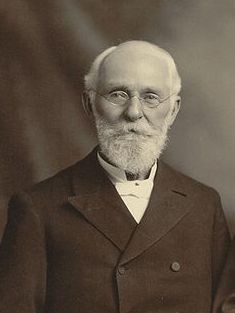
John Rex Winder (/ˈwɪndər/; December 11, 1821 – March 27, 1910) was a leader and general authority of the Church of Jesus Christ of Latter-day Saints (LDS Church). He was Second Counselor in the Presiding Bishopric from 1887 to 1901, and First Counselor in the First Presidency to church president Joseph F. Smith from 1901 until his death. He was well known for his business abilities, and influenced Heber J. Grant. He was also active in politics and the militia, participating in the Utah War and the Black Hawk War (Utah). When the church came under heavy government pressure for its practice of plural marriage, Winder held the church's assets to keep them from being seized by the federal government. He was a polygamist and had four wives and 20 children.
Winder was born to Richard and Sophia Collins Winder in Biddenden, England. He worked in several trades as a youth, settling into a position as a shoe and leather man in his twenties in London. There he married Ellen Walters in 1845. There also he was recruited to manage a shoe store in Liverpool.
In the shoe store, he discovered the LDS Church and joined as a member. In February 1853, he and his wife set out to Utah to join the church there. He traveled across the Atlantic Ocean, nearly succumbing to smallpox on the way. He then traveled via steamboat up the Mississippi River to St. Louis, Missouri, where he caught another boat leading up to Keokuk, Iowa. From there he traveled with a company of members heading towards Utah Territory under Joseph W. Young. They arrived on October 10, 1853.
Engaged in leather work, Winder was quite successful in several ventures. His business sense became recognized and eventually he found seats on several corporate boards. Of his ventures, one remains today: Winder Dairy. Winder was generous with his wealth: The poor, orphans, and widows benefited greatly from his efforts.
Winder also became a figure in politics and the militia in the territory. He led the Nauvoo Legion to stop the advance of Johnston's Army in the Utah War of 1857. In the Black Hawk War (Utah), he fought as Adjutant General. He was the chief aid to General Daniel H. Wells, and wrote up the expense report submitted to congress at the conclusion of the conflict.
Winder also served as chairman of the People's Party. His efforts to modernize the exercise of politics in the territory led from the church-dominated system to a two-party system much like the national political system. Serving as a delegate to several state constitutional conventions, he was an instrument in Utah Territory achieving statehood.
LDS Church president John Taylor called Winder to serve as Second Counselor to Presiding Bishop William B. Preston on April 8, 1887. During this time, the federal government began to put more pressure on the church for its practice of plural marriage. After the passage of the Edmunds–Tucker Act in 1887, church leaders went into hiding and church assets were distributed to be kept from being seized. Winder assisted many people on the run from the federal government, by helping to hide them or to post bail. His poplar farm on the south of the city served as a temporary church headquarters for Taylor.
In 1890, church president Wilford Woodruff approached Winder, Charles W. Penrose, and George Reynolds to review and edit the manuscript of the Manifesto. With the publication and announcement of the Manifesto, federal pressure was alleviated.
Hub AI
John R. Winder AI simulator
(@John R. Winder_simulator)
John R. Winder
John Rex Winder (/ˈwɪndər/; December 11, 1821 – March 27, 1910) was a leader and general authority of the Church of Jesus Christ of Latter-day Saints (LDS Church). He was Second Counselor in the Presiding Bishopric from 1887 to 1901, and First Counselor in the First Presidency to church president Joseph F. Smith from 1901 until his death. He was well known for his business abilities, and influenced Heber J. Grant. He was also active in politics and the militia, participating in the Utah War and the Black Hawk War (Utah). When the church came under heavy government pressure for its practice of plural marriage, Winder held the church's assets to keep them from being seized by the federal government. He was a polygamist and had four wives and 20 children.
Winder was born to Richard and Sophia Collins Winder in Biddenden, England. He worked in several trades as a youth, settling into a position as a shoe and leather man in his twenties in London. There he married Ellen Walters in 1845. There also he was recruited to manage a shoe store in Liverpool.
In the shoe store, he discovered the LDS Church and joined as a member. In February 1853, he and his wife set out to Utah to join the church there. He traveled across the Atlantic Ocean, nearly succumbing to smallpox on the way. He then traveled via steamboat up the Mississippi River to St. Louis, Missouri, where he caught another boat leading up to Keokuk, Iowa. From there he traveled with a company of members heading towards Utah Territory under Joseph W. Young. They arrived on October 10, 1853.
Engaged in leather work, Winder was quite successful in several ventures. His business sense became recognized and eventually he found seats on several corporate boards. Of his ventures, one remains today: Winder Dairy. Winder was generous with his wealth: The poor, orphans, and widows benefited greatly from his efforts.
Winder also became a figure in politics and the militia in the territory. He led the Nauvoo Legion to stop the advance of Johnston's Army in the Utah War of 1857. In the Black Hawk War (Utah), he fought as Adjutant General. He was the chief aid to General Daniel H. Wells, and wrote up the expense report submitted to congress at the conclusion of the conflict.
Winder also served as chairman of the People's Party. His efforts to modernize the exercise of politics in the territory led from the church-dominated system to a two-party system much like the national political system. Serving as a delegate to several state constitutional conventions, he was an instrument in Utah Territory achieving statehood.
LDS Church president John Taylor called Winder to serve as Second Counselor to Presiding Bishop William B. Preston on April 8, 1887. During this time, the federal government began to put more pressure on the church for its practice of plural marriage. After the passage of the Edmunds–Tucker Act in 1887, church leaders went into hiding and church assets were distributed to be kept from being seized. Winder assisted many people on the run from the federal government, by helping to hide them or to post bail. His poplar farm on the south of the city served as a temporary church headquarters for Taylor.
In 1890, church president Wilford Woodruff approached Winder, Charles W. Penrose, and George Reynolds to review and edit the manuscript of the Manifesto. With the publication and announcement of the Manifesto, federal pressure was alleviated.
Recent media