Hubbry Logo
John Stith PembertonJohn Stith PembertonMain
Open search
John Stith Pemberton
Community hub
John Stith Pemberton
logo
23 pages, 0 posts
0 subscribers
Be the first to start a discussion here.
John Stith Pemberton
from Wikipedia

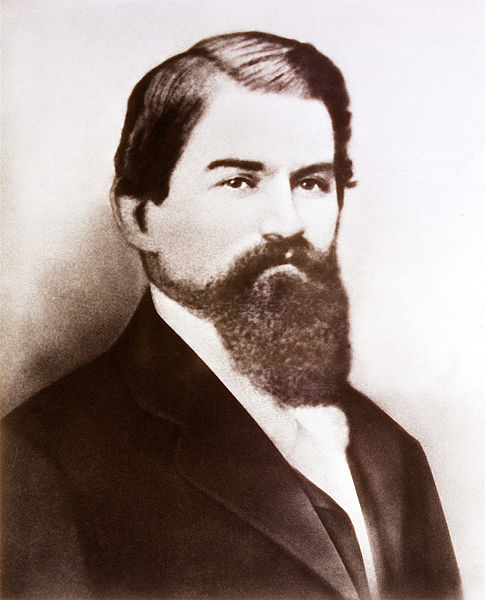
John Stith Pemberton (July 8, 1831 – August 16, 1888) was an American pharmacist and Confederate States Army officer who is best known as the inventor of Coca-Cola. On May 8, 1886, he developed an early version of a beverage that would later become Coca-Cola, but sold the rights to the drink shortly before his death in 1888.

Key Information

Pemberton suffered from a sabre wound sustained in April 1865, during the Battle of Columbus. His efforts to control his chronic pain led to morphine addiction. In an attempt to curb his addiction he began to experiment with various painkillers and toxins. The development of an earlier beverage blending alcohol and cocaine led to the recipe that later was adapted to make Coca-Cola.

Background

[edit]

Pemberton was born on July 8, 1831, in Knoxville, Georgia, and spent most of his childhood in Rome, Georgia. His parents were James C. Pemberton and Martha L. Gant.[1]

Pemberton entered the Reform Medical College of Georgia in Macon, Georgia, and in 1850, at the age of nineteen, he earned his medical degree.[2] His main talent was chemistry.[3] After initially practicing some medicine and surgery, Pemberton opened a drug store in Columbus.[2]

During the American Civil War, Pemberton served in the Third Cavalry Battalion of the Georgia State Guard, which was at that time a component of the Confederate Army. He achieved the rank of lieutenant colonel.[2]

Personal life

[edit]

Pemberton met Ann Eliza Clifford "Cliff" Lewis of Columbus, Georgia, known to her friends as "Cliff", who had been a student at Wesleyan College in Macon. They were married in Columbus in 1853. Their only child, Charles Nay Pemberton, was born in 1854.

They lived in a Victorian cottage, the Pemberton House in Columbus, a home of historic significance which was added to the National Register of Historic Places on September 28, 1971.[4][5][6]

Founding Coca-Cola

[edit]

In April 1865, Pemberton sustained a sabre wound to the chest during the Battle of Columbus. He soon became addicted to the morphine used to ease his pain.[7][8][9]

In 1866, seeking a cure for his addiction, he began to experiment with painkillers that would serve as morphine-free alternatives.[10][11][12] His first recipe was "Dr. Tuggle's Compound Syrup of Globe Flower", in which the active ingredient was derived from the buttonbush (Cephalanthus occidentalis), a toxic plant.[13] He next began experimenting with coca and coca wines, eventually creating a recipe that contained extracts of kola nut and damiana, which he called Pemberton's French Wine Coca.[14][15]

According to Coca-Cola historian Phil Mooney, Pemberton's world-famous soda was created in Columbus, Georgia and carried to Atlanta.[16] With public concern about drug addiction, depression, and alcoholism among war veterans, and "neurasthenia" among "highly-strung" Southern women,[17] Pemberton's "medicine" was advertised as particularly beneficial for "ladies, and all those whose sedentary employment causes nervous prostration".[18]

In 1886, when Atlanta and Fulton County enacted temperance legislation, Pemberton had to produce a non-alcoholic alternative to his French Wine Coca.[19] Pemberton relied on Atlanta drugstore owner-proprietor Willis E. Venable to test, and help him perfect, the recipe for the beverage, which he formulated by trial and error. With Venable's assistance, Pemberton worked out a set of directions for its preparation.

Standing in the open doorway to the pharmacy, atop the stoop, is John Pemberton in April 1888 at 47 Peachtree Street, Atlanta.[20]

Pemberton blended the base syrup with carbonated water by accident when trying to make another glassful of the beverage. Pemberton decided then to sell this as a fountain drink rather than a medicine. Frank Mason Robinson came up with the name "Coca-Cola" for the alliterative sound, which was popular among other wine medicines of the time. Although the name refers to the two main ingredients, because of controversy over its cocaine content, the Coca-Cola Company later said that the name was "meaningless but fanciful". Robinson handwrote the Spencerian script on the bottles and ads. Pemberton made many health claims for his product, touting it as a "valuable brain tonic" that would cure headaches, relieve exhaustion, and calm nerves, and marketed it as "delicious, refreshing, pure joy, exhilarating", and "invigorating".[21]

Pemberton sells the business

[edit]
A sign in Knoxville, Georgia, commemorating John Pemberton

Soon after Coca-Cola was launched, Pemberton fell ill and nearly bankrupt. Sick and desperate, he began selling rights to his formula to his business partners in Atlanta. Part of his motivation to sell was that he still suffered from expensive continuing morphine addiction.[22] Pemberton had a hunch that his formula "someday will be a national drink," so he attempted to retain a share of the ownership to leave to his son.[22] However, Pemberton's son wanted the money, so in 1888, Pemberton and his son sold the remaining portion of the patent to a fellow Atlanta pharmacist, Asa Griggs Candler, for $300 (USD),[2] which in 2022 purchasing power is equal to $9,372.88 (USD).[23]

Death

[edit]
The grave of John Pemberton in Columbus, Georgia

Pemberton died from stomach cancer at the age of 57 on 16 August 1888. At the time of his death, he was poor and had become increasingly addicted to morphine. His body was returned to Columbus, Georgia, where he was buried at Linwood Cemetery. His grave marker is engraved with symbols showing his service in the Confederate Army and his membership as a Freemason. His son Charles continued to sell his father's formula, but six years later Charles Pemberton himself died, having succumbed to opium addiction.[24]

References

[edit]

Further reading

[edit]
[edit]
Revisions and contributorsEdit on WikipediaRead on Wikipedia
from Grokipedia
John Stith Pemberton (July 8, 1831 – August 16, 1888) was an American pharmacist and who invented the original in 1886 as a medicinal tonic. Born in Knoxville, Georgia, Pemberton practiced in after earning a and engaging in chemical . He served as a in the Confederate during the Civil War, sustaining a saber wound at the Battle of Columbus in 1865 that resulted in and addiction. Seeking alternatives to , Pemberton developed syrup—initially containing coca leaf extract for and kola nut —as a non-alcoholic remedy and sold at soda fountains. Despite its eventual commercial success under successors like Asa Candler, Pemberton derived little profit from the invention due to his addictions and financial woes, dying of at age 57.

Early Life and Education

Family and Upbringing

John Stith Pemberton was born on July 8, 1831, in Knoxville, . His parents were James Clifford Pemberton, born in 1803 in , and Martha L. Gant, who had previously been married to a Worsham. The Pemberton family traced its lineage to English ancestors, including early settler Phineas Pemberton. Pemberton grew up primarily in , where his family lived for nearly two decades before relocating to Columbus. He attended local schools in Rome during his early years, receiving a typical of mid-19th-century Southern communities. His upbringing occurred in a rural Georgia setting amid the antebellum economy, though specific details on his father's occupation—likely involving or —are limited in primary records.

Professional Training as Pharmacist

John Stith Pemberton pursued formal training in pharmacy and medicine at the Reform in Macon, an institution emphasizing eclectic practices that integrated botanic remedies and pharmaceutical compounding as alternatives to conventional allopathic approaches. He enrolled there after initial studies, completing his in 1850 at the age of 19, which qualified him as a licensed and capable of preparing and dispensing medicinal compounds. This education equipped Pemberton with expertise in herbal pharmacology and the formulation of proprietary medicines, reflecting the era's reliance on plant-based therapeutics amid limited regulation of pharmaceutical practices. Following graduation, he established himself as a practicing in , where he compounded drugs and operated a drugstore, applying his training to invent and market patent remedies.

Civil War Service

Enlistment in Confederate Forces

John Stith Pemberton enlisted in the in May 1862 as a , shortly after the outbreak of the Civil War, and joined the 3rd Georgia Cavalry Battalion, where he helped organize a unit that conducted operations primarily within Georgia. This enlistment reflected his commitment to the Confederate cause as a Georgia resident and whose professional pursuits had been disrupted by the conflict. Pemberton's initial military role involved recruiting and leading elements focused on local defense and skirmishing, aligning with the battalion's formation under Georgia state authority before fuller integration into Confederate forces. Some accounts describe his service under Confederate commander , though primary documentation emphasizes his organizational contributions in the unit's early months. His active field service proved short-lived; by October 1862, Pemberton resigned his commission, citing a "chronic disease of the stomach" that he argued rendered him unfit for frontline duty but still capable of aiding the through his expertise as a and supplying medical needs. This early exit from the 3rd Georgia Cavalry marked the end of his initial enlistment period, though he later engaged in activities.

Wounding, Recovery, and Morphine Addiction

Pemberton, serving as a in the Confederate , sustained severe wounds during the Battle of , on April 16, 1865—one of the final engagements of the Civil War. Eyewitness accounts describe him being both shot and slashed by a Union saber across the , with the saber injury proving particularly debilitating and causing thereafter. Following the wound, Pemberton underwent recovery in Columbus, where was administered as a standard for battlefield injuries, reflecting the widespread medical reliance on derivatives during and after the war. This treatment dulled his immediate pain but initiated dependency, as 's euphoric and effects masked symptoms without addressing underlying tissue damage from the trauma. By late 1865, Pemberton's use had escalated into , a condition afflicting an estimated tens of thousands of Union and Confederate veterans due to the drug's liberal application in field hospitals and the absence of effective alternatives for managing persistent neuropathic and musculoskeletal pain. He continued professional activities as a amid this struggle, but the addiction impaired his health and finances, prompting later attempts to develop non-opioid remedies.

Pre-Coca-Cola Pharmaceutical Work

Inventions and Patent Medicines

Following his service in the Civil War, John Stith Pemberton returned to , and focused on and chemical manufacturing, developing a range of proprietary remedies amid the era's widespread production of unstandardized patent medicines that promised cures for common ailments through herbal and botanical ingredients. These products, sold directly to consumers via drugstores and advertisements, reflected Pemberton's experimentation with plant-based formulations as he managed his own dependency from war injuries, seeking non-opioid alternatives for pain relief and related conditions. In Columbus during the late 1860s, Pemberton created Globe Flower Cough Syrup, marketed as a treatment for coughs and throat irritations using extracts from globe flowers, and Stillingia, a compound promoted as a blood purifier to address impurities and systemic disorders. He also formulated Indian Queen Hair Dye, a vegetable-based colorant for graying hair that he later registered federally on October 7, 1884, under his name as a manufacturing in , emphasizing its non-toxic, herbal composition derived from indigenous plants. Relocating to Atlanta around 1869, Pemberton expanded his operations through the J.S. Pemberton Chemical Company, introducing Triplex Liver Pills in the 1870s or early 1880s as a digestive aid claimed to stimulate liver function, alleviate biliousness, and treat constipation via a blend of herbal laxatives and regulators. Additional inventions included Gingerine, a ginger-root tonic advertised for stomach complaints and as a general invigorant, and Lemon and Orange Elixir, a flavored syrup positioned for flavoring medicines or direct consumption to soothe nerves and aid digestion. These remedies, like many contemporaries, lacked clinical trials and relied on anecdotal efficacy, contributing to Pemberton's modest commercial success before his later coca-based ventures.

French Wine Coca and Temperance Influences

In 1885, John Stith Pemberton, a in Atlanta, Georgia, developed , an alcoholic tonic inspired by the popular European , created in 1863 by Corsican chemist Angelo Mariani. The formula combined extracts from leaves—providing as an active —with kola nuts for , damiana as an , and as the base, marketed as a nerve tonic, headache remedy, and general restorative. Pemberton positioned it as a medicinal alternative amid his own struggles with from Civil War injuries, drawing on 's reputed properties documented in contemporary pharmacopeias. The product's launch coincided with the rising U.S. , a widespread campaign against alcohol consumption that emphasized moral reform and public health, gaining traction in the post-Civil War South through organizations like the Women's Christian Temperance Union. , influenced by these pressures, enacted local in 1886, banning alcohol sales citywide and rendering French Wine Coca commercially unviable due to its wine content. This legislative shift, part of broader state-level experiments with dry laws, compelled Pemberton to reformulate the tonic by removing the alcohol and substituting a sweetened, carbonated version that retained and kola extracts. Pemberton explicitly promoted the resulting non-alcoholic beverage, later branded , as an "ideal temperance drink" in its labeling and advertisements, aligning it with the movement's advocacy for sober alternatives to liquor while preserving the original's purported invigorating effects. This adaptation not only complied with but capitalized on the era's demand for non-intoxicating tonics, reflecting causal links between regulatory pressures and pharmaceutical in late 19th-century America. The temperance context underscored a shift from wine-based elixirs to soda fountains as venues for medicinal beverages, influencing 's initial distribution as a mixed with soda water at pharmacies like Jacobs' in .

Invention of Coca-Cola

Development of the Formula

In response to Atlanta's prohibition on alcohol sales enacted in 1886, which rendered his unsellable, John Pemberton reformulated the beverage as a non-alcoholic intended for mixing with . The new version retained the core stimulating elements of leaf extract—providing as a medicinal for relief and nervous exhaustion—and kola nut extract for added , while eliminating the wine base and incorporating , , , and for palatability. Pemberton conducted these experiments in a brass kettle in his backyard laboratory during early , drawing on his pharmaceutical expertise to balance the bitter and kola flavors into a tonic marketed for temperance-era consumers seeking non-intoxicating alternatives to alcohol or opiates. The resulting formula yielded approximately 9 milligrams of per 8-ounce serving, derived from decocainized leaves processed through established extract methods, combined with roughly 60 milligrams of from kola nuts to enhance its purported invigorating effects. This iteration transformed the original wine-based elixir into a versatile , emphasizing empirical adjustments for taste and efficacy as a " tonic" rather than a direct pharmaceutical cure. By May 8, 1886, Pemberton had refined the syrup sufficiently to deliver it to Jacobs' Pharmacy in , where it was first diluted with soda water and served to customers, marking the practical culmination of his development efforts amid financial pressures and health constraints. The formula's was maintained from inception, shared only with trusted associates, reflecting Pemberton's intent to protect his proprietary blend while prioritizing its properties over precise measurement .

Initial Production and Launch in 1886

In 1886, John Stith Pemberton produced the initial syrup for Coca-Cola manually in his Atlanta laboratory, formulating it as a non-alcoholic alternative to his earlier French Wine Coca product amid local temperance pressures. The syrup incorporated extracts from coca leaves and kola nuts, combined with other flavorings, sugar, and citric acid, intended as a medicinal tonic for headaches and fatigue. On May 8, 1886, Pemberton transported a jug of this syrup to Jacobs' Pharmacy at 88 Marietta Street in downtown Atlanta, where it was first mixed with carbonated water at the soda fountain and served as a five-cent glass beverage. This marked the commercial debut, with the drink prepared on-demand by pharmacy staff rather than through pre-bottled distribution. Initial marketing efforts were modest and localized, relying on hand-painted signs at soda fountains and coupons distributed by Pemberton's associates to encourage trial. The first newspaper advertisement appeared in The Atlanta Journal on May 29, 1886, describing Coca-Cola as a "delicious, refreshing, pure, delightful, exhilarating" soda fountain drink containing coca leaf and kola nut properties, available for five cents at Jacobs' Pharmacy and other outlets. Pemberton positioned it as a healthful, invigorating alternative to alcoholic beverages, aligning with Atlanta's growing temperance movement, though production remained artisanal and limited to Pemberton's small-scale operations without mechanized equipment. Sales in the inaugural year were limited, averaging approximately nine glasses per day across soda fountains, equating to roughly 25 gallons of sold and generating about $50 in gross for Pemberton. Production costs per serving ranged from 0.5 to 1.5 cents, yielding slim margins amid slow adoption, as the beverage competed with established tonics and sodas in drugstore settings. Despite these constraints, the launch established as a fountain-exclusive product, with supplied in wooden kegs to pharmacies for on-site carbonation and serving.

Business Operations and Transfer

Partnerships and Marketing Efforts

Pemberton collaborated closely with Frank M. Robinson, his bookkeeper and business partner, who proposed the name "Coca-Cola" to reflect its key ingredients—coca leaves and kola nuts—and handwrote the distinctive Spencerian script logo that became the product's trademark. Robinson's contributions extended to early operational support, including managing aspects of syrup distribution during Pemberton's financial difficulties. To fund operations, Pemberton sold fractional interests in the Coca-Cola formula to multiple investors, including a controlling two-thirds stake to George Lowdnes and Willis E. Venable for $1,200 in late 1886 or early 1887; Venable, a pharmacist and soda fountain operator at Jacobs' Pharmacy, had assisted in recipe trials and the first serving of the beverage on May 8, 1886. Initial marketing positioned as a medicinal tonic for headaches and fatigue, with advertisements appearing in newspapers as early as May 29, 1886, touting its "delicious, exhilarating, refreshing and invigorating" qualities derived from and kola. Pemberton distributed thousands of handwritten coupons offering free glasses at soda fountains, an innovative tactic first employed in that generated trial consumption and boosted awareness despite modest sales of approximately nine drinks per day in the product's debut year, yielding about $50 in revenue. Complementary efforts included signs, posters, and streetcar placards placed around to promote the syrup at pharmacies and fountains. These low-cost, targeted promotions reflected Pemberton's pharmaceutical background, emphasizing the drink's purported health benefits over mass consumer appeal.

Financial Struggles and Sale to Asa Candler

Pemberton's worsening health, exacerbated by chronic morphine addiction stemming from his Civil War injuries, severely hampered his capacity to oversee the nascent Coca-Cola operation, contributing to mounting financial distress. The beverage's early commercial performance was underwhelming, with initial sales averaging roughly nine glasses per day in 1886, yielding limited revenue insufficient to offset production costs and personal medical expenditures. These pressures, coupled with inadequate marketing and distribution, prompted Pemberton to liquidate shares incrementally to sustain himself and the business. By early 1888, amid escalating debts and declining personal involvement, Pemberton divested two-thirds of his interests to assorted partners, including investors, in fragmented transactions totaling around $1,500. In March of that year, he further ceded partial rights to businessman for $550, though convoluted negotiations ensued as Pemberton's son Charles and other stakeholders vied for control. Just prior to Pemberton's death on August 16, 1888, Candler secured the inventor's remaining claim for an additional $1,750, consolidating preliminary dominance over the formula and trademark. Candler's full acquisition of the enterprise spanned to , culminating in a total outlay of approximately $2,300 to resolve lingering partner claims and patent entitlements, a modest sum reflective of Coca-Cola's undervalued status at the time. This transfer marked the pivot from Pemberton's struggling pharmaceutical sideline to Candler's aggressive commercialization, unburdened by the original creator's afflictions.

Death and Immediate Aftermath

Health Decline and Causes

Pemberton sustained a saber to the chest during the Battle of Columbus on April 16, 1865, while serving as a in the Confederate Army's 3rd Georgia Cavalry Battalion. The injury resulted in that he initially managed through , to which he became addicted—a condition prevalent among wounded Civil War soldiers, often termed the "soldier's disease" due to widespread hypodermic use of the for battlefield injuries. His dependence persisted for decades, prompting experiments with cocaine-laced alternatives like French Wine Coca in the 1870s and later the non-alcoholic syrup in 1886 as potential morphine substitutes. By the late 1880s, Pemberton's health had deteriorated amid ongoing , financial ruin from failed ventures, and the emergence of , which multiple accounts identify as the primary cause of his death. The cancer likely progressed rapidly, exacerbated by his impoverished state and inability to fully abstain from , though no direct causal link between the addiction and malignancy is documented in primary records. He died on August 16, 1888, at age 57 in , Georgia, leaving behind unresolved debts and a modest estate.

Estate Settlement and Family

Pemberton was married to Sarah Ann Eliza Lewis from 1853 until his death, and the couple had one son, Charles Julian Pemberton, born in 1859. Charles assisted his father in manufacturing syrup prior to 1888. At the time of Pemberton's death on August 16, 1888, he was impoverished, afflicted with , and dependent on , having sold portions of the to cover debts and personal expenses, including support for his family and his . The final sale of remaining rights occurred in 1888 for approximately $1,750, leaving negligible assets for . No detailed public records of a will or extensive proceedings survive, consistent with his financial ruin; any settlement would have prioritized claims over , resulting in minimal distribution to his widow and son. Charles, who struggled with and use, died in 1896 without issue, extinguishing direct familial claims to Pemberton's legacy.

Legacy and Historical Assessments

Impact on the Coca-Cola Empire

Pemberton's development of the syrup in 1886 provided the foundational formula that propelled the beverage into a global enterprise, though he personally derived limited financial benefit due to his sale of rights amid health and monetary difficulties. Originally marketed as a medicinal tonic containing coca leaf extract and caffeine, the syrup was first dispensed on May 8, 1886, at Jacobs' Pharmacy in , Georgia, selling approximately nine glasses per day initially. By 1888, facing debts and dependency stemming from Civil War injuries, Pemberton divested portions of his interests in the formula and brand to investors, culminating in Asa Griggs Candler acquiring the complete remaining rights for about $2,300 through a series of transactions. This transfer, occurring just before Pemberton's death on August 16, 1888, shifted control to Candler, who recognized the product's potential beyond its pharmaceutical origins. Under Candler's stewardship, the formula evolved from a regional soda fountain into the cornerstone of , incorporated in in 1892 as a Georgia . Candler invested in aggressive , including coupons, branded merchandise, and painted advertisements, expanding distribution from Atlanta soda fountains to nationwide availability by 1895. He introduced independent bottling starting in 1894, enabling scalable production without centralized manufacturing burdens, which facilitated rapid across the and eventual international exports. This model, built directly on Pemberton's —initially retaining coca-derived until its phased removal by 1903—drove exponential growth, transforming a niche tonic into a mass-market refreshment that generated millions in annual syrup sales by the early 1900s. Pemberton's innovation thus seeded an empire valued at over $250 billion in by the , though his estate received no ongoing royalties, underscoring the disconnect between and in early ventures. Historical assessments attribute the company's enduring dominance to Candler's business strategies rather than Pemberton's original intent, yet the proprietary flavor profile he devised remains the unaltered secret core of the , ensuring its role as the originating catalyst for one of history's most valuable consumer franchises.

Controversies: Addiction, Cocaine Content, and Confederate Service

Pemberton developed a severe addiction after sustaining a saber to the chest during the Battle of Columbus on April 16, 1865, while serving as a Confederate officer in the final days of the . Like many wounded Confederate veterans, he relied on for , a common practice in the era before modern analgesics, which led to dependency as supplies of the became readily accessible through his background as a and . Efforts to overcome this drove his experimentation with -derived extracts from leaves, initially in alcoholic tonics like and later in the non-alcoholic syrup introduced in 1886, which he marketed as a nerve tonic and headache remedy. He remained dependent on until his death on August 16, 1888, from , amid ongoing financial and health struggles exacerbated by his substance use. The inclusion of cocaine in Coca-Cola's original formula has drawn retrospective scrutiny, as the beverage contained an extract from coca leaves providing approximately 4 milligrams of cocaine per 8-ounce serving in its early years. Pemberton sourced the coca extract for its properties, intending it as a safer alternative to for treating , headaches, and symptoms, reflecting 19th-century pharmaceutical norms where cocaine was legally used in patent medicines for its perceived medicinal benefits before its addictive potential was widely recognized. The cocaine content stemmed directly from Pemberton's formula, which blended coca leaf extract with kola nut caffeine and other ingredients; however, under Asa Candler's ownership after 1888, the company began decocainizing the syrup by 1903 in response to emerging regulatory pressures and concerns, replacing it with "spent" coca leaves devoid of the . This shift addressed growing awareness of cocaine's risks, though early advertisements promoted unreservedly as a healthful tonic without disclosing the cocaine explicitly. Pemberton's military service in the Confederate , where he enlisted as a captain in Georgia state forces and rose to in a unit, has elicited modern controversy, often framed through contemporary moral lenses on the Confederacy's defense of and . Stationed primarily in Georgia, his unit engaged in defensive operations against Union advances, culminating in his wounding during the Battle of Columbus, one of the 's closing engagements. While historical records confirm his voluntary service for the Southern cause—consistent with many Georgians of his class and era—postwar reinterpretations in academia and media frequently emphasize Confederate affiliation as inherently tied to racial ideologies, potentially overlooking individual motivations rooted in state loyalty and regional identity amid the conflict's causal dynamics of federal overreach and economic disputes. Such assessments warrant caution, as they may reflect institutional biases favoring narratives that equate Southern military participation with moral culpability without proportional scrutiny of Union actions or the 's broader constitutional triggers. Pemberton's prewar career as a druggist and his postwar inventions show no direct evidence of advocacy for beyond standard Confederate enlistment, though his application later detailed the wound's lasting impact.

References

Add your contribution
Related Hubs
User Avatar
No comments yet.