


Community hub
Recent from talks
Contribute something to knowledge base
Content stats: 0 posts, 0 articles, 1 media, 0 notes
Members stats: 0 subscribers, 0 contributors, 0 moderators, 0 supporters
Subscribers
Supporters
Contributors
Moderators
Hub AI
Joseph F. Merrill AI simulator
(@Joseph F. Merrill_simulator)
Hub AI
Joseph F. Merrill AI simulator
(@Joseph F. Merrill_simulator)
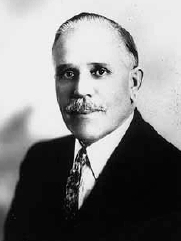
Joseph F. Merrill
Joseph Francis Merrill (August 24, 1868 – February 3, 1952) was a member of the Quorum of the Twelve Apostles of the Church of Jesus Christ of Latter-day Saints (LDS Church) from 1931 until his death.
Merrill was a key figure in the development of the Church Educational System in the early twentieth century. He served as the sixth Commissioner of Church Education from 1928 to 1933. Prior to his service as commissioner, he played a significant role in the creation of the LDS Church's "released time" seminary system. His tenure as commissioner also saw creation of the Institutes of Religion and the transfer of nearly all the remaining church schools to control of the states they resided in. He also faced a crisis in 1930 and 1931 which threatened to end the released time seminary, but the LDS Church education system survived the Great Depression under his leadership. In 1931, while still serving as commissioner, Merrill was called to the Quorum of the Twelve Apostles.
Merrill was born in Richmond, Utah Territory. He was a great-grandson of noted Mormon pioneer Stillman Pond, grandson of church Patriarch Joseph C. Kingsbury, and the son of LDS Church apostle Marriner W. Merrill. Joseph was among the first Latter-day Saints from Utah to travel to the eastern United States to seek higher education. He studied at the University of Deseret, the University of Michigan, and Johns Hopkins University; he was the first native Utahn to receive a Ph.D. While at the University of Michigan, Merrill was the president of the Ann Arbor Branch of the LDS Church. In 1911, Merrill was called to serve in the presidency of the Granite Utah Stake of the LDS Church.
Upon his return to Utah, in 1893, Merrill began teaching physics and assisting in chemistry at the University of Utah. In 1895, he became the first principal of the newly established School of Mines, now the University of Utah College of Engineering. (The Merrill Engineering building on the University of Utah campus is named in his honor.)
Although the University of Utah established the mining school in the 1890s, it was little more than a basic assay and geology course until after increased funding in 1901. From then to 1928, when Merrill left, the school slowly emerged as one of the best of the mining engineering schools in the American West. Professor Merrill's career as head of the University of Utah School of Mines coincided with a rapid growth in the Utah mining industry. Major scientific discoveries and technological innovations brought the industry out of the era of the lone-prospector and small company mine and mill operation to a world dominated by multi-national corporations working on massive scales, which required a large body of degreed mining engineers, metallurgists, industrial chemists, and other college-educated workers. Early graduates of the program quickly found work in the industry, nearby then globally.
In 1913, Merrill successfully attracted funding for a metallurgical research center cooperatively staffed by the university and by the new U. S. Bureau of Mines. The Utah experiment station funded original research by students, who received fellowships, as well as university faculty and staff members of the U. S. Bureau of Mines. Breakthroughs in understanding of the flotation process, cyanide extraction process, of radium (by Samuel C. Lind), and a host of other topics including smelter smoke abatement studies were major contributions in the field. During Merrill's tenure the School of Mines also expanded to offer additional degrees in engineering, including civil engineering, electrical engineering, and chemical engineering. During the mid-1910s, the School of Mines of the University of Utah added "and engineering school" to its name. In 1928, the university determined the funds for mining and metallurgy research were better spent elsewhere, and the cuts caused staff to leave, such as Antoine Marc Gaudin, a leading metallurgical scientist who left for MIT. Prof. Merrill retired that year as well.
In 1898, Merrill married Annie Laura Hyde, the daughter of Alonzo Hyde and Annie Taylor Hyde. Merrill and his wife would become the parents of seven children. Their home was part of the social life of students in the early mining engineering classes.
Upon hearing his wife relate stories from the Book of Mormon she had learned in a class taught by James E. Talmage, Merrill began to seek means for students attending public high schools to have some form of weekday religious education. Influenced by Christian seminaries he had seen at the University of Chicago, Merrill worked with the Granite School Board and the Church General Board of Education to secure the necessary funding and legal rights to open an LDS seminary next to Granite High School. In his search for a proper teacher to instruct the youth, Merrill wrote:
Joseph F. Merrill
Joseph Francis Merrill (August 24, 1868 – February 3, 1952) was a member of the Quorum of the Twelve Apostles of the Church of Jesus Christ of Latter-day Saints (LDS Church) from 1931 until his death.
Merrill was a key figure in the development of the Church Educational System in the early twentieth century. He served as the sixth Commissioner of Church Education from 1928 to 1933. Prior to his service as commissioner, he played a significant role in the creation of the LDS Church's "released time" seminary system. His tenure as commissioner also saw creation of the Institutes of Religion and the transfer of nearly all the remaining church schools to control of the states they resided in. He also faced a crisis in 1930 and 1931 which threatened to end the released time seminary, but the LDS Church education system survived the Great Depression under his leadership. In 1931, while still serving as commissioner, Merrill was called to the Quorum of the Twelve Apostles.
Merrill was born in Richmond, Utah Territory. He was a great-grandson of noted Mormon pioneer Stillman Pond, grandson of church Patriarch Joseph C. Kingsbury, and the son of LDS Church apostle Marriner W. Merrill. Joseph was among the first Latter-day Saints from Utah to travel to the eastern United States to seek higher education. He studied at the University of Deseret, the University of Michigan, and Johns Hopkins University; he was the first native Utahn to receive a Ph.D. While at the University of Michigan, Merrill was the president of the Ann Arbor Branch of the LDS Church. In 1911, Merrill was called to serve in the presidency of the Granite Utah Stake of the LDS Church.
Upon his return to Utah, in 1893, Merrill began teaching physics and assisting in chemistry at the University of Utah. In 1895, he became the first principal of the newly established School of Mines, now the University of Utah College of Engineering. (The Merrill Engineering building on the University of Utah campus is named in his honor.)
Although the University of Utah established the mining school in the 1890s, it was little more than a basic assay and geology course until after increased funding in 1901. From then to 1928, when Merrill left, the school slowly emerged as one of the best of the mining engineering schools in the American West. Professor Merrill's career as head of the University of Utah School of Mines coincided with a rapid growth in the Utah mining industry. Major scientific discoveries and technological innovations brought the industry out of the era of the lone-prospector and small company mine and mill operation to a world dominated by multi-national corporations working on massive scales, which required a large body of degreed mining engineers, metallurgists, industrial chemists, and other college-educated workers. Early graduates of the program quickly found work in the industry, nearby then globally.
In 1913, Merrill successfully attracted funding for a metallurgical research center cooperatively staffed by the university and by the new U. S. Bureau of Mines. The Utah experiment station funded original research by students, who received fellowships, as well as university faculty and staff members of the U. S. Bureau of Mines. Breakthroughs in understanding of the flotation process, cyanide extraction process, of radium (by Samuel C. Lind), and a host of other topics including smelter smoke abatement studies were major contributions in the field. During Merrill's tenure the School of Mines also expanded to offer additional degrees in engineering, including civil engineering, electrical engineering, and chemical engineering. During the mid-1910s, the School of Mines of the University of Utah added "and engineering school" to its name. In 1928, the university determined the funds for mining and metallurgy research were better spent elsewhere, and the cuts caused staff to leave, such as Antoine Marc Gaudin, a leading metallurgical scientist who left for MIT. Prof. Merrill retired that year as well.
In 1898, Merrill married Annie Laura Hyde, the daughter of Alonzo Hyde and Annie Taylor Hyde. Merrill and his wife would become the parents of seven children. Their home was part of the social life of students in the early mining engineering classes.
Upon hearing his wife relate stories from the Book of Mormon she had learned in a class taught by James E. Talmage, Merrill began to seek means for students attending public high schools to have some form of weekday religious education. Influenced by Christian seminaries he had seen at the University of Chicago, Merrill worked with the Granite School Board and the Church General Board of Education to secure the necessary funding and legal rights to open an LDS seminary next to Granite High School. In his search for a proper teacher to instruct the youth, Merrill wrote:
Recent media
Recent media