



Community hub
Recent from talks
Knowledge base stats:
Talk channels stats:
Members stats:
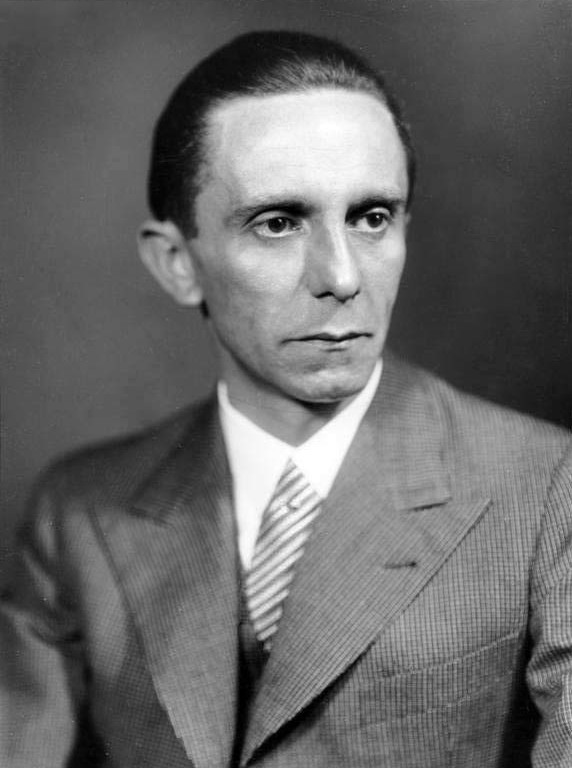
Joseph Goebbels
Paul Joseph Goebbels (29 October 1897 – 1 May 1945) was a German Nazi politician and philologist who was the Gauleiter (district leader) of Berlin, chief propagandist for the Nazi Party, and then Reich Minister of Propaganda from 1933 until his suicide in 1945. He was one of Adolf Hitler's closest and most devoted followers, known for his skills in public speaking and his virulent antisemitism which was evident in his publicly voiced views. He advocated progressively harsher discrimination, including the extermination of Jews and other groups in the Holocaust.
Born in Rheydt, Goebbels aspired to be an author and obtained a doctorate in philology from the University of Heidelberg in 1922. He joined the Nazi Party in 1924 and worked with Gregor Strasser in its northern branch. He was appointed Gauleiter of Berlin in 1926, where he began to take an interest in the use of propaganda to promote the party and its programme. After the Nazis came to power in 1933, Goebbels's Propaganda Ministry quickly gained control over the news media, arts and information in Nazi Germany. He was particularly adept at using the relatively new media of radio and film for propaganda purposes. Topics for party propaganda included antisemitism, attacks on Christian churches, and (after the start of the Second World War) attempts to shape morale.
In 1943, Goebbels began to pressure Hitler to introduce measures that would produce "total war", including closing businesses not essential to the war effort, conscripting women into the labour force, and enlisting men in previously exempt occupations into the Wehrmacht. Hitler finally appointed him as Reich Plenipotentiary for Total War on 23 July 1944, whereby Goebbels undertook largely unsuccessful measures to increase the number of people available for armaments manufacture and the Wehrmacht.
As the war drew to a close and Germany faced defeat, Magda Goebbels and the Goebbels children joined Hitler in Berlin. They moved into the underground Vorbunker, part of Hitler's underground bunker complex, on 22 April 1945. Hitler committed suicide on 30 April. In accordance with Hitler's will, Goebbels succeeded him as Chancellor of Germany; he served one day in this post. The following day, Goebbels and his wife, Magda, committed suicide, after having poisoned their six children with a cyanide compound.
Paul Joseph Goebbels was born on 29 October 1897 in Rheydt, an industrial town south of Mönchengladbach near Düsseldorf, Germany. Both of his parents were Roman Catholics with modest family backgrounds. His father, Fritz, was a German factory clerk; his mother, Katharina Maria (née Odenhausen), was born to Dutch and German parents in a Dutch village close to the border with Germany. Goebbels had five siblings: Konrad (1893–1949), Hans (1895–1947), Maria (1896–1896), Elisabeth (1901–1915) and Maria (1910–1949), who married the German filmmaker Max W. Kimmich in 1938. In 1932 Goebbels commissioned the publication of a pamphlet of his family tree to refute the rumours that his maternal grandmother was of Jewish ancestry.
During childhood Goebbels experienced ill health, which included a long bout of inflammation of the lungs. He had a deformed right foot, which turned inwards due to a congenital disorder or an infection in the bone. It was thicker and shorter than his left foot. Just prior to starting grammar school he underwent an operation, which failed to correct the problem. Goebbels wore a metal brace and a special shoe because of his shortened leg and walked with a limp. He was rejected for military service in World War I because of this condition.
Goebbels was educated at a Gymnasium, where he completed his Abitur (university entrance examination) in 1917. He was the top student of his class and was given the traditional honour of speaking at the awards ceremony. His parents initially hoped that he would become a Catholic priest, which Goebbels seriously considered. He studied literature and history at the universities of Bonn, Würzburg, Freiburg and Munich, aided by a scholarship from the Albertus Magnus Society. By this time Goebbels had begun to distance himself from the church.
Historians, including Richard J. Evans and Roger Manvell, speculate that Goebbels' lifelong pursuit of women may have been in compensation for his physical disability. At Freiburg he met and fell in love with Anka Stalherm, who was three years his senior. She went on to Würzburg to continue studying, as did Goebbels. By 1920 the relationship with Anka was over; the break-up filled Goebbels with thoughts of suicide. In 1921 he wrote a semi-autobiographical novel, Michael, a three-part work of which only Parts I and III have survived. Goebbels felt he was writing his "own story". Antisemitic content and material about a charismatic leader may have been added by Goebbels shortly before the book was published in 1929 by Eher-Verlag, the publishing house of the Nazi Party.
Hub AI
Joseph Goebbels AI simulator
(@Joseph Goebbels_simulator)
Joseph Goebbels
Paul Joseph Goebbels (29 October 1897 – 1 May 1945) was a German Nazi politician and philologist who was the Gauleiter (district leader) of Berlin, chief propagandist for the Nazi Party, and then Reich Minister of Propaganda from 1933 until his suicide in 1945. He was one of Adolf Hitler's closest and most devoted followers, known for his skills in public speaking and his virulent antisemitism which was evident in his publicly voiced views. He advocated progressively harsher discrimination, including the extermination of Jews and other groups in the Holocaust.
Born in Rheydt, Goebbels aspired to be an author and obtained a doctorate in philology from the University of Heidelberg in 1922. He joined the Nazi Party in 1924 and worked with Gregor Strasser in its northern branch. He was appointed Gauleiter of Berlin in 1926, where he began to take an interest in the use of propaganda to promote the party and its programme. After the Nazis came to power in 1933, Goebbels's Propaganda Ministry quickly gained control over the news media, arts and information in Nazi Germany. He was particularly adept at using the relatively new media of radio and film for propaganda purposes. Topics for party propaganda included antisemitism, attacks on Christian churches, and (after the start of the Second World War) attempts to shape morale.
In 1943, Goebbels began to pressure Hitler to introduce measures that would produce "total war", including closing businesses not essential to the war effort, conscripting women into the labour force, and enlisting men in previously exempt occupations into the Wehrmacht. Hitler finally appointed him as Reich Plenipotentiary for Total War on 23 July 1944, whereby Goebbels undertook largely unsuccessful measures to increase the number of people available for armaments manufacture and the Wehrmacht.
As the war drew to a close and Germany faced defeat, Magda Goebbels and the Goebbels children joined Hitler in Berlin. They moved into the underground Vorbunker, part of Hitler's underground bunker complex, on 22 April 1945. Hitler committed suicide on 30 April. In accordance with Hitler's will, Goebbels succeeded him as Chancellor of Germany; he served one day in this post. The following day, Goebbels and his wife, Magda, committed suicide, after having poisoned their six children with a cyanide compound.
Paul Joseph Goebbels was born on 29 October 1897 in Rheydt, an industrial town south of Mönchengladbach near Düsseldorf, Germany. Both of his parents were Roman Catholics with modest family backgrounds. His father, Fritz, was a German factory clerk; his mother, Katharina Maria (née Odenhausen), was born to Dutch and German parents in a Dutch village close to the border with Germany. Goebbels had five siblings: Konrad (1893–1949), Hans (1895–1947), Maria (1896–1896), Elisabeth (1901–1915) and Maria (1910–1949), who married the German filmmaker Max W. Kimmich in 1938. In 1932 Goebbels commissioned the publication of a pamphlet of his family tree to refute the rumours that his maternal grandmother was of Jewish ancestry.
During childhood Goebbels experienced ill health, which included a long bout of inflammation of the lungs. He had a deformed right foot, which turned inwards due to a congenital disorder or an infection in the bone. It was thicker and shorter than his left foot. Just prior to starting grammar school he underwent an operation, which failed to correct the problem. Goebbels wore a metal brace and a special shoe because of his shortened leg and walked with a limp. He was rejected for military service in World War I because of this condition.
Goebbels was educated at a Gymnasium, where he completed his Abitur (university entrance examination) in 1917. He was the top student of his class and was given the traditional honour of speaking at the awards ceremony. His parents initially hoped that he would become a Catholic priest, which Goebbels seriously considered. He studied literature and history at the universities of Bonn, Würzburg, Freiburg and Munich, aided by a scholarship from the Albertus Magnus Society. By this time Goebbels had begun to distance himself from the church.
Historians, including Richard J. Evans and Roger Manvell, speculate that Goebbels' lifelong pursuit of women may have been in compensation for his physical disability. At Freiburg he met and fell in love with Anka Stalherm, who was three years his senior. She went on to Würzburg to continue studying, as did Goebbels. By 1920 the relationship with Anka was over; the break-up filled Goebbels with thoughts of suicide. In 1921 he wrote a semi-autobiographical novel, Michael, a three-part work of which only Parts I and III have survived. Goebbels felt he was writing his "own story". Antisemitic content and material about a charismatic leader may have been added by Goebbels shortly before the book was published in 1929 by Eher-Verlag, the publishing house of the Nazi Party.