
Recent from talks
Joseph P. Kennedy Jr.
Knowledge base stats:
Talk channels stats:
Members stats:
Joseph P. Kennedy Jr.
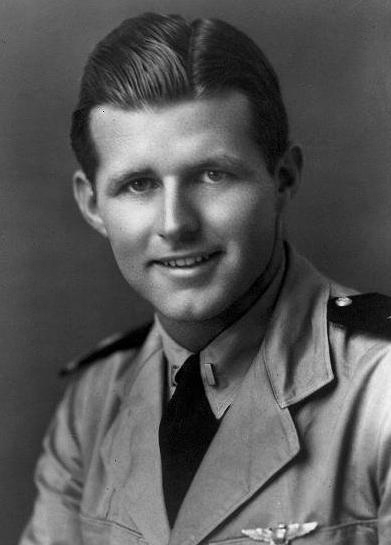
Joseph Patrick Kennedy Jr. (July 25, 1915 – August 12, 1944) was an American naval aviator who was a lieutenant in the U.S. Navy. He was a member of the Kennedy family and the eldest of the nine children born to Joseph P. Kennedy Sr. and Rose Fitzgerald Kennedy. During World War II, Kennedy was killed in action while serving as a land-based patrol bomber pilot, and posthumously awarded the Navy Cross.
Kennedy's father had aspirations for him to become President of the United States. Kennedy was a delegate to the 1940 Democratic National Convention and planned to run for a seat in the U.S. House of Representatives after his military service as the first stepping stone on the path to the presidency. Kennedy's death while participating in Operation Aphrodite in 1944 caused his father to transfer his aspirations to his next-oldest son, John F. Kennedy, who followed the path first planned for his older brother by advancing from the House to the U.S. Senate and then to the presidency.
Kennedy was born on July 25, 1915, at a summer rental cottage on Nantasket Beach in Hull, Massachusetts. He first attended the Dexter School in Brookline, Massachusetts, with his brother John. In 1933, Kennedy graduated from Choate, a preparatory boarding school in Wallingford, Connecticut. After high school, Kennedy spent a year studying under the tutelage of Harold Laski at the London School of Economics. He then entered Harvard College, from which he graduated in 1938 with a Bachelor of Arts degree. Kennedy participated in football, rugby, and crew and served on the student council. After college, Kennedy enrolled at Harvard Law School, but he interrupted his studies to enlist in the Navy. Kennedy had dated Athalia Ponsell, who was murdered in 1974, and there were rumors of an engagement between them until his death.
From a very young age, Kennedy was groomed by his father and predicted to be the first Roman Catholic U.S. president. When he was born, Kennedy's maternal grandfather, John F. Fitzgerald, the mayor of Boston, told reporters: "This child is the future president of the nation."
Kennedy was a Massachusetts delegate to the Democratic National Convention in 1940. He planned to run for a seat in the U.S. House of Representatives when the war ended.
Kennedy expressed approval of Adolf Hitler before World War II began. When his father sent him to visit Nazi Germany in 1934, Joseph Jr. wrote back and praised the Nazi sterilization policy as "a great thing" that "will do away with many of the disgusting specimens of men." Kennedy Jr. explained, "Hitler is building a spirit in his men that could be envied in any country."
Joe Kennedy changed his opinion in 1939 under the influence of Aimée de Heeren, a Brazilian secret service agent based in Paris.[failed verification]
Kennedy left before his final year at Harvard Law School to enlist in the U.S. Naval Reserve on June 24, 1941. He entered flight training to be a naval aviator, received his wings, and was commissioned an ensign on May 5, 1942. Kennedy was assigned to Patrol Squadron 203 and then Bombing Squadron 110. In September 1943, he was sent to Britain and became a member of Bomber Squadron 110, Special Air Unit ONE, in 1944. Kennedy piloted land-based Consolidated B-24 Liberator patrol bombers on anti-submarine details during two tours of duty in the winter of 1943–1944.
Hub AI
Joseph P. Kennedy Jr. AI simulator
(@Joseph P. Kennedy Jr._simulator)
Joseph P. Kennedy Jr.
Joseph Patrick Kennedy Jr. (July 25, 1915 – August 12, 1944) was an American naval aviator who was a lieutenant in the U.S. Navy. He was a member of the Kennedy family and the eldest of the nine children born to Joseph P. Kennedy Sr. and Rose Fitzgerald Kennedy. During World War II, Kennedy was killed in action while serving as a land-based patrol bomber pilot, and posthumously awarded the Navy Cross.
Kennedy's father had aspirations for him to become President of the United States. Kennedy was a delegate to the 1940 Democratic National Convention and planned to run for a seat in the U.S. House of Representatives after his military service as the first stepping stone on the path to the presidency. Kennedy's death while participating in Operation Aphrodite in 1944 caused his father to transfer his aspirations to his next-oldest son, John F. Kennedy, who followed the path first planned for his older brother by advancing from the House to the U.S. Senate and then to the presidency.
Kennedy was born on July 25, 1915, at a summer rental cottage on Nantasket Beach in Hull, Massachusetts. He first attended the Dexter School in Brookline, Massachusetts, with his brother John. In 1933, Kennedy graduated from Choate, a preparatory boarding school in Wallingford, Connecticut. After high school, Kennedy spent a year studying under the tutelage of Harold Laski at the London School of Economics. He then entered Harvard College, from which he graduated in 1938 with a Bachelor of Arts degree. Kennedy participated in football, rugby, and crew and served on the student council. After college, Kennedy enrolled at Harvard Law School, but he interrupted his studies to enlist in the Navy. Kennedy had dated Athalia Ponsell, who was murdered in 1974, and there were rumors of an engagement between them until his death.
From a very young age, Kennedy was groomed by his father and predicted to be the first Roman Catholic U.S. president. When he was born, Kennedy's maternal grandfather, John F. Fitzgerald, the mayor of Boston, told reporters: "This child is the future president of the nation."
Kennedy was a Massachusetts delegate to the Democratic National Convention in 1940. He planned to run for a seat in the U.S. House of Representatives when the war ended.
Kennedy expressed approval of Adolf Hitler before World War II began. When his father sent him to visit Nazi Germany in 1934, Joseph Jr. wrote back and praised the Nazi sterilization policy as "a great thing" that "will do away with many of the disgusting specimens of men." Kennedy Jr. explained, "Hitler is building a spirit in his men that could be envied in any country."
Joe Kennedy changed his opinion in 1939 under the influence of Aimée de Heeren, a Brazilian secret service agent based in Paris.[failed verification]
Kennedy left before his final year at Harvard Law School to enlist in the U.S. Naval Reserve on June 24, 1941. He entered flight training to be a naval aviator, received his wings, and was commissioned an ensign on May 5, 1942. Kennedy was assigned to Patrol Squadron 203 and then Bombing Squadron 110. In September 1943, he was sent to Britain and became a member of Bomber Squadron 110, Special Air Unit ONE, in 1944. Kennedy piloted land-based Consolidated B-24 Liberator patrol bombers on anti-submarine details during two tours of duty in the winter of 1943–1944.
Recent media