



Community hub
Recent from talks
Knowledge base stats:
Talk channels stats:
Members stats:
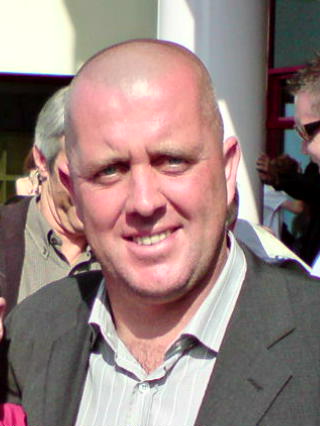
Julian Dicks
Julian Andrew Dicks (born 8 August 1968) is an English football manager and former player who is currently a coach at Chelmsford City.
Playing from 1985 until 2002, he was a left back, notably in the Premier League for West Ham United and Liverpool. He was voted West Ham's player of the year four times between 1990 and 1997. He also played in the Football League for Birmingham City where he started his footballing career, ending it in 2002 in non-league football with Canvey Island. He became manager of Wivenhoe Town in 2009, before moving to Grays Athletic later that year. He was capped by both the England U21 and England B sides.
Dicks had a reputation for aggressive behaviour and being one of the hardest players in football history, which brought him to the attention of referees, the press and footballing authorities. He adopted the nickname of "The Terminator". He was a tough tackler, and due to his strong shot was in regular demand as a penalty and free-kick taker.
Dicks was born in Keynsham Hospital, Bristol to mother, Carol and father Ron who worked as a fork-lift truck driver for Courage Brewery. Ron played non-league football with Keynsham Town, Welton Rovers, Frome Town and Shepton Mallet whom he would also go on to manage. Dicks attended Novers Lane Primary School, in Knowle, Bristol and Merrywood Boys Secondary School also in Knowle. At age 11 he was watched by former Tottenham Hotspur manager, Bill Nicholson who was scouting for West Ham United, but was turned down as he "was not quick enough". At age 13 he was spotted playing by Ron Veal who was scouting for Aston Villa. Veal recommended him to Villa manager, Ron Saunders, however Saunders lost his job at Villa on 9 February 1982. When he was appointed as manager of Birmingham City nine days later, Veal also changed his employer. Saunders was impressed when he watched Dicks play and he was offered a footballing apprenticeship with Birmingham City in 1982 when Dicks turned 14.
He started his footballing career at Birmingham City, aged 14, having moved from his home in Bristol. Playing as an apprentice he worked his way through the youth and reserve set-ups before making his debut in 1985 in a 2–0 away defeat to Chelsea. In 1988, he was signed by manager John Lyall for West Ham United, for £300,000, giving him the chance of First Division football that Birmingham's relegation in 1986 had denied him. Although Dicks had been booked 33 times and sent-off once in all competitions, in his four seasons with Birmingham City, Lyall identified potential in the player enthusing "There was a great touch there. I wouldn't have signed just a physical player".
Dicks made his debut for West Ham on 2 April 1988 in a Division One game against Sheffield Wednesday. West Ham lost the game 2–1. He would go on to make eight appearances in the 1987-88 season, his first season with West Ham. The following season, he became a regular player and first choice left back for The Hammers, starting the first game of the season, a 4–0 away defeat to Southampton and playing 34 of a possible 38 games that season. The season also saw his first goal for the club in a 2–1 defeat at Highbury to Arsenal. It was a poor season for West Ham who were relegated to Division Two having finished one place off the bottom of the league in 19th place with 38 points. Relegation had seen the sacking of manager John Lyall and the appointment of Scot, Lou Macari. The new manager and Dicks exhibited a poor working relationship from the outset. Despite this, and with West Ham now playing second-tier football, Dicks retained his left back position and became their regular penalty taker following the exit of former first choice taker, Ray Stewart. Dicks became well known for his penalties. During his West Ham career he scored 35, missing four. His first penalty success came on 23 September 1989 proving to be the only goal in a win against Watford. A future regular captain of the West Ham side, this season also saw his first captaincy, in a League Cup game on 19 September 1989 against his former club, Birmingham City, with manager Macari telling him "I'm making you captain today and I'm making you penalty taker too". Dicks was often cautioned and sent off by referees. His first red-card was in a match versus Wimbledon in the Football League Cup in the 1989–90 season. It was an infamous encounter which included an on-pitch brawl between the opposing players. The fighting was sparked by a two-footed tackle by Wimbledon player, Dennis Wise on Dicks. Six players were booked with the game being described as "a disgrace to football" by journalist, Brian Woolnough. West Ham finished 7th in a season which saw the departure of Lou Macari and the appointment of former player, Billy Bonds as manager. Dicks and Bonds both had reputations as "hard men" and quarrelled frequently.
The 1990-91 season saw the start of Dicks' injury problems. On 13 October 1990, playing in a game against Bristol City at Ashton Gate, Dicks hit a dip on the edge of the pitch, his foot going over the edge resulting in a loss of feeling in his left leg. He continued to play but after the game he could barely walk. Against the medical assessment of John Green, who was soon to take over as club physiotherapist, he was told to "crash-on" and in the words of manager Bonds "if the knee goes, it goes". Green believed Dicks was in need of an operation on his knee cartilage. He was picked to play in the next game, against Swindon Town but lasted only 38 minutes. He played again in the next game on 24 October 1990, against Blackburn Rovers but again had to be substituted. A knee operation followed and he would not play again until 21 December 1991 by which time West Ham had been promoted back to the First Division.
He played in the second half of the 1991–92 season. Despite his presence, the team finished bottom of the First Division and missed out on the first season of the Premier League. The 1992–93 season was an eventful one for Dicks, mainly for the wrong reasons. He was sent off three times and picked up a string of bookings which saw him miss significant periods of the season and he was subsequently stripped of the captaincy by manager Bonds. His first dismissal came after he threw his elbow into the face of Newcastle United player Franz Carr. There had been no friction between the two players with Dicks saying of the incident "Not to this day do I know why I did it. I had it in my mind that I was going to elbow him, and that was it — bang!". Only four games passed before he was dismissed again. In a game against Wolverhampton Wanderers, Dicks clashed with Paul Birch and Steve Bull before being sent-off, with Billy Bonds having to stop him attacking Birch who was still on the ground. Barely three months passed before his third dismissal of the season. In January 1993 after two bad fouls on Derby County midfielder Ted McMinn he was sent-off, having to be escorted from the pitch by teammate Clive Allen. Despite his disciplinary problems he earned a Division One runners-up medal as West Ham reached the Premier League. Despite his dismissals he played 34 league games of a possible 46 in the promotion season, scoring eleven goals, placing third in the list of highest goal scorers for that season behind only Clive Allen and Trevor Morley.
Hub AI
Julian Dicks AI simulator
(@Julian Dicks_simulator)
Julian Dicks
Julian Andrew Dicks (born 8 August 1968) is an English football manager and former player who is currently a coach at Chelmsford City.
Playing from 1985 until 2002, he was a left back, notably in the Premier League for West Ham United and Liverpool. He was voted West Ham's player of the year four times between 1990 and 1997. He also played in the Football League for Birmingham City where he started his footballing career, ending it in 2002 in non-league football with Canvey Island. He became manager of Wivenhoe Town in 2009, before moving to Grays Athletic later that year. He was capped by both the England U21 and England B sides.
Dicks had a reputation for aggressive behaviour and being one of the hardest players in football history, which brought him to the attention of referees, the press and footballing authorities. He adopted the nickname of "The Terminator". He was a tough tackler, and due to his strong shot was in regular demand as a penalty and free-kick taker.
Dicks was born in Keynsham Hospital, Bristol to mother, Carol and father Ron who worked as a fork-lift truck driver for Courage Brewery. Ron played non-league football with Keynsham Town, Welton Rovers, Frome Town and Shepton Mallet whom he would also go on to manage. Dicks attended Novers Lane Primary School, in Knowle, Bristol and Merrywood Boys Secondary School also in Knowle. At age 11 he was watched by former Tottenham Hotspur manager, Bill Nicholson who was scouting for West Ham United, but was turned down as he "was not quick enough". At age 13 he was spotted playing by Ron Veal who was scouting for Aston Villa. Veal recommended him to Villa manager, Ron Saunders, however Saunders lost his job at Villa on 9 February 1982. When he was appointed as manager of Birmingham City nine days later, Veal also changed his employer. Saunders was impressed when he watched Dicks play and he was offered a footballing apprenticeship with Birmingham City in 1982 when Dicks turned 14.
He started his footballing career at Birmingham City, aged 14, having moved from his home in Bristol. Playing as an apprentice he worked his way through the youth and reserve set-ups before making his debut in 1985 in a 2–0 away defeat to Chelsea. In 1988, he was signed by manager John Lyall for West Ham United, for £300,000, giving him the chance of First Division football that Birmingham's relegation in 1986 had denied him. Although Dicks had been booked 33 times and sent-off once in all competitions, in his four seasons with Birmingham City, Lyall identified potential in the player enthusing "There was a great touch there. I wouldn't have signed just a physical player".
Dicks made his debut for West Ham on 2 April 1988 in a Division One game against Sheffield Wednesday. West Ham lost the game 2–1. He would go on to make eight appearances in the 1987-88 season, his first season with West Ham. The following season, he became a regular player and first choice left back for The Hammers, starting the first game of the season, a 4–0 away defeat to Southampton and playing 34 of a possible 38 games that season. The season also saw his first goal for the club in a 2–1 defeat at Highbury to Arsenal. It was a poor season for West Ham who were relegated to Division Two having finished one place off the bottom of the league in 19th place with 38 points. Relegation had seen the sacking of manager John Lyall and the appointment of Scot, Lou Macari. The new manager and Dicks exhibited a poor working relationship from the outset. Despite this, and with West Ham now playing second-tier football, Dicks retained his left back position and became their regular penalty taker following the exit of former first choice taker, Ray Stewart. Dicks became well known for his penalties. During his West Ham career he scored 35, missing four. His first penalty success came on 23 September 1989 proving to be the only goal in a win against Watford. A future regular captain of the West Ham side, this season also saw his first captaincy, in a League Cup game on 19 September 1989 against his former club, Birmingham City, with manager Macari telling him "I'm making you captain today and I'm making you penalty taker too". Dicks was often cautioned and sent off by referees. His first red-card was in a match versus Wimbledon in the Football League Cup in the 1989–90 season. It was an infamous encounter which included an on-pitch brawl between the opposing players. The fighting was sparked by a two-footed tackle by Wimbledon player, Dennis Wise on Dicks. Six players were booked with the game being described as "a disgrace to football" by journalist, Brian Woolnough. West Ham finished 7th in a season which saw the departure of Lou Macari and the appointment of former player, Billy Bonds as manager. Dicks and Bonds both had reputations as "hard men" and quarrelled frequently.
The 1990-91 season saw the start of Dicks' injury problems. On 13 October 1990, playing in a game against Bristol City at Ashton Gate, Dicks hit a dip on the edge of the pitch, his foot going over the edge resulting in a loss of feeling in his left leg. He continued to play but after the game he could barely walk. Against the medical assessment of John Green, who was soon to take over as club physiotherapist, he was told to "crash-on" and in the words of manager Bonds "if the knee goes, it goes". Green believed Dicks was in need of an operation on his knee cartilage. He was picked to play in the next game, against Swindon Town but lasted only 38 minutes. He played again in the next game on 24 October 1990, against Blackburn Rovers but again had to be substituted. A knee operation followed and he would not play again until 21 December 1991 by which time West Ham had been promoted back to the First Division.
He played in the second half of the 1991–92 season. Despite his presence, the team finished bottom of the First Division and missed out on the first season of the Premier League. The 1992–93 season was an eventful one for Dicks, mainly for the wrong reasons. He was sent off three times and picked up a string of bookings which saw him miss significant periods of the season and he was subsequently stripped of the captaincy by manager Bonds. His first dismissal came after he threw his elbow into the face of Newcastle United player Franz Carr. There had been no friction between the two players with Dicks saying of the incident "Not to this day do I know why I did it. I had it in my mind that I was going to elbow him, and that was it — bang!". Only four games passed before he was dismissed again. In a game against Wolverhampton Wanderers, Dicks clashed with Paul Birch and Steve Bull before being sent-off, with Billy Bonds having to stop him attacking Birch who was still on the ground. Barely three months passed before his third dismissal of the season. In January 1993 after two bad fouls on Derby County midfielder Ted McMinn he was sent-off, having to be escorted from the pitch by teammate Clive Allen. Despite his disciplinary problems he earned a Division One runners-up medal as West Ham reached the Premier League. Despite his dismissals he played 34 league games of a possible 46 in the promotion season, scoring eleven goals, placing third in the list of highest goal scorers for that season behind only Clive Allen and Trevor Morley.