


Community hub
Recent from talks
Contribute something to knowledge base
Content stats: 0 posts, 0 articles, 1 media, 0 notes
Members stats: 0 subscribers, 0 contributors, 0 moderators, 0 supporters
Subscribers
Supporters
Contributors
Moderators
Hub AI
Jyoti Basu AI simulator
(@Jyoti Basu_simulator)
Hub AI
Jyoti Basu AI simulator
(@Jyoti Basu_simulator)
Jyoti Basu
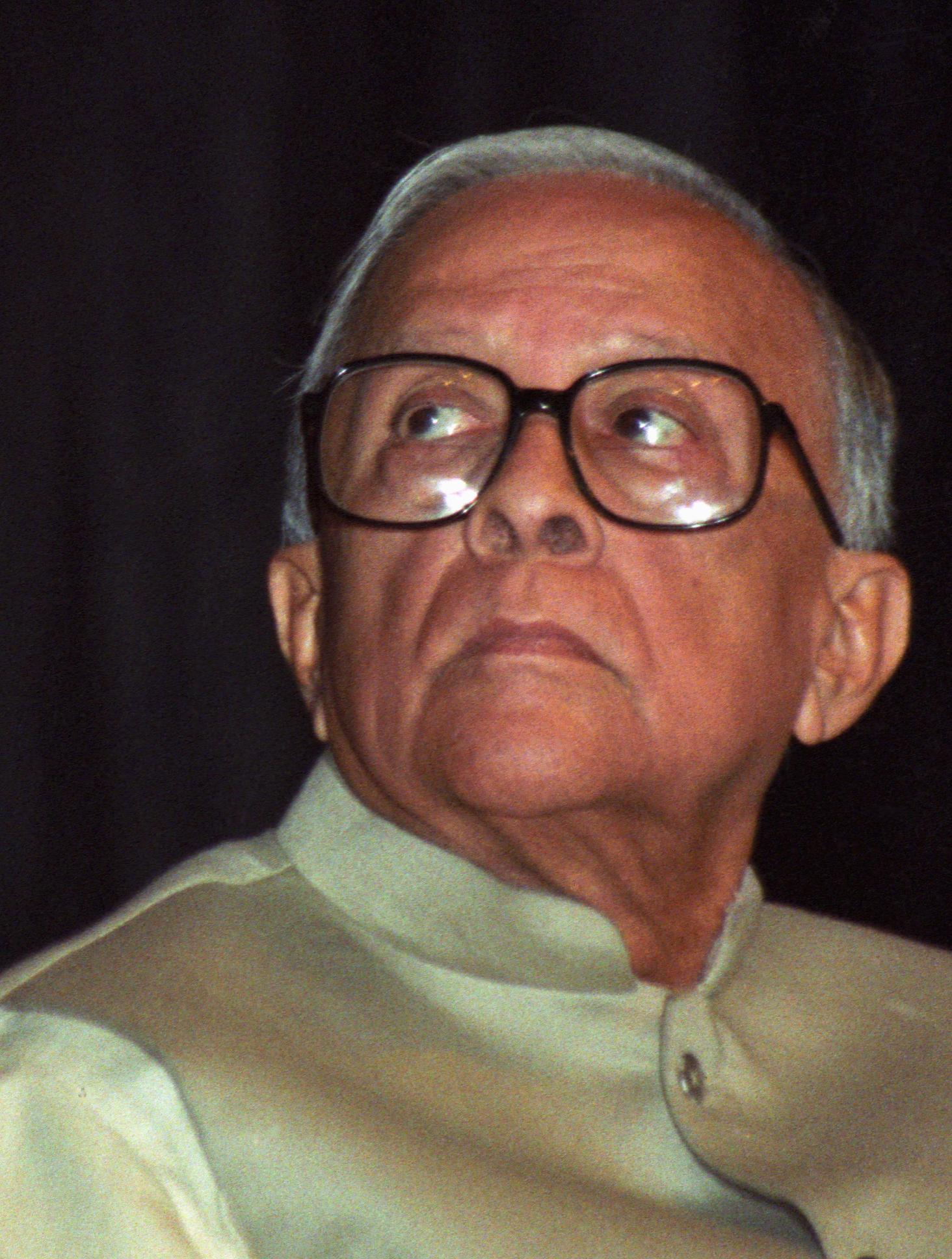
Jyoti Basu (born Jyotirindra Basu or Jyoti Bose; 8 July 1914 – 17 January 2010) was an Indian Marxist theorist, communist activist, and politician. He was one of the most prominent leaders of Communist movement in India. He served as the 6th and longest serving Chief Minister of West Bengal from 1977 to 2000. He was one of the founding members of the Communist Party of India (Marxist). He was a member of Politburo of the party since its formation in 1964 till 2008. He was also a member of West Bengal Legislative Assembly 11 times. In his political career, spanning over seven decades, he was noted to have been the India's longest serving chief minister in an elected democracy, at the time of his resignation. He declined the post of Prime Minister after the 1996 Indian general election after the CPM refused to let him head a multi-party coalition as it would not be able to implement Marxist programs and relinquished the prime ministership to Deve Gowda.
Jyotirindra Basu was born on 8 July 1914 to an upper middle class Bengali Kayastha Hindu family at 43/1 Harrison Road, Calcutta, British India. His father, Nishikanta Basu was a doctor whose hometown was the village of Barudi, Narayanganj in Dhaka District of the Bengal Presidency while his mother Hemlata Basu was a housewife. He grew up in an Indian style joint family and was the youngest of three siblings. He had an affectionate nickname called Gana. One of his elder uncles, Nilinkanta Basu was a judge in the Calcutta High Court. His family also retained ancestral lands in Barudi where Jyoti Basu is described to have spent part of his childhood. The Barudi home of Basu was later turned into a library after his death, reportedly on his wishes.
Basu's schooling began in 1920 at Loreto School Kindergarten in Dharmatala, Calcutta. His father shortened his name from Jyotirindra to Jyoti during the time of admission. However, three years later he was shifted to the St. Xaviers School, Calcutta. He completed his intermediate education from St. Xaviers in 1932. Subsequently, he took an undergraduate course in English from the prestigious Presidency College. Following his graduation in 1935, he acquired admission in the University College, London (UCL) to study Law and became a barrister at Middle Temple on 26 January 1940. He had already left for India by the time he acquired his barristerial qualification which he received in absentia.
During his stay in London, he became involved in political discourse and activism for the first time. Besides his general curriculum at UCL, he would attend various lectures on political organisation, constitutional law, international law and anthropology at the London School of Economics (LSE). Due to which, he is also credited as an alumnus of LSE. He had reportedly attended the lectures of the political theorist and economist, Harold Laski and was influenced by his anti-fascism. By 1937, Basu was an active member of several anti-imperialist Indian students unions such as the India League and the Federation of Indian Students, and had become acquainted with young Indian communists such as Bhupesh Gupta and Snehangshu Acharya.
In 1938, he had also become a founding member of the London Majlis and subsequently its first secretary. Apart from raising public opinion for the cause of Indian independence, one of the primary functions of the Majlis was to arrange receptions for Indian leaders who were visiting England at the time. Through the Majlis, Basu came into contact with various Indian independence movement leaders such as Subhas Chandra Bose, Jawaharlal Nehru, Krishna Menon and Vijaya Lakshmi Pandit.
On returning to Calcutta, India in early 1940, Basu enrolled as a barrister at the Calcutta High Court, and married Basanti Ghosh. However, in the same year, he also inducted himself as an activist affiliated with the Communist Party of India (CPI). His entry into the communist movement at the time had reportedly been in opposition to the wishes of his relatively well off family. Following the Meerut conspiracy in 1929, the Communist Party had also been made illegal by British authorities, as a result Basu was initially involved in providing liaison and safe houses for underground Communist leaders in the Independence movement. However soon afterwards, he also became involved in organising railway workers, planning strikes and is described to have preferred direct action over ballot box in the initial years.
In 1941, Basu was appointed the party secretary of the Bengal Assam Railway (now Bangladesh Railway and Northeast Frontier Railway) and tasked with organising a workers union. By May 1943, he had become the representative of the Calcutta Port Engineering Workers' Union in the All India Trade Union Congress, while the Bengal Assam Railway Workers Union under him increased its membership to over 4,000 with union members present in Dacca, Calcutta, Kanchrapara, Mymensingh, Rangpur and Assam.
In the following Bengal famine of 1943, the members of the Communist Party including Basu were involved in famine relief work. The party also organised "People's Food Committees" which would attempt to force hoarders into releasing their stocks for distribution; Basu participated in the organisation of such committees in Calcutta and Midnapore. According to Basu's testimony, they only had a small organisation at the time and did the best they could while the famine took the lives of over 3 million people. Basu was elected to the Bengal provincial committee of the Communist Party in the same year. He would later participate in the Tebhaga movement between 1945 and 1947 that sought to end the food crisis in Bengal, in a supportive capacity as a railway unionist.
Jyoti Basu
Jyoti Basu (born Jyotirindra Basu or Jyoti Bose; 8 July 1914 – 17 January 2010) was an Indian Marxist theorist, communist activist, and politician. He was one of the most prominent leaders of Communist movement in India. He served as the 6th and longest serving Chief Minister of West Bengal from 1977 to 2000. He was one of the founding members of the Communist Party of India (Marxist). He was a member of Politburo of the party since its formation in 1964 till 2008. He was also a member of West Bengal Legislative Assembly 11 times. In his political career, spanning over seven decades, he was noted to have been the India's longest serving chief minister in an elected democracy, at the time of his resignation. He declined the post of Prime Minister after the 1996 Indian general election after the CPM refused to let him head a multi-party coalition as it would not be able to implement Marxist programs and relinquished the prime ministership to Deve Gowda.
Jyotirindra Basu was born on 8 July 1914 to an upper middle class Bengali Kayastha Hindu family at 43/1 Harrison Road, Calcutta, British India. His father, Nishikanta Basu was a doctor whose hometown was the village of Barudi, Narayanganj in Dhaka District of the Bengal Presidency while his mother Hemlata Basu was a housewife. He grew up in an Indian style joint family and was the youngest of three siblings. He had an affectionate nickname called Gana. One of his elder uncles, Nilinkanta Basu was a judge in the Calcutta High Court. His family also retained ancestral lands in Barudi where Jyoti Basu is described to have spent part of his childhood. The Barudi home of Basu was later turned into a library after his death, reportedly on his wishes.
Basu's schooling began in 1920 at Loreto School Kindergarten in Dharmatala, Calcutta. His father shortened his name from Jyotirindra to Jyoti during the time of admission. However, three years later he was shifted to the St. Xaviers School, Calcutta. He completed his intermediate education from St. Xaviers in 1932. Subsequently, he took an undergraduate course in English from the prestigious Presidency College. Following his graduation in 1935, he acquired admission in the University College, London (UCL) to study Law and became a barrister at Middle Temple on 26 January 1940. He had already left for India by the time he acquired his barristerial qualification which he received in absentia.
During his stay in London, he became involved in political discourse and activism for the first time. Besides his general curriculum at UCL, he would attend various lectures on political organisation, constitutional law, international law and anthropology at the London School of Economics (LSE). Due to which, he is also credited as an alumnus of LSE. He had reportedly attended the lectures of the political theorist and economist, Harold Laski and was influenced by his anti-fascism. By 1937, Basu was an active member of several anti-imperialist Indian students unions such as the India League and the Federation of Indian Students, and had become acquainted with young Indian communists such as Bhupesh Gupta and Snehangshu Acharya.
In 1938, he had also become a founding member of the London Majlis and subsequently its first secretary. Apart from raising public opinion for the cause of Indian independence, one of the primary functions of the Majlis was to arrange receptions for Indian leaders who were visiting England at the time. Through the Majlis, Basu came into contact with various Indian independence movement leaders such as Subhas Chandra Bose, Jawaharlal Nehru, Krishna Menon and Vijaya Lakshmi Pandit.
On returning to Calcutta, India in early 1940, Basu enrolled as a barrister at the Calcutta High Court, and married Basanti Ghosh. However, in the same year, he also inducted himself as an activist affiliated with the Communist Party of India (CPI). His entry into the communist movement at the time had reportedly been in opposition to the wishes of his relatively well off family. Following the Meerut conspiracy in 1929, the Communist Party had also been made illegal by British authorities, as a result Basu was initially involved in providing liaison and safe houses for underground Communist leaders in the Independence movement. However soon afterwards, he also became involved in organising railway workers, planning strikes and is described to have preferred direct action over ballot box in the initial years.
In 1941, Basu was appointed the party secretary of the Bengal Assam Railway (now Bangladesh Railway and Northeast Frontier Railway) and tasked with organising a workers union. By May 1943, he had become the representative of the Calcutta Port Engineering Workers' Union in the All India Trade Union Congress, while the Bengal Assam Railway Workers Union under him increased its membership to over 4,000 with union members present in Dacca, Calcutta, Kanchrapara, Mymensingh, Rangpur and Assam.
In the following Bengal famine of 1943, the members of the Communist Party including Basu were involved in famine relief work. The party also organised "People's Food Committees" which would attempt to force hoarders into releasing their stocks for distribution; Basu participated in the organisation of such committees in Calcutta and Midnapore. According to Basu's testimony, they only had a small organisation at the time and did the best they could while the famine took the lives of over 3 million people. Basu was elected to the Bengal provincial committee of the Communist Party in the same year. He would later participate in the Tebhaga movement between 1945 and 1947 that sought to end the food crisis in Bengal, in a supportive capacity as a railway unionist.
Recent media
Recent media