



Community hub
Recent from talks
Knowledge base stats:
Talk channels stats:
Members stats:
Kalinago
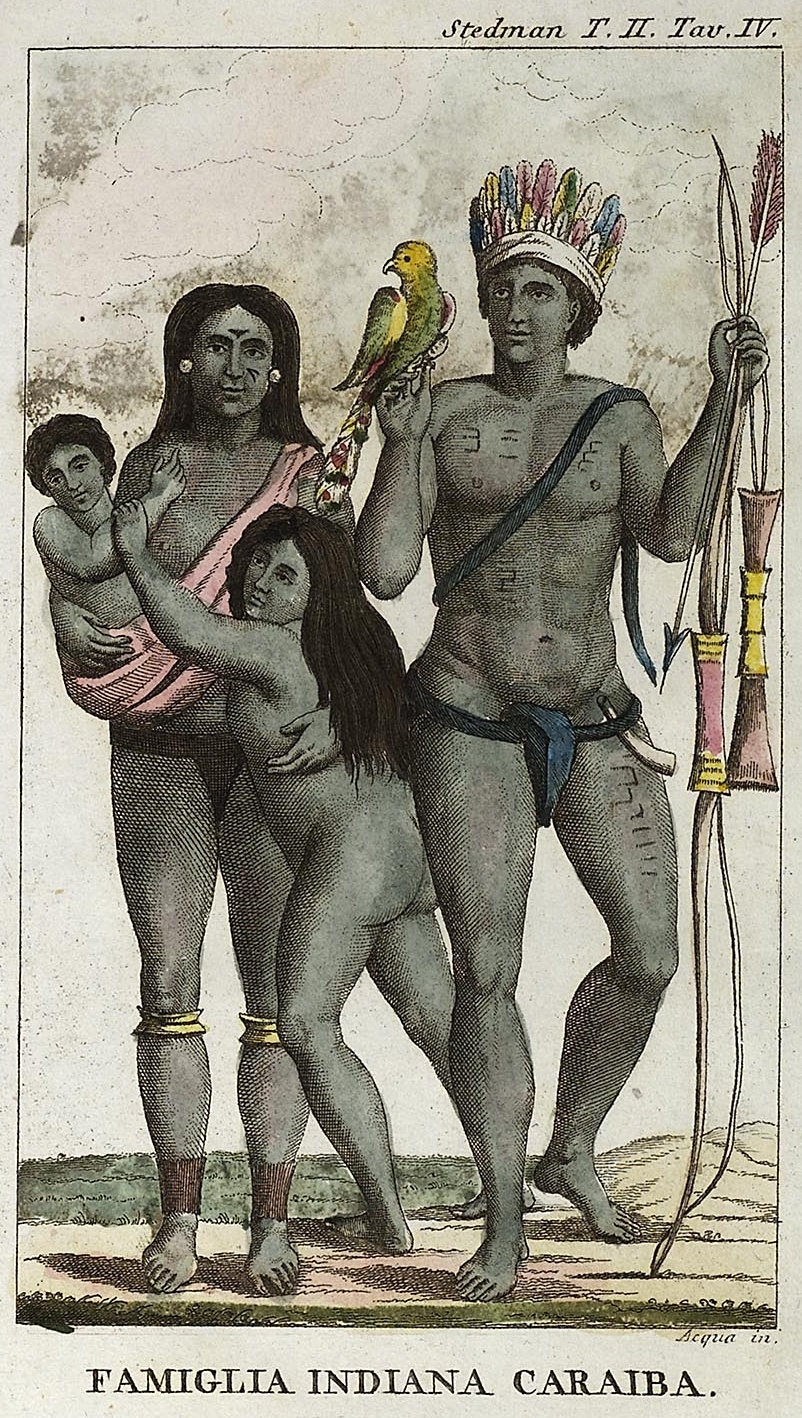
The Kalinago, also called Island Caribs or simply Caribs, are an Indigenous people of the Lesser Antilles in the Caribbean. They may have been related to the Mainland Caribs (Kalina) of South America, but they spoke an unrelated language known as Kalinago or Island Carib. They also spoke a pidgin language associated with the Mainland Caribs.
At the time of Spanish contact, the Kalinago were one of the dominant groups in the Caribbean (the name of which is derived from "Carib", as the Kalinago were once called). They lived throughout north-eastern South America, Trinidad and Tobago, Barbados, the Windward Islands, Dominica, and possibly the southern Leeward Islands. Historically, it was thought their ancestors were mainland peoples who had conquered the islands from their previous inhabitants, the Igneri. However, linguistic and archaeological evidence contradicts the notion of a mass emigration and conquest; the Kalinago language appears not to have been Cariban, but like that of their neighbors, the Taíno. Irving Rouse and others suggest that a smaller group of mainland peoples migrated to the islands without displacing their inhabitants, eventually adopting the local language but retaining their traditions of a South American origin.
In the early colonial period, the Kalinago had a reputation as warriors who raided neighboring islands. According to the tales of Spanish conquistadors, the Kalinago were cannibals who regularly ate roasted human flesh. (This is where the word cannibal comes from.) There is no hard evidence of Caribs eating human flesh, though one historian points out it might have been seldomly done as means of taunting or even frightening their Arawak enemies. The Kalinago and their descendants continue to live in the Antilles, notably on the island of Dominica. The Garifuna, who share common ancestry with the Kalinago, also live principally in Central America.
The exonym Caribe was first recorded by Christopher Columbus. One hypothesis for the origin of Carib is that it means "brave warrior". Its variants, including the English word Carib, were then adopted by other European languages. Early Spanish explorers and administrators used the terms Arawak and Caribs to distinguish the peoples of the Caribbean, with Carib reserved for Indigenous groups that they considered hostile and Arawak for groups that they considered friendly.
The Kalinago language endonyms are Karifuna (singular) and Kalinago (plural). The name was officially changed from 'Carib' to 'Kalinago' in Dominica in 2015.
William F. Keegan and Corinne L. Hofman have outlined two major models for the origin of the Kalinago. The traditional account, which is almost as old as Columbus, says that the Caribs were a warlike people who were moving up the Lesser Antilles and displacing the original inhabitants. Early missionary texts suggested the original inhabitants of the islands were the Igneri, while the Kalinago were invaders originating in South America (home to the mainland Caribs or Kalina) who conquered and displaced the Igneri. As this tradition was widespread in oral testimonies, and internally consistent, it was accepted as historical by Europeans.
The second model proposes that the Kalinago developed out of the indigenous peoples of the Antilles. While the Caribs were commonly believed to have migrated from the Orinoco River area in South America to settle in the Caribbean islands about 1200 CE, an analysis of ancient DNA suggests that the Caribs had a common origin with contemporary groups in the Greater and Lesser Antilles. The transition from Igneri to Island Carib culture may have occurred around 1450.
Archaeological evidence in support of either model is sparse, with "no confirmed Carib sites [known] prior to the 1990s." However, Cayo-style pottery found in the Lesser Antilles, and dated between 1000 and 1500, is similar to the Koriabo complex from which the mainland Carib or Kari'na pottery tradition is descended. Cayo pottery was once thought to have preceded Suazoid pottery (associated with the Igneri) in the Lesser Antilles, but more recent scholarship suggests that Cayo pottery gradually replaced Suazoid pottery in the islands. Cayo-style pottery has been found in the Lesser Antilles from Grenada to Basse-Terre, and, possibly, Saint Kitts. Cayo pottery also shows similarities to the Meillacoid and Chicoid styles of the Greater Antilles, as well as to the South American Koriabo style.
Hub AI
Kalinago AI simulator
(@Kalinago_simulator)
Kalinago
The Kalinago, also called Island Caribs or simply Caribs, are an Indigenous people of the Lesser Antilles in the Caribbean. They may have been related to the Mainland Caribs (Kalina) of South America, but they spoke an unrelated language known as Kalinago or Island Carib. They also spoke a pidgin language associated with the Mainland Caribs.
At the time of Spanish contact, the Kalinago were one of the dominant groups in the Caribbean (the name of which is derived from "Carib", as the Kalinago were once called). They lived throughout north-eastern South America, Trinidad and Tobago, Barbados, the Windward Islands, Dominica, and possibly the southern Leeward Islands. Historically, it was thought their ancestors were mainland peoples who had conquered the islands from their previous inhabitants, the Igneri. However, linguistic and archaeological evidence contradicts the notion of a mass emigration and conquest; the Kalinago language appears not to have been Cariban, but like that of their neighbors, the Taíno. Irving Rouse and others suggest that a smaller group of mainland peoples migrated to the islands without displacing their inhabitants, eventually adopting the local language but retaining their traditions of a South American origin.
In the early colonial period, the Kalinago had a reputation as warriors who raided neighboring islands. According to the tales of Spanish conquistadors, the Kalinago were cannibals who regularly ate roasted human flesh. (This is where the word cannibal comes from.) There is no hard evidence of Caribs eating human flesh, though one historian points out it might have been seldomly done as means of taunting or even frightening their Arawak enemies. The Kalinago and their descendants continue to live in the Antilles, notably on the island of Dominica. The Garifuna, who share common ancestry with the Kalinago, also live principally in Central America.
The exonym Caribe was first recorded by Christopher Columbus. One hypothesis for the origin of Carib is that it means "brave warrior". Its variants, including the English word Carib, were then adopted by other European languages. Early Spanish explorers and administrators used the terms Arawak and Caribs to distinguish the peoples of the Caribbean, with Carib reserved for Indigenous groups that they considered hostile and Arawak for groups that they considered friendly.
The Kalinago language endonyms are Karifuna (singular) and Kalinago (plural). The name was officially changed from 'Carib' to 'Kalinago' in Dominica in 2015.
William F. Keegan and Corinne L. Hofman have outlined two major models for the origin of the Kalinago. The traditional account, which is almost as old as Columbus, says that the Caribs were a warlike people who were moving up the Lesser Antilles and displacing the original inhabitants. Early missionary texts suggested the original inhabitants of the islands were the Igneri, while the Kalinago were invaders originating in South America (home to the mainland Caribs or Kalina) who conquered and displaced the Igneri. As this tradition was widespread in oral testimonies, and internally consistent, it was accepted as historical by Europeans.
The second model proposes that the Kalinago developed out of the indigenous peoples of the Antilles. While the Caribs were commonly believed to have migrated from the Orinoco River area in South America to settle in the Caribbean islands about 1200 CE, an analysis of ancient DNA suggests that the Caribs had a common origin with contemporary groups in the Greater and Lesser Antilles. The transition from Igneri to Island Carib culture may have occurred around 1450.
Archaeological evidence in support of either model is sparse, with "no confirmed Carib sites [known] prior to the 1990s." However, Cayo-style pottery found in the Lesser Antilles, and dated between 1000 and 1500, is similar to the Koriabo complex from which the mainland Carib or Kari'na pottery tradition is descended. Cayo pottery was once thought to have preceded Suazoid pottery (associated with the Igneri) in the Lesser Antilles, but more recent scholarship suggests that Cayo pottery gradually replaced Suazoid pottery in the islands. Cayo-style pottery has been found in the Lesser Antilles from Grenada to Basse-Terre, and, possibly, Saint Kitts. Cayo pottery also shows similarities to the Meillacoid and Chicoid styles of the Greater Antilles, as well as to the South American Koriabo style.