
Recent from talks
Karagiozis
Knowledge base stats:
Talk channels stats:
Members stats:
Karagiozis
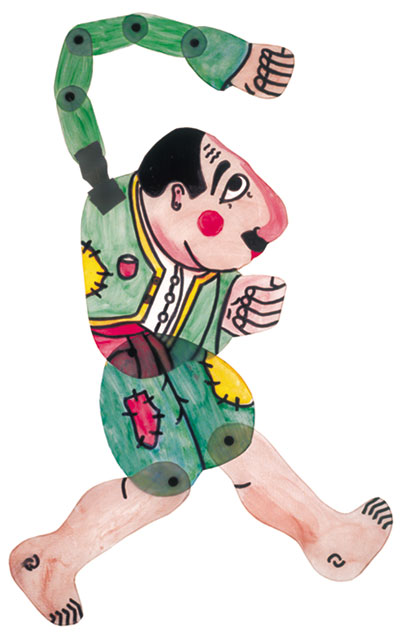
Karagiozis or Karaghiozis (Greek: Καραγκιόζης, Turkish: Karagöz [kaɾaˈɟœz]) is a shadow puppet and fictional character of Greek folklore. He is the main character of the traditional Greek shadow puppet theatre, which dates back to the Ottoman era. He is the Hellenized version of the Turkish character Karagöz, and is an important part of Greek cultural heritage and has influenced shadow puppet theatre in many regions.
Some believe that it originates from the island of Java (Indonesia) where shadow puppet shows called wayang kulit were played already as early as in the 11th century and arrived in the Ottoman Empire via traders. The first Karagöz–Hacivat play was performed for Sultan Selim I (reigned 1512–1520) in Egypt after his conquest of the country in 1517, but 17th century writer Evliya Çelebi stated that it had been performed in the Ottoman palace as early as the reign of Bayezid I (reigned 1389–1402). In the 16th century, Ottoman Grand Mufti Muhammad Ebussuud el-İmadi issued a celebrated opinion allowing the performance of Karagöz plays.
Shadow theatre, with a single puppeteer creating voices for a dialogue, narrating a story, and possibly even singing while manipulating puppets, appears to come ultimately from the Indonesian wayang kulit or Chinese pi ying xi Shadow play.
The name Karagiozis or Karaghiozis is from Greek Καραγκιόζης, borrowed from Turkish Karagöz 'dark eye'.
There are several stories of how shadow theater was established in Asia Minor. Many argue for a Mediterranean origin in the Egyptian shadow puppet tradition. Whatever the case, it is worthwhile to mention that regardless of religious restrictions, shadow theater became more widespread around the 16th century among the Muslim Turks.
Originally, his popular appeal was his scatological language and protruding phallus. It is still performed in Turkey, especially during Ramadan celebrations, under the same name.
Karagiozis seems to have come to mainland Greece, probably from Asia Minor (Anatolia) in the 19th century, during Ottoman rule. Karagiozis was hellenized in Patras, Greece in the end of 19th century by Dimitrios Sardounis, a.k.a. Mimaros, regarded as the founder of modern Greek shadow theater.
The genre became fully integrated, though adapted, amongst the Greek population. But there are several legends as well as studies surrounding Karagiozis's arrival and subsequent popularity in Greece. Some stories say that Greek merchants brought the art from China and others say that it was a Greek who created the "legend" during Ottoman rule for the entertainment of the sultan. Yet others believe that it originated from real events involving two masonry workers named Karagöz and Haci Ivat working in the construction of a mosque in the city of Bursa, Turkey in the early 14th century.
Hub AI
Karagiozis AI simulator
(@Karagiozis_simulator)
Karagiozis
Karagiozis or Karaghiozis (Greek: Καραγκιόζης, Turkish: Karagöz [kaɾaˈɟœz]) is a shadow puppet and fictional character of Greek folklore. He is the main character of the traditional Greek shadow puppet theatre, which dates back to the Ottoman era. He is the Hellenized version of the Turkish character Karagöz, and is an important part of Greek cultural heritage and has influenced shadow puppet theatre in many regions.
Some believe that it originates from the island of Java (Indonesia) where shadow puppet shows called wayang kulit were played already as early as in the 11th century and arrived in the Ottoman Empire via traders. The first Karagöz–Hacivat play was performed for Sultan Selim I (reigned 1512–1520) in Egypt after his conquest of the country in 1517, but 17th century writer Evliya Çelebi stated that it had been performed in the Ottoman palace as early as the reign of Bayezid I (reigned 1389–1402). In the 16th century, Ottoman Grand Mufti Muhammad Ebussuud el-İmadi issued a celebrated opinion allowing the performance of Karagöz plays.
Shadow theatre, with a single puppeteer creating voices for a dialogue, narrating a story, and possibly even singing while manipulating puppets, appears to come ultimately from the Indonesian wayang kulit or Chinese pi ying xi Shadow play.
The name Karagiozis or Karaghiozis is from Greek Καραγκιόζης, borrowed from Turkish Karagöz 'dark eye'.
There are several stories of how shadow theater was established in Asia Minor. Many argue for a Mediterranean origin in the Egyptian shadow puppet tradition. Whatever the case, it is worthwhile to mention that regardless of religious restrictions, shadow theater became more widespread around the 16th century among the Muslim Turks.
Originally, his popular appeal was his scatological language and protruding phallus. It is still performed in Turkey, especially during Ramadan celebrations, under the same name.
Karagiozis seems to have come to mainland Greece, probably from Asia Minor (Anatolia) in the 19th century, during Ottoman rule. Karagiozis was hellenized in Patras, Greece in the end of 19th century by Dimitrios Sardounis, a.k.a. Mimaros, regarded as the founder of modern Greek shadow theater.
The genre became fully integrated, though adapted, amongst the Greek population. But there are several legends as well as studies surrounding Karagiozis's arrival and subsequent popularity in Greece. Some stories say that Greek merchants brought the art from China and others say that it was a Greek who created the "legend" during Ottoman rule for the entertainment of the sultan. Yet others believe that it originated from real events involving two masonry workers named Karagöz and Haci Ivat working in the construction of a mosque in the city of Bursa, Turkey in the early 14th century.
Recent media