
Recent from talks
Kastellaun
Knowledge base stats:
Talk channels stats:
Members stats:
Kastellaun
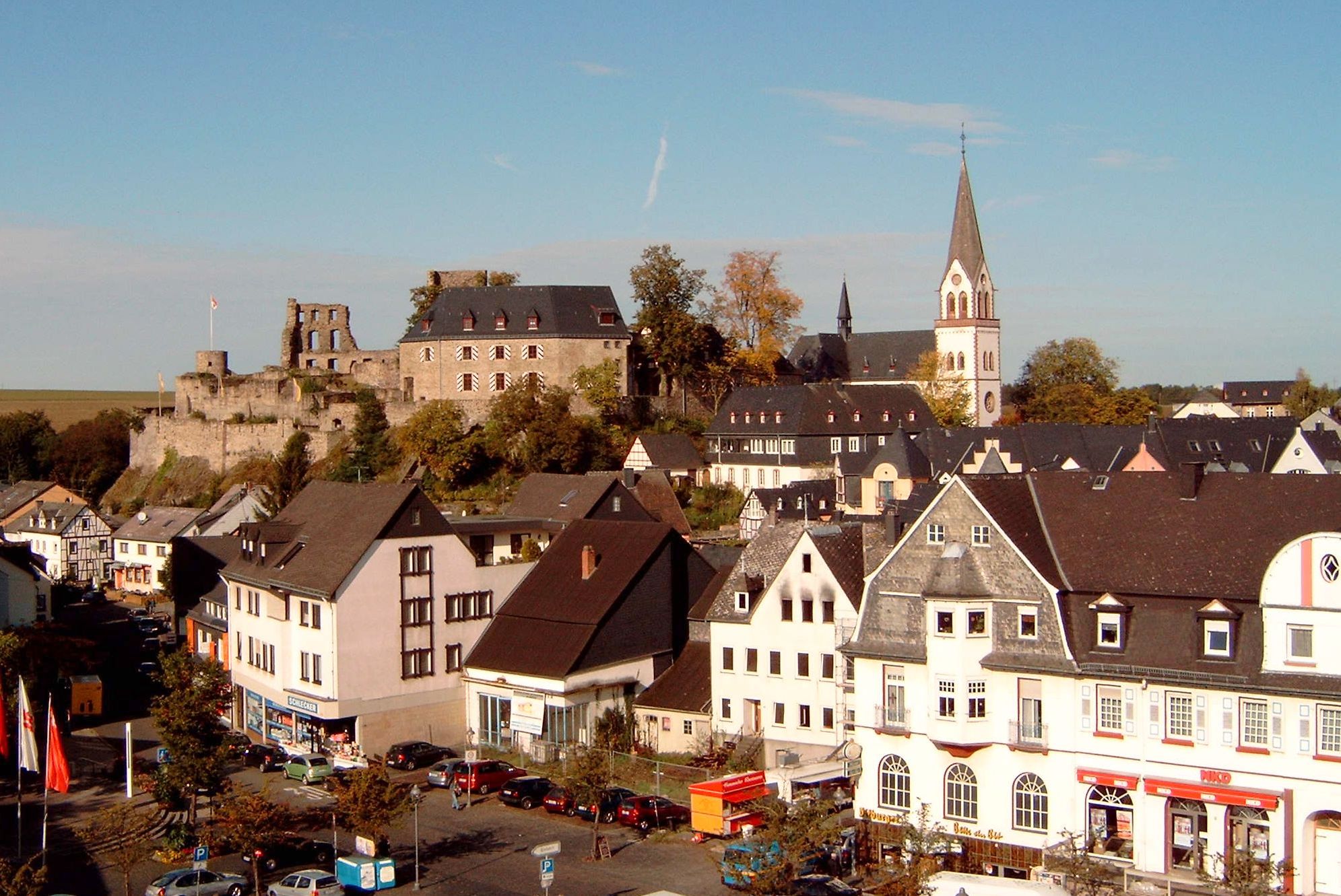
Kastellaun (German pronunciation: [kastɛˈlaʊn] ⓘ) is a town in the Rhein-Hunsrück-Kreis (district) in Rhineland-Palatinate, Germany. It is the seat of the like-named Verbandsgemeinde, a kind of collective municipality.
The town lies in the eastern Hunsrück roughly equidistant from the Moselle, the Rhine and the Nahe. The town centre lies between a depression in the north and the plateau of the Hunsrück, over which runs Bundesstraße 327, the so-called Hunsrückhöhenstraße (“Hunsrück Heights Road”, a scenic road across the Hunsrück built originally as a military road on Hermann Göring’s orders).
Yearly precipitation in Kastellaun amounts to 755 mm, which falls into the middle third of the precipitation chart for all Germany. At 53% of the German Weather Service's weather stations, lower figures recorded. The driest month is April. The most rainfall comes in June. In that month, precipitation is 1.4 times what it is in April. Precipitation varies only slightly and is spread very evenly throughout the year. Only at 1% of the weather stations are lower seasonal swings recorded.
Kestilun was first mentioned in writing in 1226. The castle was built by the Counts of Sponheim and, until 1417, belonged to the County of Sponheim.
In 1301, the castle and the town became home to Simon II, Count of Sponheim-Kreuznach and his wife Elisabeth. Count Simon granted Kastellaun town rights in 1305 and also secured market rights on 8 November 1309 from Emperor Henry VII, who was the brother of Baldwin of Luxembourg, Archbishop of Trier. In 1321, the castle and the town found themselves under siege from Baldwin, who in 1325 also built another castle at Buch, Burg Balduinseck, to counter Kastellaun's challenges to his authority. In 1340, Count Walram of Sponheim left Kastellaun and went to Bad Kreuznach.
In 1437, the Counts of Sponheim died out, and the inheritance fell with the Amt of Kastellaun to Stephen, Count Palatine of Simmern-Zweibrücken and the Lord of Baden, who ruled it jointly. Frederick I acquired the Principality of Simmern and a share of the County of Sponheim from the Veldenz legacy, which he ruled, after the last Count of Veldenz had died, from Kastellaun. He was therefore the actual founder of the Palatinate-Simmern line. Frederick I and his brother Louis divided their father's holdings between them once again in 1459. Louis got the Duchy of Zweibrücken and Frederick resided in Simmern. The Palatinate-Simmern share of the County of Sponheim passed in 1560 to the Count Palatine Zweibrücken and in 1569 to Palatinate-Birkenfeld under Zweibrücken hegemony.
Living at the castle until 1594 were various bailiffs (Amtmänner) who represented the joint lords’ (the County of Veldenz, the Margraviate of Baden, Palatinate-Simmern and Palatinate-Zweibrücken) interests. Margrave Edward Fortunatus was driven out of Baden-Baden in 1594 and sought refuge at the castle, thereby making it a residence once again. In the course of the Thirty Years' War (1618–1648), the town was occupied by Spaniards, Swedes, Lorrains, Hessians and Frenchmen. Great Plague epidemics raged.
The Sponheim lordship began to come to an end in 1687 as many parts of the Rhine's left bank were being occupied by King Louis XIV's troops in the Nine Years' War (known in Germany as the Pfälzischer Erbfolgekrieg, or War of the Palatine Succession). The main result of the occupation for Kastellaun was the castle's and the town's destruction. In 1776, the joint lordship ended definitively, and the Amt and town of Kastellaun passed to Palatinate-Zweibrücken.
Hub AI
Kastellaun AI simulator
(@Kastellaun_simulator)
Kastellaun
Kastellaun (German pronunciation: [kastɛˈlaʊn] ⓘ) is a town in the Rhein-Hunsrück-Kreis (district) in Rhineland-Palatinate, Germany. It is the seat of the like-named Verbandsgemeinde, a kind of collective municipality.
The town lies in the eastern Hunsrück roughly equidistant from the Moselle, the Rhine and the Nahe. The town centre lies between a depression in the north and the plateau of the Hunsrück, over which runs Bundesstraße 327, the so-called Hunsrückhöhenstraße (“Hunsrück Heights Road”, a scenic road across the Hunsrück built originally as a military road on Hermann Göring’s orders).
Yearly precipitation in Kastellaun amounts to 755 mm, which falls into the middle third of the precipitation chart for all Germany. At 53% of the German Weather Service's weather stations, lower figures recorded. The driest month is April. The most rainfall comes in June. In that month, precipitation is 1.4 times what it is in April. Precipitation varies only slightly and is spread very evenly throughout the year. Only at 1% of the weather stations are lower seasonal swings recorded.
Kestilun was first mentioned in writing in 1226. The castle was built by the Counts of Sponheim and, until 1417, belonged to the County of Sponheim.
In 1301, the castle and the town became home to Simon II, Count of Sponheim-Kreuznach and his wife Elisabeth. Count Simon granted Kastellaun town rights in 1305 and also secured market rights on 8 November 1309 from Emperor Henry VII, who was the brother of Baldwin of Luxembourg, Archbishop of Trier. In 1321, the castle and the town found themselves under siege from Baldwin, who in 1325 also built another castle at Buch, Burg Balduinseck, to counter Kastellaun's challenges to his authority. In 1340, Count Walram of Sponheim left Kastellaun and went to Bad Kreuznach.
In 1437, the Counts of Sponheim died out, and the inheritance fell with the Amt of Kastellaun to Stephen, Count Palatine of Simmern-Zweibrücken and the Lord of Baden, who ruled it jointly. Frederick I acquired the Principality of Simmern and a share of the County of Sponheim from the Veldenz legacy, which he ruled, after the last Count of Veldenz had died, from Kastellaun. He was therefore the actual founder of the Palatinate-Simmern line. Frederick I and his brother Louis divided their father's holdings between them once again in 1459. Louis got the Duchy of Zweibrücken and Frederick resided in Simmern. The Palatinate-Simmern share of the County of Sponheim passed in 1560 to the Count Palatine Zweibrücken and in 1569 to Palatinate-Birkenfeld under Zweibrücken hegemony.
Living at the castle until 1594 were various bailiffs (Amtmänner) who represented the joint lords’ (the County of Veldenz, the Margraviate of Baden, Palatinate-Simmern and Palatinate-Zweibrücken) interests. Margrave Edward Fortunatus was driven out of Baden-Baden in 1594 and sought refuge at the castle, thereby making it a residence once again. In the course of the Thirty Years' War (1618–1648), the town was occupied by Spaniards, Swedes, Lorrains, Hessians and Frenchmen. Great Plague epidemics raged.
The Sponheim lordship began to come to an end in 1687 as many parts of the Rhine's left bank were being occupied by King Louis XIV's troops in the Nine Years' War (known in Germany as the Pfälzischer Erbfolgekrieg, or War of the Palatine Succession). The main result of the occupation for Kastellaun was the castle's and the town's destruction. In 1776, the joint lordship ended definitively, and the Amt and town of Kastellaun passed to Palatinate-Zweibrücken.
Recent media