
Recent from talks
King Charles Spaniel
Knowledge base stats:
Talk channels stats:
Members stats:
King Charles Spaniel
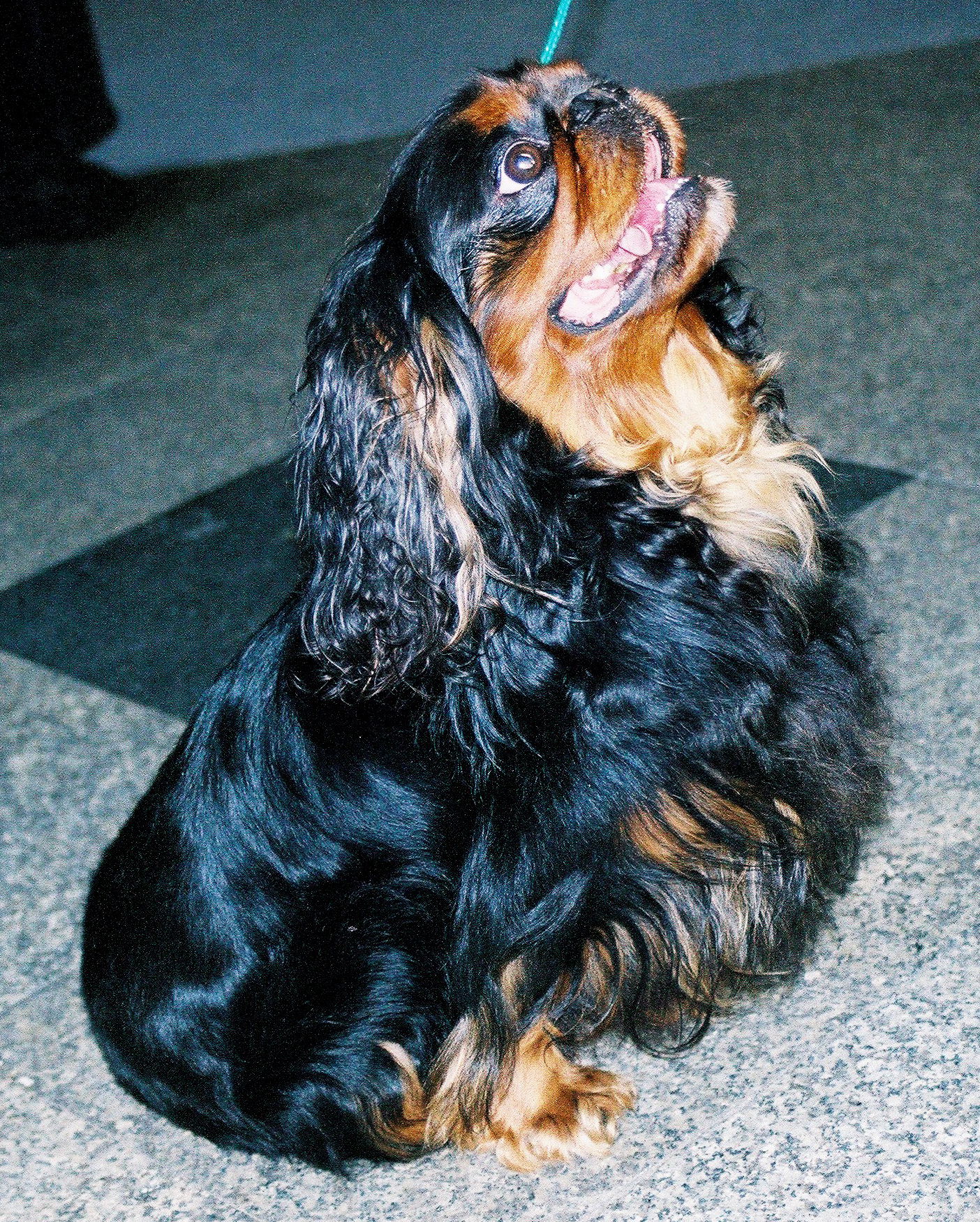
The King Charles Spaniel (also known as the English Toy Spaniel) is a small dog breed of the spaniel type. In 1903, The Kennel Club combined four separate toy spaniel breeds under this single title. The other varieties merged into this breed were the Blenheim, Ruby and Prince Charles Spaniels, each of which contributed one of the four coat colours now seen in the breed.
Thought to have originated in East Asia, and possibly acquired by European traders via the Spice Road, early toy spaniels were first seen in Europe during the 16th century. They became linked with English royalty during the rule of Queen Mary I (from 1553-1558), eventually earning their name after being made famous by their association with King Charles II. Ruling from 1660-1685, Charles II owned many small dogs which accompanied him and his entourage about their daily business. Members of the breed were also owned by Queen Victoria (Dash) and her great-granddaughter Grand Duchess Anastasia Nikolaevna of Russia.
The modern King Charles Spaniel, and the other types of toy spaniels, are likely the result of crossbreeding historic spaniels with other East Asian breeds (such as the Japanese Chin, Pekingese, and the Pug) in the early 19th century. This was done mainly to reduce the size of the nose and snout, as was the style of the day. The 20th century saw attempts to restore lines of King Charles Spaniels to the breed of Charles II's time. These included the unsuccessful Toy Trawler Spaniel and the now popular Cavalier King Charles Spaniel. The Cavalier is slightly larger, with a flat head and a longer nose, while the King Charles is smaller, with a domed head and a flat face.
Historically the breeds that were merged into the King Charles Spaniel were used for hunting; due to their stature they were not well suited. They have kept their hunting instincts, but do not exhibit high energy and are better suited to being lapdogs. The modern breed is prone to several health problems, including cardiac conditions and a range of eye problems.
The fact that dogs are always part of a royal Japanese present suggested to the Commodore the thought that possibly one species of spaniel now in England may be traced to a Japanese origin. In 1613, when Captain Saris returned from Japan to England, he carried to the King a letter from the Emperor, and presents in return for those sent to him by his Majesty of England. Dogs probably formed part of the gifts and thus may have been introduced into the Kingdom the Japanese breed. At any rate, there is a species of Spaniel in England which it is hard to distinguish from the Japanese dog. The species sent by the Emperor is by no means common even in Japan. It is never seen running about the streets, or following its master in his walks, and the Commodore understood that they were costly.
The King Charles Spaniel may share a common ancestry with the Pekingese and Japanese Chin.
The red and white variety of toy spaniel was first seen in paintings by Titian, including the Venus of Urbino (1538), where a small dog is used as a symbol of female seductiveness. Further paintings featuring these toy spaniels were created by Palma Vecchio and Paolo Veronese during the 16th century. These dogs already had high domed heads with short noses, although the muzzles were more pointed than they are today. These Italian toy spaniels may have been crossed with local small dogs such as the Maltese and also with imported Chinese dogs. The Papillon is the continental descendant of similar toy-sized spaniels.
The earliest recorded appearance of a toy spaniel in England was in a painting of Queen Mary I and King Philip. Mary, Queen of Scots, was also fond of small toy dogs, including spaniels, showing the fondness of the British royalty for these types of dogs before Charles II.
Hub AI
King Charles Spaniel AI simulator
(@King Charles Spaniel_simulator)
King Charles Spaniel
The King Charles Spaniel (also known as the English Toy Spaniel) is a small dog breed of the spaniel type. In 1903, The Kennel Club combined four separate toy spaniel breeds under this single title. The other varieties merged into this breed were the Blenheim, Ruby and Prince Charles Spaniels, each of which contributed one of the four coat colours now seen in the breed.
Thought to have originated in East Asia, and possibly acquired by European traders via the Spice Road, early toy spaniels were first seen in Europe during the 16th century. They became linked with English royalty during the rule of Queen Mary I (from 1553-1558), eventually earning their name after being made famous by their association with King Charles II. Ruling from 1660-1685, Charles II owned many small dogs which accompanied him and his entourage about their daily business. Members of the breed were also owned by Queen Victoria (Dash) and her great-granddaughter Grand Duchess Anastasia Nikolaevna of Russia.
The modern King Charles Spaniel, and the other types of toy spaniels, are likely the result of crossbreeding historic spaniels with other East Asian breeds (such as the Japanese Chin, Pekingese, and the Pug) in the early 19th century. This was done mainly to reduce the size of the nose and snout, as was the style of the day. The 20th century saw attempts to restore lines of King Charles Spaniels to the breed of Charles II's time. These included the unsuccessful Toy Trawler Spaniel and the now popular Cavalier King Charles Spaniel. The Cavalier is slightly larger, with a flat head and a longer nose, while the King Charles is smaller, with a domed head and a flat face.
Historically the breeds that were merged into the King Charles Spaniel were used for hunting; due to their stature they were not well suited. They have kept their hunting instincts, but do not exhibit high energy and are better suited to being lapdogs. The modern breed is prone to several health problems, including cardiac conditions and a range of eye problems.
The fact that dogs are always part of a royal Japanese present suggested to the Commodore the thought that possibly one species of spaniel now in England may be traced to a Japanese origin. In 1613, when Captain Saris returned from Japan to England, he carried to the King a letter from the Emperor, and presents in return for those sent to him by his Majesty of England. Dogs probably formed part of the gifts and thus may have been introduced into the Kingdom the Japanese breed. At any rate, there is a species of Spaniel in England which it is hard to distinguish from the Japanese dog. The species sent by the Emperor is by no means common even in Japan. It is never seen running about the streets, or following its master in his walks, and the Commodore understood that they were costly.
The King Charles Spaniel may share a common ancestry with the Pekingese and Japanese Chin.
The red and white variety of toy spaniel was first seen in paintings by Titian, including the Venus of Urbino (1538), where a small dog is used as a symbol of female seductiveness. Further paintings featuring these toy spaniels were created by Palma Vecchio and Paolo Veronese during the 16th century. These dogs already had high domed heads with short noses, although the muzzles were more pointed than they are today. These Italian toy spaniels may have been crossed with local small dogs such as the Maltese and also with imported Chinese dogs. The Papillon is the continental descendant of similar toy-sized spaniels.
The earliest recorded appearance of a toy spaniel in England was in a painting of Queen Mary I and King Philip. Mary, Queen of Scots, was also fond of small toy dogs, including spaniels, showing the fondness of the British royalty for these types of dogs before Charles II.
Recent media