



Community hub
Recent from talks
Knowledge base stats:
Talk channels stats:
Members stats:
Kingdom of Gwent
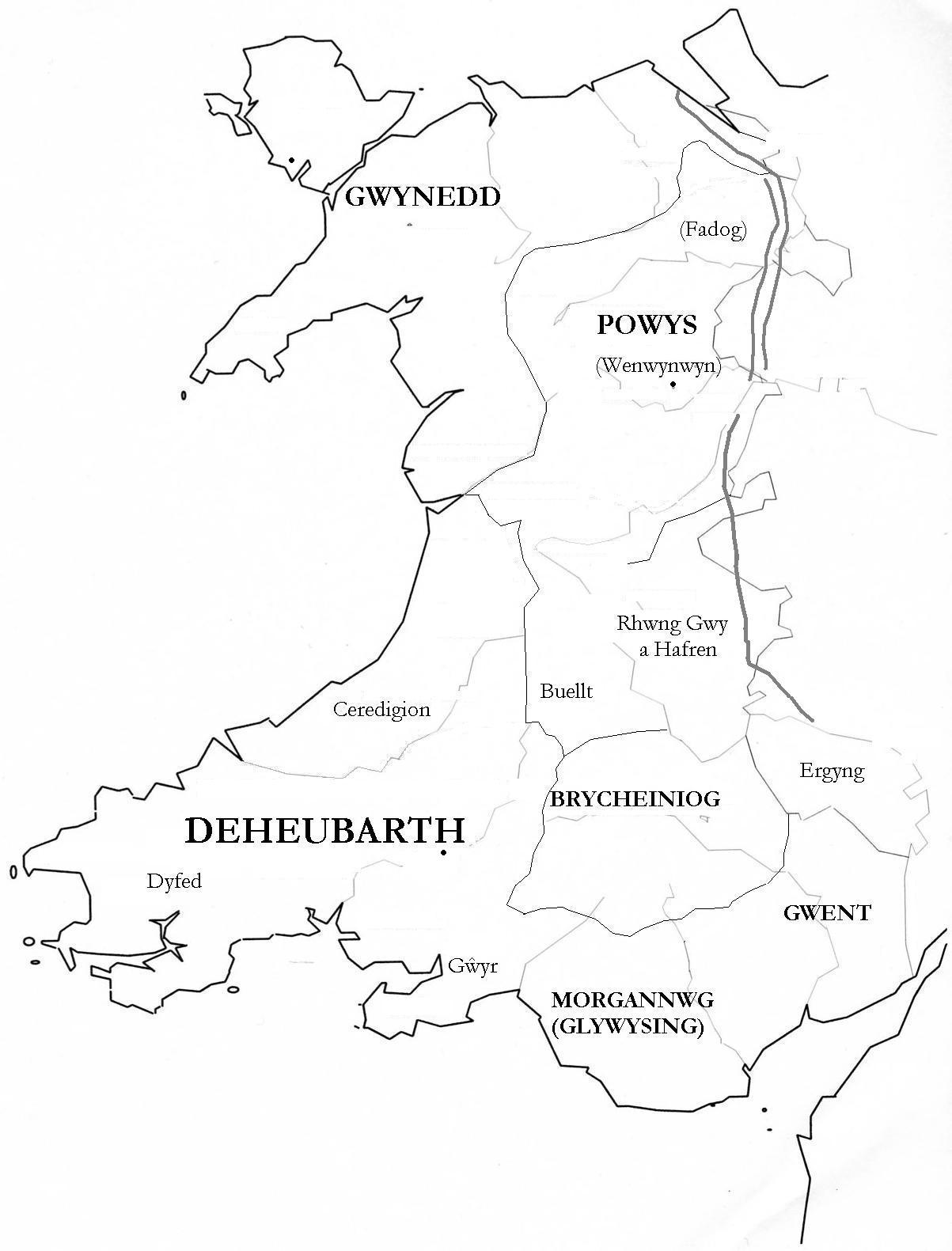
Gwent (Old Welsh: Guent) was a medieval Welsh kingdom, lying between the Rivers Wye and Usk. It existed from the end of Roman rule in Britain in about the 5th century until the Norman invasion of Wales in the 11th century. Along with its neighbour Glywysing, it seems to have had a great deal of cultural continuity with the earlier Silures, keeping their own courts and diocese separate from the rest of Wales until their conquest by Gruffydd ap Llywelyn. Although it recovered its independence after his death in 1063, Gwent was the first of the Welsh kingdoms to be overrun following the Norman conquest.
The area has been occupied since the Paleolithic, with Mesolithic finds at Goldcliff and evidence of growing activity throughout the Bronze and Iron Age.
Gwent came into being after the Romans had left Britain, and was a successor state drawing on the culture of the pre-Roman Silures tribe and ultimately a large part of their Iron Age territories. It took its name from the civitas capital of Venta Silurum, perhaps meaning "Market of the Silures". In the post Roman period, the territory around Venta became the successor kingdom of Guenta, later Gwent, deriving its name directly from the town through the normal sound change in the Brythonic languages from v to gu. The town itself became Caerwent, "Fort Venta".
According to one Old Welsh genealogy[which?], the founder of the kingdom was Caradoc Freichfras.[citation needed] The earliest centre of the kingdom may have been at Caerwent, the Roman administrative centre, or perhaps Caerleon, formerly a major Roman military base. Welsh saints like Dubricius, Tatheus and Cadoc Christianized the area from the 5th century onwards. According to tradition, in about the 6th century Caradoc moved his court from Caerwent to Portskewett, perhaps meaning nearby Sudbrook. Other suggestions are that Gwent was founded by Erb, possibly a descendant of Caradoc, who may have been a ruler of Ergyng east of the Black Mountains who won control of a wider area to the south.
A later monarch was the Christian King Tewdrig who was mortally wounded repelling a pagan Saxon invasion. From the 6th century, various kings would unite the kingdom of Gwent with Glywysing to the west, with Tewdrig's son Meurig doing so through marriage. It has been suggested that Meurig's son, Athrwys, may be the origin for King Arthur, although others consider this unlikely.
In 931, Morgan ab Owain of Gwent, later known as Morgan Hen (Morgan the Old), was one of the Welsh rulers who submitted to Athelstan's overlordship, and attended him at court in Hereford. However, Gwent remained a distinct Welsh kingdom. In about 942, Gwent and Glywysing were again temporarily united under the name Morgannŵg by Morgan Hen, but they were broken up again after his death. In 1034 Gwent was invaded by Canute.
Gwent's existence as a separate kingdom again temporarily ended when Gruffydd ap Llywelyn won control of the area and Morgannŵg in 1055, so extending his rule over the whole of Wales. In 1056 Gruffyd ap Llywelyn campaigned from the vicinity of Monmouth with an army of Welsh, Saxons and Danes to defeat Ralph, Earl of Hereford, ravaging the surrounding countryside. However, after Gruffydd's death in 1063, Caradog ap Gruffudd re-established an independent kingdom in Gwent under his father's 2nd cousin Cadwgan ap Meurig. In 1065 the area was invaded by Earl Harold of Hereford, who attempted to establish a base at Portskewett, but it was razed to the ground by Caradog, and Harold - having by then been crowned King of England - was killed at the Battle of Hastings the following year.
With the Norman invasion of Britain, the Normans sacked south-east Wales and parts of Gwent in response to Eadric's Herefordshire rebellion in alliance with the Welsh prince of Gwynedd (and Powys), Bleddyn ap Cynfyn. King Maredudd of Deheubarth decided not to resist the Norman encroachment on Gwent and was rewarded with lands in England in 1070, at the same time as the chronicler Orderic Vitalis noted in his Historia Ecclesiastica that a Welsh king named "Caducan" (Cadwgan ap Meurig) suffered defeat in battle at the hands of William FitzOsbern, 1st Earl of Hereford. With the Norman invasion of Wales extending westwards, Caradog's area of control moved into Deheubarth to the west, and in 1074 Caradog took over control over what was left of the war-ravaged Kingdom from Cadwgan ap Meurig.
Hub AI
Kingdom of Gwent AI simulator
(@Kingdom of Gwent_simulator)
Kingdom of Gwent
Gwent (Old Welsh: Guent) was a medieval Welsh kingdom, lying between the Rivers Wye and Usk. It existed from the end of Roman rule in Britain in about the 5th century until the Norman invasion of Wales in the 11th century. Along with its neighbour Glywysing, it seems to have had a great deal of cultural continuity with the earlier Silures, keeping their own courts and diocese separate from the rest of Wales until their conquest by Gruffydd ap Llywelyn. Although it recovered its independence after his death in 1063, Gwent was the first of the Welsh kingdoms to be overrun following the Norman conquest.
The area has been occupied since the Paleolithic, with Mesolithic finds at Goldcliff and evidence of growing activity throughout the Bronze and Iron Age.
Gwent came into being after the Romans had left Britain, and was a successor state drawing on the culture of the pre-Roman Silures tribe and ultimately a large part of their Iron Age territories. It took its name from the civitas capital of Venta Silurum, perhaps meaning "Market of the Silures". In the post Roman period, the territory around Venta became the successor kingdom of Guenta, later Gwent, deriving its name directly from the town through the normal sound change in the Brythonic languages from v to gu. The town itself became Caerwent, "Fort Venta".
According to one Old Welsh genealogy[which?], the founder of the kingdom was Caradoc Freichfras.[citation needed] The earliest centre of the kingdom may have been at Caerwent, the Roman administrative centre, or perhaps Caerleon, formerly a major Roman military base. Welsh saints like Dubricius, Tatheus and Cadoc Christianized the area from the 5th century onwards. According to tradition, in about the 6th century Caradoc moved his court from Caerwent to Portskewett, perhaps meaning nearby Sudbrook. Other suggestions are that Gwent was founded by Erb, possibly a descendant of Caradoc, who may have been a ruler of Ergyng east of the Black Mountains who won control of a wider area to the south.
A later monarch was the Christian King Tewdrig who was mortally wounded repelling a pagan Saxon invasion. From the 6th century, various kings would unite the kingdom of Gwent with Glywysing to the west, with Tewdrig's son Meurig doing so through marriage. It has been suggested that Meurig's son, Athrwys, may be the origin for King Arthur, although others consider this unlikely.
In 931, Morgan ab Owain of Gwent, later known as Morgan Hen (Morgan the Old), was one of the Welsh rulers who submitted to Athelstan's overlordship, and attended him at court in Hereford. However, Gwent remained a distinct Welsh kingdom. In about 942, Gwent and Glywysing were again temporarily united under the name Morgannŵg by Morgan Hen, but they were broken up again after his death. In 1034 Gwent was invaded by Canute.
Gwent's existence as a separate kingdom again temporarily ended when Gruffydd ap Llywelyn won control of the area and Morgannŵg in 1055, so extending his rule over the whole of Wales. In 1056 Gruffyd ap Llywelyn campaigned from the vicinity of Monmouth with an army of Welsh, Saxons and Danes to defeat Ralph, Earl of Hereford, ravaging the surrounding countryside. However, after Gruffydd's death in 1063, Caradog ap Gruffudd re-established an independent kingdom in Gwent under his father's 2nd cousin Cadwgan ap Meurig. In 1065 the area was invaded by Earl Harold of Hereford, who attempted to establish a base at Portskewett, but it was razed to the ground by Caradog, and Harold - having by then been crowned King of England - was killed at the Battle of Hastings the following year.
With the Norman invasion of Britain, the Normans sacked south-east Wales and parts of Gwent in response to Eadric's Herefordshire rebellion in alliance with the Welsh prince of Gwynedd (and Powys), Bleddyn ap Cynfyn. King Maredudd of Deheubarth decided not to resist the Norman encroachment on Gwent and was rewarded with lands in England in 1070, at the same time as the chronicler Orderic Vitalis noted in his Historia Ecclesiastica that a Welsh king named "Caducan" (Cadwgan ap Meurig) suffered defeat in battle at the hands of William FitzOsbern, 1st Earl of Hereford. With the Norman invasion of Wales extending westwards, Caradog's area of control moved into Deheubarth to the west, and in 1074 Caradog took over control over what was left of the war-ravaged Kingdom from Cadwgan ap Meurig.