



Community hub
Recent from talks
Knowledge base stats:
Talk channels stats:
Members stats:
Kontor
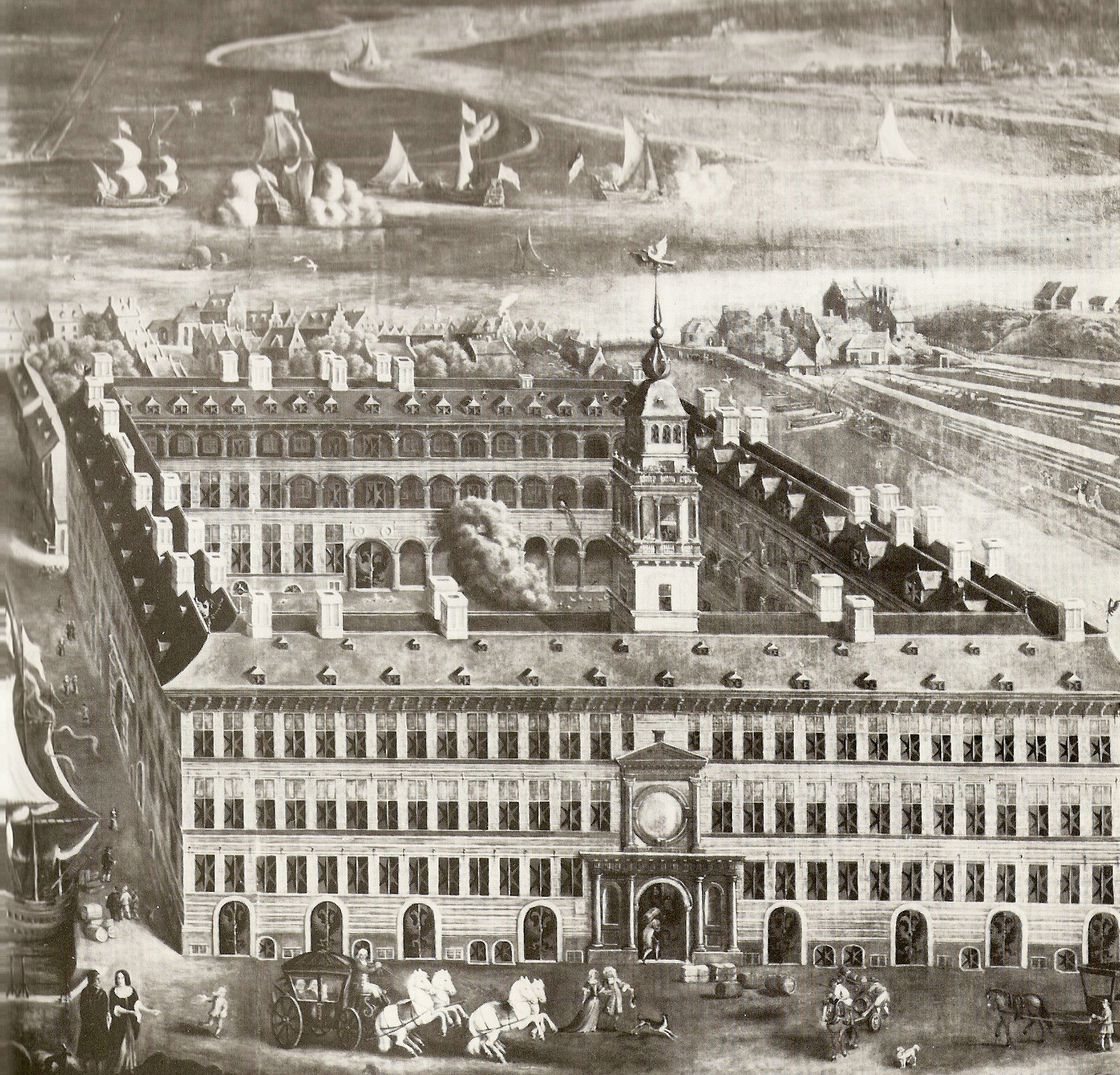
A kontor (also Kontor; English: /kɒnˈtɔːr/, German: [kɔnˈtoːɐ̯] ⓘ) was a major foreign trading post of the Hanseatic League. Kontors were legal entities established in a foreign city (i.e. a city that did not belong to the Hanseatic League), with a degree of legal autonomy. Most kontors were also enclaves. They were located in London (the Steelyard), Bruges (Kontor of Bruges, later moved to Antwerp), Bergen (Bryggen), and Novgorod (Peterhof). Smaller Hanseatic trading posts were called factorien, i.e., factories.
The kontors were established as corporations or guilds of senior merchants from trade guilds. The main reason to found them was security. The Peterhof in Novgorod was founded first, in the early 13th century, the kontor of Bruges and Bryggen in Bergen were founded last. They were subordinated to the decisions of the Hansetag (Hanseatic diet) in the mid 14th century.
In addition to the kontore, there were less important trading posts. The vitten at the Scanian herring fairs were not as important as the kontors but more significant than the average outpost. The typical Hanseatic outpost, also called factory, had a representative merchant and a warehouse; many did not operate all year. These are not considered kontors in the literature but popular discussions are often confused.
Kontor is Middle Low German. It comes from French comptoir, from Latin computāre "calculate, compute".
The kontors were legal entities established as a merchant's corporation (universitas mercatorum) and served to facilitate the Hanseatic League's trade. They had their own treasury, seal, code of rules, legal power to enforce rules on residents and administration. They were usually also merchant enclaves; the Kontor of Bruges was an exception.
Security was the primary reason for the formation of kontors, but kontors also played an important role in inspecting trade goods and diplomacy with local and regional authorities.
Each kontor had its own unique kind of administration, although there were clear similarities between the kontors. Aldermen (oldermenn, hovetlude or procuratores) formed the internal legal authority and a representative to the rest of the Hanseatic League and to local authorities. The numbers of aldermen varied. The kontor of Bruges had first six and later three aldermen, and the Steelyard had one Hanseatic alderman and one English alderman. It is assumed that Bryggen had 6 aldermen at first. One view about Bryggen is that it changed to 2 in the first half of the 15th century, and that after a change in 1476 two aldermen held the post alternately. Another view is that Bryggen had one alderman from the 15th century. The Peterhof had one. Alderman usually held their position for a term of a year.
All resident and visiting Hanseatic traders fell under the authority of the kontor's administration.
Hub AI
Kontor AI simulator
(@Kontor_simulator)
Kontor
A kontor (also Kontor; English: /kɒnˈtɔːr/, German: [kɔnˈtoːɐ̯] ⓘ) was a major foreign trading post of the Hanseatic League. Kontors were legal entities established in a foreign city (i.e. a city that did not belong to the Hanseatic League), with a degree of legal autonomy. Most kontors were also enclaves. They were located in London (the Steelyard), Bruges (Kontor of Bruges, later moved to Antwerp), Bergen (Bryggen), and Novgorod (Peterhof). Smaller Hanseatic trading posts were called factorien, i.e., factories.
The kontors were established as corporations or guilds of senior merchants from trade guilds. The main reason to found them was security. The Peterhof in Novgorod was founded first, in the early 13th century, the kontor of Bruges and Bryggen in Bergen were founded last. They were subordinated to the decisions of the Hansetag (Hanseatic diet) in the mid 14th century.
In addition to the kontore, there were less important trading posts. The vitten at the Scanian herring fairs were not as important as the kontors but more significant than the average outpost. The typical Hanseatic outpost, also called factory, had a representative merchant and a warehouse; many did not operate all year. These are not considered kontors in the literature but popular discussions are often confused.
Kontor is Middle Low German. It comes from French comptoir, from Latin computāre "calculate, compute".
The kontors were legal entities established as a merchant's corporation (universitas mercatorum) and served to facilitate the Hanseatic League's trade. They had their own treasury, seal, code of rules, legal power to enforce rules on residents and administration. They were usually also merchant enclaves; the Kontor of Bruges was an exception.
Security was the primary reason for the formation of kontors, but kontors also played an important role in inspecting trade goods and diplomacy with local and regional authorities.
Each kontor had its own unique kind of administration, although there were clear similarities between the kontors. Aldermen (oldermenn, hovetlude or procuratores) formed the internal legal authority and a representative to the rest of the Hanseatic League and to local authorities. The numbers of aldermen varied. The kontor of Bruges had first six and later three aldermen, and the Steelyard had one Hanseatic alderman and one English alderman. It is assumed that Bryggen had 6 aldermen at first. One view about Bryggen is that it changed to 2 in the first half of the 15th century, and that after a change in 1476 two aldermen held the post alternately. Another view is that Bryggen had one alderman from the 15th century. The Peterhof had one. Alderman usually held their position for a term of a year.
All resident and visiting Hanseatic traders fell under the authority of the kontor's administration.