
Recent from talks
Kunbi
Knowledge base stats:
Talk channels stats:
Members stats:
Kunbi
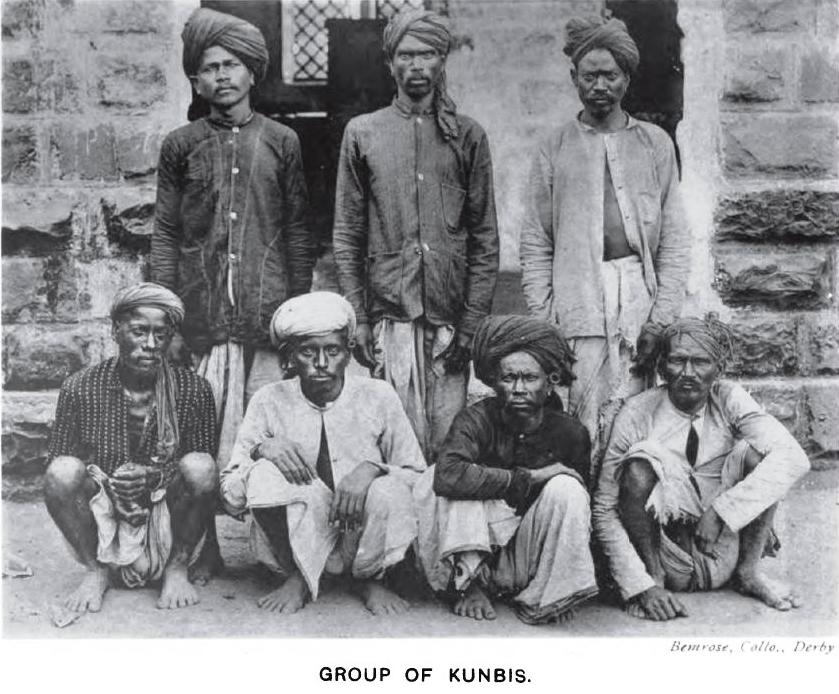
Kunbi (alternatively Kanbi) (Marathi: ISO 15919: Kuṇabī, Gujarati: ISO 15919: Kaṇabī) is a generic term applied to several castes of traditional farmers in Western India. These include the Dhonoje, Ghatole, Khedule, Khaire, Tirole, Masaram, Hindre, Jadav, Jhare, Lewa (Leva Patil), Lonari, Tirole and Khaire communities of Vidarbha. The communities are largely found in the state of Maharashtra but also exist in the states of Madhya Pradesh, Gujarat (now called Patidar), Karnataka, Kerala and Goa. Kunbis are included among the Other Backward Classes (OBC) in Maharashtra.
Most of the Mavalas serving in the armies of the Maratha Empire under Shivaji came from this community. The Shinde and Gaekwad dynasties of the Maratha Empire are originally of Kunbi origin. In the fourteenth century and later, several Kunbis who had taken up employment as military men in the armies of various rulers underwent a process of Sanskritisation and began to identify themselves as Marathas. The boundary between the Marathas and the Kunbi became obscure in the early 20th century due to the effects of colonisation, and the two groups came to form one block, the Maratha-Kunbi.
Tensions along caste lines between the Kunbi and the Dalit communities were seen in the 2006 Khairlanji killings of four Scheduled Caste citizens by fellow villagers of Khairlanji, and the media have reported sporadic instances of violence against Dalits. Other inter-caste issues include the forgery of caste certificates by politicians, mostly in the grey Kunbi-Maratha caste area, to allow them to run for elections from wards reserved for OBC candidates. In April 2005, the Supreme Court of India ruled that the Marathas are not a sub-caste of Kunbis.
Maharashtra's Kunbi community shares links with North and Eastern India's Kurmi. Both are farming communities. Both communities have deep roots in agriculture, with "Kunbi" itself meaning "farmer" in Marathi. The Indian government in 2006 recognized them as synonymous and NCBC issued notification that the 'Kurmi' caste / community of Maharashtra is akin to the Kunbis of Maharashtra and is socially and educationally backward.
According to the Anthropological Survey of India, the term Kunbi is derived from kun and bi meaning "people" and "seeds", respectively. Conjoined, the two terms mean "those who germinate more seeds from one seed". Another etymology states that Kunbi is believed to have come from the Marathi word kunbawa, or Sanskrit kur, meaning "agricultural tillage". Yet another etymology states that Kunbi derives from kutumba ("family"), or from the Dravidian kul, "husbandman" or "cultivator". Thus anyone who took up the occupation of a cultivator could be brought under the generic term Kunbi. G. S. Ghurye has posited that while the term may "signify the occupation of the group, viz., that of cultivation ... it is not improbable that the name may be of tribal origin."
Like other Maharashtrian communities such as Marathas, Dhangars Malis etc., the marriage of a man to his maternal uncle's daughter is common in the Kunbi community. Maratha and Kunbis intermarried in a hypergamous way i.e. a rich Kunbi's daughter could always marry a poor Maratha. Anthropologist Donald Attwood shows giving an example of the Karekars of Ahmednagar that this trend continues even in recent times indicating that the social order between the two is fluid and flexible.
Very little information was recorded prior to the 19th century regarding the significantly large group of Maharashtrian agricultural castes, known as Maratha-Kunbis. Both individual terms, Kunbi and Maratha are equally complex. In the fourteenth century, the term Maratha (among other meanings) referred to all speakers of the Marathi language. An example of this is the record of the Moroccan traveler Ibn Battuta whose use of the term included multiple castes who spoke Marathi. Several years later, as the Bahamani kings started employing the local population in their military, the term Maratha acquired a martial connotation. Those who were not associated with the term Maratha and were not untouchables began to identify themselves as Kunbi. According to Stewart Gordon, the so-called Marathas now differentiated themselves from the others such as the cultivators (Kunbi), iron-workers and tailors. At lower status levels, the term Kunbi was applied to those who tilled the land. It was possible for outsiders to become Kunbi, an example of which was recorded by Enthoven. Enthoven observed that it was common for Kolis (fishermen) to take up agriculture and become Kunbis. In the eighteenth century, under the Peshwas, newer waves of villagers joined the armies of the Maratha Empire. These men began to see themselves as Marathas too, further obscuring the boundary between the Marathas and Kunbi, giving rise to a new category: Maratha-Kunbi. While this view of the term was common among colonial European observers of the eighteenth century, they were ignorant of the caste connotations of the term. The dividing line between the Maratha and Kunbi was obscure, but there was evidence of certain families who called themselves Assall Marathas or true Marathas. The Assal Marathas claimed to be Kshatriyas in the Varna hierarchy and claimed lineage from the Rajput clans of north India. The rest, the Kunbi, accepted that they came lower in the Varna hierarchy. Karve says that the Maratha caste precipitated from the Kunbi through the Sanskritisation process, the two were later consolidated due to social reforms as well as political and economic development during British rule in the early 20th century.
The British installed Chatrapati Pratapsinh Bhonsle, a descendant of Shivaji, noted in his diary in the 1820s–1830s that the Gaekwads (another powerful Maratha dynasty) had Kunbi origins. He notes further "These days, when the Kunbis and others grow wealthy, they try to pollute our caste. If this goes on, dharma itself will not remain. Each man should stick to his own caste, but in spite of this these men are trying to spread money around in our caste. But make no mistake, all Kshatriyas will look to protect their caste in this matter." Later, in September 1965, the Marathi Dnyan Prasarak newspaper published a piece which addressed the changing meaning of the term Maratha, the social mobility of the day, the origins of the Maratha-Kunbi castes, the eating habits and the living conditions of the people of Maharashtra. The author of the piece claims that only a very small circle of families, like those of Shivaji Bhonsale, can claim the Kshatriya status. He also states that these Kshatriya families have not been able to stop the inroads made by the wealthy and powerful Kunbis, who had bought their way into Kshatriya status through wealth and inter-marriages. Of the most powerful Maratha dynasties, the Shindes (later anglicised to Scindia) were of Kunbi origin. A "Marathaisation" of the Kunbis was seen between the censuses of 1901 and 1931, which shows a gradually declining number of Kunbis resulting from more of them identifying themselves as Marathas. Lele notes in 1990 that a subset of the Maratha-Kunbi group of castes became the political elite in the state of Maharashtra in the 1960s and 1970s and have remained so to the present day.[as of?] The elite Maratha-Kunbis have institutionalised their ideology of agrarian development through their control of the Congress party. The state Government of Maharashtra does not recognise a group called Maratha-Kunbi.
Hub AI
Kunbi AI simulator
(@Kunbi_simulator)
Kunbi
Kunbi (alternatively Kanbi) (Marathi: ISO 15919: Kuṇabī, Gujarati: ISO 15919: Kaṇabī) is a generic term applied to several castes of traditional farmers in Western India. These include the Dhonoje, Ghatole, Khedule, Khaire, Tirole, Masaram, Hindre, Jadav, Jhare, Lewa (Leva Patil), Lonari, Tirole and Khaire communities of Vidarbha. The communities are largely found in the state of Maharashtra but also exist in the states of Madhya Pradesh, Gujarat (now called Patidar), Karnataka, Kerala and Goa. Kunbis are included among the Other Backward Classes (OBC) in Maharashtra.
Most of the Mavalas serving in the armies of the Maratha Empire under Shivaji came from this community. The Shinde and Gaekwad dynasties of the Maratha Empire are originally of Kunbi origin. In the fourteenth century and later, several Kunbis who had taken up employment as military men in the armies of various rulers underwent a process of Sanskritisation and began to identify themselves as Marathas. The boundary between the Marathas and the Kunbi became obscure in the early 20th century due to the effects of colonisation, and the two groups came to form one block, the Maratha-Kunbi.
Tensions along caste lines between the Kunbi and the Dalit communities were seen in the 2006 Khairlanji killings of four Scheduled Caste citizens by fellow villagers of Khairlanji, and the media have reported sporadic instances of violence against Dalits. Other inter-caste issues include the forgery of caste certificates by politicians, mostly in the grey Kunbi-Maratha caste area, to allow them to run for elections from wards reserved for OBC candidates. In April 2005, the Supreme Court of India ruled that the Marathas are not a sub-caste of Kunbis.
Maharashtra's Kunbi community shares links with North and Eastern India's Kurmi. Both are farming communities. Both communities have deep roots in agriculture, with "Kunbi" itself meaning "farmer" in Marathi. The Indian government in 2006 recognized them as synonymous and NCBC issued notification that the 'Kurmi' caste / community of Maharashtra is akin to the Kunbis of Maharashtra and is socially and educationally backward.
According to the Anthropological Survey of India, the term Kunbi is derived from kun and bi meaning "people" and "seeds", respectively. Conjoined, the two terms mean "those who germinate more seeds from one seed". Another etymology states that Kunbi is believed to have come from the Marathi word kunbawa, or Sanskrit kur, meaning "agricultural tillage". Yet another etymology states that Kunbi derives from kutumba ("family"), or from the Dravidian kul, "husbandman" or "cultivator". Thus anyone who took up the occupation of a cultivator could be brought under the generic term Kunbi. G. S. Ghurye has posited that while the term may "signify the occupation of the group, viz., that of cultivation ... it is not improbable that the name may be of tribal origin."
Like other Maharashtrian communities such as Marathas, Dhangars Malis etc., the marriage of a man to his maternal uncle's daughter is common in the Kunbi community. Maratha and Kunbis intermarried in a hypergamous way i.e. a rich Kunbi's daughter could always marry a poor Maratha. Anthropologist Donald Attwood shows giving an example of the Karekars of Ahmednagar that this trend continues even in recent times indicating that the social order between the two is fluid and flexible.
Very little information was recorded prior to the 19th century regarding the significantly large group of Maharashtrian agricultural castes, known as Maratha-Kunbis. Both individual terms, Kunbi and Maratha are equally complex. In the fourteenth century, the term Maratha (among other meanings) referred to all speakers of the Marathi language. An example of this is the record of the Moroccan traveler Ibn Battuta whose use of the term included multiple castes who spoke Marathi. Several years later, as the Bahamani kings started employing the local population in their military, the term Maratha acquired a martial connotation. Those who were not associated with the term Maratha and were not untouchables began to identify themselves as Kunbi. According to Stewart Gordon, the so-called Marathas now differentiated themselves from the others such as the cultivators (Kunbi), iron-workers and tailors. At lower status levels, the term Kunbi was applied to those who tilled the land. It was possible for outsiders to become Kunbi, an example of which was recorded by Enthoven. Enthoven observed that it was common for Kolis (fishermen) to take up agriculture and become Kunbis. In the eighteenth century, under the Peshwas, newer waves of villagers joined the armies of the Maratha Empire. These men began to see themselves as Marathas too, further obscuring the boundary between the Marathas and Kunbi, giving rise to a new category: Maratha-Kunbi. While this view of the term was common among colonial European observers of the eighteenth century, they were ignorant of the caste connotations of the term. The dividing line between the Maratha and Kunbi was obscure, but there was evidence of certain families who called themselves Assall Marathas or true Marathas. The Assal Marathas claimed to be Kshatriyas in the Varna hierarchy and claimed lineage from the Rajput clans of north India. The rest, the Kunbi, accepted that they came lower in the Varna hierarchy. Karve says that the Maratha caste precipitated from the Kunbi through the Sanskritisation process, the two were later consolidated due to social reforms as well as political and economic development during British rule in the early 20th century.
The British installed Chatrapati Pratapsinh Bhonsle, a descendant of Shivaji, noted in his diary in the 1820s–1830s that the Gaekwads (another powerful Maratha dynasty) had Kunbi origins. He notes further "These days, when the Kunbis and others grow wealthy, they try to pollute our caste. If this goes on, dharma itself will not remain. Each man should stick to his own caste, but in spite of this these men are trying to spread money around in our caste. But make no mistake, all Kshatriyas will look to protect their caste in this matter." Later, in September 1965, the Marathi Dnyan Prasarak newspaper published a piece which addressed the changing meaning of the term Maratha, the social mobility of the day, the origins of the Maratha-Kunbi castes, the eating habits and the living conditions of the people of Maharashtra. The author of the piece claims that only a very small circle of families, like those of Shivaji Bhonsale, can claim the Kshatriya status. He also states that these Kshatriya families have not been able to stop the inroads made by the wealthy and powerful Kunbis, who had bought their way into Kshatriya status through wealth and inter-marriages. Of the most powerful Maratha dynasties, the Shindes (later anglicised to Scindia) were of Kunbi origin. A "Marathaisation" of the Kunbis was seen between the censuses of 1901 and 1931, which shows a gradually declining number of Kunbis resulting from more of them identifying themselves as Marathas. Lele notes in 1990 that a subset of the Maratha-Kunbi group of castes became the political elite in the state of Maharashtra in the 1960s and 1970s and have remained so to the present day.[as of?] The elite Maratha-Kunbis have institutionalised their ideology of agrarian development through their control of the Congress party. The state Government of Maharashtra does not recognise a group called Maratha-Kunbi.
Recent media