Hubbry Logo
LG ViewtyLG ViewtyMain
Open search
LG Viewty
Community hub
LG Viewty
logo
8 pages, 0 posts
0 subscribers
Be the first to start a discussion here.
Contribute something
LG Viewty
LG Viewty
from Wikipedia

LG Viewty / CYON 뷰티폰
ManufacturerLG Electronics
TypeSmartphone
Availability by regionOctober 2007
December 2007 (KOR)
Compatible networksHSDPA, GSM / GPRS / EDGE Tri-Band (900/1800/1900)
Form factorCandybar
Dimensions103.5 × 54.4 × 14.8 mm (L × W × D)
Weight112 g (4 oz)
Memory100 MB
Removable storageMicroSD
Rear camera5.0 MP, VGA video 30 FPS or slo-mo QVGA video 120 FPS, strobe flash
Front cameraVGA video call
Display262K colour TFT touchscreen, 3", 240×400 (WQVGA)
ConnectivityBluetooth 1.2, USB 2.0
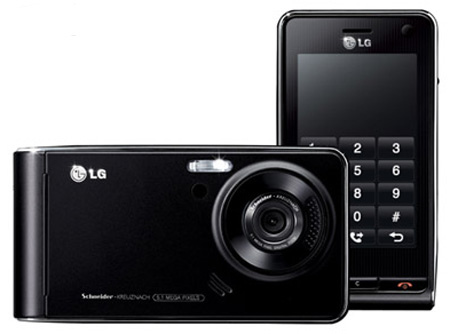
LG Viewty showing the menu screen and its stylus

The LG KU990 or LG KE990 (known and marketed as the LG Viewty) is a 3.5G touchscreen smartphone by LG Electronics, announced on August 23, 2007[1] and then released in Europe and Asia.[2] A high-end model at the time of its release, the Viewty had a resistive touchscreen and was specially marketed for its camera due to its powerful camera features.[3] The Viewty had a high gloss black look similar to the previous LG Prada,[4] although it was also released in many other colours. In South Korea, it was known as the Beauty Phone (뷰티폰).[5]

Features

[edit]

Camera

[edit]
LG Viewty with stylus

A key feature of the LG Viewty is its 5-megapixel digital camera with Schneider Kreuznach optics, Xenon flash, autofocus, and a digital image stabilizer. It features an ISO 800-equivalent High-Sensitivity mode for night scenery shots and "Smart Light" for bright and clear images in the dark. It allows capturing of MP4 VGA video at 30 FPS, and QVGA at 120 FPS for slow-motion playback. According to the manufacturer, the camera's frame rate is high enough to film a balloon bursting.[6]

The Viewty also has a front camera, designed for 3G video calling.[7]

YouTube

[edit]

In addition to being able to view YouTube videos, the LG Viewty also featured the ability to upload videos directly onto the platform.[4]

Applications

[edit]

The device supports Flash Lite 2 and MIDP Java 2.0. There are a few built-in system applications like Office and a PDF document viewer, movie and photo editor, and Obigo web browser.

Sliding disc

[edit]

The rear camera has a wheel that physically rotates, which can be used for scrolling in menus, zooming in and out of webpages or changing the volume.[8]

KU990i

[edit]

An updated model, the KU990i, was later released, but only in European markets. It features a new camera module, always-on flash mode and automatic smile and face detection. However, the strobe flash is replaced by an LED, and it does not include image stabilization nor Schneider Kreuznach optics.

Limitations

[edit]

The organizer in the phone could only store 100 calendar events[9] and is not officially listed on the compatible list with the popular GooSync,[10] which helps sync phone calendars with Google Calendar (though it does work by using instructions for LG Arena).

Model differences

[edit]

The KU990 was the original Viewty model. The KE990 was released in 2008 and lacks 3G (HSDPA) support, but does have a camera cover.[11][12] In South Korea its model numbers were LG SH10/KH2100/LH2100.[13]

Sales and reception

[edit]

Mobile Phones UK praised the device, calling it a "souped-up Prada" and commenting that the Viewty "ticks all the boxes" in terms of features.[14] TechRadar in its review wrote that the device was stylish and praised its camera and HSDPA connection, but criticised the lack of a lens cover and the "fiddly" rotating disc.[8]

LG reported sales of 310,000 units in Europe in the first five weeks.[15] A blog entry by UK mobile phone reseller Dial-A-Phone suggested that the Viewty was outselling the Apple iPhone in the region, citing anecdotal reports of sluggish sales and Apple's reluctance to publish figures for the iPhone in the region as evidence. The pricing and featuresets of the two phones were used as an explanation.[16]

In January 2009, LG reported that the Viewty had sold 5 million units after 14 months on the market.[17]

It was succeeded by the LG Renoir in 2008.[18] A number of newer Viewty phones were then released: the Viewty Smart (GC900) in 2009, which was similar to the LG Arena but with improved camera capabilities,[19] and two budget phones in 2010—the Viewty Snap and the Viewty Smile.

Specification sheet

[edit]
Feature Specification
Form factor Candybar
Operating system Proprietary LG OS, with Adobe Flash user interface, Java MIDP 2.0
Network HSDPA, GPRS, EDGE, GSM 900/1800/1900, WCDMA 2100
Dimensions 103.5 × 54.4 × 14.8 mm
Weight 112 grams
Display 262K colour TFT Touchscreen, 3.0", 400×240 pixels (Dot pitch: 0.1634 mm) with Mobile XD Engine
Camera Frontal VGA video call and rear Sony 5.1 Megapixel camera module with Schneider Kreuznach optics, 16× zoom, xenon flash, AF, MF, image stabilizer, ISO (100-800), Smart Light
Baseband Qualcomm 3G baseband
Video recording VGA (640×480 or 640×384 cropped to wide) up to 30 frame/s, QVGA (320×240) up to 120 frame/s for slow motion playback, QCIF (176×144) up to 15 frame/s
Ringtone MP3, AAC, WMA files, video ringtones, WAV and AMR voice, 72-chord/voice polyphonic
Internal memory 120 MB
CPU 140 MHz ARM9
Multimedia processor Zoran APPROACH 5C Archived 2011-07-18 at the Wayback Machine (268 MHz)
Memory card slot Up to 4 GB microSD
Email SMTP, POP3, IMAP4 (SSL not supported), and APOP
Bluetooth 1.2 + A2DP
Data cable support USB 2.0
Radio stereo Philips stereo FM radio with RDS
Audio player AAC, eAAC, MP3, WMA, m4a, WAV
Video player 3GP, MP4, DivX (Up to 720×480), AVI (Up to 640×480), H.263, H.264/AVC
Battery LGIP-580A (1000 mAh)
Talk time up to 200 minutes (WCDMA), up to 160 minutes (GSM)
Standby time up to 330 hours (WCDMA), up to 270 hours (GSM)
Additional Google services (including YouTube, Google Maps, Gmail, Blogger and Google Search), handwriting recognition/handwriting editing, DivX mobile profile, TV out, document viewer

See also

[edit]

References

[edit]
[edit]
Revisions and contributorsEdit on WikipediaRead on Wikipedia
from Grokipedia
The LG Viewty (model KU990) is a developed by , announced on August 23, 2007, and released in October 2007 as one of the early consumer-oriented devices emphasizing multimedia features, particularly its high-quality camera and video capabilities. Featuring a 3.0-inch TFT display with a 240 x 400 pixel resolution and 262,000-color support, the Viewty provided intuitive navigation through LG's proprietary touch interface, which included and gesture controls for tasks like zooming in photos. At its core, the device boasted a 5-megapixel rear camera with , Xenon flash, and a Schneider-Kreuznach lens certification, enabling sharp still photography and VGA video recording at 30 frames per second, along with in-phone tools—a rarity for non-smartphone handsets in 2007. Connectivity options included HSDPA download speeds up to 3.6 Mbps, EDGE/GPRS for data, 2.0 with A2DP stereo support, and USB 2.0, while storage comprised 100 MB internal memory expandable via microSD cards up to 4 GB. The phone was powered by a removable 1000 mAh Li-Ion battery, offering up to 3 hours 30 minutes of talk time or 240 hours of standby, and ran on a LG OS without full multitasking. Praised in contemporary reviews for its camera performance and build quality, the Viewty became LG's flagship model in and , influencing subsequent releases like the 2008 KE990 variant (without ) and the 2009 Viewty Smart successor with an 8-megapixel camera.

History and Development

Announcement and Launch

LG Electronics announced the (model KU990) on August 23, 2007, positioning it as a 3.5G with advanced capabilities. The device was introduced as part of LG's Black Label Series, following the company's collaboration with on luxury handsets, and emphasized innovative design combined with technical enhancements in mobile imaging. The Viewty saw a global rollout beginning in October 2007, with initial availability focused on and . It was first publicly revealed at the IFA 2007 consumer electronics show in on August 31, 2007, marking an early showcase in the European market before broader distribution. This timeline allowed to capitalize on the growing demand for high-end feature phones in these regions during the latter half of 2007. In its development, the Viewty was crafted as LG's direct response to the rising popularity of camera-centric feature phones, prioritizing innovation to appeal to users seeking integrated photo and video functionalities. The handset aimed to differentiate itself in a competitive dominated by devices like the , by combining touchscreen navigation with superior imaging tools. Key launch events centered on press releases that spotlighted the Viewty's 5-megapixel camera and full interface as primary differentiators from rivals such as the N95. These announcements, including coverage from the IFA reveal, underscored LG's ambition to lead in mobile photography, with features like high-speed video recording positioned as groundbreaking advancements.

Marketing Strategy

LG's marketing strategy for the Viewty centered on highlighting its 5-megapixel camera with Schneider-Kreuznach optics and innovative touchscreen interface, positioning the device as a premium that bridged mobile photography and entertainment in the competitive market. Campaign themes emphasized the joy of capturing and sharing high-quality images and videos, encapsulated in the slogan “It’s more pleasurable to view images than take them,” which underscored the phone's ease of use for visual content creation and playback. This approach targeted trend-setters and shutterbugs interested in replacing standalone digital cameras with a multifunctional . Promotional efforts utilized a multi-channel rollout, including TV commercials, print advertisements, billboards, online campaigns, and in-store demonstrations at major retailers, supported by a dedicated to build anticipation. In Europe, LG partnered with carriers like and 3 to drive availability starting in late 2007, leveraging their networks for bundled offerings and wider distribution across 14 countries. The pricing strategy positioned the Viewty as an accessible premium option, often available for free or low cost on contracts of £30-40 per month, appealing to cost-conscious early adopters without entering full pricing tiers. The target demographics focused on young, media-savvy consumers, particularly photography enthusiasts and early adopters of touch interfaces, who valued seamless integration with platforms like for viral video sharing.

Design and Build

Physical Construction

The LG Viewty measures 103.5 x 54.4 x 14.8 mm and weighs 112 grams, presenting a compact and lightweight design that facilitates easy portability and pocket-friendly use. The body adopts a curved construction with metallic accents along the edges, contributing to a sleek, camera-inspired aesthetic available in colors such as , silver/gray, , , Hot Red, and white. Build quality emphasizes functionality over ruggedness, utilizing a polycarbonate-like that feels premium and non-plasticky despite its material composition, though the rear lacks a protective cover, exposing the optics to potential damage. The device carries no official IP rating for dust or water resistance, and while the includes a secondary protective layer, it remains susceptible to fingerprints and scratches during regular handling. Access to the removable 1000 mAh battery and Mini-SIM slot is straightforward via the rear panel, which lifts to reveal the compartments, with the microSD expansion slot located in the battery compartment, accessible after removing the rear cover and battery. Ergonomically, the Viewty supports one-handed operation through its balanced weight distribution and intuitive layout, including a dedicated camera shutter button on the right edge for quick access and three mechanical keys below the 3-inch display for core functions like call management. Haptic feedback via subtle vibrations accompanies interactions and key presses, providing tactile confirmation that enhances usability without overwhelming the user.

User Interface Elements

The LG Viewty's centers on its , which facilitates direct interaction through finger taps or the included for enhanced precision in selecting options and navigating menus. This setup allows users to scroll lists by sliding a finger across the screen, mimicking natural gestures for browsing contacts, messages, or settings. The interface draws inspiration from the Prada's design, featuring a straightforward icon-based layout that prioritizes ease of use on the . A distinctive element is the sliding disc surrounding the rear , a physical circular control that integrates with the software for intuitive . Users rotate the disc to through options, adjust zoom levels in the camera app, or cycle through functions, evoking the feel of adjusting a for quick, tactile access without relying solely on the . This hardware-software synergy enhances the camera-centric experience, enabling seamless transitions between modes like photo, video, and editing tools. Input methods emphasize versatility for text entry and control. The on-screen keyboard appears for typing messages or notes, while supports stylus or finger input either across the full screen or within a designated box, converting scrawled text into editable characters with reasonable accuracy. Physical buttons complement these, including a dedicated camera shutter key for instant capture and side-mounted volume keys that double as media controls during playback or calls. The standby screen provides widget-like shortcuts for efficiency, displaying icons at the bottom for direct access to the main menu, dial pad, messaging, and phonebook, allowing one-tap entry to core functions without delving into submenus. While customization is limited compared to later smartphones, users can rearrange certain menu icons and select basic display themes through settings, tailoring the interface slightly to personal preferences.

Hardware Specifications

Display and Input

The LG Viewty featured a 3.0-inch TFT display with a resolution of 240 x 400 pixels and a of approximately 155 ppi, supporting 256K for vibrant visuals suitable for its era. This screen occupied about 45.5% of the front body ratio, providing a prominent viewing area for media and navigation, though it was prone to fingerprints and scratches without protective covering. Input was handled primarily through the resistive touchscreen, which responded to finger touches and included a small stylus for more precise interactions, such as handwriting recognition in messaging. The interface offered tactile feedback via vibration on touch, enabling basic gestures like taps, drags for scrolling through photos, and brushing motions for zooming, though limited to single-touch operations without multi-touch support. The display's responsiveness was adequate for video playback and editing but exhibited some lag during fast scrolling or web browsing, reflecting the hardware constraints of 2007 mobile technology. Powering the display and overall device was a removable 1000 mAh Li-Ion battery, which delivered up to 430 hours of standby time and up to 3 hours 30 minutes (2G) / 4 hours (3G) talk time, with actual duration varying based on usage intensity like prolonged screen activity. This battery life supported moderate display-intensive tasks, such as viewing images or videos, for over two days with light use before requiring a recharge.

Processor and Memory

The LG Viewty featured the MSM6280 baseband processor, which incorporated an integrated CPU running at 270 MHz. This setup provided the core computational capabilities for the device's operations, 3G network handling, and basic multimedia processing. Memory in the Viewty consisted of 100 MB of internal storage dedicated to files, applications, and user ; RAM capacity is not specified in available sources. For expanded capacity, the phone included a microSD card slot compatible with cards up to 4 GB, allowing users to store additional photos, videos, and music files. In terms of performance, the processor adequately managed everyday tasks such as the built-in photo-editing tools, which enabled users to apply effects, text overlays, and to captured images with responsive feedback. However, the hardware led to challenges during heavy multitasking, such as running multiple applications or processing large files simultaneously, often resulting in slowdowns or the need to close background processes. Power management was integrated into the chipset design, optimizing efficiency for 3G HSDPA connectivity with download speeds reaching up to 3.6 Mbps, which supported faster web browsing and data transfer without excessive battery drain under moderate use. This contributed to a reliable standby time of up to 430 hours on networks.

Camera and Imaging

Camera Hardware

The LG Viewty incorporates a 5-megapixel camera as its primary imaging hardware, utilizing a Schneider-Kreuznach certified lens to deliver high-quality and sharp image capture. The lens supports for accurate focusing across various distances, including a macro mode that enables detailed shots. This setup allows for still image resolutions up to 2592 × 1944 pixels, providing sufficient detail for prints and digital viewing. Complementing the sensor and lens, the camera features a Xenon flash for effective low-light illumination, producing brighter and more natural-looking photos compared to LED alternatives common in contemporary devices. An accompanying LED serves as a focus assist light and video illumination source, enhancing performance in dim conditions during both photo and video modes. Digital image stabilization is integrated to counteract hand shake, reducing blur in handheld shots. The camera module is embedded in the phone's rear panel without a dedicated lens cover, relying on the device's compact aluminum body for protection during everyday use. A small self-portrait mirror adjacent to the lens aids in composing front-facing shots using the main camera.

Image and Video Processing

The LG 's image processing leverages a built-in image signal processor (ISP) to handle key enhancements during capture, including to minimize grain in low-light conditions, automatic white balance adjustment for accurate color reproduction across lighting scenarios, and ISO sensitivity settings ranging from 100 to a maximum of 800 for better performance in varied environments. Notably, the device lacks capabilities, relying instead on manual entry for location metadata if needed. Video processing on the Viewty supports recording at 320x240 (QVGA) resolution up to 120 frames per second for slow-motion effects, enabling detailed capture of fast-moving subjects, while standard mode offers 640x480 (VGA) resolution at 30 frames per second for up to 30 minutes per clip, limited by storage and battery constraints. Videos are encoded in MPEG-4 compatible formats with compression optimized for efficient network uploads, typically using codec for reduced file sizes without significant quality loss. Post-capture editing is facilitated through the device's integrated photo and video editor, allowing users to perform in-phone cropping to trim unwanted areas, apply color filters for stylistic adjustments, and add text overlays directly to images or video frames for personalized annotations. These functions, powered by the same ISP pipeline used in capture, enable quick refinements before sharing, with output saved in standard format for still photos to ensure broad compatibility.

Software and Features

Operating System

The LG Viewty (KU990) utilizes a operating system developed by , which served as the foundational runtime for the device. This OS incorporates a custom layer enhanced by for dynamic menu navigation and interactions, providing a responsive experience tailored to the device's hardware. The system supports MIDP standards, enabling the installation and execution of compatible mobile applications through a dedicated runtime environment. Firmware updates for the LG Viewty were distributed exclusively via LG PC Suite software connected over USB, with versions such as V10B_03 and V10D_01 released primarily between 2008 and 2009 to address software bugs, enhance stability, and optimize camera and connectivity performance. These updates focused on incremental improvements rather than major revisions, and the core OS remained non-upgradable, limiting as mobile platforms evolved. In terms of , the operating system offers basic protections including SIM PIN code activation to secure the device against unauthorized SIM usage and a lock feature that requires a user-defined code to access the phone's functions. However, it lacks app sandboxing or advanced isolation mechanisms, rendering it vulnerable to early mobile threats such as unauthorized code execution from sideloaded apps or basic prevalent in pre-smartphone ecosystems.

Pre-installed Applications

The LG Viewty featured a suite of core pre-installed applications designed for essential communication and productivity tasks. The messaging application supported for , MMS for multimedia content sharing, and basic email functionality to manage incoming and outgoing correspondence. The organiser tools included a for adding and viewing events with customizable options like monthly or weekly displays, an allowing up to five programmable alarms with snooze features, and a document viewer capable of opening common file formats such as PDF and TXT for basic reading on the device. Camera-related software emphasized post-capture editing, with a built-in photo editor offering retouching capabilities including resizing images, adding text overlays, and applying effects to enhance user photos. Complementing this, the application incorporated a trimmer tool for clipping and merging video recordings, along with options to insert text or audio into clips for simple customization. Among the utilities, the phone provided a memo function within the organiser for quick , a for displaying multiple time zones, and support for Java-based applications that could extend functionality beyond stock options. The web access was limited to a WAP browser for basic mobile , without a full-featured native browser. Additionally, the device included a music player for audio playback, an FM radio tuner, and a section with pre-loaded titles, though no dedicated was standard.

Connectivity and Multimedia

Network Capabilities

The LG Viewty (KU990) supports connectivity through /HSDPA on the 2100 MHz band, enabling download speeds of up to 3.6 Mbps for data-intensive tasks such as web browsing and downloads. It also operates on networks in the 900/1800/1900 MHz tri-band configuration, providing compatibility across , , and for voice calls and basic data roaming. In areas without coverage, the device falls back to EDGE or GPRS for slower data transmission, ensuring continued connectivity. Wireless features include 1.2 with A2DP profile support, allowing stereo audio streaming to compatible headsets and basic file transfers, including media sharing. The phone lacks capability, relying instead on cellular data for . USB 2.0 connectivity is provided for charging and data transfer, with synchronization to personal computers facilitated through LG PC Suite software for contacts, calendar, and media management. Data services encompass support for POP3 and IMAP protocols, with options for automatic retrieval to simulate push functionality over the available networks. However, the Viewty does not support LTE, NFC, or advanced ; USB sharing is limited to file and sync operations without capabilities.

Media Playback and Sharing

The LG Viewty supports audio playback through its built-in music player, compatible with formats including , AAC, WMA, and AMR. Video playback is handled via a dedicated player that accommodates MPEG-4, 3GP, , and WMV files, enabling users to view clips stored on the device. The phone includes a headset jack compatible with LG's wired headset, which allows connection of standard 3.5mm via its remote, enhancing audio output for both music and video. Additionally, it features an FM radio receiver with RDS support, allowing tuning into broadcast stations with the connected ' cord serving as the antenna. Integration with is provided through the phone's and sharing tools, enabling direct uploads of captured videos optimized for connectivity. This functionality leverages the device's HSDPA support to facilitate quick sharing to the platform without needing external software. While browsing and watching content is possible via the browser, the primary emphasis is on seamless uploading for content creators. Media sharing options allow users to transmit photos, videos, and audio files directly via MMS, , or connectivity. The photo gallery application includes a slideshow mode, which displays images sequentially with customizable transitions for a more engaging viewing experience. All media playback, including from external sources, is supported via the microSD card slot, accommodating cards up to 2 GB for expanded storage of audio tracks, videos, and images.

Variants and Compatibility

Regional Models

The LG Viewty was offered in several regional variants to accommodate market-specific requirements, with differences primarily in connectivity bands, hardware additions, and software customizations. The KU990 served as the core international model for European and Asian markets, supporting full HSDPA on the 2100 MHz band for high-speed data up to 3.6 Mbps and including a pre-installed client for direct video uploads. It was available in black and silver color options, emphasizing its appeal in regions with robust 3G infrastructure. The KE990 represented the Korean domestic version, optimized for local networks with a localized Korean user interface for enhanced usability in . This model omitted HSDPA support to focus on GSM bands (850/900/1800/1900 MHz). The KU990i was a cost-reduced international variant of the KU990, featuring an LED flash instead of , 16x digital zoom (versus 8x), and removal of , while maintaining the 3-inch and 5 MP camera. It shared the same band support ( 900/1800/1900, 2100). Regional band differences rendered the Viewty incompatible with major US carriers, lacking CDMA support and AWS bands (1700/2100 MHz), limiting it to GSM/EDGE in . Carrier-specific customizations, such as branding with preloaded operator apps and locked SIM configurations, were common in to integrate seamlessly with local services.

Accessory and Update Support

The LG Viewty (KU990) was supported by a range of official accessories designed to enhance its functionality and portability. The device included a dedicated for its feature, enabling precise input on the for text and drawing applications. Official car chargers, such as the LG CLA-120 model, were available to provide vehicle-based power and connectivity, compatible with the phone's 18-pin connector. Leather cases were also offered as protective accessories, with options like fitted flip wallets providing durability and style for the . Additionally, a microSD facilitated expansion, allowing users to transfer to PCs despite the phone's native microSD slot supporting up to 2 GB cards. Firmware updates for the Viewty were delivered via over-the-air (OTA) methods and PC-based tools like the LG Mobile Download Program, with support extending through 2009. These patches addressed reported issues, including display problems such as yellow screen failures after prolonged use. Minor tweaks were also included in some updates, improving and stability on the proprietary LG operating system. Users noted that these releases helped mitigate early hardware quirks, though comprehensive overhauls were limited due to the device's age. The Viewty maintained compatibility with LG PC Suite software for data backups, synchronization, and multimedia management on Windows PCs, as outlined in the official user guide. This tool allowed users to transfer contacts, photos, and videos via USB connection, with troubleshooting resources available for common setup issues like driver recognition. However, official support for syncing with modern operating systems ceased after 2010, leaving the device reliant on legacy software without updates for newer platforms. The Viewty paved the way for its successor, the LG Viewty Smart (GC900), released in June 2009, which introduced capacitive technology and A-GPS navigation for enhanced location services.

Reception and Impact

Commercial Performance

The LG Viewty experienced robust initial sales following its October 2007 launch, surpassing 1 million units globally within the first six months. By the second quarter of 2008, cumulative sales exceeded 2 million units, driven primarily by demand in where over 550,000 units were sold in the initial months after release. By 2009, the device had reached a peak of 5 million units sold worldwide, with approximately 350,000 in and the majority in . In terms of market positioning, the Viewty performed strongly in , ranking among the top feature phones and supporting LG's goal of achieving a 10% regional for handsets in 2008 through its premium camera features and capabilities. However, penetration in the was limited due to the absence of full support in the standard model and minimal carrier partnerships, with only a modified 3G-less variant considered for potential release via but not widely adopted. The Viewty contributed significantly to LG's mobile division growth, as one of its flagship premium models alongside the Secret and Venus, helping drive record quarterly shipments of 27.7 million units in Q2 and doubling the division's operating profit to 547.3 billion won amid carrier subsidies that boosted volume sales. Overall, LG's mobile handset shipments reached 100 million units globally in , securing third place in the market behind and . Sales of the Viewty began to decline by 2009 as the global mobile market contracted by 8.6% outside the segment, with devices like Apple's and the emerging Android platform capturing growing demand for advanced touchscreen functionalities. LG's overall volumes were overshadowed by this smartphone shift, contributing to a stabilization of its at around 10% while non-smartphone categories waned.

Critical Reviews

The LG Viewty received generally positive professional reviews upon its 2007 launch, with critics highlighting its groundbreaking camera capabilities and early adoption of technology in a . awarded it an 8.3 out of 10, praising the 5-megapixel camera with autofocus and xenon flash for delivering photo quality comparable to the , along with 120fps video recording that excelled in slow-motion effects. gave it 4 out of 5 stars, commending the device's stylish design and responsive interface, which allowed intuitive photo viewing and zooming via finger gestures, positioning it as a strong rival to emerging smartphones like the . Trusted Reviews also rated it 4 out of 5, noting the large icons and easy access to functions as making it a solid example of usability at the time. Critics pointed out several shortcomings, particularly the , which was less sensitive and more prone to fingerprints and scratches than later capacitive alternatives, requiring occasional use for precision. Battery life drew consistent complaints, with heavy use like frequent or web browsing necessitating daily charging, though lighter usage could extend it to over two days; talk time was rated at approximately 355 minutes on networks. Software was described as clunky in places, with a fiddly sliding disc for camera modes and limited multitasking, alongside the absence of connectivity that hindered broader . User feedback echoed these sentiments, with high satisfaction for the photography features—averaging around 8.3 out of 10 on PhoneArena based on enthusiast reviews that lauded the camera's versatility for both stills and video. On GSMArena forums, users frequently highlighted the camera's professional-grade results (often 4-5 star ratings for imaging), but many reported frustrations with the short battery endurance under daily texting and calling (3-4 hours for intensive users) and the lack of or expandable app support, leading to mixed overall reception around 4 out of 5.

Technical Specifications

Full Hardware List

The LG Viewty (model KU990) features a range of hardware components typical of mid-2000s touchscreen mobile phones, emphasizing its camera capabilities while maintaining basic multimedia and connectivity options. Below is a comprehensive list of its key hardware specifications, presented in tabular form for clarity.
ComponentSpecifications
BodyDimensions: 103.5 x 54.4 x 14.8 mm; Weight: 112 g; Build: Plastic body with numeric keypad; Colors: Black, Silver, Pink, Violet, White
DisplayType: TFT resistive touchscreen, 256K colors; Size: 3.0 inches (~45.5% screen-to-body ratio); Resolution: 240 x 400 pixels (~155 ppi density)
ProcessorARM9, 160 MHz
MemoryInternal: 100 MB storage; Card slot: microSD, up to 2 GB
Rear Camera5 MP, autofocus, Schneider-Kreuznach optics, Xenon strobe flash, LED focus assist; Video: 480p@30fps, 240p@120fps; Features: Image stabilization, digital zoom 8x
Front CameraVGA videocall camera, 640x480 pixels
BatteryType: Removable Li-Ion 1000 mAh; Talk time: Up to 3 h 45 min (3G), 5 h 45 min (2G); Standby: Up to 450 h (3G), 430 h (2G)
SensorsNone (no accelerometer, proximity, or compass)
AudioLoudspeaker: Yes; 3.5mm jack: No (proprietary port, adapters available); Vibration: Yes; Polyphonic ringtones: Yes; Audio formats: MP3, AAC, AAC+, WMA, WAV; FM radio: Stereo FM with RDS; No FM transmitter
Connectivity HardwareBluetooth: 1.2, A2DP; USB: 2.0; SIM: Mini-SIM; No WLAN; No GPS; No NFC
Regional variants, such as the KU990i, may include minor differences in color options or bundled accessories but share the core hardware listed above.

Software Details

The Viewty operates on a proprietary operating system developed by , featuring an intuitive enhanced by elements for responsive touch navigation and multimedia interactions. This OS is Java-enabled, compliant with MIDP 2.0 standards, enabling the execution of J2ME-based applications and games compatible with early mobile environments. The device supports a range of J2ME applications, allowing users to download and run third-party and utilities via archives (.jar/.jad files), though compatibility is limited to profiles suited for 240x400 resolution touchscreens. It arrives preloaded with 10-15 built-in utilities, including a for organizing content, a media player for audio and video, an organizer suite with , to-do list, and alarm functions, a voice recorder, and basic such as puzzles and arcade titles. Browsing capabilities include a native WAP 2.0 browser for basic access over GPRS/EDGE/HSDPA connections, supporting markup for optimized page rendering. For enhanced full browsing, is downloadable and installable, compressing web pages server-side to improve speed and data efficiency on the device's limited bandwidth. In multimedia software, the Viewty holds DivX Certified status, the first mobile phone to natively record videos in the high-quality format directly from its camera, alongside playback support for , , MPEG-4, and video codecs at up to 640x480 (VGA) resolution and 30fps.

References

  1. https://lpcwiki.miraheze.org/wiki/LG_Viewty
Add your contribution
Related Hubs
Contribute something
User Avatar
No comments yet.