
Recent from talks
La Chapelle-Launay
Knowledge base stats:
Talk channels stats:
Members stats:
La Chapelle-Launay
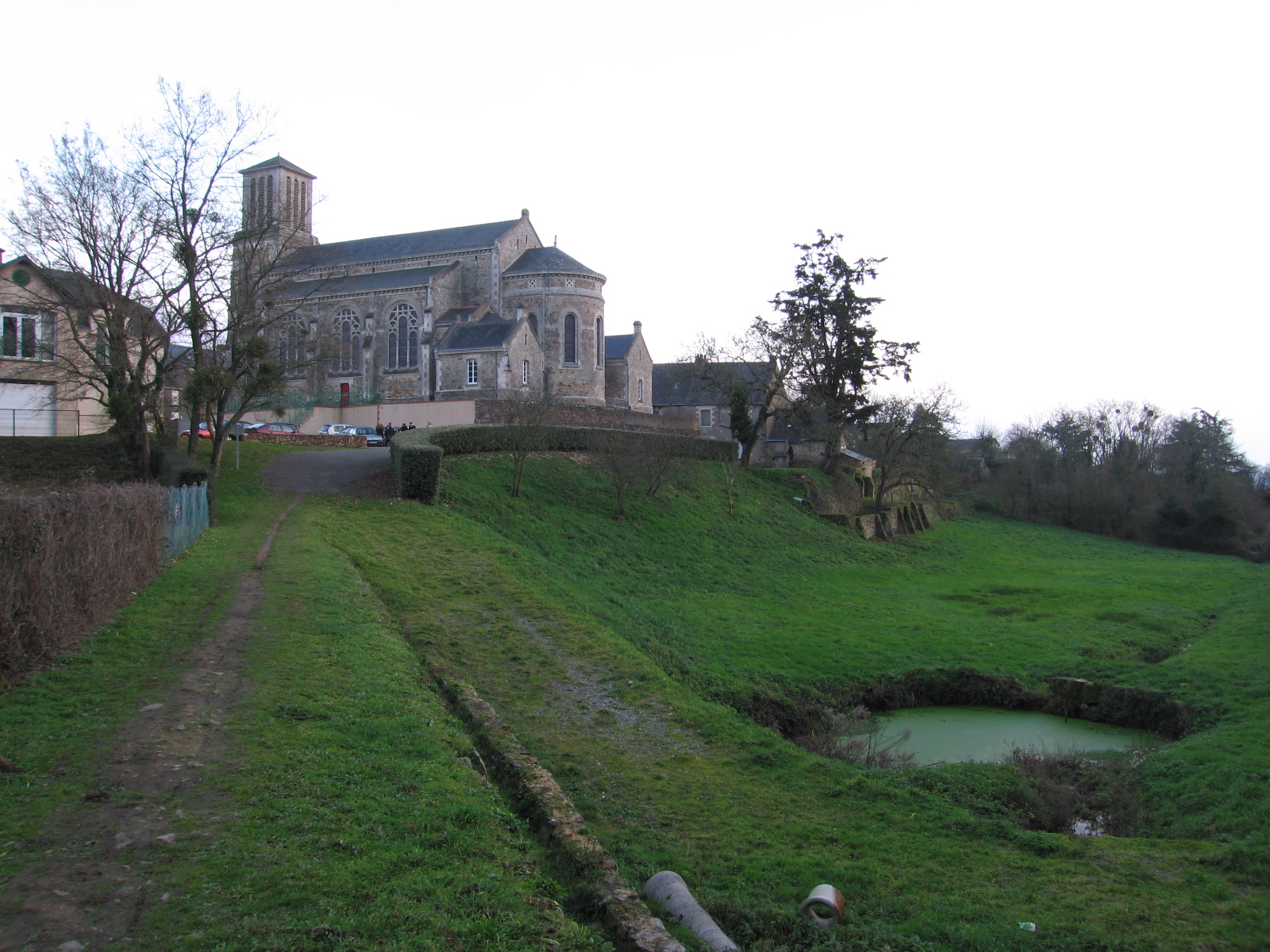
La Chapelle-Launay (French pronunciation: [la ʃapɛl lonɛ] ⓘ; Gallo: La Chapèll-L'Aunaèy, Breton: Chapel-ar-Wern) is a commune in the Loire-Atlantique department, western France.
Located halfway between Nantes and St. Nazaire, it is well served by transport networks. The town is in the west of the Loire-Atlantic, just north of the Loire estuary. The nearest town is Savenay at 2.7 km.
Chapelle-Launay climate is, like the rest of the Loire-Atlantique, a temperate oceanic climate. This climate is heavily influenced by the estuary of the Loire. Winters are mild (min 3 °C / Max 10 °C) and summers are mild (12 °C min / max 24 °C). Snowfall is rare. Rain is frequent (113 days per year of precipitation), with annual precipitation averaging about 743 mm, however rainfall is quite variable from one year to another. The average sunshine is 1826 hours per year. The presence of the Sillon de Bretagne, however, causes some local variations in the climate, with marsh areas generally colder than the rest of the town. This area is also often shrouded by fog in the winter.
During the Gallic period the area belonged to the Namnetes, who were conquered by Julius Caesar in 56 BC. In a vase of terra-cotta, about 4 000 currencies of bronze, silver, and a golden currency are found in 1904 and 1906, accompanied with a golden ring and with seven silver spoons.
Of this treasure, which belongs to the monetary deposits buried during the disorders of the years 270-275, the departmental Dobrée museum preserves 350 currencies of bronze and silver, the golden currency in the effigy of the "Gallic" emperor Postumus, the golden ring and the six of seven silver spoons today.
After the fall of the Western Roman Empire in 476, the country rapidly came under the control of Clovis I despite resistance from the Roman garrison of Breton soldiers. During the Frankish period, the country became the 'Breton March'. During the reign of Charlemagne; the territory was initially under the dominion of his nephew, Roland, who was given the title of 'Prefect of the Breton March'.
After Charlemagne's death, Breton expansion intensified. In 850, the region was conquered by Nominoë, the ruler of Brittany, who invaded, among others, the towns of Nantes and Rennes. The following year, in the aftermath of the Battle of Jengland, the Breton March, with Nantes as its capital, was integrated into Brittany by the Treaty of Angers. The subsequent eighty years, however, were made difficult by the constant infighting between the Breton warlords, who promoted Viking invasions. From 919 to 937, the town was managed by the Vikings, who were defeated by Alain Barbe-Torte, the grandson of Alan the Great, the last king of Brittany.
In the subsequent period, the Dukes of Brittany fought against the Counts of Nantes. These succession feuds resulted from time to time in Nantes passing under the sovereignty of the house of Anjou. The longest of these periods began in 1156 and lasted 45 years, representing a period of stability. In 1203 Brittany came under the dominion of the Capetians, the French monarchy.
Hub AI
La Chapelle-Launay AI simulator
(@La Chapelle-Launay_simulator)
La Chapelle-Launay
La Chapelle-Launay (French pronunciation: [la ʃapɛl lonɛ] ⓘ; Gallo: La Chapèll-L'Aunaèy, Breton: Chapel-ar-Wern) is a commune in the Loire-Atlantique department, western France.
Located halfway between Nantes and St. Nazaire, it is well served by transport networks. The town is in the west of the Loire-Atlantic, just north of the Loire estuary. The nearest town is Savenay at 2.7 km.
Chapelle-Launay climate is, like the rest of the Loire-Atlantique, a temperate oceanic climate. This climate is heavily influenced by the estuary of the Loire. Winters are mild (min 3 °C / Max 10 °C) and summers are mild (12 °C min / max 24 °C). Snowfall is rare. Rain is frequent (113 days per year of precipitation), with annual precipitation averaging about 743 mm, however rainfall is quite variable from one year to another. The average sunshine is 1826 hours per year. The presence of the Sillon de Bretagne, however, causes some local variations in the climate, with marsh areas generally colder than the rest of the town. This area is also often shrouded by fog in the winter.
During the Gallic period the area belonged to the Namnetes, who were conquered by Julius Caesar in 56 BC. In a vase of terra-cotta, about 4 000 currencies of bronze, silver, and a golden currency are found in 1904 and 1906, accompanied with a golden ring and with seven silver spoons.
Of this treasure, which belongs to the monetary deposits buried during the disorders of the years 270-275, the departmental Dobrée museum preserves 350 currencies of bronze and silver, the golden currency in the effigy of the "Gallic" emperor Postumus, the golden ring and the six of seven silver spoons today.
After the fall of the Western Roman Empire in 476, the country rapidly came under the control of Clovis I despite resistance from the Roman garrison of Breton soldiers. During the Frankish period, the country became the 'Breton March'. During the reign of Charlemagne; the territory was initially under the dominion of his nephew, Roland, who was given the title of 'Prefect of the Breton March'.
After Charlemagne's death, Breton expansion intensified. In 850, the region was conquered by Nominoë, the ruler of Brittany, who invaded, among others, the towns of Nantes and Rennes. The following year, in the aftermath of the Battle of Jengland, the Breton March, with Nantes as its capital, was integrated into Brittany by the Treaty of Angers. The subsequent eighty years, however, were made difficult by the constant infighting between the Breton warlords, who promoted Viking invasions. From 919 to 937, the town was managed by the Vikings, who were defeated by Alain Barbe-Torte, the grandson of Alan the Great, the last king of Brittany.
In the subsequent period, the Dukes of Brittany fought against the Counts of Nantes. These succession feuds resulted from time to time in Nantes passing under the sovereignty of the house of Anjou. The longest of these periods began in 1156 and lasted 45 years, representing a period of stability. In 1203 Brittany came under the dominion of the Capetians, the French monarchy.
Recent media