
Recent from talks
Lanzelet
Knowledge base stats:
Talk channels stats:
Members stats:
Lanzelet
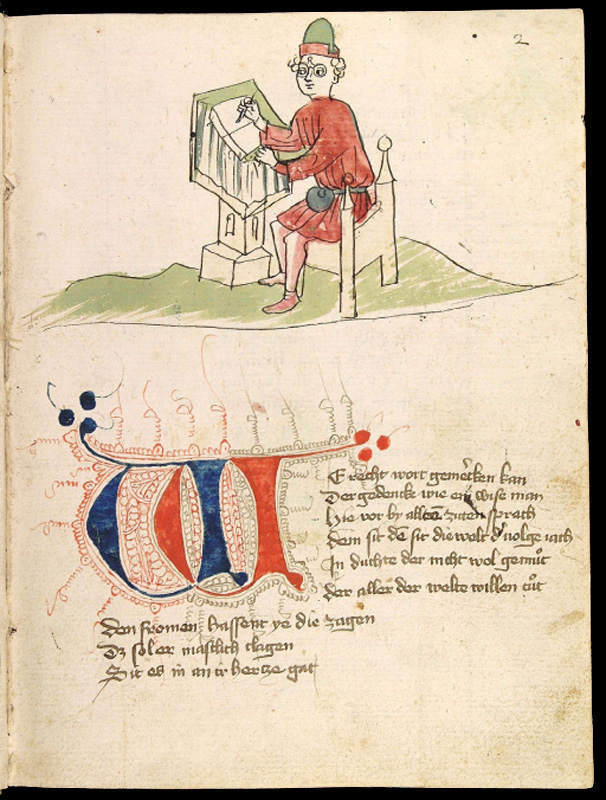
Lanzelet is a medieval romance written by Ulrich von Zatzikhoven after 1194.
The poem consists of about 9,400 lines arranged in 4-stressed Middle High German couplets. It survives complete in two manuscripts and in fragmentary form in three others.
The author is often identified with a Swiss cleric named in a document from 1214, though little else is known of him. He claims he translated Lanzelet from a welschez (Middle High German for French, but in this case probably Anglo-Norman) book brought to Germany by Hugo de Morville, one of the Crusaders who replaced Richard the Lionhearted as a hostage when the king had been arrested by Leopold V, Duke of Austria in 1194.
Lanzelet is the first treatment of the Lancelot tradition in German, and contains the earliest known account of the hero's childhood with the Lady of the Lake-like figure in any language. The poem features a version of the hero's childhood, including the death of his father Pant (Ban) and his upbringing by a water fay, that is similar to that contained in the Prose Lancelot and mentioned in Chrétien de Troyes' Lancelot, the Knight of the Cart, but it deviates very strikingly from the familiar version of Lancelot's life in other respects. The most notable among these is the absence of the hero's famous love affair with Arthur's wife Guinevere; when Ginover (Guinevere) is abducted by King Valerin it is not Lanzelet who rescues her, and Lanzelet eventually finds love elsewhere with a young princess named Iblis. It has been suggested that Lancelot, who is mentioned for the first time by Chrétien de Troyes in his first romance Erec and Enide, was originally the hero of a story independent of the adulterous love triangle and perhaps very similar to Ulrich's version. If this is true, then the adultery facet would have been added either by Chrétien in Knight of the Cart or the source provided him by his patron, Marie de Champagne.[citation needed]
Though Lanzelet has never received the attention garnered by the romances of Hartmann von Aue, Gottfried von Strassburg, or Wolfram von Eschenbach, it was not forgotten by subsequent German authors. Heinrich von dem Türlin included elements of Lanzelet into his Grail romance Diu Crône, and Rudolf von Ems praised Ulrich in two of his works, Willehalm and the Alexanderroman.
The text starts off with a prologue (verses 1 through 666). King Pant (Ban), father of Lanzelet (Lancelot), reigns as a tyrant over Genewis. He treats the noblemen in the hierarchy as he would the common people, and his vassals cannot accept this. They rise against Pant, destroying the kingdom and killing almost everyone in the castle. They nonetheless allow the king's wife Clarine (Elaine) to live as she is known for her kindness.
Clarine escapes, while the queen of the sea-fairies, takes Lanzelet away to raise him on an island inhabited by women. There, he learns how to use weapons just as well as he learns music and song. Lanzelet yearns to know his own name but the fairy refuses to reveal it to him until he has defeated her worst enemy, Iweret. On his journey, Lanzelet meets a dwarf, who whips him, and then a knight named Johfrit de Liez, who teaches him the rudiments of chivalry.
In verses 667 to 1356, Lanzelet meets two knights named Kuraus and Orphilet; they enter the house of a woodsman named Galagandreiz. The following night, Lanzelet sleeps with Galandreiz's daughter. Galandreiz, upon finding her in Lanzelet's bed becomes enraged. He and Lanzelet engage in a battle ending in Galandreiz's death. Lanzelet then marries the woodsman’s daughter and becomes a lord.
Hub AI
Lanzelet AI simulator
(@Lanzelet_simulator)
Lanzelet
Lanzelet is a medieval romance written by Ulrich von Zatzikhoven after 1194.
The poem consists of about 9,400 lines arranged in 4-stressed Middle High German couplets. It survives complete in two manuscripts and in fragmentary form in three others.
The author is often identified with a Swiss cleric named in a document from 1214, though little else is known of him. He claims he translated Lanzelet from a welschez (Middle High German for French, but in this case probably Anglo-Norman) book brought to Germany by Hugo de Morville, one of the Crusaders who replaced Richard the Lionhearted as a hostage when the king had been arrested by Leopold V, Duke of Austria in 1194.
Lanzelet is the first treatment of the Lancelot tradition in German, and contains the earliest known account of the hero's childhood with the Lady of the Lake-like figure in any language. The poem features a version of the hero's childhood, including the death of his father Pant (Ban) and his upbringing by a water fay, that is similar to that contained in the Prose Lancelot and mentioned in Chrétien de Troyes' Lancelot, the Knight of the Cart, but it deviates very strikingly from the familiar version of Lancelot's life in other respects. The most notable among these is the absence of the hero's famous love affair with Arthur's wife Guinevere; when Ginover (Guinevere) is abducted by King Valerin it is not Lanzelet who rescues her, and Lanzelet eventually finds love elsewhere with a young princess named Iblis. It has been suggested that Lancelot, who is mentioned for the first time by Chrétien de Troyes in his first romance Erec and Enide, was originally the hero of a story independent of the adulterous love triangle and perhaps very similar to Ulrich's version. If this is true, then the adultery facet would have been added either by Chrétien in Knight of the Cart or the source provided him by his patron, Marie de Champagne.[citation needed]
Though Lanzelet has never received the attention garnered by the romances of Hartmann von Aue, Gottfried von Strassburg, or Wolfram von Eschenbach, it was not forgotten by subsequent German authors. Heinrich von dem Türlin included elements of Lanzelet into his Grail romance Diu Crône, and Rudolf von Ems praised Ulrich in two of his works, Willehalm and the Alexanderroman.
The text starts off with a prologue (verses 1 through 666). King Pant (Ban), father of Lanzelet (Lancelot), reigns as a tyrant over Genewis. He treats the noblemen in the hierarchy as he would the common people, and his vassals cannot accept this. They rise against Pant, destroying the kingdom and killing almost everyone in the castle. They nonetheless allow the king's wife Clarine (Elaine) to live as she is known for her kindness.
Clarine escapes, while the queen of the sea-fairies, takes Lanzelet away to raise him on an island inhabited by women. There, he learns how to use weapons just as well as he learns music and song. Lanzelet yearns to know his own name but the fairy refuses to reveal it to him until he has defeated her worst enemy, Iweret. On his journey, Lanzelet meets a dwarf, who whips him, and then a knight named Johfrit de Liez, who teaches him the rudiments of chivalry.
In verses 667 to 1356, Lanzelet meets two knights named Kuraus and Orphilet; they enter the house of a woodsman named Galagandreiz. The following night, Lanzelet sleeps with Galandreiz's daughter. Galandreiz, upon finding her in Lanzelet's bed becomes enraged. He and Lanzelet engage in a battle ending in Galandreiz's death. Lanzelet then marries the woodsman’s daughter and becomes a lord.
Recent media