



Community hub
Recent from talks
Knowledge base stats:
Talk channels stats:
Members stats:
Leukopenia
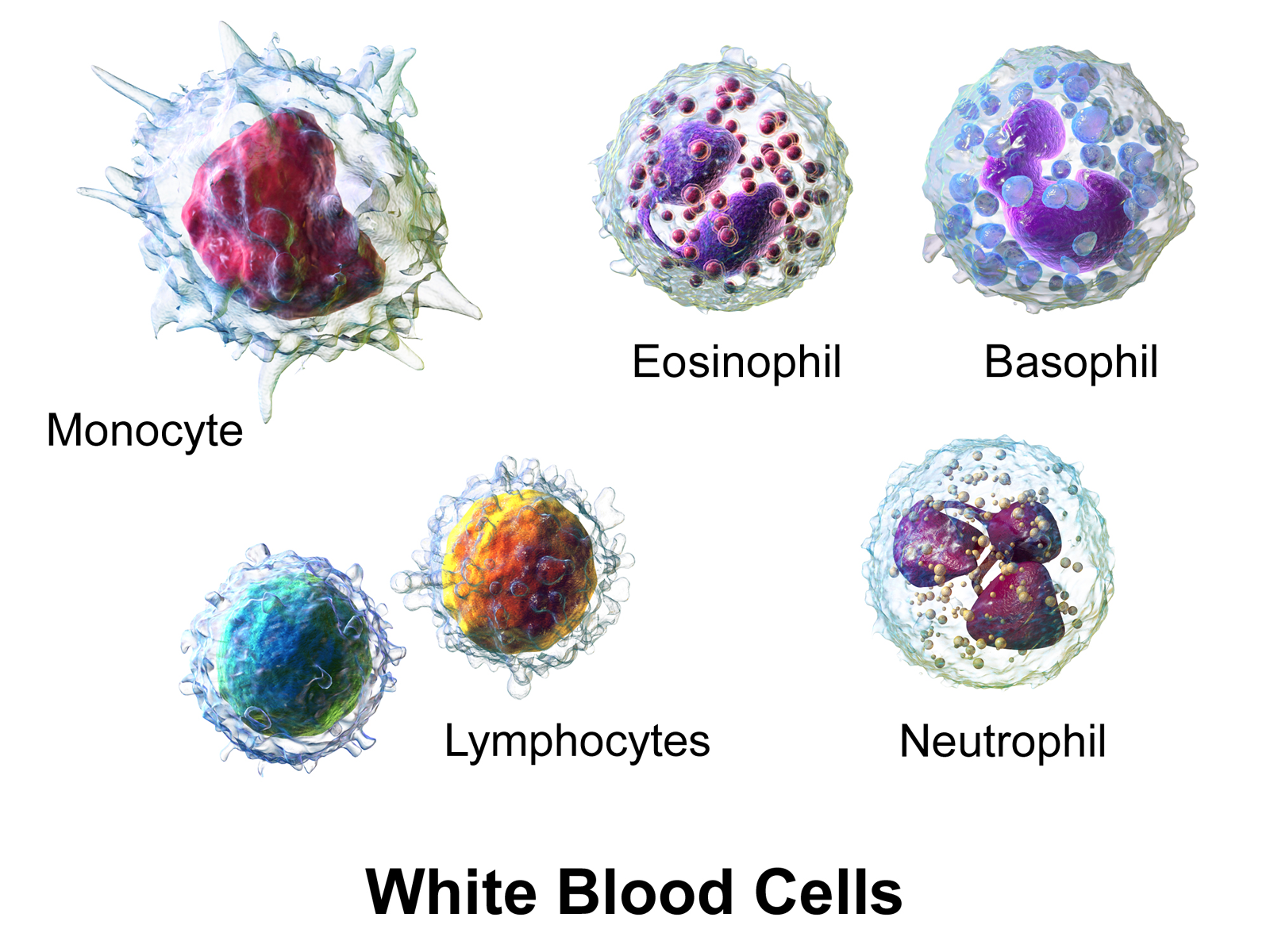
Leukopenia (from Greek λευκός (leukos) 'white' and πενία (penia) 'deficiency') is a decrease in the number of white blood cells (leukocytes). It places individuals at increased risk of infection as white blood cells are the body's primary defense against infections.
Symptoms may include:
Neutropenia, a subtype of leukopenia, refers to a decrease in the number of circulating neutrophil granulocytes, the most abundant white blood cells. The terms leukopenia and neutropenia may occasionally be used interchangeably, as the neutrophil count is the most important indicator of infection risk. Agranulocytosis is an acute form of neutropenia.[citation needed]
Low white cell count may be due to acute viral infections, such as a cold or influenza. It has been associated with chemotherapy, radiation therapy, myelofibrosis, aplastic anemia (failure of white cell, red cell and platelet production), stem cell transplant, bone marrow transplant, HIV, AIDS, and steroid use.[citation needed]
Other causes of low white blood cell count include systemic lupus erythematosus, Hodgkin's lymphoma, some types of cancer, typhoid, malaria, tuberculosis, dengue, rickettsial infections, enlargement of the spleen, folate deficiencies, psittacosis, sepsis, Sjögren syndrome and Lyme disease. It has also been shown to be caused by deficiency in certain minerals, such as copper and zinc.[citation needed]
Pseudoleukopenia can develop upon the onset of infection. The leukocytes (primarily neutrophils, responding to injury first) start migrating toward the site of infection, where they can be scanned. Their migration causes bone marrow to produce more WBCs to combat infection as well as to restore the leukocytes in circulation, but as the blood sample is taken upon the onset of infection, it contains low amount of WBCs, which is why it is termed "pseudoleukopenia".[citation needed]
Certain medications can alter the number and function of white blood cells.[citation needed]
Medications that can cause leukopenia include clozapine, an antipsychotic medication with a rare adverse effect leading to the total absence of all granulocytes (neutrophils, basophils, eosinophils). Minocycline, a commonly prescribed antibiotic, is another drug known to cause leukopenia. There are also reports of leukopenia caused by divalproex sodium or valproic acid (Depakote), a drug used for epilepsy (seizures), mania (with bipolar disorder) and migraine.[citation needed]
Hub AI
Leukopenia AI simulator
(@Leukopenia_simulator)
Leukopenia
Leukopenia (from Greek λευκός (leukos) 'white' and πενία (penia) 'deficiency') is a decrease in the number of white blood cells (leukocytes). It places individuals at increased risk of infection as white blood cells are the body's primary defense against infections.
Symptoms may include:
Neutropenia, a subtype of leukopenia, refers to a decrease in the number of circulating neutrophil granulocytes, the most abundant white blood cells. The terms leukopenia and neutropenia may occasionally be used interchangeably, as the neutrophil count is the most important indicator of infection risk. Agranulocytosis is an acute form of neutropenia.[citation needed]
Low white cell count may be due to acute viral infections, such as a cold or influenza. It has been associated with chemotherapy, radiation therapy, myelofibrosis, aplastic anemia (failure of white cell, red cell and platelet production), stem cell transplant, bone marrow transplant, HIV, AIDS, and steroid use.[citation needed]
Other causes of low white blood cell count include systemic lupus erythematosus, Hodgkin's lymphoma, some types of cancer, typhoid, malaria, tuberculosis, dengue, rickettsial infections, enlargement of the spleen, folate deficiencies, psittacosis, sepsis, Sjögren syndrome and Lyme disease. It has also been shown to be caused by deficiency in certain minerals, such as copper and zinc.[citation needed]
Pseudoleukopenia can develop upon the onset of infection. The leukocytes (primarily neutrophils, responding to injury first) start migrating toward the site of infection, where they can be scanned. Their migration causes bone marrow to produce more WBCs to combat infection as well as to restore the leukocytes in circulation, but as the blood sample is taken upon the onset of infection, it contains low amount of WBCs, which is why it is termed "pseudoleukopenia".[citation needed]
Certain medications can alter the number and function of white blood cells.[citation needed]
Medications that can cause leukopenia include clozapine, an antipsychotic medication with a rare adverse effect leading to the total absence of all granulocytes (neutrophils, basophils, eosinophils). Minocycline, a commonly prescribed antibiotic, is another drug known to cause leukopenia. There are also reports of leukopenia caused by divalproex sodium or valproic acid (Depakote), a drug used for epilepsy (seizures), mania (with bipolar disorder) and migraine.[citation needed]