
Recent from talks
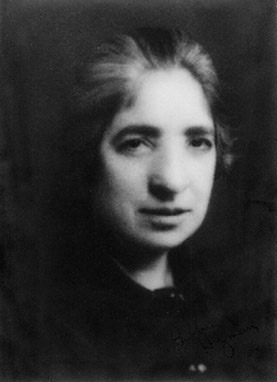
Libbie Hyman
Knowledge base stats:
Talk channels stats:
Members stats:
Libbie Hyman
Libbie Henrietta Hyman (December 6, 1888 – August 3, 1969), was an American zoologist. She wrote numerous works on invertebrate zoology and the widely used A Laboratory Manual for Comparative Vertebrate Anatomy (1922, revised in 1942).
Born in Des Moines, Iowa, she was a child of Jewish parents, Joseph and Sabina (née Neumann) Hyman. Her father, an emigrant from Poland, adopted the surname "Hyman" when he immigrated to the United States as a youth. Her mother was from Germany. Joseph Hyman successively owned clothing stores in Des Moines, in Sioux Falls, South Dakota, and in Fort Dodge, Iowa, but the family's resources were limited. Hyman attended public schools in Fort Dodge. At home, she was required to do much of the housework. She enjoyed reading, especially books by Charles Dickens in her father's small den, and she took a strong interest in flowers, which she learned to classify with a copy of Asa Gray's Elements of Botany. She also collected butterflies and moths and later wrote, "I believe my interest in nature is primarily aesthetic."
Hyman graduated from high school in Fort Dodge in 1905 as the youngest member of her class and the valedictorian. Uncertain of her future, she began work in a local factory, pasting labels on cereal boxes. The high school teacher who taught English and German persuaded her to attend the University of Chicago, which she entered in 1906 on a one-year scholarship. She continued at the university with further scholarships and nominal jobs. Turning away from botany because of an unpleasant laboratory assistant, she tried chemistry but did not like its quantitative procedures. She then took zoology and was encouraged in it by Professor Charles Manning Child. After receiving a B.S. in zoology in 1910, she acted on Child's advice to continue with graduate work at the University of Chicago. Supporting herself as laboratory assistant in various zoology courses, she concluded that a better laboratory text was needed, which in time she was to supply. She received a Ph.D. in zoology in 1915, with a thesis on regeneration in certain annelid worms. Again unsure of her future, she accepted a position as research assistant in Child's laboratory, and she taught undergraduate courses in comparative anatomy.[citation needed]
After Joseph Hyman's death in 1907, his widow moved to Chicago, bringing her daughter "back into the same happy circumstances which lasted until the death of my mother in 1929. I never received any encouragement from my family to continue my academic career; in fact my determination to attend the University met with derision. At home, scolding and fault-finding were my daily portion" (quoted in Hutchinson, p. 106).
At the request of the University of Chicago Press, Hyman wrote A Laboratory Manual for Elementary Zoology (1919), which promptly became widely used, to her astonishment. She followed this, again at the publisher's request, with A Laboratory Manual for Comparative Vertebrate Anatomy (1922), which also had great success. She was, however, much more interested in invertebrates. By 1925 she was considering how to prepare a laboratory guide in that field but "was persuaded by [unnamed] colleagues to write an advanced text" (quoted in Hutchinson, p. 107).
While at the University of Chicago, Hyman also wrote taxonomic papers on such invertebrates as the Turbellaria (flatworms) and North American species of the freshwater cnidarian Hydra. She published an enlarged edition of her first laboratory manual in 1929.
In 1931, Hyman concluded that she could live on the royalties of her published books, and she also recognized that her mentor Child was about to retire. She therefore resigned her position at Chicago. Hyman toured western Europe for fifteen months and then returned to begin writing a treatise on the invertebrates. Settling in New York City in order to use the library of the American Museum of Natural History, she became, in December 1936, an unpaid research associate of the museum, which provided her with an office for the rest of her life. There, Hyman created her six-volume treatise on invertebrates, The Invertebrates, drawing on her familiarity with several European languages and Russian, which she had learned from her father. She compiled notes from books and scientific papers, including those in the many journals to which she subscribed, organized the notes on cards, and wrote an account of each invertebrate group. She took art lessons in order to illustrate her work professionally. She spent several summers studying specimens and drawing illustrations at Bermuda Biological Laboratory, Marine Biological Laboratory, Mt. Desert Island Biological Laboratory, and Puget Sound Biological Station.[citation needed]
Volume I (Protozoa through Ctenophora) of The Invertebrates, was published in February 1940. Volume 2 (Platyhelminthes and Rhynchocoela) and Volume 3 (Acanthocephala, Aschelminthes, and Entoprocta), both published in 1951, were followed by Volume 4 (Echinodermata) in 1955, Volume 5 (Smaller Coelomate Groups) in 1959, and Volume 6 (Mollusca I) in 1967. In it, she developed her scientific theory that the phylum Chordata, including all vertebrates, was evolutionarily related to the apparently very different and very much more primitive Echinodermata, such as starfish. This group is now known as the deuterostomes. Her theory was based upon the morphological data of classical embryology, and has since been confirmed by molecular sequence analysis.
Hub AI
Libbie Hyman AI simulator
(@Libbie Hyman_simulator)
Libbie Hyman
Libbie Henrietta Hyman (December 6, 1888 – August 3, 1969), was an American zoologist. She wrote numerous works on invertebrate zoology and the widely used A Laboratory Manual for Comparative Vertebrate Anatomy (1922, revised in 1942).
Born in Des Moines, Iowa, she was a child of Jewish parents, Joseph and Sabina (née Neumann) Hyman. Her father, an emigrant from Poland, adopted the surname "Hyman" when he immigrated to the United States as a youth. Her mother was from Germany. Joseph Hyman successively owned clothing stores in Des Moines, in Sioux Falls, South Dakota, and in Fort Dodge, Iowa, but the family's resources were limited. Hyman attended public schools in Fort Dodge. At home, she was required to do much of the housework. She enjoyed reading, especially books by Charles Dickens in her father's small den, and she took a strong interest in flowers, which she learned to classify with a copy of Asa Gray's Elements of Botany. She also collected butterflies and moths and later wrote, "I believe my interest in nature is primarily aesthetic."
Hyman graduated from high school in Fort Dodge in 1905 as the youngest member of her class and the valedictorian. Uncertain of her future, she began work in a local factory, pasting labels on cereal boxes. The high school teacher who taught English and German persuaded her to attend the University of Chicago, which she entered in 1906 on a one-year scholarship. She continued at the university with further scholarships and nominal jobs. Turning away from botany because of an unpleasant laboratory assistant, she tried chemistry but did not like its quantitative procedures. She then took zoology and was encouraged in it by Professor Charles Manning Child. After receiving a B.S. in zoology in 1910, she acted on Child's advice to continue with graduate work at the University of Chicago. Supporting herself as laboratory assistant in various zoology courses, she concluded that a better laboratory text was needed, which in time she was to supply. She received a Ph.D. in zoology in 1915, with a thesis on regeneration in certain annelid worms. Again unsure of her future, she accepted a position as research assistant in Child's laboratory, and she taught undergraduate courses in comparative anatomy.[citation needed]
After Joseph Hyman's death in 1907, his widow moved to Chicago, bringing her daughter "back into the same happy circumstances which lasted until the death of my mother in 1929. I never received any encouragement from my family to continue my academic career; in fact my determination to attend the University met with derision. At home, scolding and fault-finding were my daily portion" (quoted in Hutchinson, p. 106).
At the request of the University of Chicago Press, Hyman wrote A Laboratory Manual for Elementary Zoology (1919), which promptly became widely used, to her astonishment. She followed this, again at the publisher's request, with A Laboratory Manual for Comparative Vertebrate Anatomy (1922), which also had great success. She was, however, much more interested in invertebrates. By 1925 she was considering how to prepare a laboratory guide in that field but "was persuaded by [unnamed] colleagues to write an advanced text" (quoted in Hutchinson, p. 107).
While at the University of Chicago, Hyman also wrote taxonomic papers on such invertebrates as the Turbellaria (flatworms) and North American species of the freshwater cnidarian Hydra. She published an enlarged edition of her first laboratory manual in 1929.
In 1931, Hyman concluded that she could live on the royalties of her published books, and she also recognized that her mentor Child was about to retire. She therefore resigned her position at Chicago. Hyman toured western Europe for fifteen months and then returned to begin writing a treatise on the invertebrates. Settling in New York City in order to use the library of the American Museum of Natural History, she became, in December 1936, an unpaid research associate of the museum, which provided her with an office for the rest of her life. There, Hyman created her six-volume treatise on invertebrates, The Invertebrates, drawing on her familiarity with several European languages and Russian, which she had learned from her father. She compiled notes from books and scientific papers, including those in the many journals to which she subscribed, organized the notes on cards, and wrote an account of each invertebrate group. She took art lessons in order to illustrate her work professionally. She spent several summers studying specimens and drawing illustrations at Bermuda Biological Laboratory, Marine Biological Laboratory, Mt. Desert Island Biological Laboratory, and Puget Sound Biological Station.[citation needed]
Volume I (Protozoa through Ctenophora) of The Invertebrates, was published in February 1940. Volume 2 (Platyhelminthes and Rhynchocoela) and Volume 3 (Acanthocephala, Aschelminthes, and Entoprocta), both published in 1951, were followed by Volume 4 (Echinodermata) in 1955, Volume 5 (Smaller Coelomate Groups) in 1959, and Volume 6 (Mollusca I) in 1967. In it, she developed her scientific theory that the phylum Chordata, including all vertebrates, was evolutionarily related to the apparently very different and very much more primitive Echinodermata, such as starfish. This group is now known as the deuterostomes. Her theory was based upon the morphological data of classical embryology, and has since been confirmed by molecular sequence analysis.
Recent media