Hubbry Logo
Limbal ringLimbal ringMain
Open search
Limbal ring
Community hub
Limbal ring
logo
8 pages, 0 posts
0 subscribers
Be the first to start a discussion here.
Limbal ring
Limbal ring
from Wikipedia
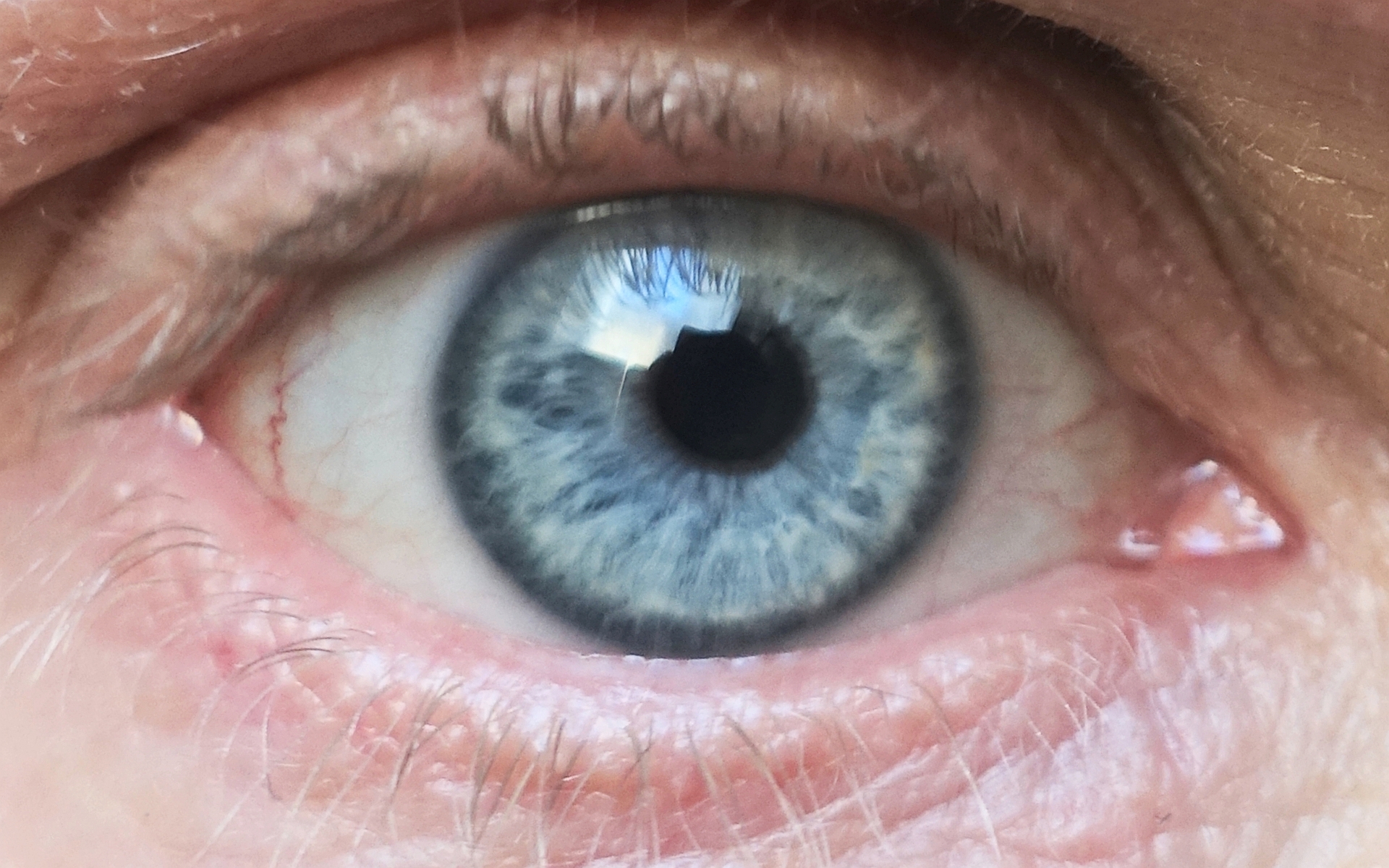
Prominent limbal ring
Light brown iris with a distinct limbal ring

A limbal ring is a dark ring around the iris of the eye, where the sclera meets the cornea.[1] It is a dark-colored manifestation of the corneal limbus resulting from optical properties of the region.[2] The appearance and visibility of the limbal ring can be negatively affected by a variety of medical conditions concerning the peripheral cornea.[3] It has been suggested that limbal ring thickness may correlate with health or youthfulness and may contribute to facial attractiveness.[3][4] The thickness of the limbal ring varies by pupil dilation: When the pupil is larger, the limbal ring narrows.[5] Some contact lenses are colored to simulate limbal rings.[1]

Youth, health, and attractiveness

[edit]
Blue eye without a limbal ring

Both health and youth are positively correlated with a prominent limbal ring.[6] For instance, a darker limbal ring tends to be found more attractive than the absence of a limbal ring, suggesting that both sexes "use the limbal ring as a probabilistic indicator of reproductive fitness".[6] Furthermore, limbal rings appear to be most noticeable "for individuals relatively free from chronic health issues".[4]

The limbal ring is thought to contain corneal epithelium stem cells.[7] Diseases involving a limbal stem cell deficiency are associated with blindness, as those with such deficiencies are "unable to maintain a stable corneal surface".[8] Transplantation of limbal stem cells is a promising therapy for limbal stem cell deficiency.[9]

See also

[edit]

References

[edit]
[edit]
Revisions and contributorsEdit on WikipediaRead on Wikipedia
from Grokipedia
The limbal ring is a dark, circular annulus that outlines the iris of the at the limbus, the transitional zone between the transparent and the opaque . This feature arises primarily from , such as the abrupt change in and contrast at the corneoscleral junction, though it can also involve anatomical pigmentation in the peripheral iris in some individuals. Nearly all individuals are born with a prominent limbal ring, which typically fades with age due to changes in corneal transparency and scleral exposure, serving as a visual cue of youthfulness. Prominent limbal rings are associated with perceived health and vitality, as their clarity diminishes in conditions affecting ocular transparency, such as corneal edema, glaucoma, or arcus senilis. Studies indicate that faces featuring distinct limbal rings are rated as more attractive by observers of both sexes, potentially due to evolutionary signals of reproductive fitness and absence of disease. Iris pigmentation and age-related factors influence ring visibility and persistence into adulthood, with thickness negatively correlated with age and more prominent in younger populations.

Anatomy

Definition and Location

The limbal ring is a dark, circular pigmentation or optical contrast at the boundary between the iris and , serving as a visible manifestation of the , which is the transitional anatomical structure between the and . It is precisely located at the junction of the transparent and the opaque , encircling the iris completely. In visible appearance, the limbal ring typically spans a width of 1-2 mm. This feature presents as a distinct dark annulus that outlines the colored iris against the white , thereby increasing the eye's overall contrast. The limbal ring is present in most individuals at birth, with its prominence varying across populations and often appearing more pronounced in those with lighter irises due to heightened contrast effects.

Structure and Composition

The corneal limbus, which underlies the visible limbal ring, is composed of three primary layers: the limbal epithelium, stroma, and endothelium. The limbal epithelium is a stratified non-keratinized squamous layer, typically 10-12 cell layers thick, with cuboidal basal cells exhibiting a high nucleus-to-cytoplasm ratio. These basal cells include limbal stem cells (LSCs) and melanocytes, which contribute to the region's cellular diversity. The stroma beneath the epithelium is a highly vascularized connective tissue lacking Bowman's layer, featuring mesenchymal cells and dense collagen fibers, primarily types I and III, that provide structural support. The endothelium forms a single layer of hexagonal cells on the posterior surface, continuous with the corneal endothelium, maintaining the limbus's barrier properties. Distinctive papillary projections known as the palisades of Vogt characterize the superficial epithelial layer, appearing as radial ridges enriched with fibrovascular elements and a rippled basement membrane composed of type IV collagen (α1 and α5 chains). These structures are more prominent in the superior and inferior limbus compared to the horizontal meridians. The limbal ring's dark appearance arises from a combination of optical contrast at the corneoscleral junction and pigmentation produced by neural crest-derived melanocytes in the basal and peripheral iris, which transfer pigment to surrounding in some individuals. This pigmentation can be denser in the peripheral iris and limbal region, creating a concentrated ring of eumelanin granules. Additionally, the contrast is enhanced by refractive index differences between the transparent (n ≈ 1.376) and the opaque , producing an optical effect that accentuates the boundary's darkness. The limbus is richly innervated and vascularized, with blood vessels confined to the stroma, distinguishing it from the avascular central . The superior limbus typically exhibits more developed palisades of Vogt than the inferior, reflecting regional differences in epithelial undulations and pigmentation.

Physiology and Function

Biological Role

The limbus, underlying the visible limbal ring, serves as a critical anatomical barrier that prevents the overgrowth of conjunctival onto the transparent , thereby maintaining the cornea's optical clarity and structural integrity. This barrier function is essential for protecting the avascular from vascular invasion and inflammatory responses associated with conjunctival tissue. Additionally, the limbus harbors limbal epithelial stem cells (LESCs), which are responsible for the continuous renewal of the , ensuring rapid regeneration to replace damaged or sloughed cells. The undergoes complete turnover approximately every 7-14 days, driven by the proliferation and centripetal migration of LESC progeny from the limbal niche. Protective mechanisms within the limbus further safeguard its population and overall ocular function. The palisades of Vogt, radially oriented fibrovascular ridges in the limbal , create undulations that shield LESCs from mechanical trauma and shearing forces during blinking or environmental exposure. In the underlying stroma, circular fibers arranged parallel to the corneal circumference absorb minor fluctuations, helping to preserve corneal shape and refractive power without compromising transparency. The limbus also contributes to ocular by facilitating aqueous humor outflow through its integration with the anterior chamber angle structures, including connections to the , which regulates via conventional drainage pathways. Furthermore, limbal melanocytes provide UV protection by transferring granules to adjacent epithelial cells, absorbing harmful radiation and reducing on the corneal surface. Evolutionarily, the limbal structure and its niche are highly conserved across vertebrates, underscoring their fundamental role in maintaining epithelial integrity and preventing corneal opacification.

Development and Aging

The limbal ring emerges during fetal development as part of the differentiation of the , the transitional zone between the and . Between gestational weeks 8 and 22, the limbal begins to thicken and become distinct from the adjacent corneal and conjunctival epithelia. This early prominence arises from heightened activity of limbal stem cells, which drive epithelial organization in the region. In childhood and early adulthood, the limbal ring reaches peak visibility, typically between ages 20 and 30, supported by robust production in the peripheral iris and efficient epithelial turnover at the limbus. Newborns and toddlers often exhibit particularly clear rings, which remain prominent through due to optimal cellular and dynamics. As individuals age beyond 30, the limbal ring gradually fades, becoming less distinct due to diminished activity, progressive depletion of limbal stem cells, and age-related stromal changes in the that alter optical clarity. By ages 50 to 60, the ring is often minimally visible in many people, reflecting cumulative declines in pigmentation and tissue maintenance. These developmental and age-related changes are modulated by several factors. play a key role, with influencing baseline pigmentation and the persistence of the ring, as variations in iris pigment genes affect its opacity and width. Environmental ultraviolet (UV) exposure accelerates fading by inducing DNA damage and reducing proliferation in limbal stem cells, thereby impairing the niche that sustains pigmentation.

Perception and Attractiveness

Health Indicators

Prominent limbal rings serve as visual cues for perceived and , primarily because they tend to fade with age, signaling youthfulness and robust corneal epithelial maintenance. indicates that faces with distinct limbal rings are consistently rated as healthier than those without, an effect attributed to the ring's role in enhancing the contrast against the , which makes the whites of the eyes appear brighter—a known indicator of reduced and overall ocular . This perceptual link to may indirectly reflect underlying biological factors, such as effective limbal epithelial activity that supports corneal renewal, though direct causal evidence remains limited. Empirical studies have established specific associations between limbal ring prominence and health perceptions in social contexts. For instance, a 2017 investigation found that individuals with visible limbal rings were judged as , with this effect being particularly strong when female observers evaluated male faces in scenarios emphasizing short-term , suggesting the ring acts as a veridical cue to tied to . Similarly, a 2024 study resolved prior methodological inconsistencies by demonstrating that limbal rings increase perceived facial primarily through the of lighter , rather than direct facial feature enhancement, thereby reinforcing their role as a subtle health signal without overemphasizing attractiveness. These findings highlight how limbal ring contrast contributes to impressions of low oxidative burden on ocular tissues, as brighter correlates with minimal inflammatory states. Gender differences amplify the health-signaling function of limbal rings, with effects more pronounced in faces rated by perceivers, potentially due to evolutionary pressures favoring cues of in reproductive evaluations. variations also influence visibility: in individuals with darker irises, common in certain ethnic groups, limbal rings are harder to detect, potentially diminishing their perceptual impact as indicators compared to lighter-eyed populations. Despite these associations, limbal rings are not reliable diagnostic tools for actual status, as their prominence can be modulated by environmental factors like and image quality rather than solely biological vitality. Moreover, while they proxy —which correlates with general —studies emphasize perceptual biases over direct physiological measurements, underscoring the need for caution in interpreting them as objective biomarkers.

Aesthetic Appeal

The presence of a dark and distinct limbal ring significantly enhances the perceived facial attractiveness of both men and women, according to empirical . In a seminal 2011 study, Peshek et al. manipulated eye images in composite faces and found that observers rated faces with limbal rings as more attractive than identical faces without them, with the effect persisting even for inverted faces, indicating a robust perceptual cue. This preference held across both raters evaluating both stimuli, suggesting a general aesthetic enhancement rather than gender-specific . From an evolutionary perspective, limbal rings function as a costly signal of genetic quality, youth, and , traits linked to reproductive fitness, thereby influencing mate selection preferences. By creating high contrast between the iris and —forming a dark annulus that makes the eyes appear brighter and more defined—they draw attention to the , increasing its captivating quality in social interactions. However, recent research nuances this view; a 2024 study by Howard and Brown, using manipulated male faces, confirmed limbal rings boost perceptions of but found no significant increase in attractiveness ratings among female observers, challenging the universality of their appeal for male faces in mating contexts. An October 2024 study further examined potential interactive effects between limbal rings and overall facial attractiveness, finding that limbal rings enhanced health perceptions but did not significantly influence attractiveness ratings independently of baseline facial attractiveness levels. Attractiveness preferences for limbal rings have been observed in Western samples. In non-Western populations with darker irises, such as Japanese and Chinese, where limbal rings may be less visible, studies on analogous features like enlarged irides show similar enhancements in perceived attractiveness. In contemporary settings, digital photo editing tools frequently amplify limbal rings to heighten visual appeal, as darker rings are known to correlate with higher attractiveness judgments in images.

Cultural and Clinical Aspects

Cultural Significance

There is no documented symbolism for the limbal ring (sometimes referred to as "iris ring eye") in ancient mythologies or traditional cultures according to reliable sources. In modern spiritual interpretations, not rooted in historical mythology, prominent limbal rings are sometimes attributed meanings such as wisdom, intuition, inner beauty, good fortune, and spiritual connection. The limbal ring holds cultural significance as a symbol of and in contemporary ideals, influencing perceptions of attractiveness in media and . indicates that prominent limbal rings enhance appeal by creating contrast in the eye, leading to higher ratings of attractiveness for both faces among diverse observers. This perception has contributed to the ring's popularity in modern cosmetics since the , where colored contact lenses designed to simulate or emphasize dark limbal rings are widely used to achieve a defined, "doe-eyed" appearance in and .

Medical and Cosmetic Relevance

The limbal ring can be diminished or obscured in limbal deficiency (LSCD), a condition characterized by the loss or dysfunction of limbal epithelial s, leading to conjunctivalization of the corneal surface and reduced visibility of the pigmented ring. LSCD often arises from acquired causes such as chemical or thermal burns, which damage the limbal region, or genetic disorders like , where mutations in the gene result in progressive limbal insufficiency and associated keratopathy. In contrast, hyperpigmentation or abnormal pigmentation in the limbal area may occur in conditions such as limbal , a rare pigmented originating from melanocytes at the corneoscleral junction, potentially mimicking or altering the appearance of the normal limbal ring. In , assessment of the limbal ring via slit-lamp biomicroscopy serves as a key indicator of corneal and limbal , with irregularities signaling potential epithelial dysfunction or early LSCD. biomicroscopy (UBM) provides high-resolution to measure limbal epithelial thickness and depth of involvement in diseases affecting the anterior segment, such as limbal dermoids or LSCD, aiding in precise diagnosis and surgical planning. For instance, UBM can delineate the extent of opaque lesions encroaching on the limbus, distinguishing them from normal ring pigmentation. Cosmetically, colored contact lenses featuring printed limbal rings, such as those in Solotica's Natural Colors line introduced in the early , enhance eye appearance by simulating a prominent ring for aesthetic contrast, particularly in individuals with faint natural pigmentation. Surgical interventions like limbal or (keratopigmentation) restore ring-like aesthetics post-trauma, using micronized pigments to camouflage scars or iris defects in eyes with poor visual potential, offering a viable option when is unsuitable. Treatment for LSCD-related limbal ring loss often involves limbal stem cell transplantation, such as cultivated limbal epithelial transplants or keratolimbal allografts, which aim to regenerate the limbal epithelium and restore ring visibility by repopulating stem cells. These procedures carry risks including allograft rejection, with incidence rates up to 27.6% in direct allogenic transplants, and postoperative infections like microbial , necessitating systemic and vigilant monitoring.

References

Add your contribution
Related Hubs
User Avatar
No comments yet.