Hubbry Logo
List of keytaristsList of keytaristsMain
Open search
List of keytarists
Community hub
List of keytarists
logo
8 pages, 0 posts
0 subscribers
Be the first to start a discussion here.
List of keytarists
List of keytarists
from Wikipedia

One of the best known keytarists, Jean Michel Jarre, playing an AX-Synth

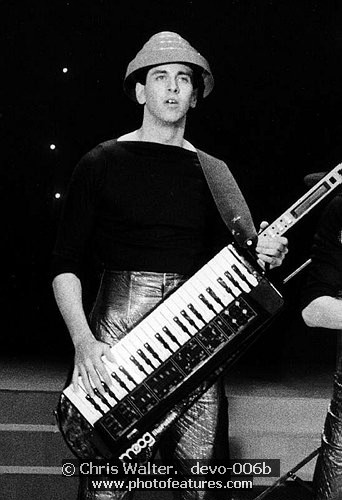
The following is a list of keytarists. A keytarist is a musician that plays the keytar, a keyboard or synthesizer worn around the neck and shoulders, similar to a guitar. Only notable musicians who are widely noted for their use of the keytar as reported in reliable sources are included.

See also

[edit]

References

[edit]
Revisions and contributorsEdit on WikipediaRead on Wikipedia
from Grokipedia
A keytarist is a musician who specializes in playing the keytar, a portable electronic instrument that combines a keyboard with the form factor of a guitar, worn via a strap over the shoulder to enable dynamic stage performances. This list compiles notable keytarists who have prominently featured the instrument in live shows, recordings, and compositions across genres including jazz, rock, pop, and electronic music, highlighting its evolution from a novelty in the late 1970s to a staple in 1980s synth-pop, followed by a decline in the 1990s, and revival beyond. The keytar's origins trace back to early wearable keyboards like the Orphica, a compact invented in 1795 by Carl Leopold Röllig for amateur musicians, though modern iterations began with George Mattson's Syntar in 1978 and Moog's Liberation in 1980, sparking widespread adoption by the decade's end through models from , , and Yamaha. Pioneering keytarists such as artists and integrated it into improvisational and ensemble settings during the 1970s and 1980s, while rock and new wave acts like and used it for its visual flair and mobility in high-energy performances. In the pop and R&B spheres, artists like Prince, whose band showcased the keytar's versatility in the 1990s, blending it with guitar-like expressiveness, and later artists including , , and Valerie Poxleitner of Lights revived it in the 2000s and 2010s for electro-pop and dance contexts. Additional prominent players include electronic pioneer of Kraftwerk, demonstrating the keytar's enduring appeal in fostering innovative, strap-on synth performances.

Background

Definition and Design

A keytar is a or engineered to be worn via a shoulder strap, mimicking the portability of a while providing a keyboard interface for performance. This design enables musicians to move freely on stage, integrating the expressive capabilities of a with the mobility typically associated with guitarists. Key components of a keytar include a neck section resembling a guitar's, which houses the primary keyboard (often 37 to 49 keys spanning 3 to 4 octaves) or a ribbon controller for pitch variation, and a body containing additional controls such as pitch bend wheels, modulation levers, volume sliders, and sometimes onboard sound modules or /USB connectivity. Power is typically supplied by batteries for untethered operation or an external adapter, with some models featuring breath controllers for nuanced expression. These elements prioritize ergonomic handling during live play, with the strap distributing weight across the shoulder and body for extended use. Unlike traditional stationary keyboards, which are desk-mounted and limit performer movement, keytars emphasize guitar-like and presence, allowing integration into band setups without confining the player to a fixed position. This focus on portability distinguishes them as performance tools rather than studio workstations, though they retain full polyphonic or monophonic synthesis capabilities. Early models emerged in the late and early as prototypes and initial commercial releases. The Moog Liberation, introduced in 1980, was one of the first widely available keytars, featuring a monophonic with dual oscillators, a ribbon controller for pitch bending, and three modulation wheels, connected via a long cable to a separate rack-mounted module containing the sound-generating electronics and power supply, enabling strap-on use of the keyboard. Commercial development continued with Roland's AX series in the 1990s, but the instrument gained prominence in music scenes for its innovative mobility. Modern variants build on these foundations with advanced features for contemporary performers. The AX-Synth, released in 2009, incorporates a 49-key velocity-sensitive keyboard, onboard PCM synthesis engine with 384 tones, a ribbon controller and D-Beam for expression, and a guitar-style interface with illuminated preset buttons for visibility, enhancing both expressiveness and visual appeal on stage.

Historical Development

The keytar emerged in the late 1970s as a solution to the constraints of traditional stationary keyboards, allowing musicians greater mobility during live performances. Early prototypes included strap-mounted configurations of synthesizers like the , which rock musician adapted for stage use in 1973 to enable dynamic movement while playing. In 1979, inventor George Mattson introduced the Syntar, the first commercially available self-contained keytar, featuring a keyboard neck and left-hand controls integrated with electronic modules for standalone sound generation. This innovation was soon followed by the Moog Liberation in 1980, a monophonic synthesizer with pitch and modulation wheels that further popularized the instrument among performers seeking guitar-like freedom. The marked a boom for the amid the synth-dominated soundscape of , pop, and fusion , coinciding with the rise of and elaborate arena tours. Models such as the Yamaha SHS-10, released in , incorporated FM synthesis for compact, lightweight designs that became staples in visual-heavy performances and videos. Other notable developments included adaptations like the Davis Co. Clavitar in 1980, a controller that appealed to artists for its expressive control. The era's emphasis on theatrical staging amplified the keytar's role, transforming it from a niche tool into an iconic element of the decade's electronic instrumentation. By the 1990s, the keytar's popularity waned as advancements in desktop synthesizers, software sequencers, and laptop-based production allowed musicians to achieve similar mobility without specialized hardware. A revival began in the , driven by nostalgia-driven acts and the electronic music scene, with modern MIDI controllers like the AX-1 (introduced in 1992) enabling integration with digital setups for broader applications. This resurgence extended into the 2010s, where keytars found renewed use in live (EDM) and hip-hop performances, leveraging their visual flair and portability in high-energy sets, continued with models like the AX-Edge in 2018, which added customizable aesthetics, advanced synthesis, and MIDI options for modern live performances. Culturally, the keytar symbolized the extravagant, technology-fueled aesthetics of rock and pop, often evoking images of neon-lit excess and futuristic . Its design, blending a strap-worn keyboard with guitar-like , influenced performance styles by merging the roles of keyboardists and guitarists, fostering more interactive and visually engaging live shows.

Keytarists by Genre

Rock and Progressive Rock

In rock and , keytarists leveraged the instrument's portability to enhance theatrical live performances and complement guitar-centric arrangements, particularly amid the revival that popularized strap-on synthesizers in arena settings. , the progressive metal virtuoso and longtime keyboardist for since 1999, has incorporated the into live solos, blending classical influences with rock intensity as seen in performances like the 2022 rendition of "Endless Sacrifice." Keith Emerson, founding keyboardist of Emerson, Lake & Palmer, pioneered keytar-like portable synthesizers in 1970s-1980s progressive rock, using instruments such as the Moog Liberation to create dramatic onstage spectacles that integrated classical elements with rock energy. Rick Wakeman, Yes's keyboardist across multiple stints including the 1980s, employed early keytar prototypes in tours starting from 1979, notably during dueling solos with guitarist Steve Howe in "Starship Trooper," as part of his multi-keyboard setups often featured in caped, theatrical appearances.

Jazz and Fusion

In jazz and fusion, the keytar found a niche among keyboardists seeking mobility for improvisational solos and ensemble interplay, allowing performers to navigate complex rhythms and harmonic explorations while maintaining visual and physical engagement akin to guitarists. This instrument's strap-on design facilitated dynamic stage presence in live settings, blending acoustic sensibilities with electronic textures during the and . Early prototypes, such as strap-mounted synthesizers, were tested in jazz scenes to enhance fusion's experimental edge. Chick Corea emerged as an early adopter of the keytar in fusion contexts, incorporating the Yamaha KX5 MIDI controller keytar into his Chick Corea Elektric Band starting in 1986. This setup enabled him to deliver high-energy, bebop-infused improvisations over electric ensembles, as heard on the band's debut album The Chick Corea Elektric Band, where the keytar's portability supported intricate interplay with bass and drums in tracks like "Side Walk." Corea's use extended his Return to Forever-era innovations from the 1970s, blending acoustic-electric elements in live jazz-fusion performances. Herbie Hancock integrated the into his 1980s funk- repertoire, notably employing the Clavitar—a guitar-shaped keyboard hybrid—on his 1980 Monster, where it contributed to synth-driven tracks emphasizing rhythmic grooves and electronic experimentation. In live renditions tied to like Future Shock (1983), Hancock's work amplified fusion's evolution, layering innovative synthesizers over hip-hop-influenced beats and harmonies, as seen in performances of "Rockit" that showcased his pioneering synth applications. Jan Hammer pioneered keytar applications in electronic in his 1980s solo projects, utilizing models like the Yamaha KX5 for fluid, high-speed solos. His signature Lync series keytar, developed in the early 1990s, reflected his contributions to driving harmonic textures, while in scoring themes, it added improvisational flair to fusion-rooted electronic compositions. Hammer's approach emphasized the instrument's role in bridging complexity with accessible grooves. Patrice Rushen employed the for groove-oriented improvisations in 1980s sessions, as demonstrated in live performances like her 1988 collaboration with Santana on "Once It's Gotcha," where she traded solos emphasizing rhythmic interplay. Her technique supported the genre's emphasis on funky, danceable fusion, drawing from her earlier work on albums such as (1979) to create layered, improvisational textures.

Electronic and

In the realm of electronic and synthpop music, keytars have been instrumental in creating atmospheric, production-heavy soundscapes, particularly during the 1980s synth boom when portable synthesizers enabled dynamic live performances. Jean Michel Jarre, an iconic figure in 1970s-1980s electronic music, prominently featured keytars in his large-scale concerts, including the Moog Liberation during 1980s tours supporting his landmark album Oxygène, and later the Roland AX-Synth in 2000s events like the 2007 Oxygène: Live in Your Living Room broadcast. Jarre's use of these wireless keytars allowed for fluid movement across expansive stages, enhancing the immersive, orchestral quality of tracks like "Oxygène Part IV." Thomas Dolby, a key 1980s synthpop innovator, incorporated the into his quirky, gadget-filled performances, notably during his contribution to ' 1990 The Wall – Live in Berlin concert where he handled keytar duties for segments like "." This setup complemented the eccentric, science-themed aesthetic of hits such as "," allowing Dolby to layer synthesized sounds over live improvisation in a mobile, stage-friendly format. Howard Jones, renowned for 1980s synthpop hits including "What Is Love," employed the keytar for energetic solo stage acts, as seen in his 1985 Grammy performance during the "Synthesizer Showdown" medley. Jones wielded the RK-100S keytar to deliver propulsive, front-and-center synth lines, enabling a one-man-band style that emphasized rhythmic drive and melodic hooks in live renditions of his chart-topping singles.

Pop and New Wave

In the pop and new wave genres, keytarists often enhanced the visual spectacle of performances with their strap-on synthesizers, delivering catchy hooks and energetic stage dynamics that complemented the era's synth-driven melodies. This instrument's prominence drew from new wave aesthetics, where mobility allowed musicians to engage audiences more dynamically during short, accessible songs. Victoria Asher, known as Vicky-T, served as the keytarist for the 2000s pop-punk band , contributing to their high-energy live shows and music videos. She prominently featured the keytar in tours and the video for "Good Girls Go Bad" (featuring ), where her playing added a playful, '80s-inspired flair to the band's anthems. Imogen Heap, a 2000s electro-pop artist known for tracks like "Hide and Seek," employed custom s in her looped, intimate live sets, allowing her to layer vocals and melodies fluidly for immersive, hook-focused performances. Videos from her tours capture her delivering keytar solos that added a dynamic, personal touch to her electro-pop arrangements.

Other Genres

In diverse genres beyond Western rock, jazz, electronic, and pop traditions, keytarists have adapted the instrument to rhythmic, dance-oriented, and hybrid styles, particularly in Latin American and Asian music scenes. Pablo Lescano, leader of the villera group Damas Gratis since the early 2000s, incorporated the to deliver tropical beats and energetic solos during live urban Latin performances, blending street slang-infused lyrics with sweaty, synthesizer-driven rhythms. Daisuke Asakura, a prominent figure in 1990s-2000s Japanese pop-rock and , integrated the into his compositions for soundtracks and band tours, using it to produce guitar-like tones and dynamic keyboard layers in high-energy live sets. Valerie Poxleitner, known professionally as Lights, emerged in the 2000s-2010s Canadian indie scene, employing the for DIY electronic-folk hybrids that allowed mobility on stage while layering melodic synth elements over intimate, bedroom-pop arrangements. Bridgit Mendler, active in 2010s Disney teen pop, featured the keytar in upbeat, youthful live performances, including her single "Hurricane," where it added a playful, guitar-keyboard fusion to her mezzo-soprano vocals and pop hooks. This revival in niche global music scenes highlights the keytar's versatility for performers seeking portable, expressive sound in culturally specific contexts.

References

Add your contribution
Related Hubs
User Avatar
No comments yet.