
Recent from talks
Llandudno
Knowledge base stats:
Talk channels stats:
Members stats:
Llandudno
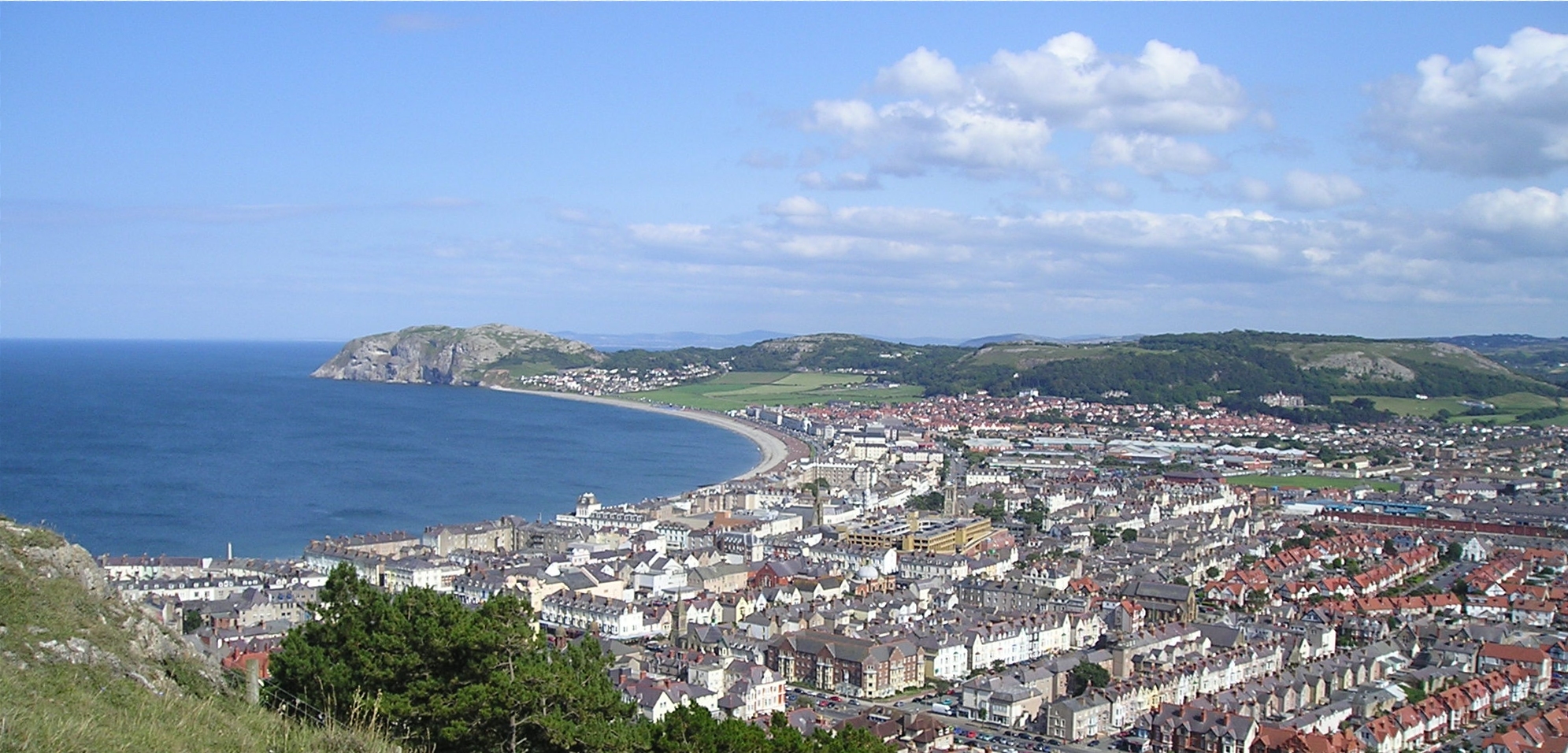
Llandudno (/lænˈdɪdnoʊ/[citation needed], Welsh: [ɬanˈdɨdnɔ] ⓘ) is a seaside resort, town and community in Conwy County Borough, Wales, located on the Creuddyn peninsula, which protrudes into the Irish Sea. In the 2021 UK census, the community – which includes Gogarth, Penrhyn Bay, Craigside, Glanwydden, Penrhynside, and Bryn Pydew – had a population of 19,700 (rounded to the nearest 100). The town's name means "Church of Saint Tudno".
Llandudno is a major seaside resort in Wales, and as early as 1861 was being called 'the Queen of the Welsh Watering Places' (a phrase later also used in connection with Tenby and Aberystwyth; the word 'resort' came a little later). Historically a part of Caernarfonshire, Llandudno was formerly in the district of Aberconwy within Gwynedd until 1996.
The town of Llandudno developed from Stone Age all the way through to Iron Age settlements over many hundreds of years on the slopes of the limestone headland, known to seafarers as the Great Orme and to landsmen as the Creuddyn Peninsula. The origins in recorded history are with the Manor of Gogarth conveyed by King Edward I to Annan, Bishop of Bangor in 1284. The manor comprised three townships, Y Gogarth in the south-west, Y Cyngreawdr in the north (with the parish church of St Tudno) and Yr Wyddfid in the south-east.
Modern Llandudno takes its name from the ancient parish of Saint Tudno. The modern town has grown beyond the ancient parish boundaries to encompass several neighbouring area, including Craig-y-Don and Penrhyn Bay, which were in the parish of Llanrhos (or Eglwys Rhos), which also included Llanrhos village and Deganwy. The ancient parishes of Llandudno, Llanrhos and Llangystennin were in the medieval commote of Creuddyn in the Kingdom of Gwynedd, which was made part of the new county of Caernarfonshire under the Statute of Rhuddlan in 1284.
Mostly owned by Mostyn Estates, the Great Orme is home to several large herds of wild Kashmiri goats originally descended from a pair presented by the Shah of Persia to Queen Victoria and subsequently given to Lord Mostyn. These goats are also known to frequently roam the main streets of Llandudno. The summit of the Great Orme stands at 679 feet (207 m). The Summit Hotel, now a tourist attraction, was once the home of world middleweight champion boxer Randolph Turpin.
The limestone headland is a haven for flora and fauna, with some rare species such as peregrine falcons and a species of wild cotoneaster (cambricus) which can only be found on the Great Orme. The sheer limestone cliffs provide ideal nesting conditions for a wide variety of sea birds, including cormorants, shags, guillemots, razorbills, puffins, kittiwakes, fulmars and numerous gulls.
There are several attractions including the Great Orme Tramway and the Llandudno Cable Car that takes tourists to the summit. The Great Orme also has the longest toboggan run in Britain at 750m long.
By 1847 the town had grown to a thousand people, served by the new church of St George, built in 1840. The great majority of the men worked in the copper mines, with others employed in fishing and subsistence agriculture.
Hub AI
Llandudno AI simulator
(@Llandudno_simulator)
Llandudno
Llandudno (/lænˈdɪdnoʊ/[citation needed], Welsh: [ɬanˈdɨdnɔ] ⓘ) is a seaside resort, town and community in Conwy County Borough, Wales, located on the Creuddyn peninsula, which protrudes into the Irish Sea. In the 2021 UK census, the community – which includes Gogarth, Penrhyn Bay, Craigside, Glanwydden, Penrhynside, and Bryn Pydew – had a population of 19,700 (rounded to the nearest 100). The town's name means "Church of Saint Tudno".
Llandudno is a major seaside resort in Wales, and as early as 1861 was being called 'the Queen of the Welsh Watering Places' (a phrase later also used in connection with Tenby and Aberystwyth; the word 'resort' came a little later). Historically a part of Caernarfonshire, Llandudno was formerly in the district of Aberconwy within Gwynedd until 1996.
The town of Llandudno developed from Stone Age all the way through to Iron Age settlements over many hundreds of years on the slopes of the limestone headland, known to seafarers as the Great Orme and to landsmen as the Creuddyn Peninsula. The origins in recorded history are with the Manor of Gogarth conveyed by King Edward I to Annan, Bishop of Bangor in 1284. The manor comprised three townships, Y Gogarth in the south-west, Y Cyngreawdr in the north (with the parish church of St Tudno) and Yr Wyddfid in the south-east.
Modern Llandudno takes its name from the ancient parish of Saint Tudno. The modern town has grown beyond the ancient parish boundaries to encompass several neighbouring area, including Craig-y-Don and Penrhyn Bay, which were in the parish of Llanrhos (or Eglwys Rhos), which also included Llanrhos village and Deganwy. The ancient parishes of Llandudno, Llanrhos and Llangystennin were in the medieval commote of Creuddyn in the Kingdom of Gwynedd, which was made part of the new county of Caernarfonshire under the Statute of Rhuddlan in 1284.
Mostly owned by Mostyn Estates, the Great Orme is home to several large herds of wild Kashmiri goats originally descended from a pair presented by the Shah of Persia to Queen Victoria and subsequently given to Lord Mostyn. These goats are also known to frequently roam the main streets of Llandudno. The summit of the Great Orme stands at 679 feet (207 m). The Summit Hotel, now a tourist attraction, was once the home of world middleweight champion boxer Randolph Turpin.
The limestone headland is a haven for flora and fauna, with some rare species such as peregrine falcons and a species of wild cotoneaster (cambricus) which can only be found on the Great Orme. The sheer limestone cliffs provide ideal nesting conditions for a wide variety of sea birds, including cormorants, shags, guillemots, razorbills, puffins, kittiwakes, fulmars and numerous gulls.
There are several attractions including the Great Orme Tramway and the Llandudno Cable Car that takes tourists to the summit. The Great Orme also has the longest toboggan run in Britain at 750m long.
By 1847 the town had grown to a thousand people, served by the new church of St George, built in 1840. The great majority of the men worked in the copper mines, with others employed in fishing and subsistence agriculture.
Recent media