
Recent from talks
Lobotomy
Knowledge base stats:
Talk channels stats:
Members stats:
Lobotomy
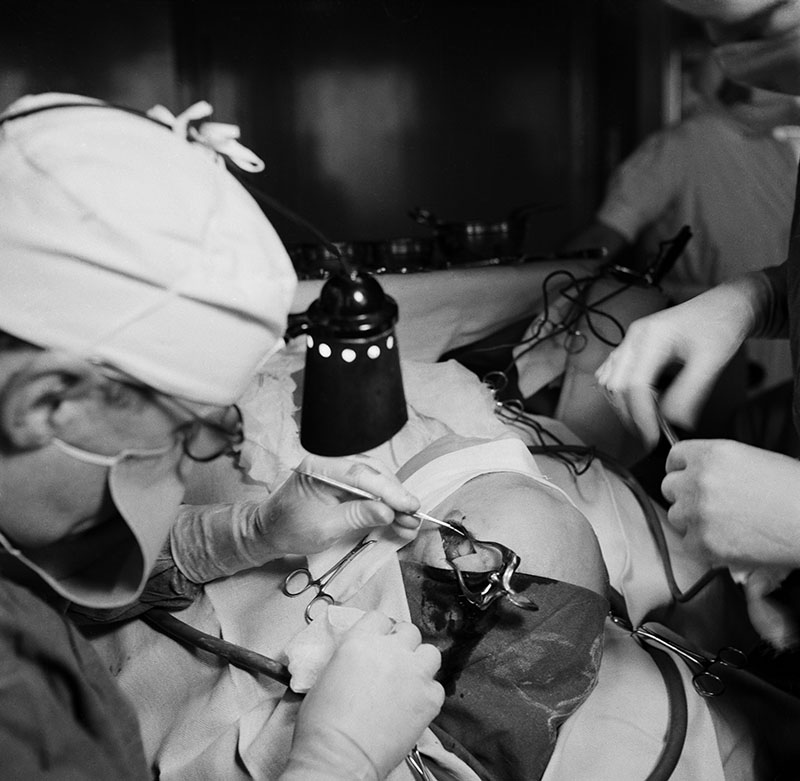
A lobotomy (from Greek λοβός (lobos) 'lobe' and τομή (tomē) 'cut, slice') or leucotomy is a discredited form of neurosurgical treatment for psychiatric disorder or neurological disorder (e.g. epilepsy, depression) that involves severing connections in the brain's prefrontal cortex. The surgery severs most of the connections to and from the prefrontal cortex, and the anterior part of the frontal lobes of the brain.
In the past, this treatment was used for handling psychiatric disorders as a mainstream procedure in some countries. A preoccupation with the ability to work and personal responsibility over patient well-being were contributing factors to the success of lobotomy in the US.
The originator of the procedure, Portuguese neurologist António Egas Moniz, shared the Nobel Prize for Physiology or Medicine of 1949 for the "discovery of the therapeutic value of leucotomy in certain psychoses", although the awarding of the prize has been subject to controversy.
The procedure was modified and championed by Walter Freeman, who performed the first lobotomy at a mental hospital in the United States in 1936. Its use increased dramatically from the early 1940s and into the 1950s; by 1951, almost 20,000 lobotomies had been performed in the US and proportionally more in the United Kingdom. More lobotomies were performed on women than on men: a 1951 study found that nearly 60% of American lobotomy patients were women, and limited data shows that 74% of lobotomies in Ontario from 1948 to 1952 were performed on female patients. From the 1950s onward, lobotomy began to be abandoned, first in the Soviet Union, where the procedure immediately garnered extensive criticism and was not widely employed, before being banned in December 1950, and then Europe. However, derivatives of it such as stereotactic tractotomy and bilateral cingulotomy are still used.
Historically, patients of frontal lobotomy were, immediately following surgery, often stuporous and incontinent. Some developed an enormous appetite and gained considerable weight. Seizures were another common complication of surgery. Emphasis was put on the training of patients in the weeks and months following surgery.
The purpose of the operation was to reduce the symptoms of mental disorders, and it was recognized that this was accomplished at the expense of a person's personality and intellect. British psychiatrist Maurice Partridge, who conducted a follow-up study of 300 patients, said the treatment achieved its effects by "reducing the complexity of psychic life". Following the operation, spontaneity, responsiveness, self-awareness, and self-control were reduced. Activity was replaced by inertia, and people were mostly left emotionally blunted and restricted in their intellectual range.
The consequences of the operation have been described as "mixed". However, many lobotomy patients suffered devastating postoperative complications, including intracranial hemorrhage, epilepsy, alterations in affect and personality, brain abscess, dementia, and death. Ominous portrayals of lobotomized patients in novels, plays, and films further diminished public opinion, and the development of antipsychotic medications led to a rapid decline in lobotomy's popularity and Walter Freeman's reputation. Others could leave the hospital or become more manageable within the hospital. A precarious number of people managed to return to responsible work, while at the other extreme, people were left with severe and disabling impairments. Most people fell into an intermediate group, left with some improvement of their symptoms but also with emotional and intellectual deficits to which they made a better or worse adjustment. On average, there was a mortality rate of approximately 5% during the 1940s. A survey of British lobotomy patients lobotomised between 1942 and 1954 found that 13% of patients were deemed to have made a full recovery and a further 28% were deemed to have made a significant recovery; for 25% lobotomy was deemed to have made no change and 4% died as a result of the surgery.
The frontal lobotomy procedure could have severe negative effects on a patient's personality and ability to function independently. Lobotomy patients often show a marked reduction in initiative and inhibition. They may also exhibit difficulty imagining themselves in the position of others because of decreased cognition and detachment from society.
Hub AI
Lobotomy AI simulator
(@Lobotomy_simulator)
Lobotomy
A lobotomy (from Greek λοβός (lobos) 'lobe' and τομή (tomē) 'cut, slice') or leucotomy is a discredited form of neurosurgical treatment for psychiatric disorder or neurological disorder (e.g. epilepsy, depression) that involves severing connections in the brain's prefrontal cortex. The surgery severs most of the connections to and from the prefrontal cortex, and the anterior part of the frontal lobes of the brain.
In the past, this treatment was used for handling psychiatric disorders as a mainstream procedure in some countries. A preoccupation with the ability to work and personal responsibility over patient well-being were contributing factors to the success of lobotomy in the US.
The originator of the procedure, Portuguese neurologist António Egas Moniz, shared the Nobel Prize for Physiology or Medicine of 1949 for the "discovery of the therapeutic value of leucotomy in certain psychoses", although the awarding of the prize has been subject to controversy.
The procedure was modified and championed by Walter Freeman, who performed the first lobotomy at a mental hospital in the United States in 1936. Its use increased dramatically from the early 1940s and into the 1950s; by 1951, almost 20,000 lobotomies had been performed in the US and proportionally more in the United Kingdom. More lobotomies were performed on women than on men: a 1951 study found that nearly 60% of American lobotomy patients were women, and limited data shows that 74% of lobotomies in Ontario from 1948 to 1952 were performed on female patients. From the 1950s onward, lobotomy began to be abandoned, first in the Soviet Union, where the procedure immediately garnered extensive criticism and was not widely employed, before being banned in December 1950, and then Europe. However, derivatives of it such as stereotactic tractotomy and bilateral cingulotomy are still used.
Historically, patients of frontal lobotomy were, immediately following surgery, often stuporous and incontinent. Some developed an enormous appetite and gained considerable weight. Seizures were another common complication of surgery. Emphasis was put on the training of patients in the weeks and months following surgery.
The purpose of the operation was to reduce the symptoms of mental disorders, and it was recognized that this was accomplished at the expense of a person's personality and intellect. British psychiatrist Maurice Partridge, who conducted a follow-up study of 300 patients, said the treatment achieved its effects by "reducing the complexity of psychic life". Following the operation, spontaneity, responsiveness, self-awareness, and self-control were reduced. Activity was replaced by inertia, and people were mostly left emotionally blunted and restricted in their intellectual range.
The consequences of the operation have been described as "mixed". However, many lobotomy patients suffered devastating postoperative complications, including intracranial hemorrhage, epilepsy, alterations in affect and personality, brain abscess, dementia, and death. Ominous portrayals of lobotomized patients in novels, plays, and films further diminished public opinion, and the development of antipsychotic medications led to a rapid decline in lobotomy's popularity and Walter Freeman's reputation. Others could leave the hospital or become more manageable within the hospital. A precarious number of people managed to return to responsible work, while at the other extreme, people were left with severe and disabling impairments. Most people fell into an intermediate group, left with some improvement of their symptoms but also with emotional and intellectual deficits to which they made a better or worse adjustment. On average, there was a mortality rate of approximately 5% during the 1940s. A survey of British lobotomy patients lobotomised between 1942 and 1954 found that 13% of patients were deemed to have made a full recovery and a further 28% were deemed to have made a significant recovery; for 25% lobotomy was deemed to have made no change and 4% died as a result of the surgery.
The frontal lobotomy procedure could have severe negative effects on a patient's personality and ability to function independently. Lobotomy patients often show a marked reduction in initiative and inhibition. They may also exhibit difficulty imagining themselves in the position of others because of decreased cognition and detachment from society.
Recent media