
Recent from talks
Lockheed YF-12
Knowledge base stats:
Talk channels stats:
Members stats:
Lockheed YF-12
The Lockheed YF-12 is an American Mach 3+ capable, high-altitude interceptor prototype, developed and manufactured by American aerospace company Lockheed Corporation.
The interceptor was developed during the late 1950s and early 1960s as a potential replacement for the F-106 Delta Dart interceptor for the United States Air Force (USAF). The YF-12 was a twin-seat version of the then-secret single-seat Lockheed A-12 reconnaissance aircraft operated by the Central Intelligence Agency (CIA); unlike the A-12, it was furnished with the Hughes AN/ASG-18 fire-control radar and could be armed with AIM-47 Falcon (GAR-9) air-to-air missiles. Its maiden flight was on 7 August 1963. Its existence was publicly revealed by President Lyndon B. Johnson on 24 February 1964; this move was to provide plausible deniability for the CIA-operated A-12 fleet, which closely resembled the prototype YF-12.
During the 1960s, the YF-12 underwent flight evaluations by the USAF, but funding to put it into operational use was not forthcoming partly due to the pressing demands of the Vietnam War and other military priorities. It set and held speed and altitude world records of over 2,000 miles per hour (3,200 km/h) and over 80,000 feet (24,000 m) (later surpassed by the closely related SR-71 Blackbird), and is the world's largest, heaviest and fastest crewed interceptor. Following its retirement by the USAF, it served as a research aircraft for NASA for a time, which used it to develop several significant improvements in control for future supersonic aircraft.
In the late 1950s, the United States Air Force (USAF) sought a replacement for its F-106 Delta Dart interceptor. As part of the Long Range Interceptor Experimental (LRI-X) program, the North American XF-108 Rapier, an interceptor with Mach 3 speed, was selected. However, the F-108 program was canceled by the Department of Defense in September 1959. During this time, Lockheed's Skunk Works was developing the A-12 reconnaissance aircraft for the U.S. Central Intelligence Agency (CIA) under the Oxcart program. Kelly Johnson, the head of Skunk Works, proposed to build a version of the A-12 named AF-12 by the company; the USAF ordered three AF-12s in mid-1960.
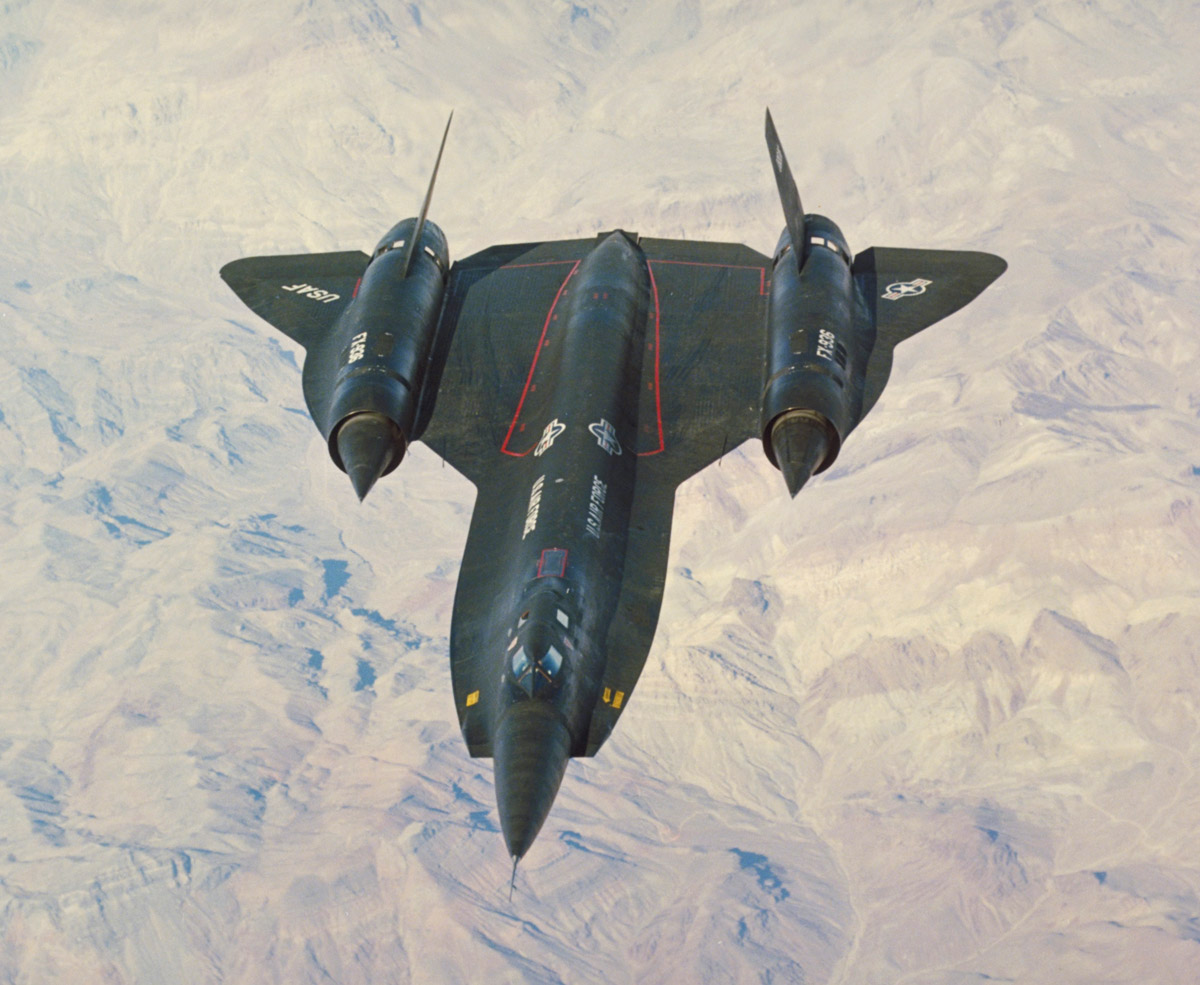
The AF-12s took the seventh through ninth slots on the A-12 assembly line; these were designated as YF-12A interceptors. The main changes involved modifying the A-12's nose by cutting back the chines to accommodate the huge Hughes AN/ASG-18 fire-control radar originally developed for the XF-108 with two infrared search and track sensors located in the chine leading edge, and the addition of the second cockpit for a crew member to operate the fire control radar for the air-to-air missile system. The modifications changed the aircraft's aerodynamics enough to require ventral fins to be mounted under the fuselage and engine nacelles to maintain stability. Three of the four bays previously used to house the A-12's reconnaissance equipment were converted to carry Hughes AIM-47 Falcon (GAR-9) missiles. One bay was used for fire control equipment.
The first YF-12A flew on 7 August 1963. President Lyndon B. Johnson announced the existence of the aircraft on 24 February 1964. The YF-12A was announced in part to continue hiding the A-12, its still-secret ancestor; any sightings of CIA/Air Force A-12s based at Area 51 in Nevada could be attributed to the well-publicized Air Force YF-12As based at Edwards Air Force Base in California. The first public showing of the aircraft was on 30 September 1964 at Edwards.
On 14 May 1965, the Air Force placed a production order for 93 F-12Bs for its Air Defense Command (ADC). However, Secretary of Defense Robert McNamara would not release the funding for three consecutive years due to Vietnam War costs. Updated intelligence placed a lower priority on defense of the continental US, so the F-12B was deemed no longer needed. Then in January 1968, the F-12B program was officially ended.
During flight tests the YF-12As set a speed record of 2,070.101 miles per hour (3,331.505 km/h) and altitude record of 80,257.86 feet (24,462.60 m), both on 1 May 1965, and demonstrated promising results with its unique weapon system. Six successful firings of the AIM-47 missiles were completed, and a seventh failed due to a gyro failure on one of the missiles. The last one was launched from the YF-12 at Mach 3.2 at an altitude of 74,000 feet (23,000 m) to a JQB-47E target drone 500 feet (150 m) off the ground. The missile did not have a warhead but still managed to hit the B-47 directly and take a 4-foot (120 cm) section off its tail. The Air Force considered it a success and ordered 96 aircraft and had an initial budget of $90 million to further testing, but this was withheld by Secretary of Defense McNamara, who on 23 November 1967 put it towards the much less successful F-106X program that nearly failed.
Hub AI
Lockheed YF-12 AI simulator
(@Lockheed YF-12_simulator)
Lockheed YF-12
The Lockheed YF-12 is an American Mach 3+ capable, high-altitude interceptor prototype, developed and manufactured by American aerospace company Lockheed Corporation.
The interceptor was developed during the late 1950s and early 1960s as a potential replacement for the F-106 Delta Dart interceptor for the United States Air Force (USAF). The YF-12 was a twin-seat version of the then-secret single-seat Lockheed A-12 reconnaissance aircraft operated by the Central Intelligence Agency (CIA); unlike the A-12, it was furnished with the Hughes AN/ASG-18 fire-control radar and could be armed with AIM-47 Falcon (GAR-9) air-to-air missiles. Its maiden flight was on 7 August 1963. Its existence was publicly revealed by President Lyndon B. Johnson on 24 February 1964; this move was to provide plausible deniability for the CIA-operated A-12 fleet, which closely resembled the prototype YF-12.
During the 1960s, the YF-12 underwent flight evaluations by the USAF, but funding to put it into operational use was not forthcoming partly due to the pressing demands of the Vietnam War and other military priorities. It set and held speed and altitude world records of over 2,000 miles per hour (3,200 km/h) and over 80,000 feet (24,000 m) (later surpassed by the closely related SR-71 Blackbird), and is the world's largest, heaviest and fastest crewed interceptor. Following its retirement by the USAF, it served as a research aircraft for NASA for a time, which used it to develop several significant improvements in control for future supersonic aircraft.
In the late 1950s, the United States Air Force (USAF) sought a replacement for its F-106 Delta Dart interceptor. As part of the Long Range Interceptor Experimental (LRI-X) program, the North American XF-108 Rapier, an interceptor with Mach 3 speed, was selected. However, the F-108 program was canceled by the Department of Defense in September 1959. During this time, Lockheed's Skunk Works was developing the A-12 reconnaissance aircraft for the U.S. Central Intelligence Agency (CIA) under the Oxcart program. Kelly Johnson, the head of Skunk Works, proposed to build a version of the A-12 named AF-12 by the company; the USAF ordered three AF-12s in mid-1960.
The AF-12s took the seventh through ninth slots on the A-12 assembly line; these were designated as YF-12A interceptors. The main changes involved modifying the A-12's nose by cutting back the chines to accommodate the huge Hughes AN/ASG-18 fire-control radar originally developed for the XF-108 with two infrared search and track sensors located in the chine leading edge, and the addition of the second cockpit for a crew member to operate the fire control radar for the air-to-air missile system. The modifications changed the aircraft's aerodynamics enough to require ventral fins to be mounted under the fuselage and engine nacelles to maintain stability. Three of the four bays previously used to house the A-12's reconnaissance equipment were converted to carry Hughes AIM-47 Falcon (GAR-9) missiles. One bay was used for fire control equipment.
The first YF-12A flew on 7 August 1963. President Lyndon B. Johnson announced the existence of the aircraft on 24 February 1964. The YF-12A was announced in part to continue hiding the A-12, its still-secret ancestor; any sightings of CIA/Air Force A-12s based at Area 51 in Nevada could be attributed to the well-publicized Air Force YF-12As based at Edwards Air Force Base in California. The first public showing of the aircraft was on 30 September 1964 at Edwards.
On 14 May 1965, the Air Force placed a production order for 93 F-12Bs for its Air Defense Command (ADC). However, Secretary of Defense Robert McNamara would not release the funding for three consecutive years due to Vietnam War costs. Updated intelligence placed a lower priority on defense of the continental US, so the F-12B was deemed no longer needed. Then in January 1968, the F-12B program was officially ended.
During flight tests the YF-12As set a speed record of 2,070.101 miles per hour (3,331.505 km/h) and altitude record of 80,257.86 feet (24,462.60 m), both on 1 May 1965, and demonstrated promising results with its unique weapon system. Six successful firings of the AIM-47 missiles were completed, and a seventh failed due to a gyro failure on one of the missiles. The last one was launched from the YF-12 at Mach 3.2 at an altitude of 74,000 feet (23,000 m) to a JQB-47E target drone 500 feet (150 m) off the ground. The missile did not have a warhead but still managed to hit the B-47 directly and take a 4-foot (120 cm) section off its tail. The Air Force considered it a success and ordered 96 aircraft and had an initial budget of $90 million to further testing, but this was withheld by Secretary of Defense McNamara, who on 23 November 1967 put it towards the much less successful F-106X program that nearly failed.
Recent media