




Community hub
Recent from talks
Contribute something to knowledge base
Content stats: 0 posts, 0 articles, 1 media, 0 notes
Members stats: 0 subscribers, 0 contributors, 0 moderators, 0 supporters
Subscribers
Supporters
Contributors
Moderators
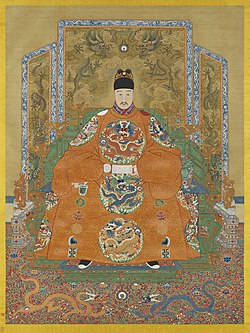
Longqing Emperor
The Longqing Emperor (4 March 1537 – 5 July 1572), personal name Zhu Zaiji, was the 13th emperor of the Ming dynasty, reigning from 1567 to 1572. He was initially known as the Prince of Yu (裕王) from 1539 to 1567 before he became the emperor. He succeeded his father, the Jiajing Emperor.
After the death of the Jiajing Emperor, the Longqing Emperor inherited a country in turmoil due to years of mismanagement and corruption. Recognizing the extent of the chaos caused during his father's lengthy reign, the Emperor worked to restore order in the state administration. He reinstated talented officials who had been previously exiled and dismissed corrupt officials and Taoist priests who had surrounded the Jiajing Emperor. Additionally, he lifted the ban on foreign trade, boosting the empire's economy, and reorganized the border troops to strengthen security on the inland and coastal borders. The seaports of Zhejiang and Fujian were fortified to defend against coastal pirates, who had been a constant nuisance during the previous government. The Emperor also successfully repelled Altan Khan's Mongol army, which had breached the Great Wall and reached Beijing. A peace treaty was signed shortly after, allowing for the resumption of the exchange of horses for silk.
The Longqing Emperor, like many previous Ming emperors, relied heavily on court eunuchs. One particular eunuch, Meng Cong (孟沖), who was supported by Grand Secretary Gao Gong, gained control over the inner court towards the end of the Emperor's reign. Despite a promising start, the Longqing Emperor quickly neglected his duties as a ruler and instead focused on personal pleasures, much to the disappointment of his reform-minded advisors. The Emperor also made contradictory decisions by re-employing Taoist priests, whom he had previously banned at the beginning of his reign.
Zhu Zaiji, the future Longqing Emperor, was born on 4 March 1537 to the Jiajing Emperor and a concubine surnamed Du. He was the Emperor's third son; the eldest son had died in infancy before Zhu Zaiji's birth, and the second son, Zhu Zairui, was six months older than him. A month after Zhu Zaiji's birth, the Emperor's fourth son, Zhu Zaizhen, was born.
In February 1539, the Jiajing Emperor named Zhu Zairui heir to the throne. On the same day, Zhu Zaiji was granted the title of Prince of Yu, and Zhu Zaizhen was given the title of Prince of Jing. In 1549, Zhu Zairui died. His death caused the Jiajing Emperor to feel immense sorrow and regret, as he believed he had not listened to the supposed advice of his Taoist priest Tao Zhongwen, who had warned him that "two dragons should not face each other". This may have been the reason why he refused to create another heir, and also avoided seeing Zhu Zaiji. Another version suggests that the Emperor held a grudge against Zhu Zaiji for not observing sexual abstinence during the mourning period (this version was fueled by the fact that Zhu Zaiji had a son in October 1555, only 18 months after his mother's death).
In September 1552, Zhu Zaiji and Zhu Zaizhen began receiving education together. Two months later, their wives were chosen and they were married in February 1553. After that, Zhu Zaiji moved from the Forbidden City to his princely palace. For thirteen years, he lived outside the Forbidden City, gaining experience of conditions beyond the Imperial Palace and developing an understanding of the country's issues. The Jiajing Emperor ensured that he and the officials treated the third and fourth sons equally, sparking speculation at court about who would be the new successor. This speculation was further fueled by the Emperor's fondness for Zhu Zaizhen's mother, with whom he spent a lot of time. In contrast, when Zhu Zaiji's mother died in February 1554, the funeral arrangements had to be revised twice, as the Emperor suppressed any insinuation that she held a higher status than just the mother of the presumptive successor.
In March 1560, the Jiajing Emperor received a memorandum suggesting that Zhu Zaiji be appointed as his successor. In response, the Emperor was outraged and ordered the execution of the writer, but later that year, he changed his mind and ordered Zhu Zaizhen to go to his seat in Anlu, Huguang. This decision strengthened Zhu Zaiji's position, although he continued to be excluded from the Emperor's entourage and neglected. Unlike the deceased Zhu Zairui, the Emperor did not like him. Despite being 29 years old at the time of his accession to the throne and having a Confucian education, Zhu Zaiji lacked deep knowledge in statesmanship and was not adequately prepared to govern an empire.
The Jiajing Emperor died on 23 January 1567, and twelve days later, Zhu Zaiji became the new emperor. He adopted the era name Longqing, which means "great celebration".
Longqing Emperor
The Longqing Emperor (4 March 1537 – 5 July 1572), personal name Zhu Zaiji, was the 13th emperor of the Ming dynasty, reigning from 1567 to 1572. He was initially known as the Prince of Yu (裕王) from 1539 to 1567 before he became the emperor. He succeeded his father, the Jiajing Emperor.
After the death of the Jiajing Emperor, the Longqing Emperor inherited a country in turmoil due to years of mismanagement and corruption. Recognizing the extent of the chaos caused during his father's lengthy reign, the Emperor worked to restore order in the state administration. He reinstated talented officials who had been previously exiled and dismissed corrupt officials and Taoist priests who had surrounded the Jiajing Emperor. Additionally, he lifted the ban on foreign trade, boosting the empire's economy, and reorganized the border troops to strengthen security on the inland and coastal borders. The seaports of Zhejiang and Fujian were fortified to defend against coastal pirates, who had been a constant nuisance during the previous government. The Emperor also successfully repelled Altan Khan's Mongol army, which had breached the Great Wall and reached Beijing. A peace treaty was signed shortly after, allowing for the resumption of the exchange of horses for silk.
The Longqing Emperor, like many previous Ming emperors, relied heavily on court eunuchs. One particular eunuch, Meng Cong (孟沖), who was supported by Grand Secretary Gao Gong, gained control over the inner court towards the end of the Emperor's reign. Despite a promising start, the Longqing Emperor quickly neglected his duties as a ruler and instead focused on personal pleasures, much to the disappointment of his reform-minded advisors. The Emperor also made contradictory decisions by re-employing Taoist priests, whom he had previously banned at the beginning of his reign.
Zhu Zaiji, the future Longqing Emperor, was born on 4 March 1537 to the Jiajing Emperor and a concubine surnamed Du. He was the Emperor's third son; the eldest son had died in infancy before Zhu Zaiji's birth, and the second son, Zhu Zairui, was six months older than him. A month after Zhu Zaiji's birth, the Emperor's fourth son, Zhu Zaizhen, was born.
In February 1539, the Jiajing Emperor named Zhu Zairui heir to the throne. On the same day, Zhu Zaiji was granted the title of Prince of Yu, and Zhu Zaizhen was given the title of Prince of Jing. In 1549, Zhu Zairui died. His death caused the Jiajing Emperor to feel immense sorrow and regret, as he believed he had not listened to the supposed advice of his Taoist priest Tao Zhongwen, who had warned him that "two dragons should not face each other". This may have been the reason why he refused to create another heir, and also avoided seeing Zhu Zaiji. Another version suggests that the Emperor held a grudge against Zhu Zaiji for not observing sexual abstinence during the mourning period (this version was fueled by the fact that Zhu Zaiji had a son in October 1555, only 18 months after his mother's death).
In September 1552, Zhu Zaiji and Zhu Zaizhen began receiving education together. Two months later, their wives were chosen and they were married in February 1553. After that, Zhu Zaiji moved from the Forbidden City to his princely palace. For thirteen years, he lived outside the Forbidden City, gaining experience of conditions beyond the Imperial Palace and developing an understanding of the country's issues. The Jiajing Emperor ensured that he and the officials treated the third and fourth sons equally, sparking speculation at court about who would be the new successor. This speculation was further fueled by the Emperor's fondness for Zhu Zaizhen's mother, with whom he spent a lot of time. In contrast, when Zhu Zaiji's mother died in February 1554, the funeral arrangements had to be revised twice, as the Emperor suppressed any insinuation that she held a higher status than just the mother of the presumptive successor.
In March 1560, the Jiajing Emperor received a memorandum suggesting that Zhu Zaiji be appointed as his successor. In response, the Emperor was outraged and ordered the execution of the writer, but later that year, he changed his mind and ordered Zhu Zaizhen to go to his seat in Anlu, Huguang. This decision strengthened Zhu Zaiji's position, although he continued to be excluded from the Emperor's entourage and neglected. Unlike the deceased Zhu Zairui, the Emperor did not like him. Despite being 29 years old at the time of his accession to the throne and having a Confucian education, Zhu Zaiji lacked deep knowledge in statesmanship and was not adequately prepared to govern an empire.
The Jiajing Emperor died on 23 January 1567, and twelve days later, Zhu Zaiji became the new emperor. He adopted the era name Longqing, which means "great celebration".
Recent media
Recent media