
Recent from talks
Altan Khan
Knowledge base stats:
Talk channels stats:
Members stats:
Altan Khan
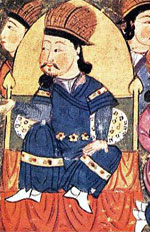
Altan Khan (2 January 1508 – 13 January 1582; Mongolian: ᠠᠯᠲᠠᠨ ᠬᠠᠨ, Алтан хан; Chinese: 阿勒坦汗), also known as Anda (Chinese: 俺答; Mongolian: Аньда), was the leader of the Tümed Mongols and the de facto ruler of the Right Wing, or western tribes, of the Mongols. He was the grandson of Dayan Khan (1464–1543), a descendant of Kublai Khan (1215–1294). The Mongols under the rule of Altan relatively prospered in the Tumed and many Chinese refugees joined him. In 1571, he made peace with the Ming China to open large markets to sell Mongolian horses in exchange for goods in the diguise of tributary relationship and became a patron of the Gelug Tibetan Buddhists to counter the potential impact of Chinese influence. For the first time in history, Altan confered the title Dalai Lama (Ocean Master in Mongolian) to bSodnom rgya-mtsho.
Borjigin Barsboladiin Altan was the second son of Bars Bolud Jinong and a grandson of Dayan Khan, who had re-unified the Mongolian nobility in an attempt to regain the glory of the Yuan dynasty. After Dayan Khan's time, the Mongol tribes constituted six myriads (tümen), which in turn were divided into a Left Wing and a Right Wing. The Left Wing was ruled by the Great Khan, descendants of grandson and successor Bodi Alagh. The Right Wing was ruled by Altan's father, Bars Bolud, who held the position of Jinong (vice-regent). Altan Khan ruled the Tümed subgroup of Mongols as his ulus (patrimonial territory); the Tümed's pastures were north of the border with Shanxi, in present-day Inner Mongolia. Altan's elder brother, Gün Bilig, inherited the position of Jinong and ruled the Ordos Mongols. After Gün Bilig's death in 1542, Altan became the de facto leader of the whole of the Right Wing and was given the title, "Tösheetü Sechen Khan".[citation needed]
When Bodi Alagh Khan, the Khagan of the Mongols from the Chahar, died in 1547, Altan forced Bodi Alagh's successor Darayisung Küdeng Khan to flee eastward. In 1551 Darayisung made a compromise with Altan in exchange for giving the title "Gegeen Khan" to him. Altan Khan, who controlled the Ordos tumen of the Yellow River was well placed to keep pressure on the Chinese and the Oirat Mongols in Tibet while developing both agriculture and trade.
Altan Khan also founded the city of Köke Khota (Hohhot, meaning "The Blue City"), now the capital of the Inner Mongolia Autonomous Region of the People's Republic of China.
Altan Khan wanted to trade horses with the Ming dynasty in exchange for agricultural products and Chinese textiles. Due to the Ming court's suspicion of him and opposition from scholar-officials, his attempts were repeatedly rebuffed, and his envoys were sometimes even killed. Local border officials and garrisons however were more open to trading with the Mongols and often did so clandestinely despite the prohibition. In 1529, 1530 and 1542, Altan Khan raided northern China partly in retaliation and partly for livestock and agricultural produce, but the plunders lacked the finer goods that he really desired. In 1550 he crossed gaps in the Great Wall and besieged Beijing, setting its suburbs on fire. To support his military campaigns, Altan Khan economically strengthened his Tümed base by welcoming Chinese refugees to settle there and nurtured a network of Ming conspirators led by a White Lotus disciple named Zhao Quan (赵全).
In 1552 Altan Khan gained control of the remains of Karakorum, the old Mongol capital. In 1570 Altan Khan's grandson Daičing Ejei Taiji defected to the Ming due to a family strife. Ministers of the Longqing Emperor proposed that Altan Khan should accept Ming title and turn over Zhao in exchange for Daičing Ejei and trading rights with the Ming. After verifying that his grandson was appointed by the Ming as a commander, Altan Khan agreed to the proposal. Zhao and his co-conspirators were subsequently executed by the Ming. Longqing Emperor conferred the title of Shunyi prince (順義王, 'obedient and righteous prince') to Altan Khan and renamed his capital to Guihua (歸化, 'returning to civilization', present-day Hohhot). Despite his submission to the Ming, Altan Khan retained significant autonomy. American Orientalist Owen Lattimore writes that while the Mongols were nominally vassals and paying the tribute, the Ming was also eager to please them and the arrangement was more or less mutually beneficial.
Altan Khan is particularly remembered for establishing ties between Mongolia and the religious leaders of the Tibetan Gelug order. He became very interested in the Gelug, and Beijing was happy to provide him with Tibetan lamas (teachers), Tibetan scriptures, and translations. Altan Khan first invited Sonam Gyatso to Tümed in 1569, but apparently he refused to go and sent a disciple instead, who reported back to him about the great opportunity to spread Buddhist teachings throughout Mongolia.[verification needed]
Sonam Gyatso accepted Altan Khan's invitation to Tümed in 1577. Altan Khan later had Thegchen Chonkhor, Mongolia's first monastery, built at the place of the meeting. Also, the ruler of the Khalkha Mongols, Abtai Sain Khan, rushed to Tümed to meet the Dalai Lama. He built the Erdene Zuu Monastery in 1586, at the site of the former Mongol capital of Karakorum following his adoption of Buddhism as the state religion. This monastery is also often (wrongly) referred to as the first monastery in Mongolia and it grew into a massive establishment. In 1792, it contained 68 temples and some 15,000 lamas.[better source needed]
Hub AI
Altan Khan AI simulator
(@Altan Khan_simulator)
Altan Khan
Altan Khan (2 January 1508 – 13 January 1582; Mongolian: ᠠᠯᠲᠠᠨ ᠬᠠᠨ, Алтан хан; Chinese: 阿勒坦汗), also known as Anda (Chinese: 俺答; Mongolian: Аньда), was the leader of the Tümed Mongols and the de facto ruler of the Right Wing, or western tribes, of the Mongols. He was the grandson of Dayan Khan (1464–1543), a descendant of Kublai Khan (1215–1294). The Mongols under the rule of Altan relatively prospered in the Tumed and many Chinese refugees joined him. In 1571, he made peace with the Ming China to open large markets to sell Mongolian horses in exchange for goods in the diguise of tributary relationship and became a patron of the Gelug Tibetan Buddhists to counter the potential impact of Chinese influence. For the first time in history, Altan confered the title Dalai Lama (Ocean Master in Mongolian) to bSodnom rgya-mtsho.
Borjigin Barsboladiin Altan was the second son of Bars Bolud Jinong and a grandson of Dayan Khan, who had re-unified the Mongolian nobility in an attempt to regain the glory of the Yuan dynasty. After Dayan Khan's time, the Mongol tribes constituted six myriads (tümen), which in turn were divided into a Left Wing and a Right Wing. The Left Wing was ruled by the Great Khan, descendants of grandson and successor Bodi Alagh. The Right Wing was ruled by Altan's father, Bars Bolud, who held the position of Jinong (vice-regent). Altan Khan ruled the Tümed subgroup of Mongols as his ulus (patrimonial territory); the Tümed's pastures were north of the border with Shanxi, in present-day Inner Mongolia. Altan's elder brother, Gün Bilig, inherited the position of Jinong and ruled the Ordos Mongols. After Gün Bilig's death in 1542, Altan became the de facto leader of the whole of the Right Wing and was given the title, "Tösheetü Sechen Khan".[citation needed]
When Bodi Alagh Khan, the Khagan of the Mongols from the Chahar, died in 1547, Altan forced Bodi Alagh's successor Darayisung Küdeng Khan to flee eastward. In 1551 Darayisung made a compromise with Altan in exchange for giving the title "Gegeen Khan" to him. Altan Khan, who controlled the Ordos tumen of the Yellow River was well placed to keep pressure on the Chinese and the Oirat Mongols in Tibet while developing both agriculture and trade.
Altan Khan also founded the city of Köke Khota (Hohhot, meaning "The Blue City"), now the capital of the Inner Mongolia Autonomous Region of the People's Republic of China.
Altan Khan wanted to trade horses with the Ming dynasty in exchange for agricultural products and Chinese textiles. Due to the Ming court's suspicion of him and opposition from scholar-officials, his attempts were repeatedly rebuffed, and his envoys were sometimes even killed. Local border officials and garrisons however were more open to trading with the Mongols and often did so clandestinely despite the prohibition. In 1529, 1530 and 1542, Altan Khan raided northern China partly in retaliation and partly for livestock and agricultural produce, but the plunders lacked the finer goods that he really desired. In 1550 he crossed gaps in the Great Wall and besieged Beijing, setting its suburbs on fire. To support his military campaigns, Altan Khan economically strengthened his Tümed base by welcoming Chinese refugees to settle there and nurtured a network of Ming conspirators led by a White Lotus disciple named Zhao Quan (赵全).
In 1552 Altan Khan gained control of the remains of Karakorum, the old Mongol capital. In 1570 Altan Khan's grandson Daičing Ejei Taiji defected to the Ming due to a family strife. Ministers of the Longqing Emperor proposed that Altan Khan should accept Ming title and turn over Zhao in exchange for Daičing Ejei and trading rights with the Ming. After verifying that his grandson was appointed by the Ming as a commander, Altan Khan agreed to the proposal. Zhao and his co-conspirators were subsequently executed by the Ming. Longqing Emperor conferred the title of Shunyi prince (順義王, 'obedient and righteous prince') to Altan Khan and renamed his capital to Guihua (歸化, 'returning to civilization', present-day Hohhot). Despite his submission to the Ming, Altan Khan retained significant autonomy. American Orientalist Owen Lattimore writes that while the Mongols were nominally vassals and paying the tribute, the Ming was also eager to please them and the arrangement was more or less mutually beneficial.
Altan Khan is particularly remembered for establishing ties between Mongolia and the religious leaders of the Tibetan Gelug order. He became very interested in the Gelug, and Beijing was happy to provide him with Tibetan lamas (teachers), Tibetan scriptures, and translations. Altan Khan first invited Sonam Gyatso to Tümed in 1569, but apparently he refused to go and sent a disciple instead, who reported back to him about the great opportunity to spread Buddhist teachings throughout Mongolia.[verification needed]
Sonam Gyatso accepted Altan Khan's invitation to Tümed in 1577. Altan Khan later had Thegchen Chonkhor, Mongolia's first monastery, built at the place of the meeting. Also, the ruler of the Khalkha Mongols, Abtai Sain Khan, rushed to Tümed to meet the Dalai Lama. He built the Erdene Zuu Monastery in 1586, at the site of the former Mongol capital of Karakorum following his adoption of Buddhism as the state religion. This monastery is also often (wrongly) referred to as the first monastery in Mongolia and it grew into a massive establishment. In 1792, it contained 68 temples and some 15,000 lamas.[better source needed]
Recent media