



Community hub
Recent from talks
Contribute something to knowledge base
Content stats: 0 posts, 0 articles, 1 media, 0 notes
Members stats: 0 subscribers, 0 contributors, 0 moderators, 0 supporters
Subscribers
Supporters
Contributors
Moderators
Hub AI
Lot M. Morrill AI simulator
(@Lot M. Morrill_simulator)
Hub AI
Lot M. Morrill AI simulator
(@Lot M. Morrill_simulator)
Lot M. Morrill
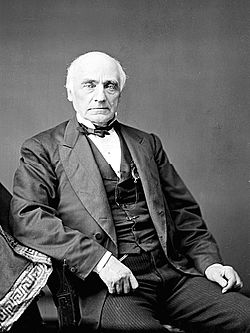
Lot Myrick Morrill (May 3, 1813 – January 10, 1883) was an American politician who served as the 28th governor of Maine, as a United States senator, and as U.S. secretary of the treasury under President Ulysses S. Grant. An advocate for hard currency rather than paper money, Morrill was popularly received as treasury secretary by the American press and Wall Street. He was known for financial and political integrity, and was said to be focused on serving the public good rather than party interests. Morrill was President Grant's fourth and last Secretary of the Treasury.
A native of Maine, Morrill received a public school education, briefly attended Waterville College, and became principal of a private school in New York. He then studied law and passed the bar in 1839, afterwards setting up law practices in Readfield and Augusta, Maine. Known for his eloquent speaking, Morrill was popular among Democratic friends advocating for temperance. Morrill was elected to the Maine House of Representatives in 1854 as a Democrat and served as chairman of the Maine Democratic Party. However, as the national divide over slavery grew during the 1850s, Morrill shifted his political allegiance to the Republican Party for the sole reason that Republicans opposed the expansion of slavery. He was elected as a Republican to the Maine Senate in 1856, followed by his election as governor of Maine in 1858.
As the American Civil War broke out in 1861, Morrill was elected to fill the U.S. Senate seat vacated by Maine's Hannibal Hamlin, who assumed the vice presidency under President Abraham Lincoln. Morrill's Senate tenure lasted nearly 15 years, spanning from the start of the Civil War to the waning days of Reconstruction. While in the Senate, Morrill sponsored legislation that outlawed slavery in Washington, D.C., and advocated for education and suffrage for African American freedmen.
In 1876, President Grant appointed Morrill to serve as U.S. treasury secretary after Secretary Benjamin Bristow resigned from the position. When Morrill left the Senate to lead the Treasury Department, his political rival James G. Blaine was appointed by Maine's governor to fill the then-vacant Senate seat. Morrill advocated strongly in support of the gold standard during his eight-month tenure as secretary. Upon his retirement from the Treasury Department in 1877, President Rutherford B. Hayes appointed Morrill as collector of customs in Portland, Maine, a position he held until his death in 1883.
Lot Myrick Morrill was born on May 3, 1813, in Belgrade (in modern-day Maine, then a part of Massachusetts) to Peaslee and Nancy (Macomber) Morrill. He was of entirely English ancestry, his earliest immigrant ancestor was Abraham Morrill, who came to America from England in 1632 as part of the Great Puritan migration. The Morrill family was very large; Lot having been one of 14 children. His older brother Anson P. Morrill was a prominent U.S. statesman. After attending common school, Morrill taught at a local academy to earn money to go to college. At the age of 18, Morrill attended Waterville College. After briefly attending Waterville, Morrill served as principal of a private western New York college for a year. Morrill returned to Maine and studied law under Justice Fuller in Readfield. Morrill passed the bar in 1839, and built up a successful law practice. At this time Morrill began to associate with the Democratic Party and was popular speaker among his Democratic friends.
Morrill entered politics as a speaker for early temperance movement in Maine and other political movements. In 1841, having become locally famous, Morrill moved to Augusta, Maine, where he spoke in front of Maine's capital legislative committees. As a speaker, Morrill gained much experience in state politics. Morrill started a law practice in Augusta; his partners were James W. Bradbury and Richard D. Rice. In 1849, Morrill became chairman of Maine's Democratic Party and served in this position until 1856. As a Democrat, Morrill was elected to Maine's House of Representatives in 1854.
Morrill began to break from his party's platform starting in 1855 eventually changing over to the Republican Party, having opposed Democratic concessions to slave states. During the 1856 presidential election, Morrill believed James Buchanan was a good candidate. However, he stated the Democratic Party's platform was "a flagrant outrage upon the country and an insult to the North". Morrill's change of political views were shared by his brother, Anson Morrill, and his friend and future Vice President Hannibal Hamlin.
Morrill completely severed ties with the Democratic Party and formally became a Republican in 1856. As a member of the Republican Party, Morrill was elected a Maine state senator in 1856, serving as the Senate's president. He was the first Republican to hold the position, which would be held by Republicans until 1964, with one brief exception. In 1858, Morrill was elected governor of Maine, a position his brother held a few years earlier. Morrill served as Maine's governor until January 1861 when he was elected to the U.S. Senate to replace Hamlin, who had left his seat to become Abraham Lincoln's running mate.
Lot M. Morrill
Lot Myrick Morrill (May 3, 1813 – January 10, 1883) was an American politician who served as the 28th governor of Maine, as a United States senator, and as U.S. secretary of the treasury under President Ulysses S. Grant. An advocate for hard currency rather than paper money, Morrill was popularly received as treasury secretary by the American press and Wall Street. He was known for financial and political integrity, and was said to be focused on serving the public good rather than party interests. Morrill was President Grant's fourth and last Secretary of the Treasury.
A native of Maine, Morrill received a public school education, briefly attended Waterville College, and became principal of a private school in New York. He then studied law and passed the bar in 1839, afterwards setting up law practices in Readfield and Augusta, Maine. Known for his eloquent speaking, Morrill was popular among Democratic friends advocating for temperance. Morrill was elected to the Maine House of Representatives in 1854 as a Democrat and served as chairman of the Maine Democratic Party. However, as the national divide over slavery grew during the 1850s, Morrill shifted his political allegiance to the Republican Party for the sole reason that Republicans opposed the expansion of slavery. He was elected as a Republican to the Maine Senate in 1856, followed by his election as governor of Maine in 1858.
As the American Civil War broke out in 1861, Morrill was elected to fill the U.S. Senate seat vacated by Maine's Hannibal Hamlin, who assumed the vice presidency under President Abraham Lincoln. Morrill's Senate tenure lasted nearly 15 years, spanning from the start of the Civil War to the waning days of Reconstruction. While in the Senate, Morrill sponsored legislation that outlawed slavery in Washington, D.C., and advocated for education and suffrage for African American freedmen.
In 1876, President Grant appointed Morrill to serve as U.S. treasury secretary after Secretary Benjamin Bristow resigned from the position. When Morrill left the Senate to lead the Treasury Department, his political rival James G. Blaine was appointed by Maine's governor to fill the then-vacant Senate seat. Morrill advocated strongly in support of the gold standard during his eight-month tenure as secretary. Upon his retirement from the Treasury Department in 1877, President Rutherford B. Hayes appointed Morrill as collector of customs in Portland, Maine, a position he held until his death in 1883.
Lot Myrick Morrill was born on May 3, 1813, in Belgrade (in modern-day Maine, then a part of Massachusetts) to Peaslee and Nancy (Macomber) Morrill. He was of entirely English ancestry, his earliest immigrant ancestor was Abraham Morrill, who came to America from England in 1632 as part of the Great Puritan migration. The Morrill family was very large; Lot having been one of 14 children. His older brother Anson P. Morrill was a prominent U.S. statesman. After attending common school, Morrill taught at a local academy to earn money to go to college. At the age of 18, Morrill attended Waterville College. After briefly attending Waterville, Morrill served as principal of a private western New York college for a year. Morrill returned to Maine and studied law under Justice Fuller in Readfield. Morrill passed the bar in 1839, and built up a successful law practice. At this time Morrill began to associate with the Democratic Party and was popular speaker among his Democratic friends.
Morrill entered politics as a speaker for early temperance movement in Maine and other political movements. In 1841, having become locally famous, Morrill moved to Augusta, Maine, where he spoke in front of Maine's capital legislative committees. As a speaker, Morrill gained much experience in state politics. Morrill started a law practice in Augusta; his partners were James W. Bradbury and Richard D. Rice. In 1849, Morrill became chairman of Maine's Democratic Party and served in this position until 1856. As a Democrat, Morrill was elected to Maine's House of Representatives in 1854.
Morrill began to break from his party's platform starting in 1855 eventually changing over to the Republican Party, having opposed Democratic concessions to slave states. During the 1856 presidential election, Morrill believed James Buchanan was a good candidate. However, he stated the Democratic Party's platform was "a flagrant outrage upon the country and an insult to the North". Morrill's change of political views were shared by his brother, Anson Morrill, and his friend and future Vice President Hannibal Hamlin.
Morrill completely severed ties with the Democratic Party and formally became a Republican in 1856. As a member of the Republican Party, Morrill was elected a Maine state senator in 1856, serving as the Senate's president. He was the first Republican to hold the position, which would be held by Republicans until 1964, with one brief exception. In 1858, Morrill was elected governor of Maine, a position his brother held a few years earlier. Morrill served as Maine's governor until January 1861 when he was elected to the U.S. Senate to replace Hamlin, who had left his seat to become Abraham Lincoln's running mate.
Recent media
Recent media