


Community hub
Recent from talks
Contribute something to knowledge base
Content stats: 0 posts, 0 articles, 1 media, 0 notes
Members stats: 0 subscribers, 0 contributors, 0 moderators, 0 supporters
Subscribers
Supporters
Contributors
Moderators
Hub AI
Lydians AI simulator
(@Lydians_simulator)
Hub AI
Lydians AI simulator
(@Lydians_simulator)
Lydians
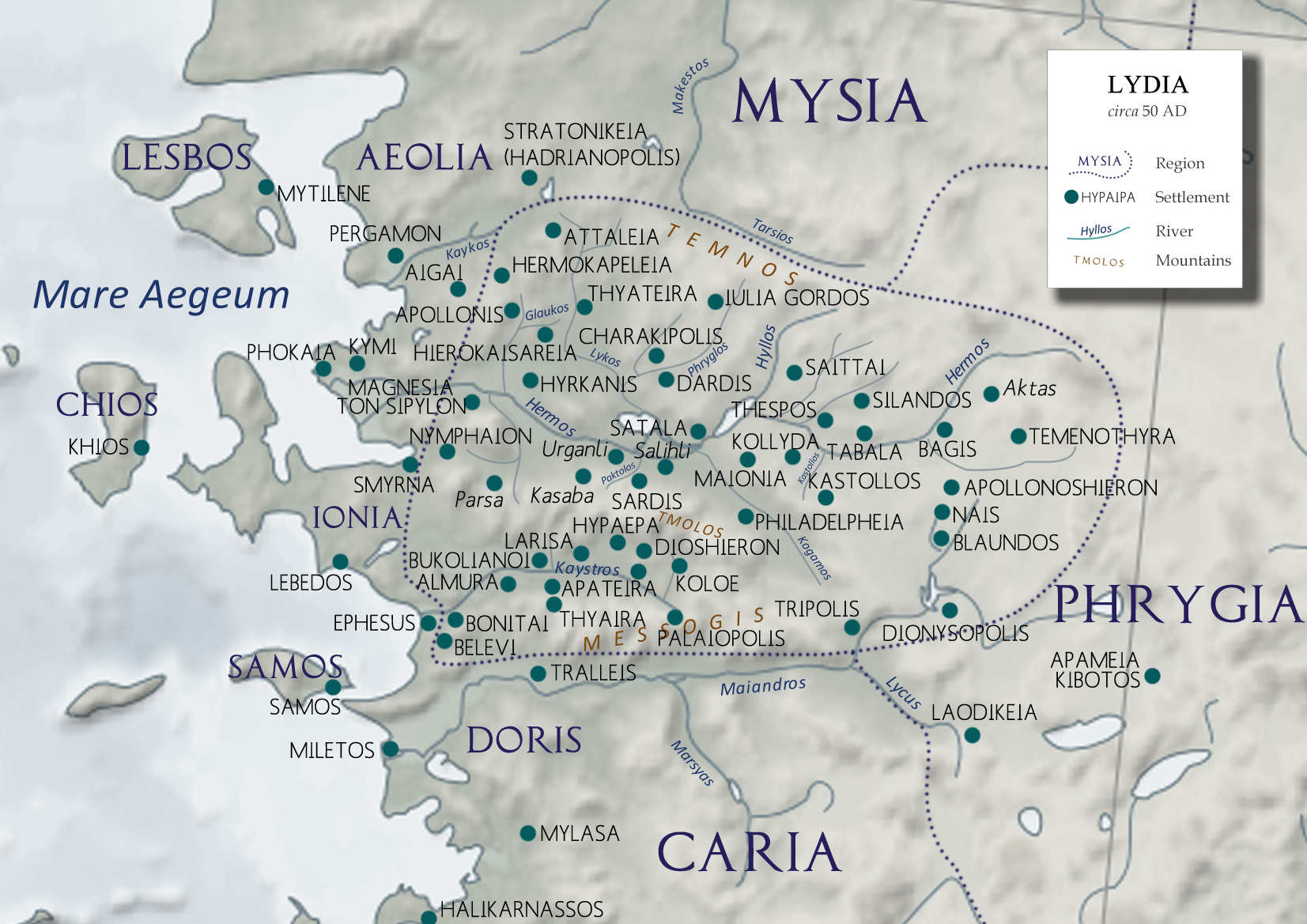
The Lydians (Greek: Λυδοί; known as Sparda to the Achaemenids, Old Persian cuneiform 𐎿𐎱𐎼𐎭) were an Anatolian people living in Lydia, a region in western Anatolia, who spoke the distinctive Lydian language, an Indo-European language of the Anatolian group.
Questions raised regarding their origins, reaching well into the 2nd millennium BC, continue to be debated by language historians and archeologists. A distinct Lydian culture lasted, in all probability, until at least shortly before the Common Era, having been attested the last time among extant records by Strabo in Kibyra in south-west Anatolia around his time (1st century BC).
The Lydian capital was at Sfard or Sardis. Their recorded history of statehood, which covers three dynasties traceable to the Late Bronze Age, reached the height of its power and achievements during the 7th and 6th centuries BC, a time which coincided with the demise of the power of neighboring Phrygia, which lay to the north-east of Lydia.
Lydian power came to an abrupt end with the fall of their capital in events subsequent to the Battle of Halys in 585 BC and defeat by Cyrus the Great in 546 BC.
Material in the way of historical accounts of themselves found to date is scarce; the knowledge on Lydians largely rely on the impressed but mixed accounts of ancient Greek writers.
The Homeric name for the Lydians was Μαίονες, cited among the allies of the Trojans during the Trojan War, and from this name "Maeonia" and "Maeonians" derive and while these Bronze Age terms have sometimes been used as alternatives for Lydia and the Lydians, nuances have also been brought between them. The first attestation of Lydians under such a name occurs in Neo-Assyrian sources. The annals of Assurbanipal (mid-7th century BC) refer to the embassy of Gu(g)gu, king of Luddi, to be identified with Gyges, king of the Lydians. It seems likely that the term Lydians came to be used with reference to the inhabitants of Sardis and its vicinity only with the rise of the Mermnad dynasty.
Herodotus states in his Histories that the Lydians "were the first men whom we know who coined and used gold and silver currency". While this specifically refers to coinage in electrum, some numismatists think that coinage per se arose in Lydia. He also states that during the kingship of Croesus, there was no other Asia Minor ethnos braver and more militant than the Lydians.
According to Herodotus, once a Lydian girl reached maturity, she would ply the trade of prostitute until she had earned a sufficient dowry, upon which she would publicize her availability for marriage. This was the general practice for girls not born into nobility.
Lydians
The Lydians (Greek: Λυδοί; known as Sparda to the Achaemenids, Old Persian cuneiform 𐎿𐎱𐎼𐎭) were an Anatolian people living in Lydia, a region in western Anatolia, who spoke the distinctive Lydian language, an Indo-European language of the Anatolian group.
Questions raised regarding their origins, reaching well into the 2nd millennium BC, continue to be debated by language historians and archeologists. A distinct Lydian culture lasted, in all probability, until at least shortly before the Common Era, having been attested the last time among extant records by Strabo in Kibyra in south-west Anatolia around his time (1st century BC).
The Lydian capital was at Sfard or Sardis. Their recorded history of statehood, which covers three dynasties traceable to the Late Bronze Age, reached the height of its power and achievements during the 7th and 6th centuries BC, a time which coincided with the demise of the power of neighboring Phrygia, which lay to the north-east of Lydia.
Lydian power came to an abrupt end with the fall of their capital in events subsequent to the Battle of Halys in 585 BC and defeat by Cyrus the Great in 546 BC.
Material in the way of historical accounts of themselves found to date is scarce; the knowledge on Lydians largely rely on the impressed but mixed accounts of ancient Greek writers.
The Homeric name for the Lydians was Μαίονες, cited among the allies of the Trojans during the Trojan War, and from this name "Maeonia" and "Maeonians" derive and while these Bronze Age terms have sometimes been used as alternatives for Lydia and the Lydians, nuances have also been brought between them. The first attestation of Lydians under such a name occurs in Neo-Assyrian sources. The annals of Assurbanipal (mid-7th century BC) refer to the embassy of Gu(g)gu, king of Luddi, to be identified with Gyges, king of the Lydians. It seems likely that the term Lydians came to be used with reference to the inhabitants of Sardis and its vicinity only with the rise of the Mermnad dynasty.
Herodotus states in his Histories that the Lydians "were the first men whom we know who coined and used gold and silver currency". While this specifically refers to coinage in electrum, some numismatists think that coinage per se arose in Lydia. He also states that during the kingship of Croesus, there was no other Asia Minor ethnos braver and more militant than the Lydians.
According to Herodotus, once a Lydian girl reached maturity, she would ply the trade of prostitute until she had earned a sufficient dowry, upon which she would publicize her availability for marriage. This was the general practice for girls not born into nobility.
Recent media
Recent media