


Community hub
Recent from talks
Contribute something to knowledge base
Content stats: 0 posts, 0 articles, 1 media, 0 notes
Members stats: 0 subscribers, 0 contributors, 0 moderators, 0 supporters
Subscribers
Supporters
Contributors
Moderators
Hub AI
Mahle GmbH AI simulator
(@Mahle GmbH_simulator)
Hub AI
Mahle GmbH AI simulator
(@Mahle GmbH_simulator)
Mahle GmbH
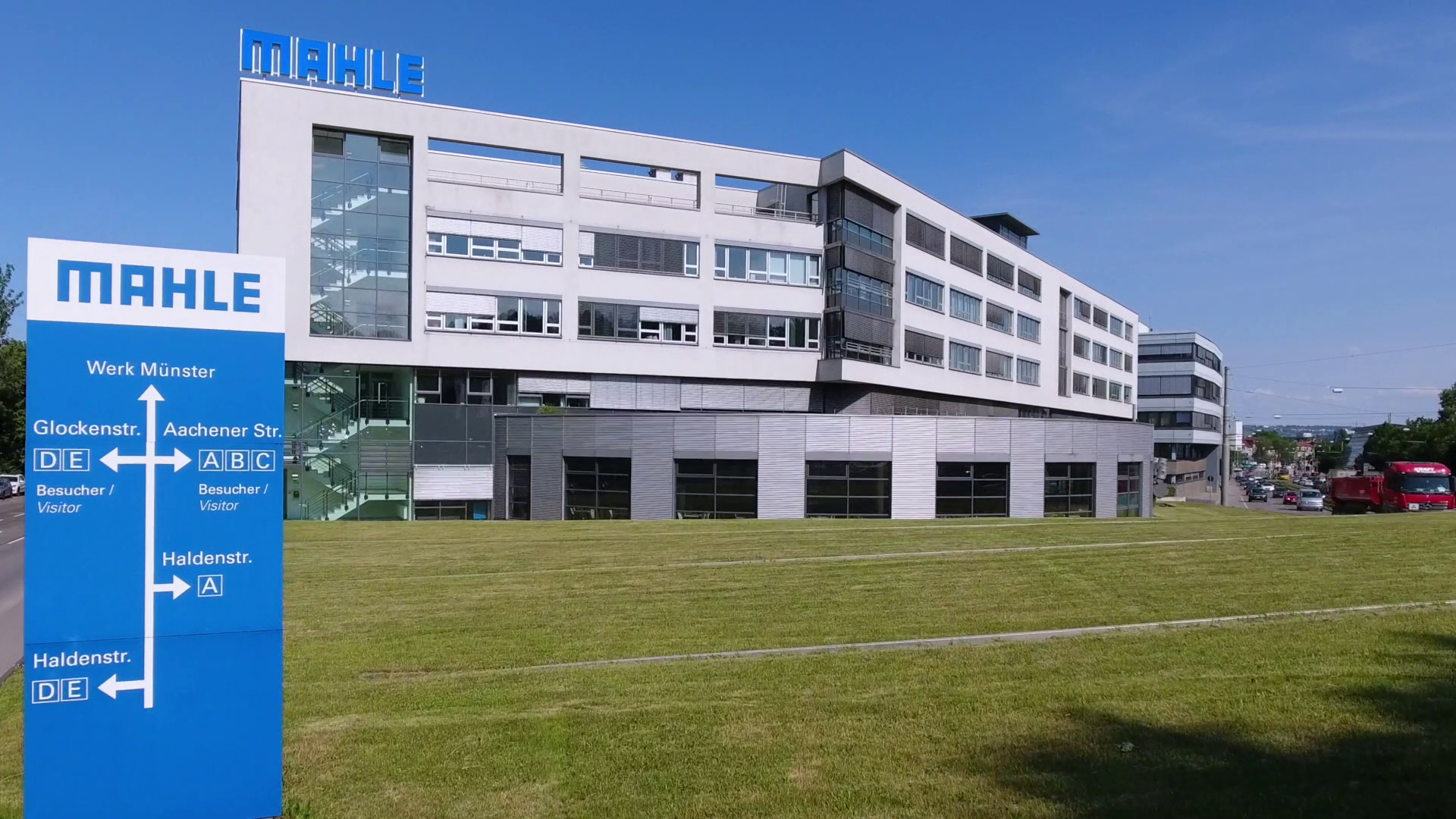
MAHLE GmbH is a German automotive parts manufacturer based in Stuttgart, Germany. It is one of the largest automotive suppliers worldwide. As a manufacturer of components and systems for the combustion engine and its periphery, the company is one of the three largest systems suppliers worldwide for engine systems, filtration, electrics, mechatronics, and thermal management. In 2018, Mahle's sales amounted to over €12.5 billion.
As of 2022[update], its approximately 72,000 employees work in 152 production plants and 12 major research and development centers in Germany, Great Britain, the United States, Brazil, Japan, China, India, Poland, Romania, Spain, and Slovenia. Worldwide, over 6000 development engineers and technicians work as partners for Mahle's customers on new products and systems.
In 1920, engineer and pilot Hellmuth Hirth established a small workshop in Bad Cannstatt with others, where he developed and constructed a two-stroke engine. 26-year-old Hermann Mahle started working for Hirth on 1 December 1920 as his seventh employee. The workshop was then called Versuchsbau Hellmuth Hirth. 1 December 1920 is acknowledged as the birth date of today's Mahle Group.
It soon became clear that the workshop would not survive by only conducting engine tests, so the need arose to build a profitable line of production in order to finance ongoing engine tests. At that time, pistons in automotive engines were generally made of cast iron, but Versuchsbau Hellmuth Hirth experimented with light alloy pistons.
On 1 November 1922, Hermann's brother Ernst joined the factory as head of engineering. In 1924, the company merged with Chemische Fabrik Griesheim-Elektron, the inventors of the magnesium alloy Elektron, and was renamed Elektronmetall GmbH.
In 1927, the company developed Germany's first controlled-expansion piston, and in 1931, the world's first aluminium ring carrier piston for diesel engines. Following this, piston technology was steadily improved. In 1931, aero engine manufacturing was split off as a separate company, Hirth Motoren GmbH.
In 1938, Elektronmetall became Mahle KG, and a new company logo was introduced. The company expanded, and before World War II was the only company in Germany manufacturing die-cast magnesium alloy products. During the war, the company's Bad Cannstatt factory made alloy pistons ranging from those for small cars to pistons with a 40 cm (15.7 in) bore for submarine engines (such as the 522 L (31,854 cu in) diesel MAN M9V 40/46). The Fellbach plant accounted for 70% of Germany's output of magnesium, aluminium and zinc alloy pressure die castings. After 1945, new products were developed and produced (such as aluminium cylinders with Cromal surface coatings in 1951).
In 1964, Hermann and Ernst Mahle decided to waive private ownership in their company and make it part of a foundation for public benefit. They transferred the company shares to the Mahle Foundation.
Mahle GmbH
MAHLE GmbH is a German automotive parts manufacturer based in Stuttgart, Germany. It is one of the largest automotive suppliers worldwide. As a manufacturer of components and systems for the combustion engine and its periphery, the company is one of the three largest systems suppliers worldwide for engine systems, filtration, electrics, mechatronics, and thermal management. In 2018, Mahle's sales amounted to over €12.5 billion.
As of 2022[update], its approximately 72,000 employees work in 152 production plants and 12 major research and development centers in Germany, Great Britain, the United States, Brazil, Japan, China, India, Poland, Romania, Spain, and Slovenia. Worldwide, over 6000 development engineers and technicians work as partners for Mahle's customers on new products and systems.
In 1920, engineer and pilot Hellmuth Hirth established a small workshop in Bad Cannstatt with others, where he developed and constructed a two-stroke engine. 26-year-old Hermann Mahle started working for Hirth on 1 December 1920 as his seventh employee. The workshop was then called Versuchsbau Hellmuth Hirth. 1 December 1920 is acknowledged as the birth date of today's Mahle Group.
It soon became clear that the workshop would not survive by only conducting engine tests, so the need arose to build a profitable line of production in order to finance ongoing engine tests. At that time, pistons in automotive engines were generally made of cast iron, but Versuchsbau Hellmuth Hirth experimented with light alloy pistons.
On 1 November 1922, Hermann's brother Ernst joined the factory as head of engineering. In 1924, the company merged with Chemische Fabrik Griesheim-Elektron, the inventors of the magnesium alloy Elektron, and was renamed Elektronmetall GmbH.
In 1927, the company developed Germany's first controlled-expansion piston, and in 1931, the world's first aluminium ring carrier piston for diesel engines. Following this, piston technology was steadily improved. In 1931, aero engine manufacturing was split off as a separate company, Hirth Motoren GmbH.
In 1938, Elektronmetall became Mahle KG, and a new company logo was introduced. The company expanded, and before World War II was the only company in Germany manufacturing die-cast magnesium alloy products. During the war, the company's Bad Cannstatt factory made alloy pistons ranging from those for small cars to pistons with a 40 cm (15.7 in) bore for submarine engines (such as the 522 L (31,854 cu in) diesel MAN M9V 40/46). The Fellbach plant accounted for 70% of Germany's output of magnesium, aluminium and zinc alloy pressure die castings. After 1945, new products were developed and produced (such as aluminium cylinders with Cromal surface coatings in 1951).
In 1964, Hermann and Ernst Mahle decided to waive private ownership in their company and make it part of a foundation for public benefit. They transferred the company shares to the Mahle Foundation.
Recent media
Recent media