Hubbry Logo
Mahle GmbHMahle GmbHMain
Open search
Mahle GmbH
Community hub
Mahle GmbH
logo
8 pages, 0 posts
0 subscribers
Be the first to start a discussion here.
Mahle GmbH
Mahle GmbH
from Wikipedia

MAHLE GmbH is a German automotive parts manufacturer based in Stuttgart, Germany. It is one of the largest automotive suppliers worldwide.[2] As a manufacturer of components and systems for the combustion engine and its periphery, the company is one of the three largest systems suppliers worldwide for engine systems, filtration, electrics, mechatronics, and thermal management.[3] In 2018, Mahle's sales amounted to over €12.5 billion.[1]

Key Information

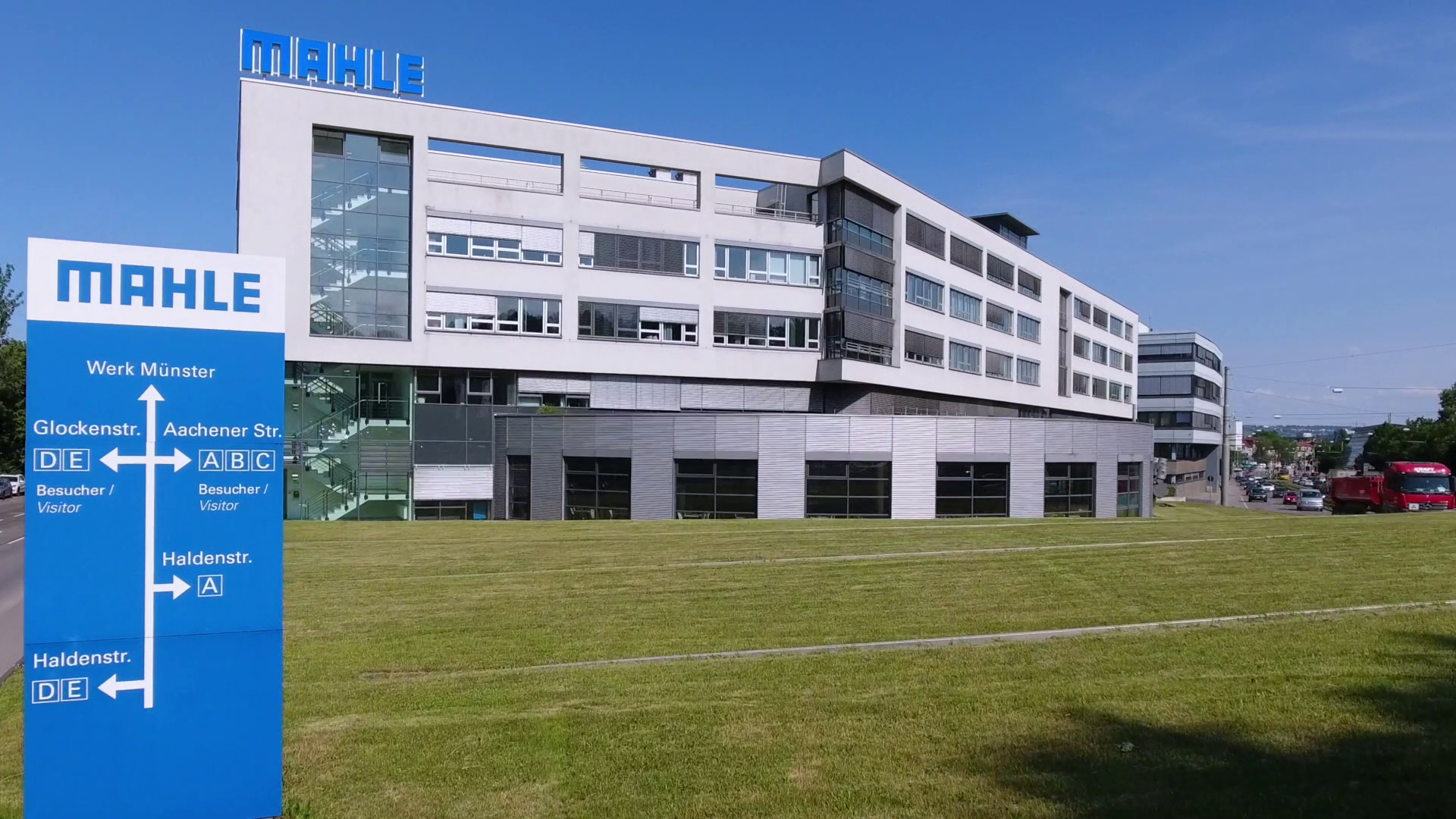
Mahle headquarters in Bad Cannstatt

As of 2022, its approximately 72,000 employees work in 152 production plants and 12 major research and development centers in Germany, Great Britain, the United States, Brazil, Japan, China, India, Poland, Romania, Spain, and Slovenia. Worldwide, over 6000 development engineers and technicians work as partners for Mahle's customers on new products and systems.[1]

History

[edit]

Formation

[edit]

In 1920, engineer and pilot Hellmuth Hirth established a small workshop in Bad Cannstatt with others, where he developed and constructed a two-stroke engine.[4] 26-year-old Hermann Mahle started working for Hirth on 1 December 1920 as his seventh employee. The workshop was then called Versuchsbau Hellmuth Hirth.[a] 1 December 1920 is acknowledged as the birth date of today's Mahle Group.

It soon became clear that the workshop would not survive by only conducting engine tests, so the need arose to build a profitable line of production in order to finance ongoing engine tests. At that time, pistons in automotive engines were generally made of cast iron, but Versuchsbau Hellmuth Hirth experimented with light alloy pistons.

On 1 November 1922, Hermann's brother Ernst joined the factory as head of engineering. In 1924, the company merged with Chemische Fabrik Griesheim-Elektron, the inventors of the magnesium alloy Elektron,[5] and was renamed Elektronmetall GmbH.[6]

In 1927, the company developed Germany's first controlled-expansion piston, and in 1931, the world's first aluminium ring carrier piston for diesel engines. Following this, piston technology was steadily improved. In 1931, aero engine manufacturing was split off as a separate company, Hirth Motoren GmbH.[7]

In 1938, Elektronmetall became Mahle KG, and a new company logo was introduced. The company expanded, and before World War II was the only company in Germany manufacturing die-cast magnesium alloy products.[8] During the war, the company's Bad Cannstatt factory made alloy pistons ranging from those for small cars to pistons with a 40 cm (15.7 in) bore for submarine engines (such as the 522 L (31,854 cu in) diesel MAN M9V 40/46). The Fellbach plant accounted for 70% of Germany's output of magnesium, aluminium and zinc alloy pressure die castings.[9] After 1945, new products were developed and produced (such as aluminium cylinders with Cromal surface coatings in 1951).

In 1964, Hermann and Ernst Mahle decided to waive private ownership in their company and make it part of a foundation for public benefit. They transferred the company shares to the Mahle Foundation.

In 1976, Mahle made the first series-production aluminium engine blocks in Europe using low-pressure die casting. In 1988, their composite camshaft was enhanced to production standards, and in 2001, they developed a cooling system for diesel engine pistons in high-speed passenger cars. The first all-plastic oil filter in the world followed in 2003. Mahle developed and constructed its first complete engine in the same year, which was used in Formula Student.

Mahle has become a predominant system supplier for components of piston systems, cylinder components, valvetrain systems, air management systems, and liquid management systems. The Mahle Group generated sales in excess of €5.2 billion in 2010, and in excess of €12.8 billion in 2017.

Organization

[edit]

As of 2022, Mahle GmbH consists of five business units and four profit centers.

The five business units are:[10]

  • Engine Systems and Components: Produces pistons, cylinders, and related parts.
  • Filtration and Engine Peripherals: Produces filters, oil coolers and pumps.
  • Thermal Management: Produces cooling systems for batteries and powertrain components of electric cars.
  • Electronics and Mechatronics: Produces electric drives, actuators and auxiliaries, and control and power electronics products.
  • Aftermarket: As its name suggests, produces spare parts and accessories for the automotive aftermarket.

Executives

[edit]

The Mahle Management Board consists of the following members:[11]

  • Arnd Franz (since 2022)
  • Jumana Al-Sibai (since 2021)
  • Georg Dietz (since 2018)
  • Markus Kapaun (since 2022)

See also

[edit]

Notes

[edit]

References

[edit]
Revisions and contributorsEdit on WikipediaRead on Wikipedia
from Grokipedia
Mahle GmbH is a German multinational automotive supplier headquartered in , specializing in the development, manufacturing, and supply of components and systems for internal combustion engines, electric drives, thermal management, , and engine peripherals. Founded in 1920 by Hermann Mahle as part of Versuchsbau Hellmuth Hirth, the company has grown into one of the world's largest automotive parts manufacturers, with a focus on advancing mobility solutions for both traditional and electrified vehicles. In 2024, Mahle GmbH reported sales of €11.7 billion and a global workforce of approximately 67,700 employees across 135 production sites and 11 research centers in around 30 countries. The company operates through three key business units: and Charging, and Fluid Systems, and Lifecycle and Mobility, serving major original equipment manufacturers (OEMs) in the passenger car, , and industrial sectors. Its product portfolio encompasses pistons, valves, air management systems, cooling modules, filters, and innovative technologies for e-mobility, such as electric compressors and battery cooling systems. Mahle is committed to sustainable mobility, investing heavily in and reducing emissions, with strategic initiatives like the development of high-voltage charging solutions and thermal management for electric vehicles. In 2025, the company restructured its operations, consolidating into three business units to accelerate its transition to and climate-neutral mobility. As a privately held entity controlled by the Mahle Foundation, it emphasizes long-term innovation and corporate responsibility, including social projects through its foundation established in 1964. The company's global footprint supports its role as a pioneer in the transition to climate-neutral transportation, partnering with automakers to integrate advanced systems for efficient and vehicles.

History

Founding and early development

Mahle GmbH originated on December 1, 1920, in , , when Hermann Mahle, a businessman, joined the workshop Versuchsbau Hellmuth Hirth, founded by engineer and aviator Hellmuth Hirth. The venture initially focused on developing and producing light alloy pistons for aircraft engines, capitalizing on the post-World War I demand for advanced aviation components. With an initial workforce of fewer than 10 employees, the company laid the groundwork for its expertise in precision . In 1922, Hermann's brother, Ernst Mahle, a graduate engineer from the Technical University of Stuttgart, joined as the technical director, strengthening the firm's engineering capabilities. By 1924, the company underwent a significant transformation through a merger with Chemische Fabrik Griesheim-Elektron, pioneers in the Elektron magnesium alloy, leading to its renaming as Elektronmetall GmbH. This partnership shifted the business emphasis from aviation to automotive pistons, with light-alloy components increasingly applied in motorsports and series production vehicles; employee numbers had grown to around 50 by this period. Hermann Mahle was appointed commercial director in 1926, and Ernst took on the technical director role in 1927, guiding the firm's expansion. The Mahle brothers acquired equal shares in the company by 1932, becoming sole shareholders in 1933 amid the growing automotive sector. In 1938, they renamed it Mahle KG, underscoring their personal leadership and the firm's dedication to aluminum pistons for passenger cars, while introducing the enduring Mahle logo. The initial capital at founding stood at 100,000 Reichsmarks, reflecting modest beginnings that evolved into a robust operation. To safeguard the company's independence and align it with long-term societal goals, Hermann and Ernst Mahle transferred ownership to the non-profit Mahle Foundation in 1964. The foundation acquired 99.9% of the shares, ensuring strategic autonomy without private profit motives. By then, Mahle KG had expanded to 5,500 employees and generated annual sales of DM 200 million, solidifying its position as a key player in engine components.

Expansion and key innovations

Following , Mahle GmbH focused on rebuilding its operations amid the economic challenges in , resuming production of light-alloy pistons and expanding into new product lines during the 1950s. By 1948, the company introduced its first AUTOTHERMIK® pistons, designed for improved management in engines, marking a key step in recovery. In 1949, Mahle developed the first aluminum cylinder featuring a chrome-plated working surface under the CROMAL® , enhancing durability and performance for automotive applications. Series production of the AUTOTHERMATIK® piston began in 1955, incorporating advanced compositions to achieve better stability by compensating for differential expansion between the piston and cylinder materials through integrated insert strips. Mahle's key innovations in piston technology laid the foundation for its growth, with early breakthroughs including the development of Germany's first controlled-expansion in 1927. This utilized a special with embedded or iron strips to regulate , ensuring tight fits in cylinders across varying operating temperatures and reducing . In 1931, Mahle pioneered the world's first for diesel engines, where the ring carrier—a insert guiding the top rings—was integrated by the around it, allowing the material to shrink and lock securely during solidification for superior heat resistance and sealing. Later advancements included the three-piece oil control ring introduced in 1969, which featured two thin rails and an expander for low-friction oil scraping, minimizing oil consumption in high-speed engines. By 2003, Mahle launched the world's first all-plastic oil filter module, replacing metal housings with durable materials to reduce weight by up to 40% while maintaining filtration efficiency and enabling easier . International expansion accelerated in the mid-, with Mahle establishing its first production facility through MAHLE Cylinders Inc. in , in 1975, focusing on cylinder manufacturing to serve North American automakers. Entry into Asian markets began in the late , with the acquisition of Chongqing Changjiang Izumi Industries in in 2003, which bolstered local production and supported growing demand from regional manufacturers. These moves complemented earlier diversification into via the 1972 acquisition of a majority stake in Knecht Filterwerke in , enabling entry into air and oil products by the , and thermal management through the 1986 acquisitions of Técafiltres and Soparis in . By 1990, these efforts contributed to significant growth, with sales reaching DM 2 billion (approximately €1 billion) and the workforce expanding to 15,000 employees worldwide. A pivotal expansion occurred in 2013 when Mahle increased its stake in the Behr Group to 50.71%, acquiring majority control to integrate Behr's expertise in thermal systems such as radiators, condensers, and climate control modules. This acquisition, valued at several hundred million euros, allowed Mahle to consolidate its thermal management portfolio under a unified business unit, generating synergies through shared R&D facilities and supply chains that reduced development costs by optimizing component integration for engine cooling and cabin air systems. The integration was completed by late 2013, boosting Mahle's overall sales by €956.7 million from the Behr operations starting in October and positioning the company as a leader in holistic vehicle thermal solutions.

Recent milestones and restructuring

In the late 2010s, Mahle GmbH intensified its focus on to align with the automotive industry's shift toward electric vehicles. In 2018, the company launched development of high-voltage traction motors for electric vehicles and 48-volt drive motors for hybrid applications, marking a significant entry into electric drive systems. By 2020, Mahle invested in advanced battery cooling technologies, including immersive cooling systems to enable faster charging and improved battery performance. Mahle's financial performance during this period reflected both resilience and adaptation to market changes. The company achieved revenue of €12.4 billion in 2022, underscoring its scale amid ongoing transitions. In 2024, despite headwinds, Mahle secured €10.3 billion in new orders across electrification, thermal management, and sustainable combustion technologies. Research and development spending reached €630 million that year, representing approximately 5.4% of sales and supporting innovations in e-mobility. Key strategic events in late 2024 and 2025 highlighted Mahle's proactive restructuring. In December 2024, the company announced advancements to its MAHLE 2030+ strategy, emphasizing efficiency in and thermal management to accelerate transformation. This was followed in January 2025 by the sale of its U.S. engineering services business, MAHLE LLC, to the Dumarey Group, allowing Mahle to streamline non-core operations. In July 2025, Mahle completed a of €300 million in senior notes due 2032, bolstering its financial flexibility for future investments. Organizational changes effective January 2025 further consolidated Mahle's structure to enhance agility. The company merged its five existing business units into three focused entities: and Charging, Thermal Systems, and Aftermarket, integrating related production and development activities for greater efficiency. Concurrently, Mahle fully acquired the remaining 25% minority stake in MAHLE Behr & Co. KG, its thermal management subsidiary, to strengthen control over key electrification components. These developments occurred against a backdrop of market challenges in 2024, including disruptions and the accelerating decline in demand for combustion engine components. The shift toward strained traditional segments, contributing to a decline, yet Mahle's strategic pivots enabled a positive net profit of €22 million for the year.

Business activities

Core product lines

Mahle GmbH's core product lines encompass a range of components and systems essential for automotive powertrains and vehicle efficiency, spanning traditional internal engines, hybrids, and electric . These products are designed to meet the demands of original equipment manufacturers (OEMs) and aftermarket needs, with applications in passenger cars, commercial , and industrial sectors. The company's offerings emphasize durability, emission reduction, and integration with like . In engine systems and components, Mahle produces pistons, piston rings, cylinder liners, and bearings tailored for high-performance and standard applications. Pistons feature controlled-expansion designs using insert strips to manage , enabling tighter fitting clearances in gray crankcases, which reduces engine noise, wear, emissions, and improves oil control. These components are engineered for , diesel, and hydrogen-compatible engines, supporting clean combustion and . For instance, forged pistons and valve trains are supplied for both and environments. Filtration solutions from Mahle include oil, fuel, air, and cabin air filters designed to capture contaminants and enhance engine longevity. Oil filter modules, often flanged directly to the engine block, provide filtering and cooling for gasoline and diesel engines, while cabin air filters employ multi-layer media to block particles such as dust, pollen, smog, and soot. Fuel filters incorporate water separation systems to prevent damage from contaminants, and the CleanLine prefilter family targets fine particulates in intake air. These filters protect against premature wear of components like valves, cylinders, and bearings. Thermal management products focus on efficient heat dissipation and climate control, critical for vehicle performance and passenger comfort. Cooling modules, including radiators and charge air coolers, maintain optimal and component temperatures, while battery thermal management systems for electric vehicles (EVs) feature cooling plates and to enable faster charging and extend battery life. Innovations like integrated thermal management modules combine heat exchangers, pumps, chillers, and valves, reducing electric compressor power consumption by up to 15% in battery electric vehicles (BEVs) and improving range by up to 20% when paired with heat pumps. Electric fans and e-compressors ensure quiet, efficient operation during charging. Electronics and mechatronics offerings integrate sensors, actuators, and electric drives to enable precise control in powertrains. Sensors and thermal switches monitor temperatures and fluid levels, while electric actuators, such as wastegates and transmission locks, optimize combustion, reduce emissions, and support hybrid and EV functions. Electric drives include 48V mild hybrid systems, high-voltage inverters, and compact motors like the SCT series for e-scooters and industrial uses, providing full-range electrification solutions. Control units and battery electronics manage power distribution, enhancing overall vehicle efficiency. The aftermarket parts division supplies replacement components mirroring OEM quality, including filters, , piston rings, bearings, valves, cylinders, and elements for passenger and commercial vehicles. These parts, such as the CLASSIC LINE range for vintage applications, ensure reliable maintenance and performance restoration. Mahle's products apply across combustion, hybrid, and electric powertrains, serving major OEMs like and for passenger cars, as well as truck manufacturers for commercial applications. This broad coverage supports global mobility transitions toward lower emissions and electrification.

Research and development focus

Mahle maintains a robust (R&D) infrastructure comprising 11 major technology centers staffed by over 6,000 development engineers and technicians, as of 2025. These facilities support advanced testing and innovation across key locations, including the in , , for core engineering and capabilities; , , focused on development; and , , dedicated to e-mobility and regional market needs. The company's strategic R&D priorities emphasize sustainable mobility, with a strong focus on , , and materials to reduce emissions. In electrification, Mahle develops components such as silicon carbide-based for electric vehicles, enabling high-efficiency systems that support extended range and compact designs. Hydrogen efforts include test benches for applications and integrated systems for commercial vehicles, while solutions like camshaft modules contribute to lower vehicle weight and CO2 emissions. Mahle's innovation is evidenced by its active patent portfolio and extensive collaborations. In 2024 alone, the company filed 427 new patent applications and registered 536 new inventions, underscoring its commitment to technological leadership. Partnerships with academic institutions, such as for research, and OEMs, including a with Cellcentric (a of and ) on components, enhance these efforts. Investment in R&D remains a cornerstone, with Mahle allocating €630 million in 2024, equivalent to 5.4% of its sales revenue. This funding supports advanced simulation tools, including digital twins and AI-driven modeling, to optimize development processes and accelerate in sustainable technologies. is integral to Mahle's R&D agenda, targeting a 28% reduction in Scope 3 emissions by 2030 and full climate neutrality in production by 2040. In 2024, compared to 2019 baseline, Mahle achieved a 47% reduction in Scope 1 and 2 emissions and a 17% reduction in Scope 3 emissions, advancing toward its targets. In October 2025, the company received the in Sustainability Award from . Key initiatives include the development of recyclable components and low-global-warming-potential (low-GWP) refrigerants, such as HFO-1234yf, for thermal management systems in vehicles.

Organization and leadership

Executive board

The executive board of Mahle GmbH, known as the Management Board, consists of four members as of January 1, 2025, following a that reduced the board from seven to four to streamline operations and focus on and thermal management. Arnd Franz serves as Chairman of the Management Board and CEO since November 1, 2022, and assumed the additional role of Chief Labor Officer in 2025 as part of the organizational changes. His responsibilities include and application, the Lifecycle and Mobility business unit, , corporate purchasing, planning, communications, and external affairs. Franz brings extensive experience, having previously worked at Mahle for 18 years in various leadership roles before joining as COO of LKQ Europe in 2019 and CEO in October of that year. Markus Kapaun has been since November 1, 2022, overseeing finance, controlling, taxes, corporate legal and insurance, , and corporate IT. He has spent nearly his entire career at Mahle, joining in 2003 after earning a degree in , and most recently served as of Finance & . Kapaun leads the company's financial strategy, including ongoing efforts to secure funding through debt issuance programs amid market challenges. Jumana Al-Sibai heads the Thermal and Fluid Systems business unit since April 2021, with expertise in automotive strategy, marketing, sales, and product management developed during her 17-year tenure at GmbH, where she focused on systems such as sensors, engines, and components. She holds a degree in from and . Georg Dietz has been responsible for the and Charging business unit since February 2018, leading initiatives in while also managing corporate quality, , health, safety, environment, , production systems, and . Dietz joined Mahle in 1989 after earning a degree in with a specialization in from , advancing through roles in operations, foundry management, and vice presidencies in engine systems across and . The 2025 restructuring added a dedicated labor relations focus under the CEO to enhance employee engagement during the company's transformation, with the board's average tenure standing at approximately four years and featuring 25% female representation among its members.

Supervisory board and ownership

Mahle GmbH has been 99.9% owned by the non-profit MAHLE Foundation since 1964, when brothers Hermann and Ernst Mahle transferred their shares to the foundation to promote long-term social and economic benefits. This ownership model prioritizes and innovation over short-term profit maximization, aligning with the foundation's charitable objectives in education, research, and social welfare. As a German , Mahle operates under a system, featuring a management board for day-to-day operations and a (Aufsichtsrat) for oversight. The , which consists of 20 members including employee representatives as mandated by German co-determination laws, is responsible for approving corporate , ensuring , appointing and monitoring the management board, and supervising initiatives. It convenes regularly to review annual reports and guide long-term . As of 2025, key leadership changes include the election of Dr. Michael Macht, a former member of AG's executive board and AG's group board, as the new supervisory board chairman, effective January 1, 2026. He succeeds Prof. Dr.-Ing. Heinz K. Junker, who has chaired the board for ten years and will retire at the end of 2025 after also serving as head of the foundation's ownership representation. In recent actions, the approved the streamlining of Mahle's group structure through 2025 business unit mergers, aimed at enhancing efficiency amid the automotive industry's transformation toward . Additionally, it endorsed the sale of Mahle's U.S. services business, Mahle Powertrain LLC, to the Belgium-based Dumarey Group, completed in early 2025 to focus resources on core competencies.

Global presence

Manufacturing and R&D facilities

Mahle GmbH operates 135 production plants and 11 technology centers (R&D facilities) worldwide as of August 2025, supporting its global for automotive components. The company's headquarters in , , serves as the primary hub for both manufacturing and , housing advanced facilities for engine components and thermal management systems. In , Mahle's operations are concentrated in , with additional key sites in countries like and the , focusing on specialized production for systems and filtration technologies. The headquarters integrates R&D with nearby production, enabling and testing for components. Outside , facilities in , , support development and assembly. Asia hosts a significant portion of Mahle's manufacturing footprint, with approximately 20 production sites across , including major plants in and dedicated to production and components. In , the Chakan facility near specializes in thermal management systems, serving the automotive market. Japan's operations, including sites in and Gotemba, emphasize and electric drive systems through MAHLE Electric Drives . In the Americas, Mahle maintains robust production capabilities tailored to regional demands. features multiple plants, such as those in Mogi Guaçu and , which handle and manufacturing for South American markets. These Brazilian operations are conducted through the subsidiary MAHLE Metal Leve S.A., which came under MAHLE GmbH control in 1996 and is publicly traded on the B3 stock exchange under the ticker LEVE3. In the United States, the company operates 15 locations, with the plant undergoing a $10 million expansion announced in August 2025 to boost electric compressor production capacity. Mahle's facilities demonstrate substantial scale, exemplified by its piston production sites in Asia capable of high-volume output to meet global OEM demands. For instance, the Yingkou plant in China contributes to the company's role as a leading supplier of engine pistons. Recent developments include the sale of Mahle's US engineering services business, MAHLE Powertrain LLC, to the Dumarey Group, completed in the first quarter of 2025, allowing focus on core manufacturing and R&D. Concurrently, expansions in the US, such as the Morristown investment, underscore a strategic shift toward electrification components. In October 2025, Mahle announced the permanent closure of its Mt. Sterling facility in Ohio, affecting 141 employees and beginning December 1, 2025. In Europe, Mahle is advancing EV-related production through innovations in thermal management and electric motors, with ongoing investments in sites like Kornwestheim for mechatronics. Mahle's supply chain emphasizes , with a high degree of in-house production for core components like pistons and filters, enabling control over quality and innovation across its .

Workforce and key markets

Mahle GmbH maintains a of approximately 68,000 employees as of mid-2025, reflecting a reduction from 72,373 the previous year due to efficiency measures amid challenging market conditions. Despite these adjustments, the company has avoided major layoffs and anticipates workforce stability in 2025 as part of its strategy to optimize operations in best-cost countries. A significant portion of employees is dedicated to , supporting Mahle's innovation in automotive technologies, with the company filing 427 patent applications in 2024 alone. The company emphasizes diversity and inclusion, particularly in promoting gender balance through initiatives like its Together-Strategie 2025, which focuses on empowering women and fostering equitable workplaces. In , Mahle supports extensive training programs, including apprenticeships that develop skilled talent for its and roles. adhere to Germany's codetermination model, involving employee representatives in , which has helped navigate 2024's economic pressures without widespread job cuts. Mahle's key markets are concentrated in , which generates about 50% of its revenue, primarily from original equipment manufacturers (OEMs) such as the . Asia contributes around 30%, with a strong emphasis on the (EV) sector in , while accounts for approximately 15%, driven by demand in commercial vehicles. The company is also expanding into emerging areas like for trucks, aligning with global and decarbonization trends. Mahle supplies components to nearly all major global manufacturers, covering about 80% of the market, and serves diverse customer segments including passenger cars and commercial vehicles. Its aftermarket business unit supports an extensive network of over 500,000 service points worldwide, ensuring broad of replacement parts and solutions.

References

Add your contribution
Related Hubs
User Avatar
No comments yet.