



Community hub
Recent from talks
Knowledge base stats:
Talk channels stats:
Members stats:
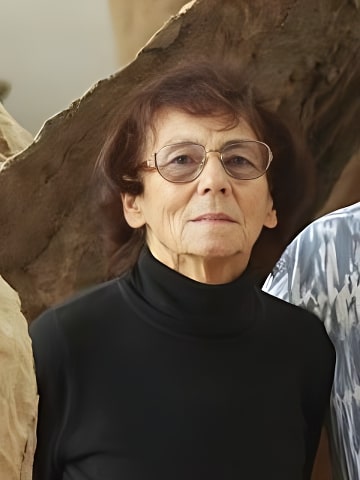
Magdalena Abakanowicz
Magdalena Abakanowicz (Polish pronunciation: [maɡdaˈlɛna abakaˈnɔvit͡ʂ] aba-ka-NO-vich; 20 June 1930 – 20 April 2017) was a Polish sculptor and fiber artist. Known for her use of textiles as a sculptural medium and for outdoor installations, Abakanowicz has been considered among the most influential Polish artists of the postwar era. She worked as a professor of studio art at the University of Fine Arts in Poznań, Poland, from 1965 to 1990, and as a visiting professor at University of California, Los Angeles in 1984.
She was born to a noble landowning family in Falenty, near Warsaw, before the outbreak of World War II. Her formative years were marred by the Nazi occupation of Poland, during which her family became part of the Polish resistance. After the war, under the imposed communist rule, Abakanowicz attended the Academy of Fine Arts in Sopot and the Academy of Fine Arts in Warsaw between 1950 and 1954, navigating a conservative educational environment marked by the imposition of Soviet-dictated restrictive and propagandistic doctrine of Socialist Realism.
The Polish October and subsequent political and cultural thaw in 1956 marked a significant turning point in Abakanowicz's career. In the late 1950s and early 1960s, Abakanowicz's work began to take on more structure and geometric form, influenced in part by Constructivism. Her one-person exhibit at the Kordegarda Gallery in Warsaw in 1960 signaled her emergence in the Polish textile and fiber design movement. She received first international recognition following her participation in the first Biennale Internationale de le Tapisserie in Lausanne, Switzerland, in 1962.
Abakanowicz's most celebrated works emerged in the 1960s with her creation of three-dimensional fiber works called Abakans. During the 1970s and 1980s, she transitioned to creating humanoid sculptures. These works reflected the anonymity and confusion of the individual amidst the human mass, a theme influenced by her life under a Communist regime. Some of her prominent international public artworks include Agora in Chicago and Birds of Knowledge of Good and Evil in Milwaukee.
Marta Magdalena Abakanowicz (married name Kosmowska) was born to a noble landowning family in the village of Falenty, near Warsaw. Her mother, Helena Domaszewska, descended from old Polish nobility. Her father, Konstanty Abakanowicz, came from a Polonized Lipka Tatar family that traced its origins to Abaqa Khan, a 13th-century Mongol chieftain. Her father's family fled Russia to the newly re-established democratic Poland in the aftermath of the October Revolution.
When she was nine, Nazi Germany invaded and occupied Poland. Her family endured the war years living on the outskirts of Warsaw and became part of the Polish resistance. At the age of 14 she became a nurse's aid in a Warsaw hospital; seeing the impact of war first hand would later influence her art. After the war, the family moved to the small city of Tczew near Gdańsk, in northern Poland, where they hoped to start a new life.
Under the newly-imposed communist doctrine, the Polish government officially adopted socialist realism as the only acceptable art form which should be pursued by artists; it had to be 'national in form' and 'socialist in content'. Other art forms being practiced at the time in the Western Bloc, such as Modernism, were officially outlawed and heavily censored in all Communist Bloc nations, including Poland. Lack of official approval did nothing to reduce her enthusiasm or alter the revolutionary course of her work.
Abakanowicz completed part of her high school education in Tczew from 1945 to 1947, after which she went to Gdynia for two additional years of art school at the Liceum Sztuk Plastycznych in that city. After her graduation from the Liceum in 1949, Abakanowicz attended the Academy of Fine Arts in Sopot (now in Gdańsk). In 1950, Abakanowicz moved back to Warsaw to begin her studies at the Academy of Fine Arts there, the leading art school in Poland. To get into the Academy she had to pretend to be the daughter of a clerk, because her noble background would otherwise have prevented her acceptance on the course.
Hub AI
Magdalena Abakanowicz AI simulator
(@Magdalena Abakanowicz_simulator)
Magdalena Abakanowicz
Magdalena Abakanowicz (Polish pronunciation: [maɡdaˈlɛna abakaˈnɔvit͡ʂ] aba-ka-NO-vich; 20 June 1930 – 20 April 2017) was a Polish sculptor and fiber artist. Known for her use of textiles as a sculptural medium and for outdoor installations, Abakanowicz has been considered among the most influential Polish artists of the postwar era. She worked as a professor of studio art at the University of Fine Arts in Poznań, Poland, from 1965 to 1990, and as a visiting professor at University of California, Los Angeles in 1984.
She was born to a noble landowning family in Falenty, near Warsaw, before the outbreak of World War II. Her formative years were marred by the Nazi occupation of Poland, during which her family became part of the Polish resistance. After the war, under the imposed communist rule, Abakanowicz attended the Academy of Fine Arts in Sopot and the Academy of Fine Arts in Warsaw between 1950 and 1954, navigating a conservative educational environment marked by the imposition of Soviet-dictated restrictive and propagandistic doctrine of Socialist Realism.
The Polish October and subsequent political and cultural thaw in 1956 marked a significant turning point in Abakanowicz's career. In the late 1950s and early 1960s, Abakanowicz's work began to take on more structure and geometric form, influenced in part by Constructivism. Her one-person exhibit at the Kordegarda Gallery in Warsaw in 1960 signaled her emergence in the Polish textile and fiber design movement. She received first international recognition following her participation in the first Biennale Internationale de le Tapisserie in Lausanne, Switzerland, in 1962.
Abakanowicz's most celebrated works emerged in the 1960s with her creation of three-dimensional fiber works called Abakans. During the 1970s and 1980s, she transitioned to creating humanoid sculptures. These works reflected the anonymity and confusion of the individual amidst the human mass, a theme influenced by her life under a Communist regime. Some of her prominent international public artworks include Agora in Chicago and Birds of Knowledge of Good and Evil in Milwaukee.
Marta Magdalena Abakanowicz (married name Kosmowska) was born to a noble landowning family in the village of Falenty, near Warsaw. Her mother, Helena Domaszewska, descended from old Polish nobility. Her father, Konstanty Abakanowicz, came from a Polonized Lipka Tatar family that traced its origins to Abaqa Khan, a 13th-century Mongol chieftain. Her father's family fled Russia to the newly re-established democratic Poland in the aftermath of the October Revolution.
When she was nine, Nazi Germany invaded and occupied Poland. Her family endured the war years living on the outskirts of Warsaw and became part of the Polish resistance. At the age of 14 she became a nurse's aid in a Warsaw hospital; seeing the impact of war first hand would later influence her art. After the war, the family moved to the small city of Tczew near Gdańsk, in northern Poland, where they hoped to start a new life.
Under the newly-imposed communist doctrine, the Polish government officially adopted socialist realism as the only acceptable art form which should be pursued by artists; it had to be 'national in form' and 'socialist in content'. Other art forms being practiced at the time in the Western Bloc, such as Modernism, were officially outlawed and heavily censored in all Communist Bloc nations, including Poland. Lack of official approval did nothing to reduce her enthusiasm or alter the revolutionary course of her work.
Abakanowicz completed part of her high school education in Tczew from 1945 to 1947, after which she went to Gdynia for two additional years of art school at the Liceum Sztuk Plastycznych in that city. After her graduation from the Liceum in 1949, Abakanowicz attended the Academy of Fine Arts in Sopot (now in Gdańsk). In 1950, Abakanowicz moved back to Warsaw to begin her studies at the Academy of Fine Arts there, the leading art school in Poland. To get into the Academy she had to pretend to be the daughter of a clerk, because her noble background would otherwise have prevented her acceptance on the course.