


Community hub
Recent from talks
Contribute something
Nothing was collected or created yet.
SPAD S.VII
View on Wikipedia | This article needs additional citations for verification. (August 2008) |
The SPAD S.VII C.1 was the first in a series of single-seat biplane fighter aircraft produced by Société Pour L'Aviation et ses Dérivés (SPAD) during the First World War. Like its successors, the S.VII was renowned as a sturdy and rugged aircraft with good diving characteristics. It was also a stable gun platform, although pilots used to the more manoeuvrable Nieuport fighters found it heavy on the controls. It was flown by a number of famous aces, such as France's Georges Guynemer, Italy's Francesco Baracca and Australia's Alexander Pentland.
Key Information


Design and development
[edit]Origins
[edit]In February 1915, Swiss designer Marc Birkigt had created an overhead cam aviation powerplant based on his Hispano-Suiza V8 automobile engine, resulting in a 150-kilogram (330 lb) engine capable of producing 100 kW (140 hp) at 1,400 rpm. Further refinement brought the power to 110 kW (150 hp) by July 1915. Given the engine's potential, French officials ordered called upon aircraft designers to create a new high-performance fighter around the engine, called the Hispano-Suiza 8A, with production to begin as soon as possible.
Louis Béchereau, chief designer of the SPAD company, quickly produced a prototype fighter with the new engine. The SPAD V was a version of the SPAD S.A two-seat "pulpit fighter", which dispensed with the so-called "pulpit" which carried the observer in front of the propeller.
Design
[edit]
.jpg)
One of many many common design features between the new SPAD V and the S.A.2 was the use of a single-bay biplane wing with additional struts mounted mid-bay at the point of junction of the flying and landing wires. This design simplified rigging and reduced drag. The fuselage was of the standard construction for the time, consisting of a wooden frame covered with fabric, while the forward part was covered with metal sheeting. A .303 (7.7mm) Vickers machine gun was installed above the engine, synchronized to fire through the propeller arc. The prototype was also fitted with a large spinner, to be abandoned later. Another common design feature of both the "pulpit fighters" and the S.VII – also shared with the S.XIII – was the pushrod aileron control linkage, which used a pair of exposed, 90° bellcranks protruding from the lower wing panels to operate vertical pushrods, going up to forward-projecting aileron control horns.
SPAD test pilot Bequet flew the SPAD V for the first time in April 1916.[2] Flight testing revealed excellent maximum speed (192 km/h (119 mph) and climb rate of 4.5 min to 2,000 m (6,560 ft)). The airframe's sound construction also enabled a good diving performance. In comparison, the Nieuport 17 sesquiplane fighters that equipped a large part of the fighter units couldn't dive as fast because of their lower weight, but could outclimb the SPADs by a wide margin. The high diving speed promised to give lower-skilled Allied pilots the initiative to engage or leave combat against heavier German fighters. If the new fighter was a rugged and stable shooting platform, many pilots regretted its lack of manoeuvrability.
An initial production contract was made on 10 May 1916, calling for 268 machines, to be designated SPAD VII C.1 (C.1, from avion de chasse in French, indicating the aircraft was a fighter, while the 1 indicated it was a single seater).[2]
Early production aircraft suffered from numerous defects which took time to resolve and limited deliveries. While a few SPADs arrived at frontline units as early as August 1916, large numbers only began to appear in the first months of 1917. In hot weather, the engine overheated and in cold weather, the engine would not warm up. Field modifications attempted to counter the problem, including cutting extra holes in the metal sheeting to provide more air over the engine. On the production lines, the cowling opening was enlarged and then redesigned with vertical shutters to solve both problems. The engine mount also proved weak, and reinforcements were added.[3] Early production aircraft had two ammunition drums: one for the loaded canvas cartridge belt, and one to hold the empty belt after the rounds had been fired. However, dealing with the fabric belt as it came out of the gun was a significant problem, and was prone to jamming, which was only solved when Prideaux disintegrating ammo links were introduced.
With the initial teething problems solved, several subcontractors began producing the SPAD VII under license. The subcontractors included the firms Grémont, Janoir, Kellner et Fils, de Marçay, Société d'Etudes Aéronautiques, Régy and Sommer. It was not, however, until February 1917 that the last examples from the initial batch of 268 aircraft was delivered.[4] In early 1917, an improved version of the engine developing 130 kW (180 hp), the Hispano-Suiza 8Ab, was made available. This provided the SPAD VII with better performance, the top speed increasing from 192 to 208 km/h (119 to 129 mph). The new engine gradually became the standard powerplant for the SPAD VII and by April 1917, all newly produced aircraft were equipped with it.
Variants and experiments
[edit]Numerous experiments were made to improve performance. A Renault V8 110 kW (150 hp) powerplant was tested but required major redesign and the performance was not worthwhile. A supercharged Hispano-Suiza engine was also tested, but also failed to significantly improve performance. Different wing profiles were tested but were not incorporated in production models. One field modification was applied in Czechoslovakia after the war when the undercarriage struts of one S.VII were faired over.
Early in the development of the S.VII, the British RFC and RNAS showed an interest in the new fighter. An initial order for 30 aircraft was made but production difficulties kept the delivery rate very low, with production not even meeting French requirements. As the RFC was encountering stronger opposition over the Front, production of the S.VII was initiated in the United Kingdom. Blériot & SPAD Aircraft Works and Mann, Egerton & Co. Ltd. were supplied with plans and sample aircraft and to begin production as soon as possible.
The first British-built S.VII was flown and tested in April 1917, and the first aircraft was reported to have performance equal to that of French models. There were however differences between the two. The British were worried about the light armament of the S.VII as most German fighters were now carrying two guns and experiments were made with an extra machine gun on the S.VII. One aircraft was fitted with a Lewis machine gun on the top wing and tested at Martlesham Heath in May 1917, while front line units also made field modifications with Foster mounts commonly associated with the Royal Aircraft Factory S.E.5. The performance penalty was too drastic for the installation to become standard, and most S.VIIs flew with a single Vickers.
Other distinguishing features of the British-built S.VIIs included a gun fairing and a solid cowling access panel. The gun fairing partially covered the gun and extended rearwards, replacing the windshield. This, however, seriously limited pilot vision to the front and, although retained on training aircraft, was removed on aircraft destined for front line units. The bulged engine access panel located under the exhaust pipe on British models was made of a solid sheet of metal, in place of the louvered panel fitted on French production models. Some British SPADs were also fitted with small spinners on the prop hub.
It was soon apparent that British production lines had lower quality standards than their French counterparts, degrading performance and handling. Poor fabric sewing, fragile tailskids and ineffective radiators plagued the British SPADs. Photographic evidence shows that some had the cylinder bank fairings, or even the entire upper engine cowling, cut out to compensate for the malfunctioning radiators. As a result, most British-built S.VIIs were used for training, with front line units equipped with French-built models. After some 220 had been produced, British production of the S.VII was halted in favour of comparable British types that were becoming available.
In a similar fashion, the Dux factory in Moscow produced approximately 100 S.VIIs under licence in 1917, with engines supplied by France. It would appear the engines were often used and/or of lower quality, and that Dux used lower-grade material in building the airframes. This combination of extra weight and weaker powerplants significantly reduced performance.
The total number of aircraft produced is uncertain, with sources varying from 3,825 to some 5,600 SPAD S.VIIs built in France, 220 in the United Kingdom and approximately 100 in Russia. French production numbers may include other SPAD models, and/or S.VIIs produced by other contractors.
The SPAD XII began as an enlarged S.VII, equipped with a 37 mm cannon. It was a distinct type rather than a variant of the S.VII though. the S.VII can be distinguished from both the S.XII and the later and larger S.XIII by having unraked cabane struts, connecting the top wing to the fuselage, as well as differences in armament.
Late models were equipped with 130 kW (170 hp) or 150 kW (200 hp) Hispano-Suiza engines. The upgrade produced a top speed of 212 km/h (132 mph).
Operational history
[edit]France
[edit]
The French Aviation Militaire had been sufficiently impressed by the performance of the SPAD V prototype to order a batch of 268 aircraft on 10 May 1916. However, teething problems soon appeared and it would be several months before the SPAD VII would serve in significant numbers on the front, the last aircraft of the initial batch only being delivered in February 1917.
In spite of these delays, some aircraft were delivered to frontline units as early as August 1916, complementing the Nieuport fighters. By this date, the Nieuport 11 that had ended the infamous "Fokker scourge" episode had been largely replaced by later types such as the Nieuport 17, but these were now being bested by a new generation of German fighters by the second half of 1916 that threatened to give Germany mastery of the skies again. At the same time, the rotary engines that had powered most Allied fighters until then were proving difficult to scale further, while the heavier inline engines were steadily getting more powerful. In this context, it was hoped the new Hispano-Suiza 8-powered SPAD VII would be able to fight the latest German fighters on better terms. The first aircraft delivered to a frontline unit was S.112 flown by Lt Sauvage of N.65, followed by S.113, assigned to Georges Guynemer of N.3. Guynemer was already credited with 15 victories at the time, but it was Armand Pinsard of N.26 who was the first to score an aerial victory on 26 August.

The introduction of the SPAD VII was not enough to change the balance of the air war, but it allowed both pilots and mechanics to familiarise themselves with the new fighter. Many pilots found the SPAD lacked manoeuverability, and some even returned to the nimbler Nieuports. New tactics based on speed were developed to take advantage of the SPAD's power, and to compensate for its lack of manoeuvrability. The aircraft's capacity to dive safely up to 400 km/h (250 mph) permitted the pilot to disengage from combat when the situation demanded it.
With early problems solved and production shared between several manufacturers, the SPAD VII was finally available in large numbers at the front in early 1917. By mid-1917, some 500 were in front-line service, having largely replaced the Nieuport. It gained a reputation for being stronger than its predecessors. Its principal shortcoming was its one machine gun armament at a time when the opposing Albatros D.III fighters were equipped with two. The SPAD VII was gradually replaced by the improved SPAD XIII in frontline units, but remained in use as a trainer aircraft with Aviation Militaire throughout the war, and it remained as the standard pilot certification test aircraft until 1928.
Foreign service
[edit]
Allied air services were also equipped with the new fighter. The Royal Flying Corps was the first foreign service to receive the SPAD VII, although only 19 Squadron and 23 Squadron) used it on the Western Front. Fighter schools in the United Kingdom and 30 Squadron in Mesopotamia also received SPADs. British-built SPADs were generally used in the training units and in the Middle East, while fighting units in France used superior French-built models. The SPAD VII was replaced by the Sopwith Dolphin in 19 Squadron in January 1918 – with No. 23 Squadron in April (becoming perhaps the last squadron to use S.VIIs in France).
Russia received a batch of 43 in spring 1917 which were supplemented by approximately 100 SPAD VII manufactured by the Dux factory under licence.
Another early user of the SPAD VII was Germany. Several were captured intact and were reportedly used both in combat and for training. Rudolf Windisch of Jasta 66 flew a SPAD VII with German markings in combat, although it is not known if any aerial victories were achieved.
Belgium equipped the 5e Escadrille (later renamed 10e Escadrille) with the S.VII. Edmond Thieffry was probably the most famous Belgian pilot to fly the type, most other aces preferring the Hanriot HD.1.
Italy began using the SPAD VII in March 1917 where nine Squadriglia were equipped with it. As was the case in other air services, pilots accustomed to more manoeuverable mounts disliked the new fighter, and again some reverted to the Nieuport 27 or the Hanriot HD.1, which eventually became the standard Italian fighter. Francesco Baracca, Italy's leading ace, was delighted with the new model, and his personal aircraft is preserved in Italy.
When the United States entered the war in 1917, an order for 189 SPAD VIIs was placed for the United States Army Air Service of the American Expeditionary Force. The first aircraft were delivered in December 1917. Most were used as advanced trainers to prepare the American pilots for the SPAD XIII.
After the war, surplus SPAD VIIs were used into the late 1920s by numerous countries, including Brazil, Czechoslovakia, Finland, Greece, Japan, the Netherlands, Peru, Poland, Portugal, Romania, Siam, the United States and Yugoslavia.
Operators
[edit]


- Argentine Air Force - Postwar - two aircraft.


- Brazilian Air Force - Postwar - 15 aircraft.

- Chilean Air Force - Postwar - one aircraft

- Czech Air Force - Postwar - 70–80 aircraft

- Estonian Air Force - Postwar, two aircraft

- Finnish Air Force - Postwar, one aircraft


- Hellenic Air Force - Postwar

- Corpo Aeronautico Militare - 214 aircraft
- Regia Aeronautica - Postwar


 Netherlands
- - One aircraft
 Peru
Peru- - Two aircraft
 Poland


- Polish Air Force - Post-war


- Romanian Air Corps - Postwar

- Imperial Russian Air Service - 43 aircraft


- Royal Aeronautical Service - Postwar. Locally designated B.Kh.3 (Thai: บ.ข.๓).[5]

- Soviet Air Force - Postwar.[6]

- Ukrainian People's Republic Air Fleet - Postwar - two aircraft
 United Kingdom
- - 185 aircraft

 Uruguay
- - Two aircraft - Fighter Squadron
 United States


- Yugoslav Royal Air Force - Postwar
Surviving aircraft
[edit]

- Canada
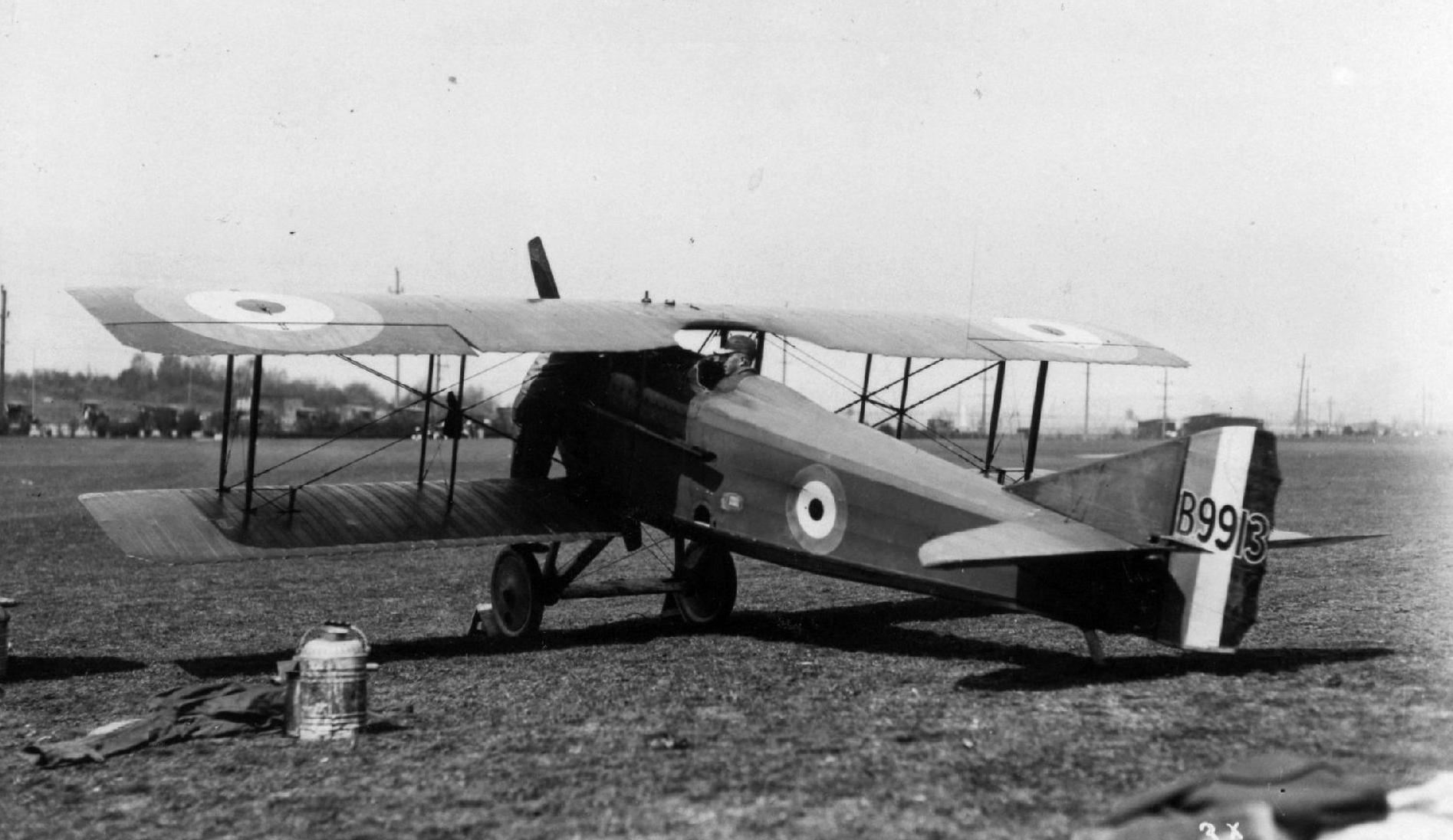
- B9913 - SPAD S.VII Scout CF-RFC, on display at Canada Aviation and Space Museum in Ottawa. The airplane was built in Britain then transferred to the United States in 1918, was purchased by the museum in 1965.[7]
- Czech Republic
- 11583 – SPAD VIIC.1 on static display at the Prague Aviation Museum in Kbely, Prague. It was flown post-World War I by the Czechoslovak Air Force and then the West Bohemia Aero Club until 1930.[8]
- France
- S.254 – SPAD VII Vieux Charles on static display at the Musée de l'Air et de l'Espace in Paris, Île-de-France. Georges Guynemer scored 16 kills in this aircraft in World War I.[9][10]
- Italy
- S.153 – SPAD VII on static display at the Italian Air Force Museum in Bracciano, Lazio. It was flown by Fulco Ruffo di Calabria.[11]
- Unknown – SPAD VII on static display at the Italian Air Force Museum in Bracciano, Lazio. It was flown by Ernesto Cabruna.[12]
- United States
- B9913 – SPAD VII is on display at the Shannon Air Museum in Fredericksburg, Virginia. It was one of 100 British made SPADS built in 1917 by Mann Egerton & Co. Ltd. It was fully restored in 1973.[13][14]
- B9916 – SPAD VIIC.1 on static display at the San Diego Air & Space Museum in San Diego, California. Built by Mann Egerton & Co. Ltd in Norwich, England in 1917, it was one of a batch shipped to the United States for use as a trainer. The aircraft was fully restored in 1990 and is 95 percent original.[15][16]
- AS 94099 – SPAD VII on static display at the National Museum of the United States Air Force in Dayton, Ohio. It was acquired from the Museum of Science and Industry and restored by the 1st Fighter Wing from 1962 to 1966.[17][18]
Specifications
[edit]Data from Davilla, Dr. James J.; Soltan, Arthur (1997). French Aircraft of the First World War. Mountain View, CA: Flying Machines Press. p. 493. ISBN 978-1891268090.
General characteristics
- Crew: 1
- Length: 6.080 m (19 ft 11 in)
- Wingspan: 7.822 m (25 ft 8 in)
- Height: 2.20 m (7 ft 3 in)
- Wing area: 17.85 m2 (192.1 sq ft)
- Empty weight: 500 kg (1,102 lb)
- Gross weight: 705 kg (1,554 lb)
- Powerplant: 1 × Hispano-Suiza 8Aa 90° V-8 liquid-cooled engine, 110 kW (150 hp)
- Propellers: 2-bladed wooden propeller
Performance
- Maximum speed: 193 km/h (120 mph, 104 kn) at sea level
- 187 km/h (116 mph; 101 kn) at 2,000 m (6,600 ft)
- 180 km/h (110 mph; 97 kn) at 3,000 m (9,800 ft)
- 174 km/h (108 mph; 94 kn) at 4,000 m (13,000 ft)
- Range: 400 km (250 mi, 220 nmi)
- Endurance: 2.66 hours
- Service ceiling: 5,500 m (18,000 ft)
- Time to altitude:
- 6 minutes 40 seconds to 2,000 m (6,600 ft)
- 11 minutes 20 seconds to 3,000 m (9,800 ft)
Armament
- Guns: * 1 × 7.7 mm (.303 in) Vickers machine gun
See also
[edit]Related development
Aircraft of comparable role, configuration, and era )
References
[edit]Notes
[edit]- ^ Sharpe 2000, p. 270.
- ^ a b Bruce 1981, p. 59.
- ^ Bruce 1981, p. 61.
- ^ Bruce 1981, p. 62.
- ^ "Thai Military Aircraft Designations". designation-systems.net. Retrieved 2025-03-18.
- ^ "Red Fighters".
- ^ Harold A. Skaarup. "Canadian Warplanes 1: S.P.A.D. S.VII Scout". silverhawkauthor.com.
- ^ "SPAD S-VIIC.1 - stíhací letoun". Vojenský Historický Ústav Praha (in Czech). Vojenský Historický Ústav. Archived from the original on 14 June 2012. Retrieved 11 May 2017.
- ^ "SPAD VII". Musée Air & Espace (in French). Retrieved 11 May 2017.
- ^ "LE SPAD VII S 254". Musée Air & Espace (in French). Archived from the original on 13 October 2015. Retrieved 11 May 2017.
- ^ "SPAD S-VII RUFFO". Aeronautica Militare (in Italian). Retrieved 11 May 2017.
- ^ "SPAD S-VII CABRUNA". Aeronautica Militare (in Italian). Retrieved 11 May 2017.
- ^ "HISTORIC AIRCRAFT" (PDF). Virginia Aviation Museum. Archived from the original (PDF) on 12 May 2016. Retrieved 11 May 2017.
- ^ "Shannon's rebirth". AOPA Pilot Magazine. February 2018. Retrieved 7 June 2019.
- ^ "SPAD VII". San Diego Air & Space Museum. Retrieved 11 May 2017.
- ^ "Airframe Dossier - Societe Pour lAviation et ses Derives (SPAD) S-VIIc1, s/n B9916 RAF". Aerial Visuals. AerialVisuals.ca. Retrieved 11 May 2017.
- ^ "SPAD VII". National Museum of the US Air Force. 7 April 2015. Retrieved 11 May 2017.
- ^ "Airframe Dossier - Societe Pour lAviation et ses Derives (SPAD) S-VII, s/n AS94099 USAAS". Aerial Visuals. AerialVisuals.ca. Retrieved 11 May 2017.
Bibliography
[edit]- Bordes, Gerard. "SPAD." Mach 1, L'encyclopédie de l'Aviation, Volume 8. Paris: Atlas, 1981, pp. 2173–2187.
- Bruce, J.M. "The First Fighting SPADs". Air Enthusiast, Issue 15, April–July 1981, pp. 58–77. Bromley, Kent: Pilot Press. ISSN 0143-5450
- Bruce, J.M. SPAD Scouts SVII - SXIII (Aircam Aviation Series No. 9). England : Osprey Publications, 1969. ISBN 0-85045-009-8.
- Connors, John F. Don Greer and Perry Manley. SPAD Fighters in Action (Aircraft in Action No. 93). Carrollton, Texas: Squadron-Signal, 1989. ISBN 0-89747-217-9.
- Crosby, Francis. A Handbook of Fighter Aircraft. London: Hermes House, 2003. ISBN 1-84309-444-4.
- Davilla, Dr. James J.; Soltan, Arthur (1997). French Aircraft of the First World War. Mountain View, CA: Flying Machines Press. ISBN 978-1891268090.
- Gerdessen, Frederik. "Estonian Air Power 1918 – 1945". Air Enthusiast, No. 18, April – July 1982. pp. 61–76. ISSN 0143-5450.
- Guttman, Jon. SPAD SVII Aces of World War 1 (Osprey Aircraft of the Aces; vol. 39). Oxford: Osprey, 2001. ISBN 1-84176-222-9.
- Klaauw, Bart van der (March–April 1999). "Unexpected Windfalls: Accidentally or Deliberately, More than 100 Aircraft 'arrived' in Dutch Territory During the Great War". Air Enthusiast (80): 54–59. ISSN 0143-5450.
- Kudlicka, Bohumir (August 2001). "Des avions français en Tchécoslovaquie: les unités de chasse sur Spad" [French Aircraft in Czechoslovakia: The Fighter Units with Spads]. Avions: Toute l'Aéronautique et son histoire (in French) (101): 52–56. ISSN 1243-8650.
- Kudlicka, Bohumir (September 2001). "Des avions français en Tchécoslovaquie: les unités de chasse sur Spad" [French Aircraft in Czechoslovakia: Everyone Goes Down!]. Avions: Toute l'Aéronautique et son histoire: Tout le monde descende! (in French) (102): 54–58. ISSN 1243-8650.
- Rimell, R. L., Spad 7.C1 (Windsock Datafile 8). Berkhamsted, UK : Albatros Productions, 1996. ISBN 0-948414-12-X.
- Sharpe, Michael. Biplanes, Triplanes, and Seaplanes. London: Friedman/Fairfax Books, 2000. ISBN 1-58663-300-7.
- United States Air Force Museum Guidebook. Wright-Patterson AFB, Ohio: Air Force Museum Foundation, 1975.
- Velek, Martin, Spad S.VII C1. Prague : MARK I, 2004. ISBN 80-86637-00-X.
External links
[edit]

SPAD S.VII
View on GrokipediaDesign and Development
Origins
The Société Pour L'Aviation et ses Dérivés (SPAD) was established in 1913 when aviation pioneer Louis Blériot acquired the assets of the financially troubled Deperdussin aircraft company following a scandal involving its founder, Armand Deperdussin.[5] Blériot reorganized the firm under the SPAD name, retaining key talent such as chief designer Louis Béchereau, who had previously led Deperdussin's innovative designs, to focus on military aircraft production amid escalating European tensions.[3] This restructuring positioned SPAD as a major player in France's burgeoning aviation industry, emphasizing robust and high-performance machines for wartime needs.[6] By 1915, the French Aéronautique Militaire faced urgent requirements for an advanced single-seat fighter to supersede the Morane-Saulnier Type L and Type N monoplanes, as well as early Nieuport scouts like the Nieuport 11, which struggled against the synchronizing gun-equipped German Fokker Eindecker in aerial engagements.[7] These predecessors offered limited speed and maneuverability, prompting demands for a more robust design capable of sustained high-speed dives and superior stability to enable effective offensive patrols and escort duties.[8] SPAD, under Béchereau's direction, responded by prioritizing a tractor biplane configuration that could accommodate forward-firing armament while addressing these vulnerabilities.[9] In late 1915, SPAD selected the newly developed Hispano-Suiza 8A water-cooled V-8 engine, rated at 150 horsepower, as the powerplant for the prospective fighter; this engine originated from Swiss engineer Marc Birkigt's adaptation of Hispano-Suiza's existing automotive V-8 design, initially created for luxury cars in Spain and France before wartime reconfiguration for aviation use.[10] Birkigt's modifications, begun in February 1915, emphasized reliability and power output suitable for sustained flight, marking a shift from rotary engines prevalent in earlier French scouts.[11] Béchereau, leveraging his experience with SPAD's earlier two-seat S.A model and evolving the unarmed single-seat SPAD S.V prototype by integrating a synchronized Vickers machine gun, created the armed S.VII to allow the pilot unobstructed forward fire without a separate gunner position.[12] The S.VII prototype achieved its maiden flight in April 1916 at Villacoublay airfield near Paris, piloted by SPAD test pilot Maurice Bequet.[12] Early evaluations highlighted exceptional maximum speed of 119 mph (192 km/h) at sea level and a climb rate of 4.5 minutes to 6,500 feet (2,000 meters), outperforming contemporaries in straight-line performance and dive capability due to the airframe's sturdy construction.[13] However, initial handling proved challenging at low speeds and during turns, with minor stability issues in pitch, necessitating refinements to the wing rigging and control surfaces before production approval.[14] These tests validated the design's potential, leading to an immediate order for 268 aircraft in May 1916.[3]Design Features
The SPAD S.VII was constructed as a single-bay sesquiplane biplane, featuring a wooden fuselage framed with longerons and covered in fabric, while the forward section was protected by thin steel sheeting for durability.[13] This airframe design emphasized structural integrity over lightness, with reinforced wing spars and internal bracing that allowed the aircraft to endure high-stress maneuvers, particularly steep dives, without risk of failure—a deliberate improvement over the more fragile Nieuport fighters it replaced.[1] The wings were of equal span at 7.82 meters (25 ft 8 in) without stagger, with the sesquiplane arrangement providing enhanced longitudinal stability through a narrower chord on the lower wing.[3] Fixed V-struts formed the primary interplane bracing, supplemented by wire cabling for both structural support and control actuation, resulting in an empty weight of around 510 kg.[13] The cockpit was an open, single-seat enclosure positioned behind the engine and below the upper wing, equipped with rudimentary instrumentation including a basic compass, altimeter, and airspeed indicator, but offering limited forward and downward visibility due to the biplane layout.[15] Lateral control was achieved solely through ailerons on the upper and lower wings, eschewing the wing-warping systems common in earlier designs for more precise handling at higher speeds.[13] The undercarriage consisted of fixed, faired main wheels mounted on a V-shaped axle with oleo shock absorbers, paired with a simple tailskid for landings on unprepared fields.[2] Armament integration focused on a forward-firing offensive capability, with a single 0.303-inch Vickers machine gun offset slightly to starboard and synchronized via the Constantinesco hydraulic interrupter gear to safely fire through the propeller disc.[16] This mechanism used hydraulic impulses from the engine crankshaft to time interrupts, ensuring reliable synchronization without the mechanical complexity of cam-driven systems. The gun was fed from a 500-round fabric drum magazine mounted externally above the fuselage decking. Aerodynamically, the design incorporated a streamlined light-alloy cowling around the initial Hispano-Suiza 8Aa V-8 engine—producing 150 horsepower—to reduce drag, while the overall compact form prioritized speed and robustness in combat environments.[3]Variants
The baseline SPAD S.VII featured the 150 hp Hispano-Suiza 8Aa water-cooled V-8 engine and entered production in September 1916, with deliveries to French squadrons beginning shortly thereafter.[17] Overall production totals are estimated at between 3,800 and 6,000 aircraft, reflecting discrepancies in wartime records across multiple manufacturers.[18][2] From early 1917, an upgraded version designated S.VII.1 incorporated the more powerful 180 hp Hispano-Suiza 8Ab engine, which boosted the aircraft's top speed to 208 km/h and necessitated modifications to the propeller and oil cooling system for improved reliability.[17][15] This upgrade became standard by April 1917, enhancing the fighter's performance without major structural changes.[17] Licensed production expanded output amid French capacity constraints. In Britain, Mann, Egerton & Co. Ltd. manufactured approximately 200 units starting in 1917, though these suffered from lower quality standards, including poor fabric adhesion and fragile propellers, resulting in reduced handling and performance compared to French-built examples.[18][3] In Russia, the Dux factory in Moscow produced over 100 aircraft under license during 1917, but output was hampered by persistent landing gear issues and a shortage of imported engines.[4] Italian forces received around 214 SPAD S.VIIs, with some adapted for 200 hp engines to meet local operational needs, though full-scale licensed production remained limited.[19] Several experimental adaptations were tested to address performance limitations. The S.VII bis variant trialed a geared 200 hp Hispano-Suiza 8Bc engine, but the increased torque led to handling difficulties and the configuration was abandoned.[20] In 1917, two prototypes were fitted with radio transmitters for scouting trials, yet the added weight compromised maneuverability and the equipment was not adopted.[20] Post-war, a number of surplus S.VIIs underwent civil conversions, including modifications to two-seater configurations for racing and training, with examples used in air races and instructional roles at facilities like the École Blériot.[19][21] To meet surging demand, SPAD relied on subcontractors such as Blériot and Kellner et ses Fils, which handled component fabrication and assembly.[20] However, supply chain disruptions in 1917, including shortages of raw materials and skilled labor, contributed to production delays and a rejection rate of approximately 20% for completed airframes due to quality control failures.[20]Operational History
French Service
The SPAD S.VII entered service with the French Aéronautique Militaire in August 1916, initially equipping Escadrille Spa.3 (also known as les Cigognes), where it quickly demonstrated superior speed and structural integrity compared to earlier designs.[9] By spring 1917, it had replaced the Nieuport 11 and Nieuport 17 across numerous squadrons, becoming the standard frontline fighter due to its ability to withstand high-speed dives and absorb battle damage.[22] This rapid adoption reflected the aircraft's role in shifting French tactics toward aggressive pursuit and interception missions.[1] In key engagements, the SPAD S.VII proved instrumental during the Somme Offensive in 1916, where French pilots used it to support ground operations against German positions.[9] It conducted patrols on the Western Front to counter German reconnaissance and bombing raids, leveraging its dive capabilities to disrupt enemy formations effectively.[9] By the German Spring Offensive in 1918, the aircraft remained in use for defensive intercepts where squadrons had not yet transitioned.[9] Production of the SPAD S.VII ramped up significantly through licensed manufacturing at multiple facilities, which ensured a steady supply to frontline units.[9] It saw widespread use in the Aéronautique Militaire's inventory.[9] Despite its strengths, the SPAD S.VII suffered from engine reliability issues, particularly overheating of the Hispano-Suiza 8Aa in warm conditions, which sometimes forced pilots to limit prolonged operations or risk mechanical failure.[9] These problems, along with the need for greater firepower and performance, led to its phased replacement by the more advanced SPAD XIII starting in mid-1918, though many S.VIIs remained in service for training roles through the armistice.[9][4] French ace Georges Guynemer scored 39 of his 53 victories flying the S.VII.[9] Overall, the SPAD S.VII contributed to numerous aerial victories for French forces through emphasis on dive-and-zoom tactics that exploited its robust airframe and speed advantage over German opponents.[9] This performance solidified its legacy as a cornerstone of French air power during the latter stages of World War I.[1]Allied Service
The SPAD S.VII saw widespread adoption among non-French Allied forces during World War I, serving as a reliable fighter in various theaters from 1917 onward. Its robust construction and high-speed diving capability made it suitable for escort and pursuit roles, though operational success varied by nation due to differences in tactics, maintenance, and engine reliability. Several hundred aircraft were supplied or produced for Allied operators outside France, contributing to numerous confirmed aerial victories in multinational campaigns.[22] In British service with the Royal Flying Corps (later Royal Air Force), SPAD S.VIIs were imported or license-built starting in 1917, equipping squadrons such as No. 19 and No. 23 for operations over the Western Front. No. 23 Squadron deployed the type in the Ypres Salient, where pilots like Captain William Kennedy-Cochran-Patrick achieved 18 victories while flying it during intense dogfights against German Albatros scouts. British units transitioned to more advanced fighters like the Sopwith Dolphin by mid-1918, as the SPAD's single-gun armament limited its effectiveness in prolonged engagements compared to newer designs. To enhance ground-attack capabilities, some RFC aircraft were experimentally fitted with an over-wing Lewis machine gun for strafing infantry and trenches, though this modification was not widely adopted due to performance penalties.[22][23][24][4] The United States Army Air Service (USAS) integrated the SPAD S.VII into its expanding air forces from February 1918, with approximately 189 aircraft produced domestically or imported for units including the 94th Aero Squadron (formerly the Lafayette Escadrille). American pilots valued its stability as a gun platform during the Spring Offensive, with Captain Eddie Rickenbacker scoring four of his early victories in the type over the Toul sector before the squadron upgraded to the SPAD S.XIII. Other squadrons, such as the 103rd and 27th, used it for patrol and bombing escort duties, where its ruggedness proved advantageous in harsh frontline conditions.[1][25][26] Italian forces of the Corpo Aeronautico Militare received over 200 SPAD S.VIIs from 1917, primarily for the Italian front against Austro-Hungarian aircraft. The 91a Squadriglia, commanded by Francesco Baracca, achieved notable success with the type; Baracca himself downed several foes in his personal SPAD S.VII (serial S.1544), which featured the squadron's prancing horse emblem and is now preserved in the Museo Baracca in Lugo. Squadrons like the 76a and 77a employed it in mountain patrols and intercepts, leveraging its climb rate for high-altitude ambushes.[27][4][28] Belgium's Aviation Militaire operated about 40 SPAD S.VIIs in the 5e Escadrille de Chasse (later redesignated 10e), using them for defensive patrols over occupied territory from late 1917. Pilot Sous-Lieutenant Edmond Thieffry, a prominent ace with 10 victories, flew the type extensively, including in actions near the Yser River where its diving speed aided in downing German reconnaissance planes. The aircraft's simplicity suited the Belgians' limited resources, though spare parts shortages occasionally grounded units.[22][29] Other Allied nations had more restricted use; the Imperial Russian Air Service received a small number for squadrons like the 7th and XI, but engine shortages from Hispano-Suiza supply issues limited frontline deployment, with only isolated victories credited to pilots such as Ivan Smirnov (six total).[22][30]Post-War Operations
Following the Armistice of 11 November 1918, surplus SPAD S.VII aircraft from French stocks were rapidly demobilized and redistributed for export or secondary roles, with many sold off by 1920 to emerging air forces in Europe and beyond.[4] In the French colonial context, some remaining aircraft continued in limited service for border patrols in regions such as Syria and Morocco until approximately 1923, supporting stabilization efforts amid post-war unrest.[4] Exports played a key role in extending the type's military life into the interwar period. Poland acquired 18 SPAD S.VII fighters from France, equipped with 180 hp Hispano-Suiza engines, which saw combat during the Polish-Soviet War of 1920; these aircraft contributed to Polish air operations against Bolshevik forces, though exact victory tallies are sparsely documented.[4][31] Similarly, small numbers were supplied to Brazil for naval aviation duties in the 1920s, primarily for coastal defense patrols along the South American littoral.[4] Other recipients included Greece, which deployed 28 examples in the Greco-Turkish War (1919–1922), and Peru, where the type lingered in service as a trainer into the 1930s.[4][32] Civilian adaptations emerged from the abundance of surplus airframes, with some French examples modified for racing events, such as attempts in the 1919 Gordon Bennett Cup using uprated 200 hp engines for enhanced speed.[4] Others found niche roles as agricultural sprayers in France during the 1920s, leveraging the aircraft's robust structure for crop-dusting operations.[4] By the mid-1920s, the SPAD S.VII was largely phased out from frontline service across most operators, often replaced by more advanced types like the Bristol Fighter; retirement occurred around October 1925 in several air forces, with lingering use confined to training units.[4] Documentation on post-war attrition remains incomplete, but estimates suggest over 1,000 airframes were still airworthy globally as late as 1922, reflecting the type's durability amid demobilization.[4]Operators
European Operators
France was the primary operator of the SPAD S.VII, with approximately 3,500 aircraft produced in total, the majority built domestically and delivered to the Aéronautique Militaire.[3] The fighter equipped numerous escadrilles, including the renowned Spa.3 ("Les Cigognes") and Spa.103, serving as the backbone of French fighter forces from 1916 through the end of World War I and into the postwar period until 1923.[4] The United Kingdom acquired approximately 220 SPAD S.VIIs built under license in Britain by firms such as Blériot and Mann Egerton, in addition to numerous imports bearing French serials for the Royal Flying Corps (RFC).[33] These were operated by squadrons including Nos. 23, 40, and 84, primarily during 1917–1918, with surviving aircraft used for Royal Air Force training roles until around 1920.[33] Italy obtained 472 SPAD S.VIIs, which entered service starting in March 1917 and equipped eight fighter squadrons, including the 91a Squadriglia commanded by ace Francesco Baracca.[34] The type remained in Italian use postwar, notably during the 1925 Cirenaica campaign in Libya, until retirement in the mid-1920s.[28] Belgium purchased 22 SPAD S.VIIs for the Aviation Militaire Belge, with the first 15 delivered in October 1917 to the 5me and 10me Escadrilles de Chasse, followed by additional units equipped with Lewis guns.[34] These served from 1917 through World War I and postwar until 1922.[19] Postwar, Czechoslovakia acquired around 50 SPAD S.VIIs (combined with S.XIIIs), forming a key element of the early Československé Letectvo for border defense in the 1920s.[4] Similarly, Poland received 18 aircraft, which saw service during the 1920 Polish-Soviet War, where they were retired by 1924.[34] Smaller European operators included Portugal, which acquired 10 aircraft for use from 1918 to 1922; Romania with 15 postwar; and the Kingdom of Serbs, Croats and Slovenes (later Yugoslavia) with 22 ex-Serbian units in the 1920s.[35] The Netherlands evaluated a single SPAD S.VII in 1918 but did not adopt it operationally.Non-European Operators
The United States Army Air Service (USAS) acquired approximately 189 SPAD S.VII aircraft, primarily for use during World War I, with many transitioning to training roles after the 1918 armistice.[1] The type equipped units such as the 94th Pursuit Squadron, where it served in combat on the Western Front, valued for its speed and structural integrity in dogfighting. Post-war, the aircraft remained in U.S. Air Corps inventory as advanced trainers until their retirement around 1925, supporting the expansion of American pursuit aviation capabilities. In Russia, approximately 100 SPAD S.VII were produced under license for the Imperial Russian Air Service, entering service by late 1916 to replace older Nieuport fighters in squadrons like the 7th, 11th, and 19th.[4] These robust biplanes provided the Russian ace Alexander Kazakov with a reliable platform for his victories before the 1917 Revolution disrupted operations. Following the Bolshevik takeover, surviving examples continued in use with White Russian forces during the Civil War, contributing to anti-Bolshevik air efforts in limited numbers amid the chaos of the conflict.[36][37] Japan imported 20 SPAD S.VII in 1918 for trials with the Imperial Japanese Navy aviation branch, focusing on evaluation of Western fighter designs rather than operational deployment.[4] The aircraft's performance in high-speed dives and stability informed Japanese naval air development, though it was not adopted for production or frontline service. Argentina operated 10 SPAD S.VII in its army aviation from 1922 to 1928, mainly as trainers to build pilot proficiency in pursuit tactics. Peru acquired 2 examples in the 1920s for similar training purposes within its air service, emphasizing basic fighter handling amid limited resources. Siam (modern Thailand) received 6 donated SPAD S.VII in 1919 for its royal air service, which used them until around 1930 in ceremonial and instructional roles.[4]Surviving Aircraft
Airworthy Examples
The SPAD S.VII reproduction at the Old Rhinebeck Aerodrome in Red Hook, New York, remains the sole confirmed airworthy example of this World War I fighter as of November 2025. Constructed by aviation enthusiast Carl A. Swanson as his final project, the aircraft was completed in 2000 following his passing, utilizing original design plans for authenticity while incorporating modern safety features.[38] Powered by a 150 hp Lycoming O-320-E2D engine in place of the original Hispano-Suiza, it replicates the S.VII's performance characteristics, achieving speeds up to 138 mph.[38] Since entering service in 2000, it has participated in the aerodrome's weekend airshows, engaging in simulated aerial combat and solo demonstrations that highlight the type's historical role as a stable gun platform.[39] The aircraft underwent a major rebuild in 2018, returning to flight that year after engine overhaul and airframe inspections, and continued operations through the 2024 season. In 2025, temporary early-season scheduling disruptions from FAA certification delays were resolved, allowing airshows to proceed through October.[40][41][38] In Europe, Fox-Aviation Historique in France produces faithful reproductions of the SPAD S.VII C.1 using period materials and techniques, including a newly developed 180 hp Hispano-Suiza V8 Ad engine replica. One such example was offered for sale in 2024, though its operational history remains limited pending acquisition.[42] These restorations underscore ongoing challenges in preserving airworthy S.VIIs, such as sourcing compatible parts and adapting vintage designs with modern alloys for gearbox and structural integrity to ensure safe flight. Worldwide, only 1-2 such aircraft are estimated to be fully airworthy, with no new conversions reported in 2025.[43]Static Displays
Several SPAD S.VII aircraft survive in non-airworthy condition as static exhibits in museums around the world, preserving the type's historical significance from World War I service. These artifacts, often unrestored or partially restored, provide tangible links to the fighter's operational legacy with Allied forces. As of 2025, approximately eight to ten original examples remain on public display, with two additional airframes in private collections, reflecting ongoing preservation efforts without reported losses since 2017.[44] At the National Museum of the United States Air Force in Dayton, Ohio, a French-built SPAD S.VII (serial S3730) has been on static display since the 1960s. Originally part of the Lafayette Escadrille's inventory before transfer to the U.S. 103rd Aero Squadron in 1918, it was acquired from the Museum of Science and Industry in Chicago, Illinois, and restored between 1962 and 1966 by the 1st Fighter Wing at Selfridge Air Force Base, Michigan. The aircraft features a Hispano-Suiza 8-Aa engine and Vickers .303-caliber machine gun, emblematic of American Expeditionary Forces use.[1][45] The Canada Aviation and Space Museum in Ottawa, Ontario, houses a British-built example (serial B9913), acquired in 1965 after postwar civilian use in the United States. This unrestored airframe, one of about 100 produced by Mann, Egerton & Co. in Norwich, England, in 1917, entered service with the Royal Flying Corps before transfer to the U.S. Army Air Service; it has remained static since the 1990s, showcasing original fabric and structural elements from its training role at Rockwell Field, California.[46][47] In Italy, the Italian Air Force Museum at Vigna di Valle near Rome displays an original SPAD S.VII (serial S.153), captured from French stocks in 1918 and exhibited since the 1920s. Flown by Italian ace Fulco Ruffo di Calabria during World War I, it bears markings associated with Francesco Baracca's unit, though authenticity debates persist; metallurgical analysis in 2023 confirmed its World War I provenance, including period-specific aluminum alloys and construction techniques. The museum's 2023 reopening highlighted this artifact amid a broader WWI collection.[48][4][49] The Musée de l'Air et de l'Espace in Paris, France, preserves one SPAD S.VII example as a static display, grounded since World War II. Serial S.254 ("Vieux Charles"), Georges Guynemer's mount with a 180 hp Hispano-Suiza 8 engine variant, on which the ace achieved 16 victories in 1917; it retains original fabric and underwent meticulous restoration to highlight French aviation heroism. This airframe underscores the type's role in equipping escadrilles like SPA 3.[50][51] Other notable static displays include serial B9916 (British-built, 1917) at the San Diego Air & Space Museum in California, restored in 1990 to 95% originality using wartime-discovered graffiti under the wings; it served in U.S. training and was acquired by the museum in 1981 after Smithsonian loan. In the Czech Republic, the Prague Aviation Museum at Kbely holds a unrestored example in private-like storage, while two additional airframes reside in European private collections, contributing to the global tally of preserved SPAD S.VIIs.[3][52]Specifications
General Characteristics
The SPAD S.VII was a single-seat biplane fighter accommodating one pilot.[1] Its overall dimensions included a length of 6.18 m (20 ft 3 in), a height of 2.18 m (7 ft 2 in), and a wingspan of 7.82 m (25 ft 8 in) for both the upper and lower wings.[2] The wings featured unequal chords of upper 1.30 m (4 ft 3 in) and lower 1.00 m (3 ft 4 in) and a total area of 17.9 m² (193 sq ft), providing the necessary lift for its compact design.[53][54] The aircraft had an empty weight of 500 kg (1,102 lb) and a gross weight of 740 kg (1,631 lb), reflecting its lightweight construction optimized for agility.[55] Fuel capacity was 105 L (28 US gal), sufficient for typical mission durations.[10] It was powered by a two-bladed wooden fixed-pitch propeller with a diameter of 2.59 m (8 ft 6 in).[4] The airframe utilized a spruce wooden frame with doped linen (percale) covering and steel fittings for structural integrity.[4]Performance and Armament
The SPAD S.VII was powered by a Hispano-Suiza 8Aa inline V-8 liquid-cooled engine delivering 150 horsepower at 2,000 rpm, providing reliable performance for its era despite occasional cooling issues.[13] Later production models incorporated the upgraded Hispano-Suiza 8Ab engine rated at 180 horsepower, which improved overall capabilities without altering the service ceiling.[2] This baseline configuration enabled a maximum speed of 119 mph (192 km/h) at sea level and a cruising speed of approximately 100 mph (161 km/h), making it competitive with contemporary German fighters in straight-line performance.[13][14] Operational range was limited to 217 mi (350 km), suitable for patrol and escort missions but requiring careful fuel management for extended operations.[3] The aircraft achieved a service ceiling of 17,500 ft (5,300 m) and climbed to 2,000 m (6,560 ft) in 4.5 minutes, reflecting its sturdy biplane design optimized for medium-altitude engagements rather than superior vertical maneuverability.[2] Dive performance was a standout feature, with safe dives up to 162 mph (260 km/h) thanks to the robust airframe, while the stall speed of 50 mph (80 km/h) demanded skilled handling at low speeds to avoid instability.[14] The 180 hp variant offered roughly a 15% increase in speed over the original, reaching up to 129 mph (208 km/h), though it retained the same ceiling due to unchanged wing loading and propeller efficiency.[13] Armament centered on a single synchronized 0.303 in (7.7 mm) Vickers machine gun mounted on the forward fuselage, supplied with 500 rounds of ammunition for sustained fire during dogfights.[1] This setup provided a stable gun platform, synchronized via a Constantinesco interrupter gear to fire through the propeller arc without striking the blades.[13] Although primarily a fighter, some S.VIIs carried optional underwing bombs, typically two 10-kg Anilite types, but such configurations were rare and not standard for frontline use.[4]References
- https://commons.wikimedia.org/wiki/Category:SPAD_S.VII_museum_and_replica_aircraft