
Recent from talks
Marinid dynasty
Knowledge base stats:
Talk channels stats:
Members stats:
Marinid dynasty
The Marinid dynasty (Arabic: المرينيون al-marīniyyūn) was a Berber Muslim dynasty that controlled present-day Morocco from the mid-13th to the 15th century and intermittently controlled other parts of North Africa (Algeria and Tunisia) and of the southern Iberian Peninsula (Spain) around Gibraltar. It was named after the Banu Marin (Arabic: بنو مرين, Berber: Ayt Mrin), a Zenata Berber tribe. It ruled the Marinid sultanate, founded by Abd al-Haqq I.
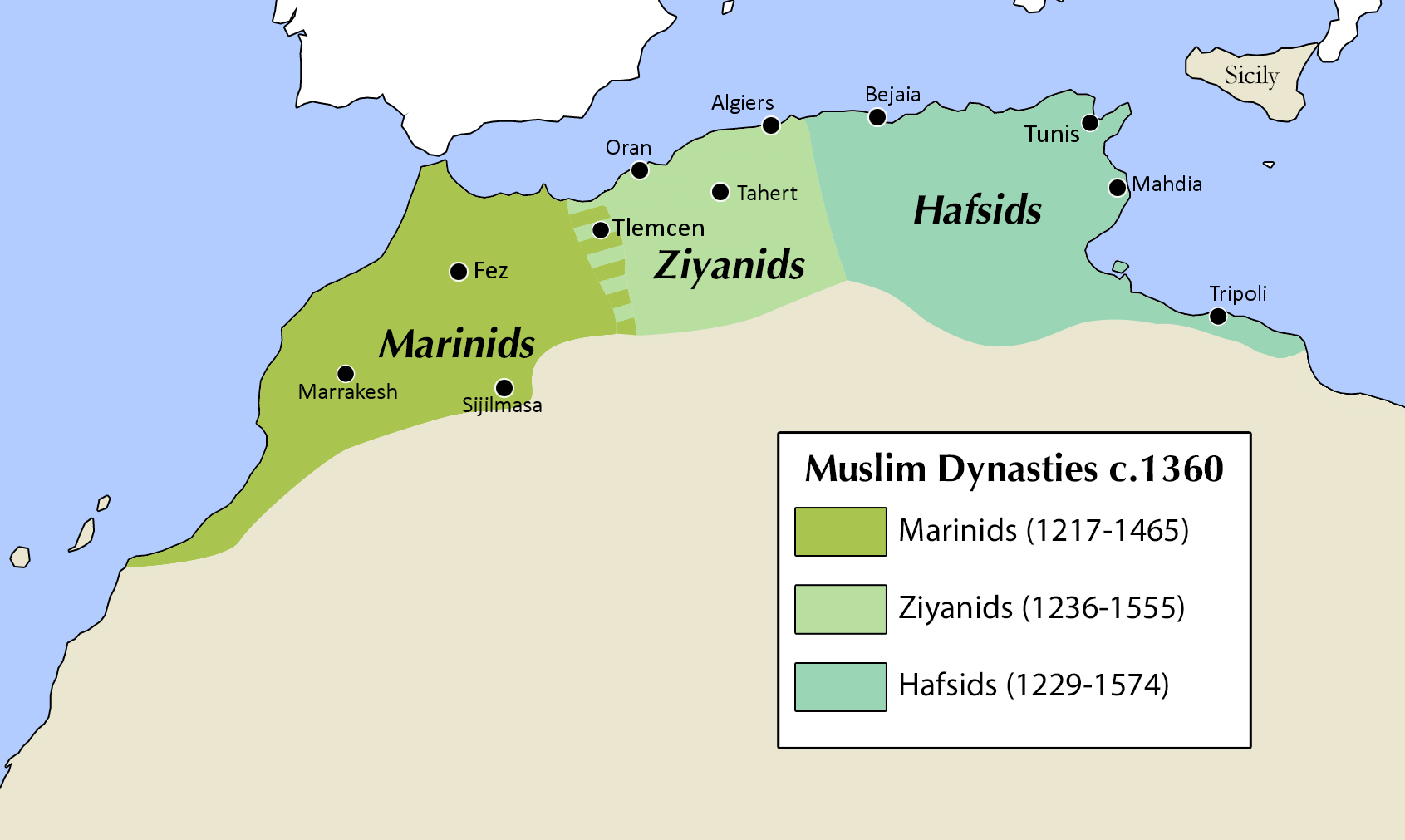
In 1244, after being at their service for several years, the Marinids overthrew the Almohads which had controlled Morocco. At the height of their power in the mid-14th century, during the reigns of Abu al-Hasan and his son Abu Inan, the Marinid dynasty briefly held sway over most of the Maghreb including large parts of modern-day Algeria and Tunisia. The Marinids supported the Emirate of Granada in al-Andalus in the 13th and 14th centuries and made an attempt to gain a direct foothold on the European side of the Strait of Gibraltar. They were however defeated at the Battle of Río Salado in 1340 and finished after the Castilians took Algeciras from the Marinids in 1344, definitively expelling them from the Iberian Peninsula. Starting in the early 15th century the Wattasid dynasty, a related ruling house, competed with the Marinid dynasty for control of the state and became de facto rulers between 1420 and 1459 while officially acting as regents or viziers. In 1465 the last Marinid sultan, Abd al-Haqq II, was finally overthrown and killed by a revolt in Fez, which led to the establishment of direct Wattasid rule over most of Morocco.
In contrast to their predecessors, the Marinids sponsored Maliki Sunnism as the official religion and made Fez their capital. Under their rule, Fez enjoyed a relative golden age. The Marinids also pioneered the construction of madrasas across the country which promoted the education of Maliki ulama, although Sufi sheikhs increasingly predominated in the countryside. The influence of sharifian families and the popular veneration of sharifian figures such as the Idrisids also progressively grew in this period, preparing the way for later dynasties like the Saadians and Alaouites.
The Marinids were a faction of the Berber tribal confederation of the Zenata. The Banu Marin were nomads who originated from the Zab (a region around Biskra in modern-day Algeria). Following the arrival of Arab Bedouins in North Africa in the middle of the 11th-12th centuries, they were pushed to leave their lands in the region of Biskra. They moved to the north-west of present-day Algeria, before entering en masse into what is now Morocco by the beginning of the 13th century. The Banu Marin first frequented the area between Sijilmasa and Figuig, at times reaching as far as the Zab. They moved seasonally from the Figuig oasis to the Moulouya River basin.
The Marinids took their name from their ancestor, Marin ibn Wartajan al-Zenati. Like earlier Berber ruling dynasties of North Africa and Al-Andalus had done, and in order to help gain legitimacy for their rule, Marinid historiography claimed an Arab origin for the dynasty through a North Arabian tribe. The first leader of the Marinid dynasty, Abd al-Haqq I, was born in the Zab into a noble family. His great-grandfather, Abu Bakr, was a sheikh of the region.
After arriving in present-day Morocco, they initially submitted to the Almohad dynasty, which was at the time the ruling regime. Their leader Mahyu contributed to the Almohad victory at Battle of Alarcos in 1195, in central Iberian Peninsula, though he died of his wounds. His son and successor, Abd al-Haqq, was the effective founder of the Marinid dynasty. Later, the Almohads suffered a severe defeat against Christian kingdoms of Iberia on 16 July 1212 in the Battle of Las Navas de Tolosa. The severe loss of life at the battle left the Almohad state weakened and some of its regions somewhat depopulated. Starting in 1213 or 1214, the Marinids began to tax farming communities of today's north-eastern Morocco (the area between Nador and Berkane). The relationship between them and the Almohads became strained and starting in 1215, there were regular outbreaks of fighting between the two parties. In 1217 they tried to occupy the eastern part of present-day Morocco but were defeated by an Almohad army and Abd al-Haqq was killed. They were expelled, pulling back from the urban towns and settlements, while their leadership passed on to Uthman I and then Muhammad I. In the intervening years, they regrouped and managed to establish their authority again over the rural tribes in the regions around Taza, Fez, and Ksar el-Kebir. Meanwhile, the Almohads lost their territories in Al-Andalus to Christian kingdoms like Castile, the Hafsids of Ifriqiya broke away in 1229, followed by the independence of the Zayyanid dynasty of Tlemcen in 1235. The Almohad caliph Sa'id nonetheless managed to defeat the Marinids again in 1244, forcing them to retreat back to their original lands south of Taza.
It was under the leadership of Abu Yahya, whose reign began in 1244, that the Marinids re-entered into the region on a more deliberate campaign of conquest. Between 1244 and 1248 the Marinids were able to take Taza, Rabat, Salé, Meknes and Fez from the weakened Almohads. Meknes was captured in 1244 or 1245, Fez was captured in 1248, and Sijilmassa in 1255. The Almohad caliph, Sa'id, managed to reassert his authority briefly in 1248 by coming north with an army to confront them, at which point Abu Yahya formally submitted to him and retreated to a fortress in the Rif. However, in June of the same year the caliph was ambushed and killed by the Zayyanids in a battle to the south of Oujda. The Marinids intercepted the defeated Almohad army on its return, and the Christian mercenaries serving under the Almohads entered the service of the Marinids instead. Abu Yahya quickly reoccupied his previously conquered cities the same year, and established his capital in Fes. His successor, Abu Yusuf Yaqub (1259–1286) captured Marrakech in 1269, effectively ending Almohad rule.
After the Nasrids of Granada ceded the town of Algeciras to the Marinids, Abu Yusuf went to Al-Andalus to support the ongoing struggle against the Kingdom of Castile. The Marinid dynasty then tried to extend its control to include the commercial traffic of the Strait of Gibraltar.
Hub AI
Marinid dynasty AI simulator
(@Marinid dynasty_simulator)
Marinid dynasty
The Marinid dynasty (Arabic: المرينيون al-marīniyyūn) was a Berber Muslim dynasty that controlled present-day Morocco from the mid-13th to the 15th century and intermittently controlled other parts of North Africa (Algeria and Tunisia) and of the southern Iberian Peninsula (Spain) around Gibraltar. It was named after the Banu Marin (Arabic: بنو مرين, Berber: Ayt Mrin), a Zenata Berber tribe. It ruled the Marinid sultanate, founded by Abd al-Haqq I.
In 1244, after being at their service for several years, the Marinids overthrew the Almohads which had controlled Morocco. At the height of their power in the mid-14th century, during the reigns of Abu al-Hasan and his son Abu Inan, the Marinid dynasty briefly held sway over most of the Maghreb including large parts of modern-day Algeria and Tunisia. The Marinids supported the Emirate of Granada in al-Andalus in the 13th and 14th centuries and made an attempt to gain a direct foothold on the European side of the Strait of Gibraltar. They were however defeated at the Battle of Río Salado in 1340 and finished after the Castilians took Algeciras from the Marinids in 1344, definitively expelling them from the Iberian Peninsula. Starting in the early 15th century the Wattasid dynasty, a related ruling house, competed with the Marinid dynasty for control of the state and became de facto rulers between 1420 and 1459 while officially acting as regents or viziers. In 1465 the last Marinid sultan, Abd al-Haqq II, was finally overthrown and killed by a revolt in Fez, which led to the establishment of direct Wattasid rule over most of Morocco.
In contrast to their predecessors, the Marinids sponsored Maliki Sunnism as the official religion and made Fez their capital. Under their rule, Fez enjoyed a relative golden age. The Marinids also pioneered the construction of madrasas across the country which promoted the education of Maliki ulama, although Sufi sheikhs increasingly predominated in the countryside. The influence of sharifian families and the popular veneration of sharifian figures such as the Idrisids also progressively grew in this period, preparing the way for later dynasties like the Saadians and Alaouites.
The Marinids were a faction of the Berber tribal confederation of the Zenata. The Banu Marin were nomads who originated from the Zab (a region around Biskra in modern-day Algeria). Following the arrival of Arab Bedouins in North Africa in the middle of the 11th-12th centuries, they were pushed to leave their lands in the region of Biskra. They moved to the north-west of present-day Algeria, before entering en masse into what is now Morocco by the beginning of the 13th century. The Banu Marin first frequented the area between Sijilmasa and Figuig, at times reaching as far as the Zab. They moved seasonally from the Figuig oasis to the Moulouya River basin.
The Marinids took their name from their ancestor, Marin ibn Wartajan al-Zenati. Like earlier Berber ruling dynasties of North Africa and Al-Andalus had done, and in order to help gain legitimacy for their rule, Marinid historiography claimed an Arab origin for the dynasty through a North Arabian tribe. The first leader of the Marinid dynasty, Abd al-Haqq I, was born in the Zab into a noble family. His great-grandfather, Abu Bakr, was a sheikh of the region.
After arriving in present-day Morocco, they initially submitted to the Almohad dynasty, which was at the time the ruling regime. Their leader Mahyu contributed to the Almohad victory at Battle of Alarcos in 1195, in central Iberian Peninsula, though he died of his wounds. His son and successor, Abd al-Haqq, was the effective founder of the Marinid dynasty. Later, the Almohads suffered a severe defeat against Christian kingdoms of Iberia on 16 July 1212 in the Battle of Las Navas de Tolosa. The severe loss of life at the battle left the Almohad state weakened and some of its regions somewhat depopulated. Starting in 1213 or 1214, the Marinids began to tax farming communities of today's north-eastern Morocco (the area between Nador and Berkane). The relationship between them and the Almohads became strained and starting in 1215, there were regular outbreaks of fighting between the two parties. In 1217 they tried to occupy the eastern part of present-day Morocco but were defeated by an Almohad army and Abd al-Haqq was killed. They were expelled, pulling back from the urban towns and settlements, while their leadership passed on to Uthman I and then Muhammad I. In the intervening years, they regrouped and managed to establish their authority again over the rural tribes in the regions around Taza, Fez, and Ksar el-Kebir. Meanwhile, the Almohads lost their territories in Al-Andalus to Christian kingdoms like Castile, the Hafsids of Ifriqiya broke away in 1229, followed by the independence of the Zayyanid dynasty of Tlemcen in 1235. The Almohad caliph Sa'id nonetheless managed to defeat the Marinids again in 1244, forcing them to retreat back to their original lands south of Taza.
It was under the leadership of Abu Yahya, whose reign began in 1244, that the Marinids re-entered into the region on a more deliberate campaign of conquest. Between 1244 and 1248 the Marinids were able to take Taza, Rabat, Salé, Meknes and Fez from the weakened Almohads. Meknes was captured in 1244 or 1245, Fez was captured in 1248, and Sijilmassa in 1255. The Almohad caliph, Sa'id, managed to reassert his authority briefly in 1248 by coming north with an army to confront them, at which point Abu Yahya formally submitted to him and retreated to a fortress in the Rif. However, in June of the same year the caliph was ambushed and killed by the Zayyanids in a battle to the south of Oujda. The Marinids intercepted the defeated Almohad army on its return, and the Christian mercenaries serving under the Almohads entered the service of the Marinids instead. Abu Yahya quickly reoccupied his previously conquered cities the same year, and established his capital in Fes. His successor, Abu Yusuf Yaqub (1259–1286) captured Marrakech in 1269, effectively ending Almohad rule.
After the Nasrids of Granada ceded the town of Algeciras to the Marinids, Abu Yusuf went to Al-Andalus to support the ongoing struggle against the Kingdom of Castile. The Marinid dynasty then tried to extend its control to include the commercial traffic of the Strait of Gibraltar.
Recent media