Hubbry Logo
Martin LowryMartin LowryMain
Open search
Martin Lowry
Community hub
Martin Lowry
logo
8 pages, 0 posts
0 subscribers
Be the first to start a discussion here.
Martin Lowry
Martin Lowry
from Wikipedia

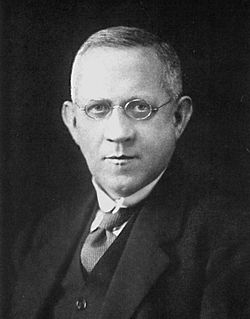
Thomas Martin Lowry CBE FRS[1] (/ˈlri/; 26 October 1874 – 2 November 1936) was an English physical chemist who developed the Brønsted–Lowry acid–base theory simultaneously with and independently of Johannes Nicolaus Brønsted and was a founder-member and president (1928–1930) of the Faraday Society.[2]

Key Information

Biography

[edit]

Lowry was born in Low Moor, Bradford, West Riding of Yorkshire, England, in a Cornish family. He was the second son of the Reverend E. P. Lowry who was the minister of the Wesleyan Church in Aldershot from 1892 to 1919. He was educated at Kingswood School, Bath, Somerset, and then at the Central Technical College in South Kensington. During those years he realized that he wanted to be a chemist. He studied chemistry under Henry Edward Armstrong, an English chemist whose interests were primarily in organic chemistry but also included the nature of ions in aqueous solutions. From 1896 to 1913 Lowry was assistant to Armstrong, and between 1904 and 1913 worked as lecturer in chemistry at the Westminster Training College. In 1913, he was appointed head of the chemical department in Guy’s Hospital Medical and became the first teacher of chemistry in a Medical School to be made a University Professor, at the University of London. From 1920 till his death, Lowry served as the Chair of Physical Chemistry at the University of Cambridge. He married a daughter of the Rev. C. Wood in 1904 and was survived by his widow, two sons and a daughter.[2]

Since the establishment of the Faraday Society in 1903, Lowry had been its active member and served as its president between 1928 and 1930. In 1914 he was elected a fellow of the Royal Society.[1] During and after the World War I, Lowry acted as director of shell-filling (1917–1919) and worked for the Trench Warfare Committee, Chemical Warfare Committee and Ordnance Committee. For this service, he was awarded the Order of the British Empire and the Order of Saints Maurice and Lazarus.[2]

Research

[edit]

In 1898, Lowry noted the change in optical rotation on nitro-d-camphor with time and invented the term mutarotational to describe this phenomenon. He studied changes in optical rotation caused by acid- and base-catalyzed reactions of camphor derivatives. This led in 1923 to his formulation of the protonic definition of acids and bases, now known as Brønsted–Lowry acid–base theory, independently of the work by Johannes Nicolaus Brønsted.[3][4] Lowry published a few hundred papers and several books. His 1935 monograph on "Optical Rotatory Power" (1935) has long been regarded as a standard work on the subject.[2]

References

[edit]
Revisions and contributorsEdit on WikipediaRead on Wikipedia
from Grokipedia
Thomas Martin Lowry (26 October 1874 – 2 November 1936) was an English physical chemist best known for independently developing the Brønsted–Lowry theory of acids and bases, which defines acids as proton donors and bases as proton acceptors, a concept he introduced in his paper on the uniqueness of hydrogen. He also pioneered studies in , notably discovering the phenomenon—the time-dependent change in of freshly prepared solutions of certain compounds, such as nitro-d-camphor—and coining the term in 1899. Throughout his career, Lowry advanced understanding of dynamic isomerism, prototropy, and the application of electronic theories to , earning recognition as a foundational figure in . Born in Low Moor, Bradford, , Lowry was the son of a Methodist minister from an old Cornish family long associated with the church. He received his at in Bath, a Methodist , before entering the Central Technical College in in 1893 on a Clothworkers' scholarship, where he studied under Henry Edward Armstrong and earned his D.Sc. from the in 1899. Lowry's early research under Armstrong focused on and derivatives, laying the groundwork for his lifelong interest in and optical activity. Lowry's academic career began as an assistant to Armstrong from 1896 to 1913, during which he also served as a in chemistry at Westminster Training College from 1904 to 1913. In 1913, he became head of the chemical department and the first professor of chemistry at , a position affiliated with the . From 1920 until his death, he held the inaugural chair of at the , where he emphasized quantitative approaches to reaction mechanisms and , including the application of Drude's to rotatory dispersion. Elected a in 1914, he was appointed Commander of the (C.B.E.) and received honorary degrees from , , and , as well as the Italian Order of St. Maurice and St. Lazarus.

Early Life and Education

Family Background

Thomas Martin Lowry was born on 26 October 1874 in Low Moor, a suburb of in the , England. He was the second son of the Reverend Edward Pearce Lowry, a minister whose family had a long history of service in the Methodist Church spanning generations, originating from an old Cornish lineage. The Lowry family's connection to Methodism emphasized values of education, discipline, and moral integrity, which influenced the household environment during Thomas's upbringing in the industrial heartland of . The family's circumstances were modest, reflecting the typical life of a clerical in a working-class region dominated by textile mills and manufacturing, where relocations within circuits were common due to the itinerant nature of Methodist ministry assignments. This formative period in a dynamic, industrially vibrant yet modest setting prepared Lowry for his transition to formal schooling at .

Formal Education

Lowry received his secondary education at in Bath, a Methodist founded by in 1748, which he attended from around the age of 13. There, amid a disciplined environment shaped by his family's Methodist background, he began to cultivate an interest in the sciences. In 1893, Lowry entered the Central Technical College in (now part of ) on a Clothworkers' , where he pursued studies in chemistry and graduated in 1896. Following this, he undertook postgraduate research under the supervision of Henry Edward Armstrong at the Central Technical College in , focusing on aspects of , and obtained his D.Sc. from the in 1899. Armstrong's profoundly shaped Lowry's approach to chemistry, emphasizing rigorous experimental methods and demonstrations over rote lectures or textbooks, while instilling a toward emerging theories like electrolytic dissociation and the concept of ions. This training equipped Lowry with a strong foundation in empirical investigation that would influence his later contributions to the field.

Professional Career

Early Positions

Following his training under Henry E. Armstrong at the City and Guilds Technical College, Thomas Martin Lowry took on his first independent teaching role as a in chemistry at Westminster Training College in 1904, a position he held until while continuing his research assistance to Armstrong. This role involved instructing future educators in foundational chemical principles, providing Lowry with practical experience in and laboratory demonstration for non-specialist audiences. In 1913, Lowry was appointed head of the chemical department and the first professor of chemistry at Medical School, a position affiliated with the . Until his departure in 1920, he focused on teaching analytical and physiological chemistry to medical students, emphasizing applied aspects relevant to clinical practice, such as biochemical assays and pharmaceutical preparations. During this tenure, Lowry also conducted research in the hospital's laboratories, integrating chemical analysis with medical applications to support diagnostics and therapeutics. Amid , Lowry contributed to the British war effort by serving as Director of Shell-Filling in the Department of Explosives Supply from 1917 to 1919, where he investigated munitions propellants and the polymorphic transitions of in the high explosive to improve shell-filling safety and efficiency. His efforts earned him recognition for advancing the stability and performance of wartime ordnance. Concurrently, Lowry published several early papers exploring reaction kinetics in organic transformations and the of asymmetric compounds, building on his prior expertise in . These works, often presented through the Chemical Society, laid groundwork for his later theoretical developments by examining rate dependencies and rotatory dispersion in solution.

Academic Roles at Cambridge

In 1920, Thomas Martin Lowry was appointed to the newly established Chair of at the , a position funded in part by a benefaction from oil companies, marking his transition to a leading academic role at the institution. He served in this capacity for the remainder of his career, until his death in 1936, during which time he organized and led the new Laboratory of , transforming it into a prominent center for research. In 1930, amid a departmental reorganization that also saw the creation of a separate Science Department under Eric Rideal, Lowry led the Department of . Under his leadership, Lowry focused on modernizing the department by applying contemporary physical methods—such as spectroscopic and optical techniques—to traditional chemical problems, thereby elevating the quantitative rigor of investigations. A key aspect of these efforts involved fostering the integration of approaches with , particularly through his advocacy for the electronic theory of valence in interpreting molecular structures and reactions. Throughout his tenure, Lowry was recognized as an inspiring mentor who attracted a range of students and collaborators to the laboratory, guiding their work on topics like optical rotatory power and reaction mechanisms. His administrative and teaching contributions helped build a collaborative environment within Cambridge's chemistry community, including interactions with prominent figures such as in interdisciplinary areas like and molecular structure. By 1936, these initiatives had established the department as a hub for innovative research.

Scientific Contributions

Brønsted-Lowry Acid-Base Theory

In 1923, Thomas Martin Lowry independently proposed a new framework for understanding acid-base reactions, defining acids as proton donors and bases as proton acceptors, a concept that paralleled the simultaneous work of . This theory, now known as the Brønsted-Lowry acid-base theory, shifted the focus from ionic dissociation in to the transfer of protons (H⁺ ions) between chemical species. Lowry's formulation appeared in his paper "The Uniqueness of Hydrogen," published in the Journal of the Society of . Under the Brønsted-Lowry definition, an is any substance capable of donating a proton, while a base is any substance capable of accepting a proton. This proton-transfer mechanism forms conjugate acid-base pairs, where the acid loses a proton to become its conjugate base, and the base gains a proton to become its conjugate acid. Representative examples illustrate this process. In the reaction between hydrochloric acid and water: HCl+H2OH3O++Cl\text{HCl} + \text{H}_2\text{O} \rightleftharpoons \text{H}_3\text{O}^+ + \text{Cl}^- HCl acts as the acid by donating H⁺ to H₂O, which serves as the base; H₃O⁺ is the conjugate acid of water, and Cl⁻ is the conjugate base of HCl. Similarly, in the interaction of ammonia and water: NH3+H2ONH4++OH\text{NH}_3 + \text{H}_2\text{O} \rightleftharpoons \text{NH}_4^+ + \text{OH}^- NH₃ functions as the base by accepting H⁺ from H₂O, which acts as the ; NH₄⁺ is the conjugate acid of , and OH⁻ is the conjugate base of . These examples highlight the reversible nature of proton transfer and the amphoteric behavior of , which can act as either an acid or a base depending on the reactant. The Brønsted-Lowry theory offered significant advantages over the earlier Arrhenius definition, which limited acids to substances producing H⁺ ions in aqueous solution and bases to those producing OH⁻ ions. By emphasizing proton donation and acceptance without requiring ionization or water as the solvent, it extended applicability to non-aqueous systems and a wider range of compounds, including those that do not fully dissociate. This relative view of acid-base strength, based on equilibrium tendencies rather than absolute ionization, provided a more flexible and mechanistic understanding of reactions, influencing subsequent developments in physical chemistry.

Work on Optical Activity and Mutarotation

Thomas Martin Lowry's pioneering investigations into optical activity commenced in the late 1890s, when he observed time-dependent changes in the of solutions containing freshly dissolved nitro-d-, attributing this to a form of dynamic isomerism between isomeric forms. In 1899, he published detailed measurements on the rotatory power of derivatives, including the isolation of two isomeric π-bromonitro-d-s, which demonstrated reversible interconversions detectable through . Building on these findings, Lowry extended his studies to sugars, applying the term "," which he had coined in 1899, to describe the observed change in upon dissolving freshly crystallized glucose, where the shifts from +112° for the α-anomer to an equilibrium value of approximately +52.5° at 20°C. This phenomenon, now understood as the interconversion between α- and β-anomers via transient ring opening and proton transfer (a process he later conceptualized as prototropy), highlighted the role of solution dynamics in stereochemical behavior. Lowry's key experiments on focused on glucose solutions, where he monitored the time course of rotation changes using , revealing kinetics and a marked dependence: the rate constant increased from about 0.0008 min⁻¹ at 0°C to 0.013 min⁻¹ at 35°C, indicating an of roughly 15 kcal/mol. He further linked these changes to catalytic effects, demonstrating that trace amounts of acids or bases—such as 1 ppm in —accelerated the process, while certain solvents like could arrest it, underscoring the involvement of proton transfer in non-aqueous media. These observations were pivotal in establishing as a model for reversible tautomerism in saccharides, with Lowry extending similar studies to other sugars like and in subsequent works. To deepen insights into molecular structure, Lowry advanced (ORD) techniques, emphasizing measurements of rotation across multiple wavelengths rather than at a single sodium D-line, which allowed differentiation between simple and anomalous dispersion patterns. In 1913–1914, he and collaborators fitted ORD data for alcohols and tartrates to Drude's dispersion equation using two terms of opposite sign for anomalous cases, enabling structural assignments based on wavelength-dependent rotations from 2263 Å to 32,000 Å. His 1921 Bakerian Lecture detailed ORD in derivatives, revealing how absorbing chromophores induce complex dispersion curves. Lowry's seminal publications include the 1903 paper "Studies of Dynamic Isomerism. I. The of Glucose," early reports on glucose isomers around 1900, and later saccharide studies in the Journal of the Chemical Society, culminating in his comprehensive 1935 monograph Optical Rotatory Power.

Contributions to Organic Chemistry and Stereochemistry

Thomas Martin Lowry was a pioneering advocate for the electronic of valency in , promoting the application of Lewis-Langmuir concepts to interpret molecular structures and reactions, which challenged the limitations of classical structural formulas that relied solely on fixed bonds. In his 1923 introductory address to the Faraday Society symposium on the electronic , Lowry emphasized how electron sharing and transfer could explain the polarity and reactivity of organic compounds, such as intramolecular in molecules like amine oxides. This work laid foundational ideas for understanding electronic effects in , influencing later developments in quantum mechanical models of bonding. Lowry's studies on tautomerism advanced the understanding of dynamic molecular equilibria, particularly through his introduction of the term "prototropy" in to describe proton migrations between atomic centers, as seen in keto- transformations. He linked prototropy to reaction mechanisms, proposing that such shifts facilitate isomerizations in organic systems like beta-diketones, where the enol form contributes to enhanced acidity and reactivity. This concept extended his acid-base theory by highlighting proton transfer as a key driver in tautomerization, providing a framework for mechanistic interpretations in . A significant contribution was Lowry's elucidation of "mixed multiple bonds," where he proposed that certain linkages exhibit partial double-bond character through resonance between covalent and electrovalent forms, as detailed in his 1923 paper "The Polarity of Double Bonds." He applied this to compounds like azoxy derivatives and azo systems, suggesting that the N-O or N=N bonds involve electron delocalization, explaining their stability and spectroscopic properties. This idea prefigured modern theory and influenced the analysis of conjugated systems in . In , Lowry utilized (ORD) to determine the configurations of asymmetric molecules, extending measurements across wide ranges to validate Drude's dispersion and probe molecular dissymmetry. His work, compiled in the 1935 monograph , demonstrated how ORD data could resolve spatial arrangements in compounds like tartrates, offering a quantitative alternative to classical methods for chiral analysis. These efforts highlighted the dynamic aspects of , paving the way for quantum-based interpretations of optical activity.

Later Life and Legacy

Personal Life and Death

Lowry married Eliza Wood, daughter of the Reverend C. Wood, in 1904. The couple had two sons and a . In his final years as head of the Department of at the , Lowry's health declined, though specific details of his illnesses remain undocumented in available records. He died on 2 November 1936 at the age of 62 in .

Honors and Recognition

Thomas Martin Lowry was elected a (FRS) in 1914 in recognition of his contributions to . He received the Commander of the (CBE) for his wartime service in chemical munitions production during . Additionally, he was awarded the Italian Order of Saints Maurice and Lazarus for his efforts in coordinating shell-filling operations. He was Vice-President of the Chemical Society from 1922 to 1924, contributing to its leadership during a period of growth in chemical research. From 1928 to 1930, he held the presidency of the Faraday Society, a role in which he actively promoted discussions on and physical methods in chemistry. Lowry's independent development of the proton donor-acceptor definition of acids and bases in led to the theory being eponymously named the Brønsted–Lowry acid-base theory, a lasting acknowledgment of his foundational work in the field. He also received an honorary (M.A.) degree from the , as well as honorary degrees from the and the University of Brussels, in recognition of his scholarly contributions.

Influence on Chemistry

The Brønsted–Lowry acid-base theory, co-developed by Thomas Martin Lowry in 1923, achieved widespread adoption in chemical education and practice, becoming the foundational framework for understanding proton transfer reactions in both aqueous and non-aqueous environments. This theory expanded beyond the limitations of the earlier Arrhenius model by defining acids as proton donors and bases as proton acceptors, enabling explanations of acid-base behavior in a broader range of solvents and conditions. As a result, it has been integrated into standard general chemistry and curricula, where it is presented as the primary model for equilibrium and kinetics studies, often subsuming the Arrhenius definition as a special case limited to water-based systems. Lowry's proton-centric approach contributed to the evolution of acid-base theory alongside contemporaneous independent advancements, such as Gilbert N. Lewis's 1923 electron-pair formulation, which broadened the to include reactions without proton involvement, such as coordination compounds. Lowry himself advocated for the integration of Lewis-Langmuir electronic models into interpretations, facilitating the analysis of bond polarities and reaction mechanisms through electronic effects. This lineage extended to modern extensions like the hard-soft acid-base () theory proposed by Ralph Pearson in 1963, which classifies by and builds on the complementary Lewis framework to the Brønsted-Lowry proton-transfer model in predicting reactivity trends in coordination and synthetic chemistry. In physical-organic chemistry, Lowry's pioneering studies on (ORD) and electronic theories of laid groundwork for later spectroscopic techniques, influencing the development of (NMR) and computational modeling for conformational analysis. His emphasis on quantitative measurements of optical activity and provided early electronic interpretations of molecular structure, which informed the transition to quantum-based models in predicting reaction pathways and . Through his laboratory at , Lowry trained key figures such as William Alec Waters, who advanced free radical mechanisms and further bridged physical and organic approaches, contributing to the field's evolution into a quantitative discipline. Despite these impacts, Lowry's contributions to tautomerism—particularly his work on dynamic equilibria in sugars—remain underappreciated relative to his acid-base legacy, with limited integration into contemporary discussions of . Additionally, his cautious stance toward early , favoring empirical physical methods over nascent theoretical frameworks, highlights a gap in recognizing how his experimental rigor complemented later computational advances in chemistry.

References

Add your contribution
Related Hubs
User Avatar
No comments yet.