Hubbry Logo
DaughterDaughterMain
Open search
Daughter
Community hub
Daughter
logo
8 pages, 0 posts
0 subscribers
Be the first to start a discussion here.
Contribute something
Daughter
Daughter
from Wikipedia
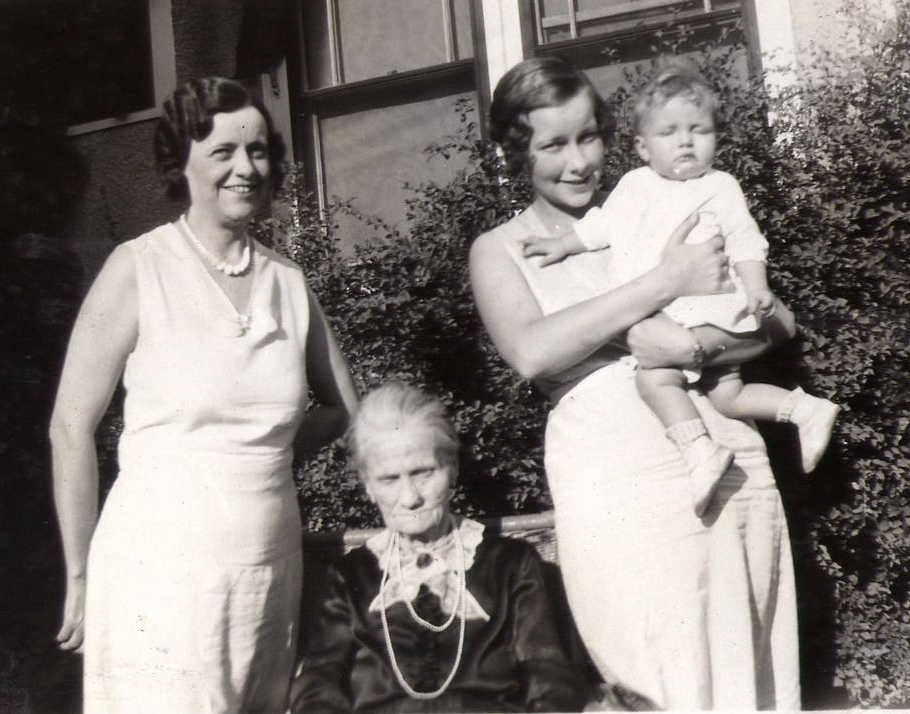
A 1931 photograph of four generations of mothers and daughters
Pierre Mayer with his daughter Constance Mayer, painted by Constance Mayer

A daughter is a female offspring; a girl or a woman in relation to her parents. Daughterhood is the state, condition or quality of being someone's daughter. The male counterpart is a son. Analogously the name is used in several areas to show relations between groups or elements. From biological perspective, a daughter is a first degree relative. The word daughter also has several other connotations attached to it, one of these being used in reference to a female descendant or consanguinity. It can also be used as a term of endearment coming from an elder.

In patriarchal societies, daughters often have different or lesser familial rights than sons. A family may prefer to have sons rather than daughters and subject daughters to female infanticide.[1] In some societies, it is the custom for a daughter to be 'sold' to her husband, who must pay a bride price. The reverse of this custom, where the parents pay the husband a sum of money to compensate for the financial burden of the woman and is known as a dowry. The payment of a dowry can be found in societies where women do not labour outside the home.

The number next to each box in the Table of Consanguinity indicates the degree of relationship relative to the given person.
First lady of the United States Betty Ford with her daughter Susan Ford

Perception

[edit]

In the United States, the birth rate is 105 sons to 100 daughters which has been the natural birth rate since the 18th century. In the US, prospective parents seeking to adopt a child display a slight preference for girls over boys.[2] In fertility clinics that enable sex preferences, daughters are usually preferred over sons.[3] In the traditions of various Abrahamic religions, Luluwa is regarded as the first daughter to have ever existed.[4]

Daughters in literature

[edit]

The role of the daughter has been an important theme in literature, especially when exploring relationships between family members and gender roles. Through exploration of the relationship between children and their parents, readers can draw conclusions about the impact of parenting style on the growth and development of a child's character and personality.

Notable daughters whose character and development has been impacted by their parents in literature have been:[5]

Daughter Parent/s Novel Author Year
Elizabeth Bennet Mr Bennet & Mrs Bennet (née Gardiner) Pride and Prejudice Jane Austen 1813
Jo March Marmee March Little Women Louisa May Alcott 1868
Francie Nolan Johnny and Katie Nolan A Tree Grows in Brooklyn Betty Smith 1943
Scout Finch Atticus Finch To Kill A Mockingbird Harper Lee 1960
Meg Murry Alex and Kate Murry A Wrinkle In Time Madeleine L’Engle 1962
Astrid Magnussen Ingrid Magnussen and Klaus Anders White Oleander Janet Fitch 1999

See also

[edit]

References

[edit]
[edit]
Revisions and contributorsEdit on WikipediaRead on Wikipedia
from Grokipedia
A is a offspring of parents, denoting a or in direct relation to her and . Biologically, daughters possess two X —one inherited from the 's ovum and one from the 's —distinguishing them from sons who receive a Y from the father, thereby establishing at fertilization. This chromosomal determination underscores the binary nature of mammalian differentiation, where daughters develop ovaries and the capacity for , essential for through XX production. In , "daughter" functions as a foundational relational term across , tracing etymologically to Proto-Indo-European *dhugheter, connoting a tied to parental lineage and often linked historically to roles in household labor or . Empirically, daughters transmit exclusively from the mother, providing a uniparental for maternal ancestry, while nuclear DNA recombination ensures biparental patterns critical for evolutionary fitness. Culturally, while patrilineal systems have sometimes undervalued daughters in favor of sons for and continuity, reveals daughters' equivalent reproductive value in perpetuating genetic lines, with modern data indicating no inherent disparity in outcomes when controlling for societal biases. Defining characteristics include developmental trajectories shaped by , such as earlier onset and distinct skeletal morphology, verifiable through anthropological and genetic studies.

Biological Foundations

Genetic Inheritance and Physiology

Daughters inherit a 46,XX , consisting of two X chromosomes—one from the via the ovum and one from the via the —distinguishing them from sons who receive an X from the and a Y from the . This chromosomal configuration determines female sex in humans under the , where the absence of the SRY on the Y chromosome allows for ovarian development rather than testicular. Mitochondrial DNA (mtDNA), which encodes 37 genes essential for cellular energy production, is inherited almost exclusively from the in humans, as the contributes negligible mitochondria that are typically degraded post-fertilization. Daughters thus receive their 's mtDNA and transmit it unchanged to all their , perpetuating maternal lineages across generations, whereas sons receive it but do not pass it on. Mutations in mtDNA can lead to maternally inherited disorders affecting multiple systems, with levels influencing phenotypic expression in daughters and their descendants. In , daughters of carrier mothers or affected fathers have a 50% chance of inheriting a mutated on the , often resulting in carrier status due to the presence of a second providing a functional copy via mosaicism. This contrasts with sons, who are hemizygous and express the trait if inheriting the mutated X; daughters manifest symptoms only if homozygous or if favors the mutated , as seen in conditions like hemophilia or . Physiologically, XX embryos undergo female-specific gonadal differentiation around weeks 6-8 of gestation, where bipotential gonads develop into ovaries under the influence of genes like WNT4 and RSPO1, suppressing testicular pathways. The Müllerian ducts persist and differentiate into the , fallopian tubes, and upper , while Wolffian ducts regress due to low levels; external genitalia feminize without exposure. Pubertal in daughters involves hypothalamic-pituitary-ovarian axis maturation, leading to estrogen-driven secondary such as and typically between ages 10-15, alongside ovarian recruitment for .

Sex-Specific Developmental Traits

Female children exhibit distinct developmental trajectories influenced by chromosomal and hormonal factors, particularly the presence of two X chromosomes and estrogen-driven processes. Puberty in girls typically commences between ages 8 and 13, marked by thelarche (breast bud development) around age 10 in white girls and age 9 in Black girls, followed by pubic hair growth, a growth spurt peaking at approximately 11-12 years, and menarche at an average of 13.0 years. These milestones occur earlier than in boys, whose gonadarche begins around ages 9-14, reflecting sex-specific hypothalamic-pituitary-gonadal axis activation and ovarian follicle maturation leading to estrogen surges. Sex-specific physical traits include accelerated skeletal maturation in girls, with epiphyseal closure occurring sooner due to estrogen's role in advancing , resulting in shorter average adult stature compared to males despite similar prepubertal heights. Prepubertally, girls often display higher size-adjusted density at certain sites like the , though post-puberty, males develop greater cortical area and strength. Additionally, girls experience increased subcutaneous fat deposition, particularly in hips and thighs, driven by , contrasting with male androgen-promoted lean mass gains. Neurological development in female children shows earlier peaking of gray matter volumes and faster overall maturation, with differences evident from birth, including structural variations in regions like the and . Girls demonstrate reduced amygdala development duration and shorter prefrontal cortex trajectories relative to boys, alongside greater consistency in brain structure variability. These patterns correlate with precocious cognitive processing speeds but may influence differential vulnerability to stressors, as X-chromosome genes contribute to brain circuitry without full inactivation uniformity due to mosaicism.

Evolutionary and Reproductive Roles

Parental Investment Differentials

In , differential parental investment between sons and daughters arises from sex differences in reproductive variance and potential returns on resources. Males typically exhibit higher variance in due to intrasexual competition and polygynous mating systems, where high-quality sons can sire many offspring but low-quality sons few or none. Females, by contrast, have more consistent reproductive output limited by and . Consequently, the Trivers-Willard predicts that parents in favorable conditions—such as high resource availability or status—should allocate more investment to sons to capitalize on their potential for amplified fitness gains, while parents in poor conditions should favor daughters for their steadier reproductive returns. This extends beyond sex ratio adjustment at birth to post-natal , including food, , and protection. In theory, extra in a high-condition son enhances his competitive edge in mate acquisition, whereas for daughters, baseline investment suffices for reliable without the same upside potential. Low-condition parents, facing higher offspring mortality risks, prioritize daughters to ensure at least some grandchildren, as sons in such scenarios may fail to reproduce altogether. Empirical evidence in humans is inconsistent, with support varying by context and measure. In polygynous or high-inequality societies, high-status parents often direct more resources toward sons, such as preferential or , aligning with predictions; for example, among the Arials of , dominant mothers invested more in sons via effort. Conversely, low-status households in some studies show female-biased , evidenced by lower male mortality or resource allocation in daughters during . However, meta-analyses and surveys frequently find weak or null effects, particularly in monogamous, low-variance modern populations where educational equalizes between sexes, challenging strict Trivers-Willard application. Sex-specific parental biases further modulate differentials: mothers may invest more in daughters (e.g., time and emotional support), while fathers favor sons, potentially due to paternal uncertainty or same-sex phenotypic matching, though data remain mixed and context-dependent. In resource-limited settings like parts of or as of 2020, son preference persists culturally, leading to higher investment in male offspring despite evolutionary predictions, highlighting gene-culture coevolution's role. Overall, while the framework underscores daughters' role in buffering under adversity, human patterns reflect interplay of , , and institutions rather than pure adaptation.

Kin Selection and Familial Continuity

In , explains how behaviors that enhance the of genetic relatives can evolve, even at a personal cost to the actor, as formalized by Hamilton's rule: a promoting spreads if the benefit to the recipient (B), weighted by the of genetic relatedness (r), exceeds the cost to the actor (C), or rB > C. For daughters, r = 0.5 with parents and full siblings, making their survival, reproduction, and supportive actions toward kin direct contributors to parental , equivalent to that of sons in terms of shared nuclear genes. Daughters propagate 50% of a father's autosomal genes and all of a mother's , which is maternally inherited and thus ensures uniparental genetic continuity exclusively through lines. Daughters often exhibit , such as caregiving for younger or aging parents, which aligns with by boosting the fitness of relatives sharing high r values. In societies, empirical studies document daughters providing more frequent emotional and practical support to members compared to sons, potentially due to evolved differences in nurturing roles and lower dispersal from natal groups. For instance, analyses of intergenerational care show women directing resources upward (to parents) and downward (to offspring) based on calculations, with daughters' involvement enhancing survival rates in resource-scarce environments. This pattern echoes female observed in many , where females remain nearer to kin, facilitating and reducing dispersal costs, though patterns are more bilateral with persistent maternal kin ties. Such behaviors yield indirect fitness benefits; for example, a daughter's assistance in child-rearing can increase nieces' and nephews' (r = 0.25) viability, amplifying familial transmission. Familial continuity, in this context, refers to the sustained propagation of genetic lineages across generations, where daughters play a pivotal by both reproducing and aiding collateral kin. Unlike sons, whose Y-chromosome transmission is patrilineal but limited to male heirs, daughters enable broader dissemination of X-linked traits (which they carry two copies of) and mitochondrial genomes, critical for metabolic functions under selection. Cross-cultural data from and agricultural societies indicate daughters' contributions to household labor and allomaternal care correlate with higher survival, supporting lineage persistence amid high mortality risks historically exceeding 40% rates in pre-modern settings. thus favors daughters' integration into family networks, as their altruistic investments—often exceeding direct reproduction in early adulthood—outweigh costs when rB > C holds, ensuring genetic continuity over multiple generations. This mechanism underpins observed human patterns of , where daughters' roles in sustaining kin groups have persisted despite cultural shifts.

Familial Dynamics

Father-Daughter Bonds


Father-daughter bonds, characterized by emotional closeness, involvement, and support, significantly influence daughters' psychological development and long-term outcomes. Empirical research indicates that positive paternal engagement fosters , enhancing daughters' emotional regulation and during and emerging adulthood. For instance, studies show that higher quality father-daughter relationships predict greater satisfaction of psychological needs, leading to improved and reduced ill-being in adolescent girls.
Paternal warmth and involvement correlate with better behavioral outcomes, including lower rates of externalizing problems and higher in daughters. Longitudinal data reveal that fathers play critical roles in daughters' social, , and emotional growth, with direct involvement positively impacting cognitive and social competencies. Daughters perceiving greater paternal positivity exhibit improved , as evidenced by meta-analytic findings linking such interactions to reduced . Conversely, low father involvement is associated with increased risky behaviors, such as early sexual activity and substance use, in adolescents. These bonds extend to shaping daughters' interpersonal relationships, particularly romantic ones. demonstrates that the quality of father-daughter ties influences daughters' partner preferences and relationship satisfaction in adulthood, with secure paternal attachments linked to healthier mate selections. , often due to or non-residential status, exacerbates vulnerabilities; daughters from such households face heightened risks of depression, academic underperformance, and intergenerational patterns of paternal disengagement. Rigorous studies confirm persistent negative effects on , underscoring the causal role of paternal presence in mitigating these outcomes.

Mother-Daughter and Sibling Relations

Mother-daughter relationships exhibit distinct dimensions including connectedness, interdependency, and trust in , with empirical analysis of 426 adult daughters revealing that higher connectedness correlates positively with , while greater interdependency associates negatively. In , these dyads frequently experience conflict marked by mutual physiological escalation during discussions, as observed in studies of 97 mother-adolescent pairs using conductance measures, where such escalation predicts elevated rumination and challenges in emotion regulation. Transitioning to adulthood, greater emotional differentiation—reflecting from —links to improved psychological for both mothers and daughters, based on actor-partner interdependence modeling in 167 Korean pairs, though daughters' parental status moderates benefits for mothers. Daughters' sibling relationships contribute to social-cognitive development, with same-gender pairings, especially sister dyads, fostering enhanced influence through similarity and modeling, as foundational studies indicate older sisters shape younger daughters' behaviors more effectively than opposite-sex . For example, younger sisters of adolescent mothers face a fourfold increased risk of , attributable to social learning in warm same-sex relationships that transmit attitudes toward early sexuality. These interactions promote daughters' skills in and emotion understanding, extending to improved peer competence, while same-gender pairs generally display higher levels of mutual care and nurturing compared to mixed-gender ones. Overall, positive ties buffer developmental stressors for daughters, though composition minimally alters core traits per large-scale analyses across countries.

Historical and Societal Roles

Pre-Modern Eras

In ancient civilizations, daughters typically occupied subordinate positions within patriarchal structures, valued primarily for their roles in alliances, household labor, and perpetuating familial ties through offspring rather than direct or . In , from approximately the 5th to 4th centuries BCE, female children were excluded from citizenship rights, property ownership, and , remaining under the lifelong authority of a male —initially their , later their husband—whose consent was required for , typically arranged by age 14 to secure dowries and social connections. This system prioritized sons for lineage continuity, with daughters often exposed at birth if deemed economically burdensome, reflecting a causal emphasis on male heirs for patrilineal descent. In , spanning the (509–27 BCE) and (27 BCE–476 CE), daughters fell under the patria potestas of the paterfamilias, who controlled their , , and property until his death or ; girls were commonly betrothed as young as 7 but married around 12–14, serving as conduits for political and economic pacts via that could include up to one-third of paternal estates. While allowed daughters to inherit equally with sons in intestate succession under the (c. 450 BCE), practical norms favored male control, and tutela perpetua restricted women's independent legal actions, underscoring a societal calculus where daughters enhanced family prestige through strategic unions but incurred costs like dowry provisions. Exceptions occurred in elite families, where daughters like those of received rudimentary in letters and household management, yet their primary utility lay in marital diplomacy rather than personal agency. Contrasting these, (c. 3100–30 BCE) afforded daughters greater inheritance equity, with property divided equally among siblings regardless of sex, enabling women—and by extension daughters—to own land, litigate independently, and engage in commerce, as evidenced by legal records from the New Kingdom (c. 1550–1070 BCE). Daughters in royal contexts, such as those of pharaohs, wielded influence through court roles and divine associations, though commoner girls focused on domestic tasks like and child-rearing, reflecting a matrifocal element in where maternal lines bolstered legitimacy. Transitioning to medieval Europe (c. 500–1500 CE), inheritance customs under feudal generally privileged eldest sons, relegating daughters to portions via dowries or, absent male heirs, joint co-heirship that fragmented estates and necessitated marriages to consolidate holdings. English from the onward stipulated that heiresses wed within the king's wardship to secure alliances, with daughters receiving cash bequests in up to 86% of testate fathers' wills by the , often earmarked for rather than independent use. Daughters contributed economically through labor in agrarian households—spinning, , and childcare—while noble girls were groomed for dynastic matches, as in the case of Norman traditions where firstborn daughters inherited but transmitted titles patrilineally upon . This framework, rooted in Germanic customs post-Roman collapse, balanced daughters' roles as familial assets against preferences for sons in warfare and succession, with empirical records from inquisitions post mortem (1270s–1440s) documenting co-heiresses managing divided manors under male oversight. Across these eras, daughters' societal valuation hinged on reproductive and functions, with empirical variances—such as Egypt's equitable divisions versus Greco-Roman guardianship—arising from ecological and pressures, where patrilocality amplified sons' primacy but daughters' marriages mitigated lineage risks. rates, inferred from skeletal analyses in sites (c. 2000 BCE), suggest higher female mortality in resource-scarce contexts, prioritizing survival for labor-intensive economies.

Modern Transitions

In the twentieth century, daughters in Western societies transitioned from roles largely centered on domesticity and marital alliances to ones emphasizing , professional independence, and delayed family formation. This shift was propelled by legislative advancements, such as the expansion of gained the vote via the Nineteenth in —and broader access to secondary and higher education, which enabled greater economic self-sufficiency. By the late twentieth century, women's enrollment in higher education surpassed men's in many developed nations; in the U.S., women constituted 59% of college enrollees by 2022, outnumbering men in the college-educated labor force. Economic participation marked a pivotal change, with female labor force participation rates in the U.S. rising from approximately 34% in to a peak of 60% in 1999, reflecting daughters' integration into professional spheres previously dominated by sons. This trend correlated with declining reliance on paternal or dowries for financial security, as women pursued careers in fields like , , and —areas where female representation grew from negligible levels pre-1970 to over 50% in medical schools by the . Globally, similar patterns emerged in industrialized economies, though unevenly; for instance, data show female labor force participation averaging 60-70% by 2020 in , underscoring causal links between education policies and workforce entry. Family dynamics evolved concurrently, with daughters marrying later and bearing fewer children, prioritizing over early motherhood. The median age at first for U.S. women increased from 20.3 years in 1950 to 28.4 in 2023, accompanied by rates dropping from 3.7 births per woman in 1960 to 1.6 in 2023—below replacement levels—allowing extended investment in careers and . This postponement reduced traditional expectations of daughters as familial caregivers, fostering nuclear families where both parents often worked, though it raised debates on intergenerational support amid longer parental lifespans. Legal reforms further equalized daughters' status, dismantling male-preferred inheritance systems. In the U.S., state laws progressively granted daughters equal shares in intestate succession by the mid-twentieth century, diverging from colonial-era that favored eldest sons; by 1980, most jurisdictions mandated gender-neutral distribution. Internationally, reforms like the UK's Succession to the Crown Act 2013 introduced absolute , permitting eldest daughters to inherit the throne ahead of younger sons, reversing over a of male precedence. These changes, rooted in egalitarian statutes rather than customary biases, empowered daughters economically, though empirical studies indicate persistent familial son preference in in some cultures despite legal parity.

Psychological and Developmental Impacts

Identity Formation

Identity formation in daughters encompasses the psychological process by which females develop a stable sense of self, integrating personal values, roles, and relational experiences, often intensifying during . This development aligns with Erik Erikson's of identity versus role confusion, but empirical studies highlight gender-specific patterns, such as females exhibiting higher rates of moratorium (active exploration) or achieved identity statuses in familial and relational domains compared to males. For daughters, identity coherence frequently emerges through interpersonal connections, with research indicating that family environments fostering and emotional support promote resolution of identity diffusion. Parental rearing styles exert a causal influence on daughters' ego-identity maturation, where authoritative parenting—characterized by warmth, clear boundaries, and encouragement of —positively predicts identity achievement and reduces or . Conversely, authoritarian or neglectful styles correlate with heightened , as evidenced in longitudinal analyses of adolescent samples showing negative rearing hindering and commitment formation. Daughters' , a core component of identity, is particularly sensitive to these dynamics; for example, perceived parental rejection or inconsistency undermines global and relational identity stability. Father-daughter relationships contribute distinctly to , with involved fathers—defined by emotional availability and shared activities—enhancing daughters' psychological well-being and self-perception from into adulthood. Studies report that paternal support buffers against identity distress, fostering resilience in domains like aspirations and , where daughters internalize fathers' affirmations as validators of competence. Similarly, mother-daughter bonds shape and social identity, with secure attachments predicting higher emotional regulation and lower diffusion, though over-involvement can impede . Societal gender expectations intersect with familial inputs, amplifying relational foci in daughters' identities; research on posits that girls' early attachments emphasize and interdependence, contrasting boys' separation-based models, which influences long-term self-definition. Empirical data from cross-sectional surveys confirm that daughters in cohesive families achieve greater identity integration by early adulthood, with stability in personal and ideological commitments linked to early parental modeling of adaptive roles. These patterns underscore causal pathways from proximal caregiving to distal identity outcomes, independent of broader cultural narratives.

Long-Term Outcomes

Daughters who experience secure, involved relationships with their fathers during childhood exhibit lower rates of depression and anxiety in adulthood, along with higher and emotional resilience. Longitudinal data indicate that paternal correlates with daughters' improved partner selection, reduced likelihood of entering abusive relationships, and greater satisfaction in romantic partnerships. , conversely, is associated with elevated risks of early sexual activity, unintended pregnancies, and substance use among daughters, persisting into early adulthood and contributing to cycles of socioeconomic disadvantage. In terms of career and , daughters of actively involved fathers demonstrate higher academic performance and professional success, including increased college completion rates and . These outcomes stem from fathers' roles in fostering and risk-taking behaviors, with studies showing that positive father-daughter dynamics predict greater psychological need satisfaction and overall well-being in , extending to adult achievements. Mother-daughter bonds, while foundational for emotional development, can yield mixed long-term effects depending on relational quality; secure attachments promote self-nourishment and relational capacity, but critical or emotionally unavailable maternal styles link to daughters' heightened depression, body dissatisfaction, and interpersonal difficulties in adulthood. Overly controlling dynamics may impair daughters' , leading to perfectionism and challenges in self-discovery, whereas balanced interactions support adaptive and resilience. Broader family dynamics, including sibling relations and intact versus disrupted structures, influence daughters' trajectories; children in stepfamilies or single-parent households (often mother-led) show outcomes akin to those in unstable environments, with daughters facing compounded risks in socioemotional adjustment and absent paternal involvement. Empirical evidence underscores that early family stability, particularly paternal presence, buffers against adverse developmental pathways, yielding measurable gains in adult psychological functioning across diverse cohorts.

Cultural Representations

In Literature and Folklore

In Greek mythology, exemplifies the daughter as a figure of transition and loss, abducted by from her mother 's side while picking flowers in a , an event that causes Demeter's mourning to halt earth's fertility and establish the seasonal cycle of growth and dormancy as recounted in ancient sources. This narrative, preserved in the Homeric Hymn to Demeter dating to around the 7th-6th century BCE, underscores the daughter's role in symbolizing inevitable separation from parental protection and integration into new domains of authority, with Persephone's partial return each spring reflecting cyclical renewal rather than permanent reunion. In , particularly the fairy tales compiled by the in their 1812 collection Kinder- und Hausmärchen, daughters frequently serve as protagonists embodying virtue, endurance, and cunning amid familial adversity. The tale "Aschenputtel" (, KHM 21), first published in 1812, depicts a mistreated daughter of a widowed father who suffers under a cruel and stepsisters but ascends socially through , a helpful spirit (originally birds sent by her late mother), and recognition at a royal ball, illustrating how daughters' resilience leads to reward in pre-modern social structures. Similarly, in "The Peasant in Heaven" variant or related stories like "The Wise Peasant's Daughter" (inferred from Grimm motifs), daughters outwit kings through intellect, as seen in narratives where a lowly girl solves riddles or fulfills impossible tasks to secure marriage and status, emphasizing empirical problem-solving over passive beauty. Literary works further explore father-daughter tensions through realism and tragedy. William Shakespeare's King Lear (1606) centers Cordelia, the youngest daughter, whose refusal to flatter her aging father with insincere professions of love—"I love your Majesty / According to my bond, no more no less"—triggers his division of the kingdom and descent into madness, yet her steadfast loyalty culminates in attempted restoration and sacrificial death, portraying the daughter as a moral anchor amid parental folly. In 19th-century novels like those of George Eliot, such as The Mill on the Floss (1860), daughters navigate paternal expectations and societal constraints, with figures like Maggie Tulliver embodying internal conflict between filial obedience and personal agency, reflecting Victorian-era causal links between family dynamics and individual fate. Irish folklore, as in Jeremiah Curtin's 1890 collection Myths and Folk-Lore of Ireland, features tales like "The Three Daughters of King O'Hara," where the king's daughters are enchanted or abducted, requiring heroic intervention and filial quests, which highlight daughters as catalysts for paternal action and restoration of order in oral traditions passed down through generations. Across these depictions, daughters consistently drive plots involving , , and maturation, grounded in cultural observations of biological imperatives like and lineage continuity rather than abstract ideals.

Religious and Mythological Contexts

In mythology, daughters of divine figures often embodied pivotal cosmic roles, with fathering numerous goddesses who influenced fate, arts, and nature. , born fully armored from 's head without a mother, represented wisdom and strategic warfare as his favored daughter. , daughter of and , symbolized seasonal cycles through her abduction by , highlighting themes of loss and maternal grief in agrarian cults. The nine Muses, daughters of and , governed inspiration in poetry, music, and sciences, underscoring daughters' association with cultural preservation and intellectual legacy. In Egyptian religion, goddesses frequently appeared as daughters in the pantheon, reinforcing familial hierarchies among deities that mirrored human societal structures. , daughter of the earth god and sky goddess Nut, emerged as a protective figure embodying magic, motherhood, and resurrection, aiding her brother-husband and son in myths central to royal legitimacy and beliefs. , sometimes depicted as daughter of or , served as a multifaceted deity of love, music, and , with her daughterly ties emphasizing continuity between generations of gods and the pharaoh's divine lineage. Human daughters in religious contexts held roles as priestesses, such as the , inheriting spiritual authority that paralleled inheritance rights women enjoyed in property and temple service. Biblical narratives, shared across and , portray daughters advocating for legal equity, as in the case of Zelophehad's —Mahlah, Noah, Hoglah, Milcah, and Tirzah—who, lacking brothers, petitioned around 1400 BCE for their father's tribal inheritance in the (Numbers 27:1–11). affirmed their claim, establishing precedent that daughters inherit when no sons exist, provided they marry within the tribe to preserve land allocation (Numbers 36:1–12; Joshua 17:3–6). This ruling balanced patrilineal descent with equity, influencing later interpretations of female property rights. Job's daughters, Jemimah, , and , uniquely received inheritance post-restoration (Job 42:13–15), exceptional amid norms favoring sons for patriarchal continuity. Islamic tradition, per the Quran and hadiths, elevates daughters as divine blessings countering pre-Islamic infanticide, with Surah An-Nahl 16:58–59 condemning grief over a daughter's birth as satanic. Raising daughters piously yields paradise, as in Sahih Muslim hadiths where the Prophet Muhammad stated two daughters raised in faith suffice for intercession on Judgment Day, and kindness to them erases sins. Daughters inherit fixed shares (e.g., half a brother's in some cases, Quran 4:11), with emphasis on education, consent in marriage, and equal spiritual worth, reflecting causal emphasis on familial piety over gender utility. Hindu scriptures view daughters variably, with Yajur Veda 22.22 invoking rituals for healthy girl births akin to sons, signaling ritual parity in progeny welfare. Mythologically, Shiva's daughters like Ashoka Sundari embody solace and beauty, while Daksha's progeny—over a dozen daughters wed to sages—facilitate cosmic order through marital alliances. Yet, Brahmanas restrict inheritance to sons, treating daughters as transient "guests" departing via marriage, prioritizing male ritual performers for ancestral rites and continuity, though epics like depict exceptional daughters like wielding influence.

Contemporary Challenges and Debates

Gender Preferences and Selection Practices

In many societies, particularly those with patrilineal and reliance on labor for economic support, parents exhibit a strong for sons over daughters, leading to discriminatory selection practices that disadvantage offspring. This son preference manifests in higher rates of , neglect, and sex-selective abortions, resulting in skewed sex ratios at birth exceeding the biological norm of approximately 105 male births per 100 female births. Globally, the estimates that 142 million girls are "missing" due to these practices as of 2023, primarily from gender-biased and daughter aversion in regions like and . Sex-selective abortions, enabled by ultrasound technology since the 1980s, have been the dominant modern practice in countries with son preference, often amplified by policies restricting family size. In , the sex ratio at birth reached 108.8 males per 100 females in 2023, a decline from peaks above 118 in the early 2000s but still indicative of ongoing selection against daughters, historically tied to the (1979–2015) and cultural norms favoring sons for lineage continuation and elder care. In , the ratio stood at 108 males per 100 females in the 2019–2021 , down from 110 in 2005–2006, though persistent in rural areas due to dowry burdens and patrilocal residence patterns that position daughters as economic liabilities. , though less prevalent today, persists in isolated cases; historical records from 19th-century document systematic killing of female infants among groups like the Rajputs, while modern underreporting complicates quantification, with studies linking it to broader neglect contributing to higher child mortality in son-preferring households.
Country/RegionSex Ratio at Birth (Males per 100 Females)YearSource
108.82023World Bank via Trading Economics
1082019–2021Pew Research/NFHS
Global Norm105–106N/AWHO/Our World in Data
Efforts to curb these practices include legal bans on prenatal sex determination—enacted in via the 1994 Pre-Conception and Pre-Natal Diagnostic Techniques Act and in through enforcement against illegal clinics—along with campaigns promoting , which have correlated with gradual ratio normalization as rises and reduces perceived economic costs of daughters. In Western countries, where social welfare systems mitigate traditional rationales for son preference, parental gender preferences are weaker and more balanced; surveys across indicate no strong bias, with many parents expressing indifference or a slight desire for gender mix, and sex selection via IVF (legal in places like the for non-medical reasons) showing minimal net preference against daughters, though data reveal a modest overall tilt toward boys among those opting for it. Peer-reviewed analyses of developing regions confirm that son preference diminishes with women's and , shifting toward indifference as daughters gain economic viability, though cultural persistence in patrilineal norms sustains disparities absent structural reforms. In prevalent in and other regions, daughters typically received smaller portions or doweries rather than full estates, with male-preference directing the majority of to eldest sons to preserve family lineages and economic units. This practice, rooted in agrarian economies where control ensured continuity, often left daughters dependent on alliances or paternal support, limiting their independent economic agency. Reforms in the 19th and 20th centuries, such as Married Women's Property Acts in (1882) and analogous U.S. statutes allowing married women to retain premarital or gifted , began equalizing rights, though implementation varied by jurisdiction. Modern legal frameworks in many countries mandate equal inheritance for daughters and sons in intestate cases, as in the since the Administration of Estates Act 1925, which abolished male primogeniture for personal estates. Despite this, global gender gaps persist: a 2022 World Bank analysis of 86 economies found men are more likely to own property than women in nearly all countries, with gaps exceeding 20 percentage points in places like and , often due to customary laws overriding statutory equality in and marital property division. These disparities correlate with weaker enforcement of daughters' rights in patrilineal societies, where sons are culturally expected to provide old-age support, reducing incentives for equitable division. Economically, families in dowry-practicing cultures, such as parts of , incur substantial costs for daughters' marriages, with payments often escalating with gold prices and family status, imposing a net financial burden that fuels and rates up to 10% higher in high-dowry regions. Empirical studies show households with daughters save 5-10% less than those with sons of equivalent parity, partly due to anticipated expenses and perceived lower returns on in daughters' versus sons' labor contributions. In contrast, during economic recessions, parental spending shifts toward daughters, with experimental evidence indicating up to 15% more resource allocation to girls amid , challenging assumptions of uniform son bias. Property rights gaps exacerbate daughters' economic opportunities: World Bank data from 2021 reveals women report sole or joint land ownership at rates 15-30% below men across developing economies, constraining credit access and agricultural productivity, as collateral requirements favor male-held assets. Legal equality on paper does not eliminate these barriers, as patrilocal customs and intra-household —evident in studies where daughters inherit less even under equal laws—perpetuate cycles of limited accumulation for women. In developed contexts, equal legal standing has enabled daughters to contribute via remittances and workforce participation, with U.S. data showing declining son preference since 1980, as daughters' earning potential rivals sons'.

References

Add your contribution
Related Hubs
Contribute something
User Avatar
No comments yet.