



Community hub
Recent from talks
Knowledge base stats:
Talk channels stats:
Members stats:
Masurian dialects
The Masurian ethnolect (Masurian: mazurská gádkä; Polish: mazurski; German: Masurisch), according to some linguists, is a dialect group of the Polish language; others consider Masurian to be a separate language, spoken by the Masurian people in northeastern Poland.
The dialect belongs to the Masovian dialect group and is located in the part of Poland as well as parts of Siberia. It borders the Lubawa dialect to the far southwest, the Ostróda dialect and Warmia dialect to the west, the new mixed dialects to the north, the Suwałki dialect to the east, marginally the Podlachia dialect to the far east, and the Kurpie dialect and Far Mazovian dialect to the south.
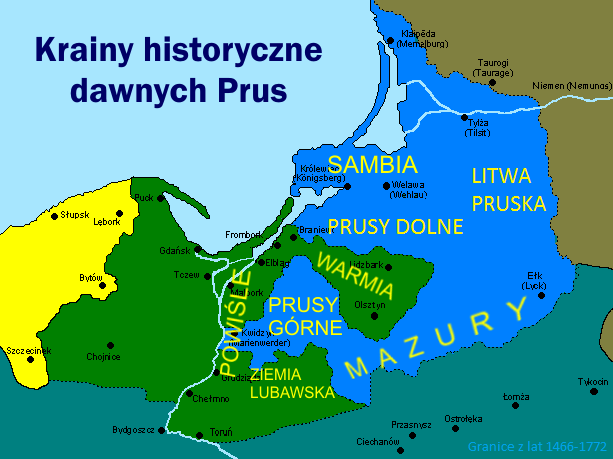
From the 14th century, some settlers from Masovia started to settle in southern Prussia, which had been devastated by the crusades of the Teutonic Knights against the native Old Prussians. According to other sources, people from Masovia did not move to southern Prussia until the time of the Protestant Reformation, Prussia having become Lutheran in 1525. The Masurians were mostly of the Protestant faith, in contrast to the neighboring Roman Catholic people of the Duchy of Masovia, which was incorporated into the Polish kingdom in 1526. A new dialect developed in Prussia, isolated from the remaining Polish language area. The Masurian dialect group has many Low Saxon, German and Old Prussian words mixed in with Polish-language endings.
Beginning in the 1870s, Imperial German officials restricted the usage of languages other than German in Prussia's eastern provinces. While in 1880 Masurians were still treated as Poles by the German Empire, at the turn of century the German authorities undertook several measures to Germanise and separate them from the Polish nation by creating a separate identity. After World War I the East Prussian plebiscite was held on July 11, 1920, according to the Treaty of Versailles, in which the Masurians had to decide whether they wanted to be part of the Second Polish Republic or remain in German East Prussia; about 98% voted for Germany.
By the early 20th century, most Masurians were at least bilingual and could speak Low Saxon and German; in some areas about half of them still spoke Masurian, at least at home. In 1900, according to the German census there were 142,049 Masurians speaking Masurian. In 1925, only 40,869 people gave Masurian as their native language, many considering German their first language, considering Masurian merely as their domestic dialect, By the early 1920s there were also some Masurians who had their separate identity, claiming that Masurians are a nation. Most of them were members of Masurenbund. Their main goal was to grant Masurians some minority laws inside Germany, but there were also some separatists. In the early 1930s, support for the Nazi Party was high in Masuria, especially in elections in 1932 and 1933. Nazi political rallies were organized in the Masurian dialect during the campaigning.
After 1933 the usage of the Masurian dialect was prohibited by the National Socialist authorities. By 1938 most Masurian place and personal names had been changed to "pure" German substitutes. From 1939 on it was forbidden to hold church services in Masurian.
The replacement of Masurian in favor of German was not completed by the time the Soviet Red Army conquered Masurian East Prussia in January 1945, in World War II. The territory was transferred to Poland according to the postwar Potsdam Conference. During the wartime fighting and post-war deportations in the subsequent decades, most Masurian-speakers left Masuria for western Germany, especially to post-war West Germany, where they were quickly assimilated into the German mainstream.
According to some scientists such as Andrzej Sakson, there are about 5,000–10,000 ethnic Masurians left in Poland. According to the Polish census from 2011, there are only 1,376 of them who identify themselves as Masurians. Most Masurians live in Germany now, but due to the German law the ethnicity and nationality are not determined in their census.
Hub AI
Masurian dialects AI simulator
(@Masurian dialects_simulator)
Masurian dialects
The Masurian ethnolect (Masurian: mazurská gádkä; Polish: mazurski; German: Masurisch), according to some linguists, is a dialect group of the Polish language; others consider Masurian to be a separate language, spoken by the Masurian people in northeastern Poland.
The dialect belongs to the Masovian dialect group and is located in the part of Poland as well as parts of Siberia. It borders the Lubawa dialect to the far southwest, the Ostróda dialect and Warmia dialect to the west, the new mixed dialects to the north, the Suwałki dialect to the east, marginally the Podlachia dialect to the far east, and the Kurpie dialect and Far Mazovian dialect to the south.
From the 14th century, some settlers from Masovia started to settle in southern Prussia, which had been devastated by the crusades of the Teutonic Knights against the native Old Prussians. According to other sources, people from Masovia did not move to southern Prussia until the time of the Protestant Reformation, Prussia having become Lutheran in 1525. The Masurians were mostly of the Protestant faith, in contrast to the neighboring Roman Catholic people of the Duchy of Masovia, which was incorporated into the Polish kingdom in 1526. A new dialect developed in Prussia, isolated from the remaining Polish language area. The Masurian dialect group has many Low Saxon, German and Old Prussian words mixed in with Polish-language endings.
Beginning in the 1870s, Imperial German officials restricted the usage of languages other than German in Prussia's eastern provinces. While in 1880 Masurians were still treated as Poles by the German Empire, at the turn of century the German authorities undertook several measures to Germanise and separate them from the Polish nation by creating a separate identity. After World War I the East Prussian plebiscite was held on July 11, 1920, according to the Treaty of Versailles, in which the Masurians had to decide whether they wanted to be part of the Second Polish Republic or remain in German East Prussia; about 98% voted for Germany.
By the early 20th century, most Masurians were at least bilingual and could speak Low Saxon and German; in some areas about half of them still spoke Masurian, at least at home. In 1900, according to the German census there were 142,049 Masurians speaking Masurian. In 1925, only 40,869 people gave Masurian as their native language, many considering German their first language, considering Masurian merely as their domestic dialect, By the early 1920s there were also some Masurians who had their separate identity, claiming that Masurians are a nation. Most of them were members of Masurenbund. Their main goal was to grant Masurians some minority laws inside Germany, but there were also some separatists. In the early 1930s, support for the Nazi Party was high in Masuria, especially in elections in 1932 and 1933. Nazi political rallies were organized in the Masurian dialect during the campaigning.
After 1933 the usage of the Masurian dialect was prohibited by the National Socialist authorities. By 1938 most Masurian place and personal names had been changed to "pure" German substitutes. From 1939 on it was forbidden to hold church services in Masurian.
The replacement of Masurian in favor of German was not completed by the time the Soviet Red Army conquered Masurian East Prussia in January 1945, in World War II. The territory was transferred to Poland according to the postwar Potsdam Conference. During the wartime fighting and post-war deportations in the subsequent decades, most Masurian-speakers left Masuria for western Germany, especially to post-war West Germany, where they were quickly assimilated into the German mainstream.
According to some scientists such as Andrzej Sakson, there are about 5,000–10,000 ethnic Masurians left in Poland. According to the Polish census from 2011, there are only 1,376 of them who identify themselves as Masurians. Most Masurians live in Germany now, but due to the German law the ethnicity and nationality are not determined in their census.