Hubbry Logo
Cycle per secondCycle per secondMain
Open search
Cycle per second
Community hub
Cycle per second
logo
8 pages, 0 posts
0 subscribers
Be the first to start a discussion here.
Cycle per second
Cycle per second
from Wikipedia
Not found
Revisions and contributorsEdit on WikipediaRead on Wikipedia
from Grokipedia
The cycle per second (abbreviated as cps or c/s) is a unit of that measures the number of complete cycles or periods of a repeating , such as a wave or , occurring in one second. It is dimensionally equivalent to the reciprocal of the second (s⁻¹) and serves as a fundamental measure in fields like physics, , and to quantify periodic events. Historically, the concept emerged in the late through the experimental work of German physicist Heinrich Rudolf Hertz, who quantified the frequency of electromagnetic waves—previously theorized by James Clerk Maxwell—using the notion of cycles per second to describe their repetitive patterns over time intervals. This unit became a standard for expressing frequencies in early radio and , predating formalized international standards. In 1960, the 11th General Conference on Weights and Measures (CGPM) established the (SI) and officially renamed the unit the hertz (Hz) in honor of Hertz's pioneering contributions, defining 1 Hz as exactly one cycle per second to integrate it as a coherent derived SI unit. The transition marked a shift toward metric consistency, though "cycles per second" persisted in practical applications, such as audio equipment specifications and analog , until widespread adoption of Hz by the 1970s. Today, while obsolete in formal SI contexts, the cycle per second remains a conceptual foundation for understanding in modern technologies, including , acoustics, and , where multiples like kilohertz (kHz) and megahertz (MHz) denote higher rates of cycles. Its legacy underscores the evolution from empirical measurements to standardized units, ensuring precise quantification of dynamic systems across scientific disciplines.

Definition and Units

Definition

The cycle per second is a measure of that represents the number of complete cycles of a periodic occurring in one second. In physics, quantifies how often a recurring event repeats over time, with each cycle denoting a full repetition of the pattern or motion. A cycle is the fundamental unit of repetition in such phenomena; for a sinusoidal wave, it specifically refers to one complete , measured from one crest to the subsequent crest, passing through a trough in between. This concept extends beyond waves to any repeating process, including mechanical vibrations like those of a swinging back and forth or electrical alternations in circuits where current direction reverses periodically. The ff in cycles per second is inversely related to the period TT, which is the duration of a single cycle, according to the f=1Tf = \frac{1}{T}, where TT is expressed in seconds. Historically, the cycle per second was the common term used for the unit of prior to the adoption of the hertz in the (SI) in 1960.

Equivalence to Hertz

The cycle per second is exactly equivalent to the , the derived unit of in the (SI), such that one cycle per second corresponds precisely to one . This equivalence is expressed mathematically as 1cps=1Hz.1 \, \text{cps} = 1 \, \text{Hz}. The (symbol: Hz) is defined as the SI unit of , representing the number of cycles of a periodic phenomenon occurring in one second, and is dimensionally equivalent to the (s⁻¹). Prior to the formal adoption of the SI in 1960, "cycle per second" served as the standard English-language term for this unit of frequency. The name "hertz" was selected to commemorate the contributions of German physicist Heinrich Rudolf Hertz, who experimentally confirmed the existence of electromagnetic waves in the late , thereby validating James Clerk Maxwell's electromagnetic theory. Traditionally, the cycle per second has been abbreviated as cps or c/s, in contrast to the hertz, which uses the symbol Hz.

Historical Development

Early Usage

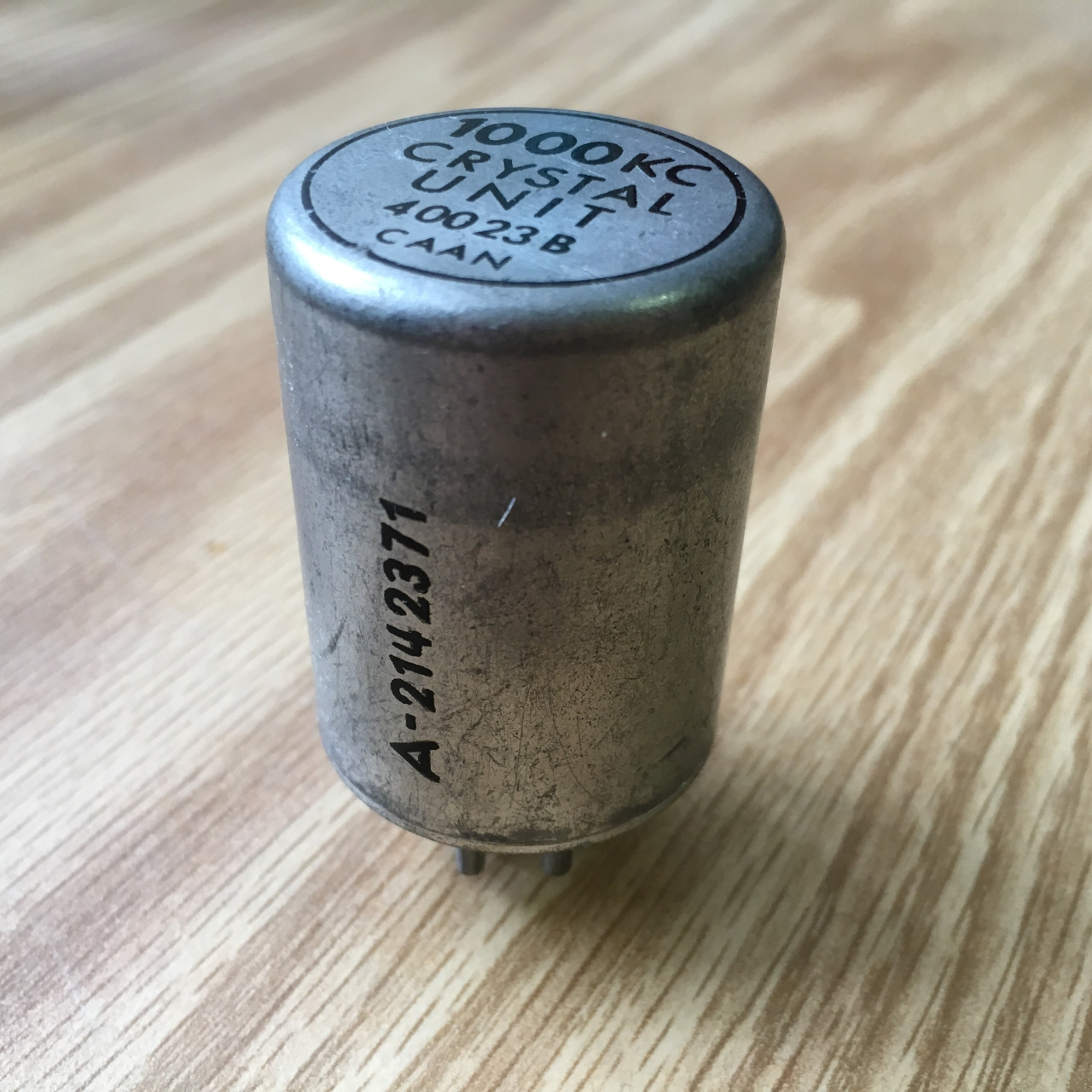
The concept of cycles per second emerged in the late 19th century through Heinrich Rudolf Hertz's experiments on electromagnetic waves, where he measured the number of complete cycles occurring in one second. This measure was later adopted in for (AC) systems in the early 20th century, quantifying the oscillations in power waveforms. Frequencies like 60 cycles per second became standard for optimizing motor and generator performance in polyphase systems, as seen in the development of power grids. In the early , "cycle per second" gained traction in acoustics and radio engineering as a way to denote periodic phenomena, building on 19th-century notions of "vibrations per second." Acousticians used it to describe wave frequencies, while radio pioneers specified oscillations in this unit for transmission bands. For instance, early radio equipment from the to often listed frequencies in kilocycles per second (kc/s), such as the New York State Police's 1658 kc/s allocation in 1931. Throughout the to , "cycle per second" appeared in texts and specifications as a practical descriptor for cyclical rates in , including power grid . Devices such as Henry E. Warren's 1916 master clock maintained a steady 60 cycles per second for AC stability. This usage predated formal international standardization.

Standardization and Replacement

In 1935, the (IEC) introduced the term "hertz" (symbol Hz) as a unit for frequency, equivalent to cycles per second, to honor physicist and provide concise nomenclature in . However, "cycles per second" continued to dominate in scientific and technical literature due to its established usage. The formal standardization occurred in 1960 at the 11th General Conference on Weights and Measures (CGPM), where the (SI) was established, and "hertz" was officially adopted as the derived unit for frequency, replacing "cycles per second" for precision and international consistency. Under this system, one hertz is defined as exactly one cycle per second. Following the 1960 CGPM resolution, the hertz became the standard in , with "cycles per second" phased out by the 1970s as organizations aligned with SI conventions. In engineering fields like audio and radio , the older term lingered into the 1980s.

Applications

In Physics and Waves

In physics, the cycle per second (cps) was a key unit for quantifying the frequency of periodic phenomena, such as waves and oscillations, prior to the standardization of the hertz in 1960. This unit directly measured the number of complete cycles occurring in one second, providing a basis for analyzing wave behaviors in both classical and quantum contexts. The cps found extensive application in describing electromagnetic waves, sound waves, and mechanical vibrations, where ff governs essential properties like λ\lambda, related by the equation λ=vf\lambda = \frac{v}{f}, with vv denoting the wave's propagation speed. For electromagnetic waves in , v=c3×108v = c \approx 3 \times 10^8 m/s, the , yielding shorter wavelengths at higher frequencies. In sound waves and mechanical vibrations, such as those in a vibrating string or air medium, vv is the (typically around 343 m/s in air at ), linking cps to audible pitches or structural resonances. A core principle in wave physics is the inverse relationship between and : higher cps values produce shorter wavelengths for a fixed speed. Visible exemplifies this, with frequencies on the order of 5×10145 \times 10^{14} cps corresponding to wavelengths of 400–700 nm, enabling the perception of colors from violet (higher , shorter ) to (lower , longer ). In , the cps unit underpinned early formulations of , expressed as E=hfE = h f, where hh is Planck's constant (6.626×10346.626 \times 10^{-34} J s); historically, ff denoted cycles per second, reflecting the quantized nature of before the hertz nomenclature. This relation, introduced by in 1900, tied directly to discrete energy packets, revolutionizing the understanding of as both wave and particle. Heinrich Hertz's experiments in the late demonstrated the practical measurement of wave frequencies in cps equivalents, producing radio waves at approximately 50 million cps using spark-gap transmitters and loop antennas to detect electromagnetic propagation. These observations validated James Clerk Maxwell's predictions, establishing cps as a tool for quantifying long-wavelength electromagnetic phenomena beyond visible .

In Engineering and Technology

In , the cycle per second (cps) unit has been fundamental to the design and operation of (AC) power systems, where determines the of generators, transformers, and loads. In , the standard AC mains is 60 cps, which supports efficient and minimizes losses in long-distance grids while aligning with the rotational speeds of induction motors commonly used in industrial applications. This 60 cps standard enables motors to operate at synchronous speeds, such as 3,600 for a two-pole motor, ensuring stable performance in machinery like pumps and fans without additional speed control mechanisms. In contrast, much of and employs a 50 cps standard for grids, chosen for its compatibility with early generator designs and as a round number in the . This frequency influences motor speeds accordingly, with a typical two-pole running at 3,000 , which has shaped the engineering of appliances and industrial equipment in those regions to match the lower cycle rate for optimal efficiency. Telecommunications and radio engineering historically relied on cps derivatives like kilocycles per second (kc/s) to specify carrier frequencies, particularly in (AM) broadcasting. AM radio bands were allocated in the medium-wave spectrum from 535 to 1,605 kc/s in the early , allowing engineers to design transmitters and receivers tuned to precise intervals for clear signal separation and minimal interference. This notation facilitated the expansion of commercial radio, with stations operating at fixed kc/s assignments to cover urban areas effectively before the shift to kilohertz (kHz) in the mid-20th century. In audio engineering, cps defines the frequency response of systems to match human auditory limits, guiding the design of speakers, , and amplifiers. The typical hearing range spans 20 to 20,000 cps, prompting engineers to target this bandwidth in consumer to reproduce natural sound without or loss of detail in vocals and harmonics. For instance, high-fidelity speaker systems are engineered to extend to the upper cps limit for accurate playback of musical , while filters attenuate frequencies outside this range to reduce noise in recording studios. Computing hardware once measured processor performance in megacycles per second (Mc/s), reflecting the clock rate at which circuits executed instructions before standardization on megahertz (MHz). Early mainframes like the operated at 2.25 Mc/s, where each cycle synchronized flip-flops and logic gates to process data at rates sufficient for scientific calculations in the . This metric allowed engineers to optimize vacuum-tube and early designs for reliable timing, paving the way for higher-speed integrated circuits as demands grew.

Measurement and Calculations

Measurement Methods

In the 19th and early 20th centuries, measurements in cycles per second were often performed using mechanical devices such as tuning forks and stroboscopes. Tuning forks served as primary standards, with their frequencies determined by physical dimensions and calibrated through visual observation of vibrations or by comparing beats against known references; for instance, sets of precisely manufactured forks allowed scientists to count cycles over a timed interval using stopwatches or pendulums. Stroboscopes, invented around as mechanical rotating disks with slits, enabled visual frequency assessment by adjusting the flash rate to make periodic motions appear stationary, thus allowing manual counting of cycles per second in laboratory settings for phenomena like rotating machinery or sound waves. Modern frequency measurement relies on electronic frequency counters, which digitally tally the number of zero-crossings or waveform peaks within a precise gate time, typically derived from a stable quartz crystal oscillator. These instruments achieve accuracies on the order of parts per million by extending measurement periods or using reciprocal counting techniques for lower frequencies, making them essential for precise quantification in cycles per second or hertz. In radio engineering, the method mixes an unknown signal with a of known to produce a beat , which is then measured as cycles per second using simpler audio detectors or counters; this technique, pioneered by in 1901, remains foundational for high-frequency assessments beyond direct counting capabilities. Ultimate precision in frequency measurement traces to atomic clocks, which serve as international standards; for example, cesium-133 atoms oscillate at exactly 9,192,631,770 cycles per second between hyperfine energy levels, providing a traceable reference for calibrating all other instruments via synthesizers or direct comparison.

Unit Conversions

The cycle per second (cps), being equivalent to the hertz (Hz), employs standard SI prefixes to denote multiples and submultiples of frequency. For instance, 1 kilocycle per second (kc/s) equals 1,000 cps, which is identical to 1 kHz; similarly, 1 megacycle per second (Mc/s) equals 1,000,000 cps or 1 MHz, and 1 gigacycle per second (Gc/s) equals 1,000,000,000 cps or 1 GHz. These prefix conversions follow the decimal system, where prefixes like kilo- (10³), mega- (10⁶), and giga- (10⁹) scale the base unit for expressing higher frequencies common in radio, , and . The relation between linear frequency ff in cycles per second and angular frequency ω\omega in radians per second is given by ω=2πf\omega = 2\pi f. This arises because a complete cycle corresponds to a full of 2π2\pi radians in the phase of a , such as θ(t)=2πft\theta(t) = 2\pi f t for the phase angle θ\theta at time tt. Differentiating with respect to time yields the angular speed ω=dθdt=2πf\omega = \frac{d\theta}{dt} = 2\pi f, connecting the two measures in contexts like wave propagation and oscillatory systems. For example, a of 1 cps (or 1 Hz) corresponds to ω6.2832\omega \approx 6.2832 rad/s. Conversion to the period TT, the duration of one cycle, is straightforward via T=1fT = \frac{1}{f}. For a of 50 cps, this yields T=150=0.02T = \frac{1}{50} = 0.02 seconds, representing the time between successive cycles in phenomena like or sound waves. This inverse relationship underscores how higher imply shorter periods. In non-SI applications, such as music , cycles per second can convert to beats per minute (bpm) using bpm=60f\text{bpm} = 60 f, accounting for 60 seconds in a minute; thus, 1 cps equals 60 bpm, facilitating in rhythm-based contexts.

References

Add your contribution
Related Hubs
User Avatar
No comments yet.