
Recent from talks
Methylene blue
Knowledge base stats:
Talk channels stats:
Members stats:
Methylene blue
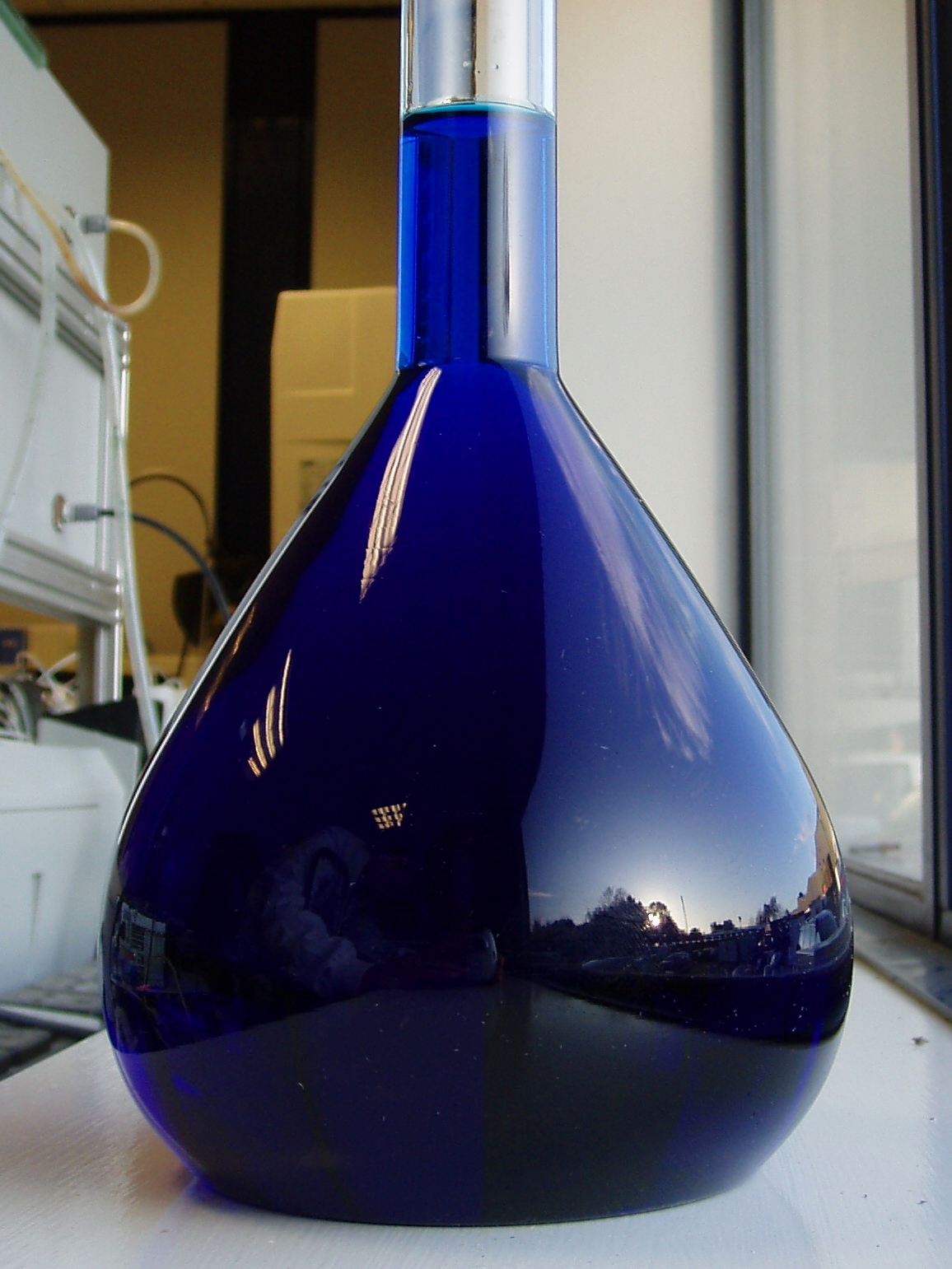
Methylthioninium chloride, commonly called methylene blue, is a salt used as a dye and as a medication. As a medication, it is mainly used to treat methemoglobinemia. It has previously been used for treating cyanide poisoning and urinary tract infections, but this use is no longer recommended. It has also been used to treat cases of malaria for over a century.
Methylene blue is typically given by injection into a vein. Common side effects include headache, nausea, and vomiting.
Methylene blue was first prepared in 1876, by Heinrich Caro. It is on the World Health Organization's List of Essential Medicines.
Methylene blue is used to treat methemoglobinemia by chemically reducing the ferric iron in hemoglobin to ferrous iron. Methemoglobinemia can arise from ingestion of certain pharmaceuticals, toxins, or broad beans in those susceptible. Specifically, it is used to treat methemoglobin levels that are greater than 30% or in which there are symptoms despite oxygen therapy. Normally, through the NADH- or NADPH-dependent methemoglobin reductase enzymes, methemoglobin is reduced back to hemoglobin. When large amounts of methemoglobin occur secondary to toxins, methemoglobin reductases are overwhelmed. Methylene blue, when injected intravenously as an antidote, is itself first reduced to leucomethylene blue, which then reduces the heme group from methemoglobin to hemoglobin. Methylene blue can reduce the half-life of methemoglobin from hours to minutes. At high doses, however, methylene blue actually induces methemoglobinemia, reversing this pathway.
Isobutyl nitrite is one of the compounds used as poppers, an inhalant drug that induces a brief euphoria.
Isobutyl nitrite is known to cause methemoglobinemia. Severe methemoglobinemia may be treated with methylene blue.
Hyoscyamine/hexamethylenetetramine/phenyl salicylate/methylene blue/benzoic acid is a combination drug used to treat pain caused by urinary tract infections and spasms of the urinary tract. It is currently sold under multiple brand names in the US, eg. Hyophen, Methylphen, Urophen, Urised. It was formerly sold as Prosed/DS, but this particular brand name was discontinued.
Since its reduction potential is similar to that of oxygen and can be reduced by components of the electron transport chain, large doses of methylene blue are sometimes used as an antidote to potassium cyanide poisoning, a method first successfully tested in 1933 by Matilda Moldenhauer Brooks in San Francisco, although first demonstrated by Bo Sahlin of Lund University, in 1926.
Hub AI
Methylene blue AI simulator
(@Methylene blue_simulator)
Methylene blue
Methylthioninium chloride, commonly called methylene blue, is a salt used as a dye and as a medication. As a medication, it is mainly used to treat methemoglobinemia. It has previously been used for treating cyanide poisoning and urinary tract infections, but this use is no longer recommended. It has also been used to treat cases of malaria for over a century.
Methylene blue is typically given by injection into a vein. Common side effects include headache, nausea, and vomiting.
Methylene blue was first prepared in 1876, by Heinrich Caro. It is on the World Health Organization's List of Essential Medicines.
Methylene blue is used to treat methemoglobinemia by chemically reducing the ferric iron in hemoglobin to ferrous iron. Methemoglobinemia can arise from ingestion of certain pharmaceuticals, toxins, or broad beans in those susceptible. Specifically, it is used to treat methemoglobin levels that are greater than 30% or in which there are symptoms despite oxygen therapy. Normally, through the NADH- or NADPH-dependent methemoglobin reductase enzymes, methemoglobin is reduced back to hemoglobin. When large amounts of methemoglobin occur secondary to toxins, methemoglobin reductases are overwhelmed. Methylene blue, when injected intravenously as an antidote, is itself first reduced to leucomethylene blue, which then reduces the heme group from methemoglobin to hemoglobin. Methylene blue can reduce the half-life of methemoglobin from hours to minutes. At high doses, however, methylene blue actually induces methemoglobinemia, reversing this pathway.
Isobutyl nitrite is one of the compounds used as poppers, an inhalant drug that induces a brief euphoria.
Isobutyl nitrite is known to cause methemoglobinemia. Severe methemoglobinemia may be treated with methylene blue.
Hyoscyamine/hexamethylenetetramine/phenyl salicylate/methylene blue/benzoic acid is a combination drug used to treat pain caused by urinary tract infections and spasms of the urinary tract. It is currently sold under multiple brand names in the US, eg. Hyophen, Methylphen, Urophen, Urised. It was formerly sold as Prosed/DS, but this particular brand name was discontinued.
Since its reduction potential is similar to that of oxygen and can be reduced by components of the electron transport chain, large doses of methylene blue are sometimes used as an antidote to potassium cyanide poisoning, a method first successfully tested in 1933 by Matilda Moldenhauer Brooks in San Francisco, although first demonstrated by Bo Sahlin of Lund University, in 1926.
Recent media