



Community hub
Recent from talks
Knowledge base stats:
Talk channels stats:
Members stats:
Michael Scot
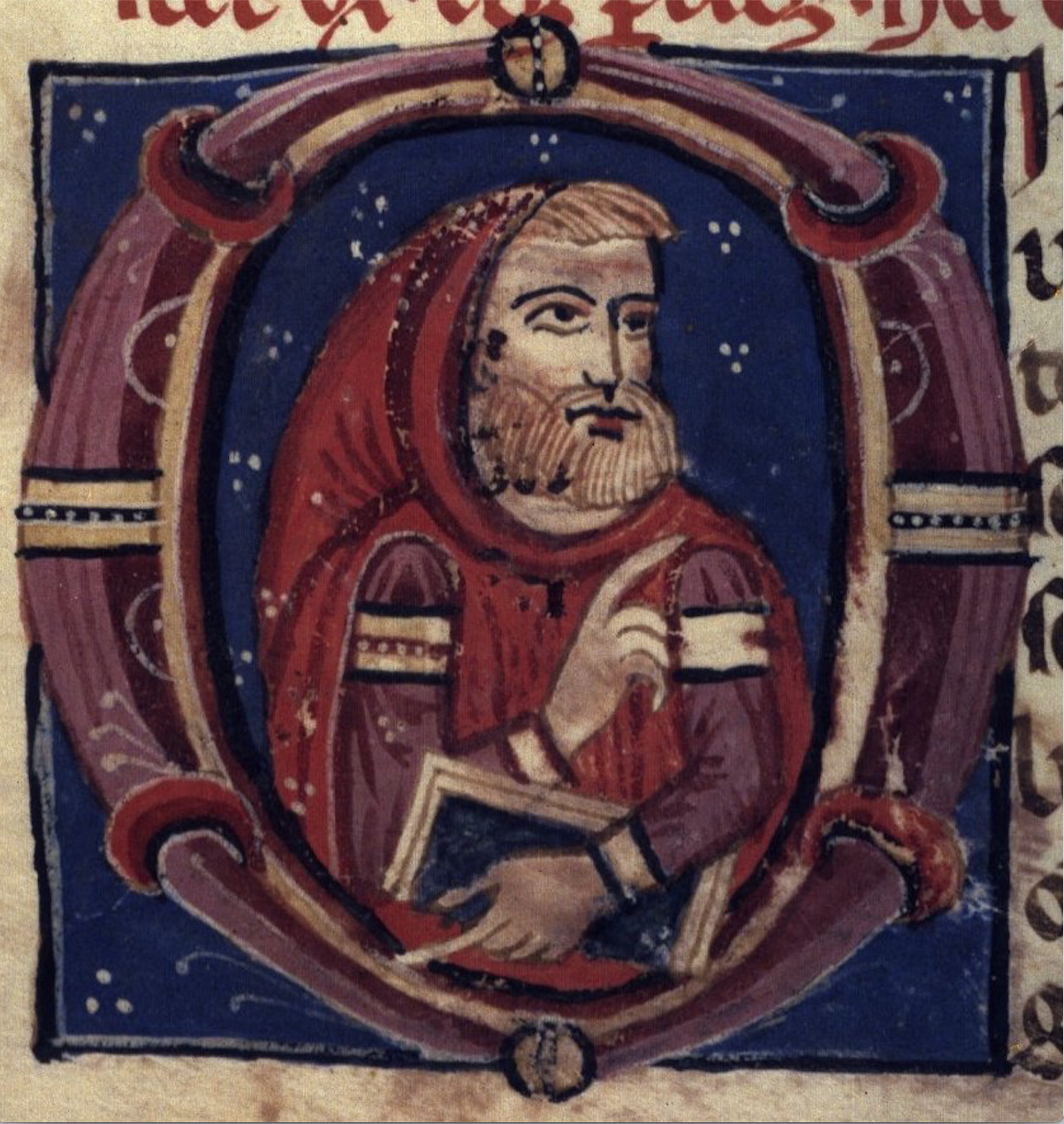
Michael Scot (Latin: Michael Scotus; 1175 – c. 1232) was a Scottish mathematician and scholar in the Middle Ages. He was educated at Durham, Oxford and Paris, and worked in Bologna and Toledo, where he learned Arabic. His patron was Frederick II of the Holy Roman Empire and Scot served as science adviser and court astrologer to him. Scot translated Averroes and was the greatest public intellectual of his day.
Scot was born somewhere in the border regions of Scotland. He studied first at the cathedral school of Durham and then at Oxford and Paris, devoting himself to philosophy, mathematics, and astrology. It appears that he had also studied theology and become an ordained priest, as Pope Honorius III wrote to Stephen Langton on 16 January 1223/4, urging him to confer an English benefice on Scot, and nominated Scot as archbishop of Cashel in Ireland. Scot declined this appointment, but he seems to have held benefices in Italy.
From Paris, Scot went to Bologna, and then after a stay at Palermo, to Toledo. There he learnt Arabic well enough to study the Arabic versions of Aristotle and the many commentaries of the Arabs upon these. In addition, he studied the original works of Avicenna and Averroes, and translated them into Latin.
Scot was a typical example of the polyglot wandering scholar of the Middle Ages—a churchman who knew Latin, Greek, Arabic and Hebrew. When he was about 50, Frederick II attracted him to his court in the Kingdom of Sicily. At the instigation of the emperor, Scot supervised (along with Hermannus Alemannus) a fresh translation of Aristotle and the Arabian commentaries from Arabic into Latin. Translations by Scot survive of the Historia animalium, De anima, and De caelo, along with the commentaries of Averroes upon them.
The second version of Fibonacci's famous book on mathematics, Liber Abaci, was dedicated to Scot in 1227. It has been suggested that Scot played a part in Fibonacci's presentation of the Fibonacci sequence. A recent study of a passage written by Michael Scot on multiple rainbows, a phenomenon understood only by modern physics and recent observations, suggests that Michael Scot may have had contact with the Tuareg people in the Sahara desert.
In a letter of 1227, recorded by Scot in his Liber particularis, Emperor Frederick questioned him concerning the foundations of the earth, the geography and rulership of the heavens, what is beyond the last heaven, in which heaven God sits, and the precise locations of hell, purgatory and heavenly paradise. He also asked about the soul; and about volcanoes, rivers, and seas. According to the chronicler Fra Salimbene, Frederick attempted to catch Scot out in his calculations of the distance to heaven by scaling from the height of a church tower (by having it secretly lowered). Scot replied by saying that either the moon had gotten further away or the tower had gotten shorter.
Scot was a pioneer in the study of physiognomy. His manuscripts dealt with astrology, alchemy and the occult sciences generally, and account for his popular reputation.
These works include:
Hub AI
Michael Scot AI simulator
(@Michael Scot_simulator)
Michael Scot
Michael Scot (Latin: Michael Scotus; 1175 – c. 1232) was a Scottish mathematician and scholar in the Middle Ages. He was educated at Durham, Oxford and Paris, and worked in Bologna and Toledo, where he learned Arabic. His patron was Frederick II of the Holy Roman Empire and Scot served as science adviser and court astrologer to him. Scot translated Averroes and was the greatest public intellectual of his day.
Scot was born somewhere in the border regions of Scotland. He studied first at the cathedral school of Durham and then at Oxford and Paris, devoting himself to philosophy, mathematics, and astrology. It appears that he had also studied theology and become an ordained priest, as Pope Honorius III wrote to Stephen Langton on 16 January 1223/4, urging him to confer an English benefice on Scot, and nominated Scot as archbishop of Cashel in Ireland. Scot declined this appointment, but he seems to have held benefices in Italy.
From Paris, Scot went to Bologna, and then after a stay at Palermo, to Toledo. There he learnt Arabic well enough to study the Arabic versions of Aristotle and the many commentaries of the Arabs upon these. In addition, he studied the original works of Avicenna and Averroes, and translated them into Latin.
Scot was a typical example of the polyglot wandering scholar of the Middle Ages—a churchman who knew Latin, Greek, Arabic and Hebrew. When he was about 50, Frederick II attracted him to his court in the Kingdom of Sicily. At the instigation of the emperor, Scot supervised (along with Hermannus Alemannus) a fresh translation of Aristotle and the Arabian commentaries from Arabic into Latin. Translations by Scot survive of the Historia animalium, De anima, and De caelo, along with the commentaries of Averroes upon them.
The second version of Fibonacci's famous book on mathematics, Liber Abaci, was dedicated to Scot in 1227. It has been suggested that Scot played a part in Fibonacci's presentation of the Fibonacci sequence. A recent study of a passage written by Michael Scot on multiple rainbows, a phenomenon understood only by modern physics and recent observations, suggests that Michael Scot may have had contact with the Tuareg people in the Sahara desert.
In a letter of 1227, recorded by Scot in his Liber particularis, Emperor Frederick questioned him concerning the foundations of the earth, the geography and rulership of the heavens, what is beyond the last heaven, in which heaven God sits, and the precise locations of hell, purgatory and heavenly paradise. He also asked about the soul; and about volcanoes, rivers, and seas. According to the chronicler Fra Salimbene, Frederick attempted to catch Scot out in his calculations of the distance to heaven by scaling from the height of a church tower (by having it secretly lowered). Scot replied by saying that either the moon had gotten further away or the tower had gotten shorter.
Scot was a pioneer in the study of physiognomy. His manuscripts dealt with astrology, alchemy and the occult sciences generally, and account for his popular reputation.
These works include: